FIND YOUR ADVENTURE

Climb Details

Cost:
Deposit:
Length:
Difficulty:
Type:

$1676
$300
5 day(s)
Level 3 difficulty 
Mountaineering

Availability

Please call for program dates.

Upcoming Climbs

August 4, 2013 - FULL
BE NOTIFIED ON 2014 CLIMBING DATES

Add Program To FavoritesDownload Brochure
"I climbed Rainier with RMI and had a great experience. The guides are amazing, friendly and always professional. I've done trips with other guide services in a variety of activities, but no service has matched RMI."

— Jim V. | Read More Testimonials

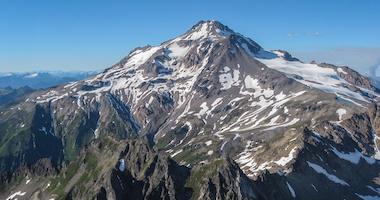
Mt Rainier

The Five Day Emmons Climb ascends the Emmons Glacier route, covering 10,000 vertical feet from trailhead to summit. Climb highlights include:

  • An expedition-style climb, establishing successive tented camps on Mt. Rainier's Inter and Emmons Glaciers.
  • The opportunity to review basic mountaineering techniques and skills on the extended approach to high camp.
  • Make a summit attempt on the largest glacier in the contiguous U.S.

The Five Day Emmons Climb is an expedition-style climb of Mt. Rainier's Emmons Glacier. Following an afternoon orientation, climbers depart for the two-day approach up the Inter Glacier to our high camp at Camp Schurman. We ascend through the thick forest along Mt. Rainier's Glacier Basin Trail and onto its glaciated flanks. Our summit bid ascends the Emmons Glacier, an intermediate route up the largest of Mt. Rainier's twenty-six glaciers, in a long and challenging ascent. This climb is ideal for climbers in great physical condition with an understanding of basic mountaineering techniques or those who have previously climbed Mt. Rainier and are looking for another adventure on the mountain.

THE RMI DIFFERENCE

The Mountain Guides at RMI have a reputation as top guides in the United States. RMI Guides participated in some of America's first ventures into the far reaches of the Himalaya. Years of expedition guiding and climbing around the world have built a core of consummate professional guides.

"You folks have a tremendous team of people. I didn't meet one person who didn't help to make the whole experience more meaningful- a life changing event. Thanks again for the tremendous experience- I look forward to the chance to join you on another expedition in the future."
— Steve S.

Our guides are celebrated teachers and trainers, known for their leadership as well as their character. They possess the compassion, enthusiasm and ability to empower others and inspire them forward. Such qualities may only be found in people at the top of their profession. Despite their vast experience, RMI Guides still remember their own first steps into the mountains, and enjoy helping other climbers reach new heights.

Our exceptional focus to detail, our unparalleled level of climber attention, and our genuine excitement for these adventures make our programs truly memorable.

SAFETY

RMI strives to create the safest mountain experience possible. Our experienced team of guides focuses on leading fun and successful climbs without compromising safety. Each climb includes careful pre-trip planning, daily weather forecasts, avalanche forecasts, and diligent attention to detail. All RMI Guides are highly trained in remote medicine and rescue skills and carry comprehensive medical kits, rescue equipment, and radio communication equipment throughout the program. Regardless of the objective or the destination, safety remains RMI’s top priority.

As you prepare for your upcoming adventure please feel free to contact our office and speak directly to one of our experienced guides regarding equipment, conditioning, the route, or any other questions you may have about our programs. We are available Monday thru Friday 8:30 a.m. to 4:00 p.m. at (888) 89-CLIMB or info@rmiguides.com.

5 Day Emmons Climb Equipment List

Whittaker Mountaineering Whittaker Mountaineering

The following is a list of required equipment. We may encounter a variety of weather conditions throughout our climb, including rain, wind, snow, sleet and extreme heat. Skimping on equipment can jeopardize your safety and success, so we want you to think carefully about any changes or substitutions you are considering. If you have questions regarding the equipment needed for your upcoming climb, give us a call and speak directly to one of our experienced guides.

Most of the required equipment is available for rent or purchase from our affiliate Whittaker Mountaineering. RMI climbers receive a 10% discount on new clothing and equipment items ordered from Whittaker Mountaineering. This offer excludes sale items. For internet orders, please use the discount code RMI 2013.


Pack & Bag Guides' Pick

Equipment Check Box

BACKPACK: A 90+ liter pack is the recommended size for this climb.   It is imperative that your backpack is large enough and tough enough to handle the load. A separate summit pack is not needed.


Equipment Check Box

SLEEPING BAG: A bag rated 0° to 20° F will keep you warm. Use the colder bag in May, June and September; and the warmer bag in July and August. You may use either goose down or synthetic.


Equipment Check Box

SLEEPING PAD: Full length inflatable or closed cell pad.


Technical Gear Guides' Pick

Equipment Check Box

ICE AXE: The length of your axe depends on your height. Use the following general mountaineering formula: up to 5'8", use a 65 cm. axe; 5'8" to 6'2", use a 70 cm. axe; and taller, use a 75 cm. axe. If you hold the axe so that it hangs comfortably at your side, the spike of the axe should still be a few inches above the ground.


Equipment Check Box

CLIMBING HARNESS: A comfortable, adjustable climbing harness.


Equipment Check Box

CRAMPONS: The 10 to 12 point adjustable crampons designed for general mountaineering are ideal. Rigid frame crampons designed for technical ice climbing are not recommended. Carry any repair kit/replacement parts and adjusting tools which are specific to your crampons.


Equipment Check Box

AVALANCHE TRANSCEIVER: A digital transceiver is preferred; analog will work as well.


Head Guides' Pick

Equipment Check Box

WARM HAT: Wool or synthetic. It should be warm and thin enough to fit underneath a climbing helmet.


Equipment Check Box

BALL CAP OR SUN HAT: A lightweight ball cap or sun hat.


Equipment Check Box

GLACIER GLASSES: A pair of dark-lensed sunglasses with side shields or full wrap-type sunglasses.


Equipment Check Box

GOGGLES: Amber or rose-tinted goggles for adverse weather. Additionally, contact lens wearers may find a clear-lensed goggle very useful on windy nights.


Hands Guides' Pick

Equipment Check Box

HEAVY WEIGHT INSULATED GLOVE OR MITTEN: Wind/water resistant, insulated gloves or mittens for protection against wind, snow and cold. These also serve as emergency back-ups if you drop or lose a glove.


Upper Body Guides' Pick

Equipment Check Box

LIGHT TO MEDIUM WEIGHT BASELAYER: Long-sleeve wool or synthetic top will be used as your base layer. Zip-neck styles will allow for better temperature regulation.


Equipment Check Box

SOFT SHELL LAYER: A windproof, water-resistant and highly breathable layer.


Equipment Check Box

INSULATED PARKA with HOOD: This item becomes of highest importance when we are faced with poor weather. This should be an expeditionary-type heavy parka that extends well below the waist and above the knees. Goose down is recommended versus synthetic fill. It does not have to be waterproof, but that is a nice feature. The parka is worn primarily at rest breaks on summit day and as an emergency garment if needed. When sizing a parka, allow for several layers to be worn underneath; buy it large. The parka must have an insulated hood.


Equipment Check Box

NON-COTTON HIKING SHIRT (OPTIONAL): Lightweight, synthetic shirt with either long or short sleeves is nice for July and August. Long sleeve is preferred for sun protection.

M:
  • Mountain Hardwear Wicked Lite Long Sleeve

W:

Lower Body Guides' Pick

Equipment Check Box

CLIMBING PANT: Synthetic climbing pants offer a wide range of versatility. You can wear them alone on hot days, or in combination with the base layer on cold days. The thickness (insulation quality) should be based on how well you do in the cold and the temperatures expected on your climb.


Equipment Check Box

HARD SHELL PANT: A pant made of breathable rain and wind-proof material will be needed. Full-length side zippers are required for facilitating quick clothing adjustments over boots and crampons in cold, inclement weather.


Equipment Check Box

LIGHT WEIGHT TREKKING PANT OR SHORTS - OPTIONAL: A lightweight, synthetic pair of pants is a good option for the approach trek when hiking at lower altitudes and in warm conditions. These pants have no insulation, are typically made of thin nylon, and commonly feature zippers to convert between pants and shorts.

M:
  • Mountain Hardwear Mesa Convertible Pant

W:

Feet Guides' Pick

Equipment Check Box

MOUNTAINEERING BOOTS: Insulated plastic boots are the preferred choice for ascents on Mt. Rainier. They provide the best insulation as well as a more rigid sole for kicking steps and holding crampons. Leather mountaineering boots that have completely rigid soles are also adequate, but they will need to be insulated and may still result in cold feet on summit day. Lightweight hiking boots without insulation are not acceptable as they don't work well with crampons, or in very cold or wet weather.


Equipment Check Box

GAITERS: A knee-length pair of gaiters, large enough to fit over your mountaineering boots. This will protect you from catching your crampons on loose clothing.


Equipment Check Box

2 PAIR SOCKS: Either wool or synthetic. Some people find liner socks useful for reducing friction.


Miscellaneous Items Guides' Pick

Equipment Check Box

EXTRA BATTERIES FOR HEADLAMP: Lithium batteries perform best in cold environments. 


Equipment Check Box

MEALS: See the Food tab for suggestions and quantities.


Equipment Check Box

2 - 3 WATER BOTTLES: One-quart water bottles are required. Wide mouth bottles are ideal since their opening is less likely to freeze.


Equipment Check Box

2 GARBAGE BAGS (Large): We recommend lining your backpack with garbage bags to keep items in your backpack completely dry.


Equipment Check Box

ZIP-LOCK BAG (1 GALLON): Please use the Zip-Lock as your personal trash bag.


Equipment Check Box

CAMERA


Toilet Articles

Equipment Check Box

TOOTHBRUSH


Equipment Check Box

HAND SANITIZER(S): Personal size (2 oz.) bottle.


Utensils Guides' Pick

Provided Equipment

RMI provides the following equipment for your program: tents, group cooking gear, shovels, climbing ropes, and blue bags (for solid waste disposal).

Every guide on your climb will carry rescue equipment and a first aid kit. Each climb has two-way radios and a cell phone for emergency contact.


Pre-Trip Checklist

Equipment Check Box

Purchase travel insurance.


Equipment Check Box

Return the Participant Information Form to the RMI Office.


Equipment Check Box

Arrange Lodging in Ashford.


Equipment Check Box

Purchase airplane tickets.


Equipment Check Box

Arrange Transportation to Ashford.


Equipment Check Box

Reserve rental equipment.


Equipment Check Box

Be in the Best Shape of Your Life!


Qualifications

This trip is open to individuals in excellent physical condition with previous climbing experience. In order to participate, each team member is asked to submit a short climbing resume showing, at a minimum, the following skills:

  • Familiar with crampon use, team rope travel skills, and ice axe arrest techniques.
  • A minimum of one previous glacier climb.

Physical Fitness Training

Fitness and Conditioning

Mountaineering requires a high degree of physical stamina and mental toughness. Even for the healthiest and fittest individuals, climbing mountains qualifies as an extremely challenging endeavor.

  • Start immediately. Start a rigorous fitness and training program now with the goal of arriving in top physical condition and confident in your skills.
  • Be intentional. Focus on gaining the necessary strength, stamina and skills to meet the physical and technical demands of the climb.
  • Be sport-specific. The best fitness and training program mimics the physical and technical demands of your climbing objective. The closer you get to your program date, the more your training should resemble the climbing.

For this 5-day Emmons Climb, you are preparing for:

  • Steep climbing, climbing and glacier travel with a 50-60 lb load
  • A 12+ hour summit day
  • Mountaineering techniques which require core strength and flexibility

Nothing ensures a personally successful adventure like your level of fitness and training. Bottom line: Plan on being in the best shape of your life and ready for a very challenging adventure!

Below are approximate outlines of the program's physical demands that will be helpful in planning your training schedule and goals:

Total Hiking Time
Elevation Gain / Loss
Total Distance
Pack Weight
DAY 1
n/a
n/a
n/a
n/a
DAY 2
3 - 4 Hours
Gain = 3,100'
4 Miles
50 - 60 lbs
DAY 3
3 Hours
Gain = 2,000'
2 Miles
50 - 60 lbs
DAY 4
12 + Hours
Round Trip
Gain = 5,000'
Loss = 5,000'
8 Miles
Round Trip
20 - 25 lbs
DAY 5
3 Hours
Loss = 5,000'
6 Miles
50 - 60 lbs

Please refer to our Resources for Mountaineering Fitness and Training for detailed fitness and training information.


Acclimatization

Excellent physical conditioning significantly increases your ability to acclimatize. Climbers in excellent physical condition simply have more energy to commit to the acclimatization process throughout the days and nights of the ascent, allowing their bodies to adjust to the altitude more easily.

While the key to climbing high is proper acclimatization, this climb effectively moves up and down the mountain at a rate that exceeds our body’s ability to adjust (acclimate) to the high altitude. This is true whether a program spends 2 days or 5 days on the upper mountain (elevations above 10,000 feet). During our short climb, our bodies simply do not have the time to completely adjust to the altitude, and because of this short stay, our bodies do not typically succumb to altitude’s ill effects. In short, climbers generally experience the mild but uncomfortable, yet normal, symptoms of their bodies beginning the adjustment process. While climbers will feel better rested on the slightly longer programs, fitness remains the key factor in a climber’s performance.

In addition, physical performance at altitude is often related to how well you have taken care of yourself throughout the hours, days and weeks prior to summit day. Arriving healthy and well-rested, maintaining proper hydration and caloric intake, and protecting against unnecessary heat loss (staying warm) are usually key factors in an individual’s success on a short-term visit to altitude.

What is the Guide-to Client Ratio on this program? We use a 1 guide per 2 climber ratio on the Emmons Glacier route.

What is the maximiun group size? The maximum group size of any program anywhere on Mt. Rainier is 12 individuals, including guides.

Whittaker Mountaineering Notebleu Design

©2013 RMI Expeditions // info@rmiguides.com