
Senior Guide
With RMI

Boone, NC

Grandfather Mountain, NC - climbing ladders and unknowingly training for Rainier

I do spend a lot of time engaged in outdoor recreation like running, biking, skiing and climbing but I also enjoy reading fiction, picking banjo, watching other people pick banjo and domestic travel.
Will grew up in the mountains of western North Carolina where he learned to love the outdoors through his ardent parents who brought him skiing, hiking, kayaking, camping and mountain biking. The enjoyment he found in skiing drove him further west to Salt Lake City where he studied Parks, Recreation and Tourism with an emphasis in outdoor recreation studies at the University of Utah. It was during college that Will got into rock climbing, backcountry skiing and mountaineering. In the winter Will works as a guide, outdoor educator and ski instructor in Salt Lake City. When he isn’t working you can find him riding his bike, walking, or learning to play the banjo.
The best part of my job is certainly the community the mountains provide.
I enjoy spending the fall in the Southeast with friends and family, rock climbing and mountain biking. I spend my winters in Salt Lake City skiing as much as I can. In between I’ll poke around the West going rock or ice climbing.
I hope my clients learn something, I often do. I think that RMI has an impressive collection of knowledge and folks who are good at sharing it.


39 | Mt. Rainier, Washington, USA | 14,410' (Kautz, DC, ID & Emmons; Success Couloir ski descent)
1 | Mt. Shuksan, Washington, USA | 9,131' (Fisher Chimneys)
2 | Snake Mountain, North Carolina, USA | 5,522' (summits & ski descents)
1 | Pfeifferhorn, Utah, USA | 11,331' (North Ridge winter ascent)
1 | Mount Superior, Utah, USA | 11,045' (South Ridge winter ascent)
1 | Castleton Tower (North Chimney), Utah, USA | 6,656'
Multiple | Backcountry Skiing & Rock Climbing (NC, UT, CO, AZ, WA, NV, MT), USA
RMI Expeditions Guides are required to hold a number of certifications, but many go above and beyond with their technical and outdoor training. We actively encourage (and provide funding for) our guides' continuing education.
November 2, 2025

Program Name
Lorem ipsum dolor sit amet, consectetur adipiscing elit. Suspendisse varius enim in eros elementum tristique. Duis cursus, mi quis viverra ornare, eros dolor interdum nulla, ut commodo diam libero vitae erat. Aenean faucibus nibh et justo cursus id rutrum lorem imperdiet. Nunc ut sem vitae risus tristique posuere.
- Name
Mountaineering
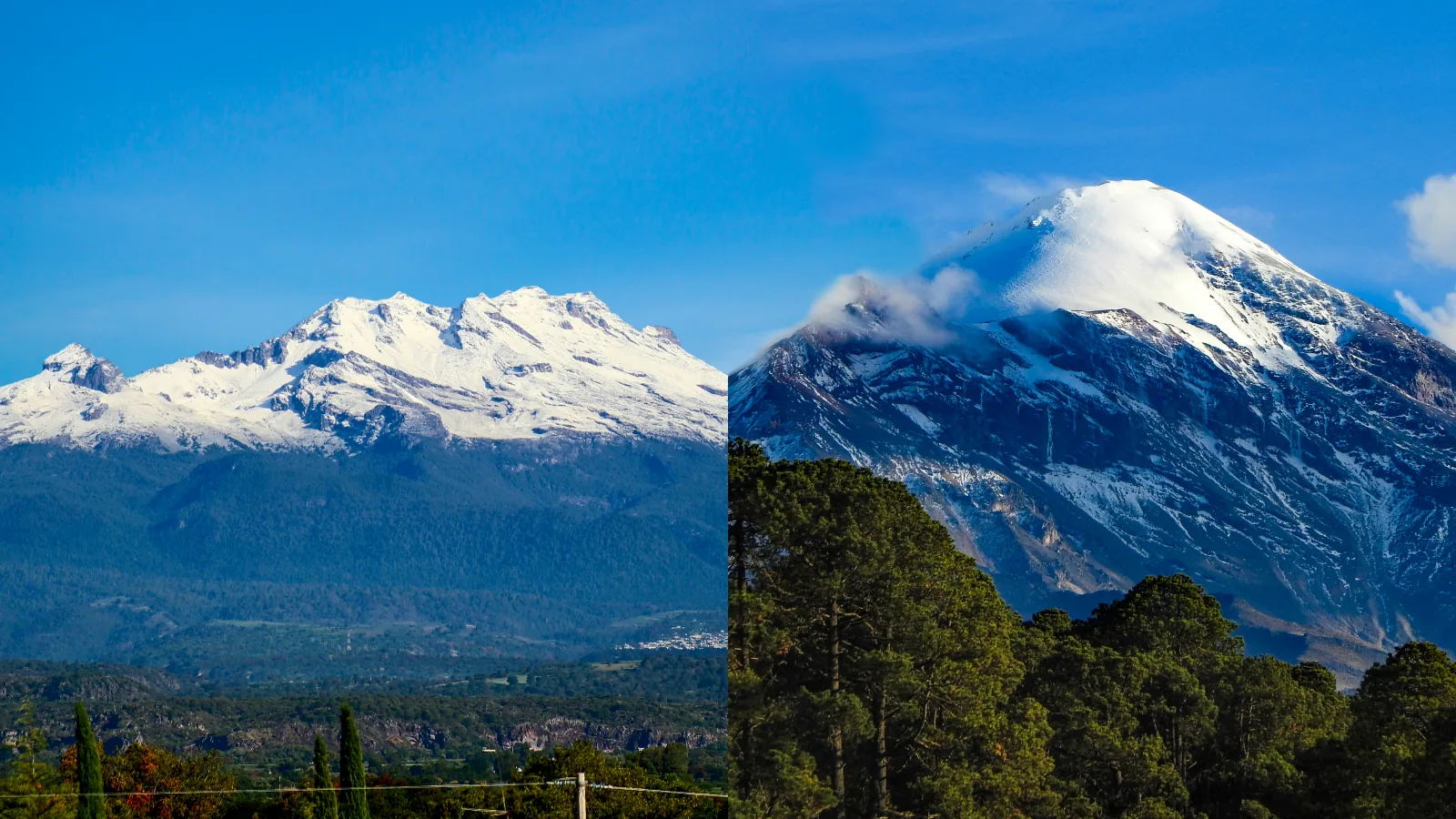
Mexico's central highlands sit at the intersection of ancient culture and extraordinary mountain terrain, a landscape where colonial towns and traditional markets share the valley floor with some of the highest peaks in North America. This nine-day expedition climbs two of the finest: Ixtaccihuatl at 17,340 feet, whose broad ridgeline and Arista del Sol route approach lead to an airy summit walk above Mexico City, and Orizaba at 18,491 feet, the crown jewel of the Mexican volcanoes and the third highest peak on the continent.
The program builds deliberately. An overnight acclimatization hike on La Malinche, an extinct volcano rising above the Puebla Valley, introduces the team to altitude before Ixtaccihuatl and sets the stage for Orizaba's Jamapa Glacier. The sequence is efficient without feeling rushed, with each objective preparing climbers physically and technically for the one that follows.
What makes this program distinctive is the combination of serious high-altitude climbing and genuine cultural immersion. Mexico City, the Puebla Valley, and the small towns of the country's heartland are not backdrops to the climbing. They are part of the experience, and the program is designed to move through them with enough time to take them in.

Mountaineering
At 20,310 feet, Mt. McKinley is the highest peak in North America and one of the most serious high-altitude objectives on the planet. The West Buttress is the standard route to the summit, and while it involves no technical rock or vertical ice climbing, that framing undersells the challenge: miles of glaciated terrain, extreme cold, sustained altitude above 14,000 feet, and weather that can pin a team for days at a stretch. This Ski Approach climbs the same route to the same summit, with two deliberate differences: a smaller team and the ability to move on skis.
On the lower and middle mountain the team travels on skis and skins, roped together for glacier travel, ascending as high as the 11,000 or 14,000-foot camp depending on conditions. Skiing spreads the load over the snow and, on the way down, lets the team ski the lower glaciers instead of walking them, cutting hours off the descent and reducing time spent in the most crevassed terrain. Above the ski line the climb continues on foot exactly as a standard West Buttress expedition does, including the fixed ropes on the steeper sections up high.
The team is capped at four climbers and two guides, a smaller group and a closer two-to-one ratio than a standard expedition, and as on all of RMI's Mt. McKinley programs there is no fixed fly-off date, so the schedule moves with conditions and acclimatization rather than a set calendar. This is a major commitment of time, fitness, and preparation, and it asks for one thing a standard climb does not: the ability to ski a wide range of off-piste snow with a heavy pack. Climbers who bring that background gain a faster, more efficient way to move on the lower mountain, and a genuinely different way to experience Mt. McKinley.


November 2, 2025
tempor incididunt ut labore et dolore magna aliqua. Ut enim ad minim veniam, quis nostrud exercitation ullamco laboris nisi ut aliquip ex ea commodo consequat. Duis aute irure dolor in reprehenderit in voluptate velit esse cillum dolore eu fugiat nulla pariatur.
-Name
Leadership
tempor incididunt ut labore et dolore magna aliqua. Ut enim ad minim veniam, quis nostrud exercitation ullamco laboris nisi ut aliquip ex ea commodo consequat. Duis aute irure dolor in reprehenderit in voluptate velit esse cillum dolore eu fugiat nulla pariatur.