


Written by RMI Expeditions Guide Sam Hoffman.
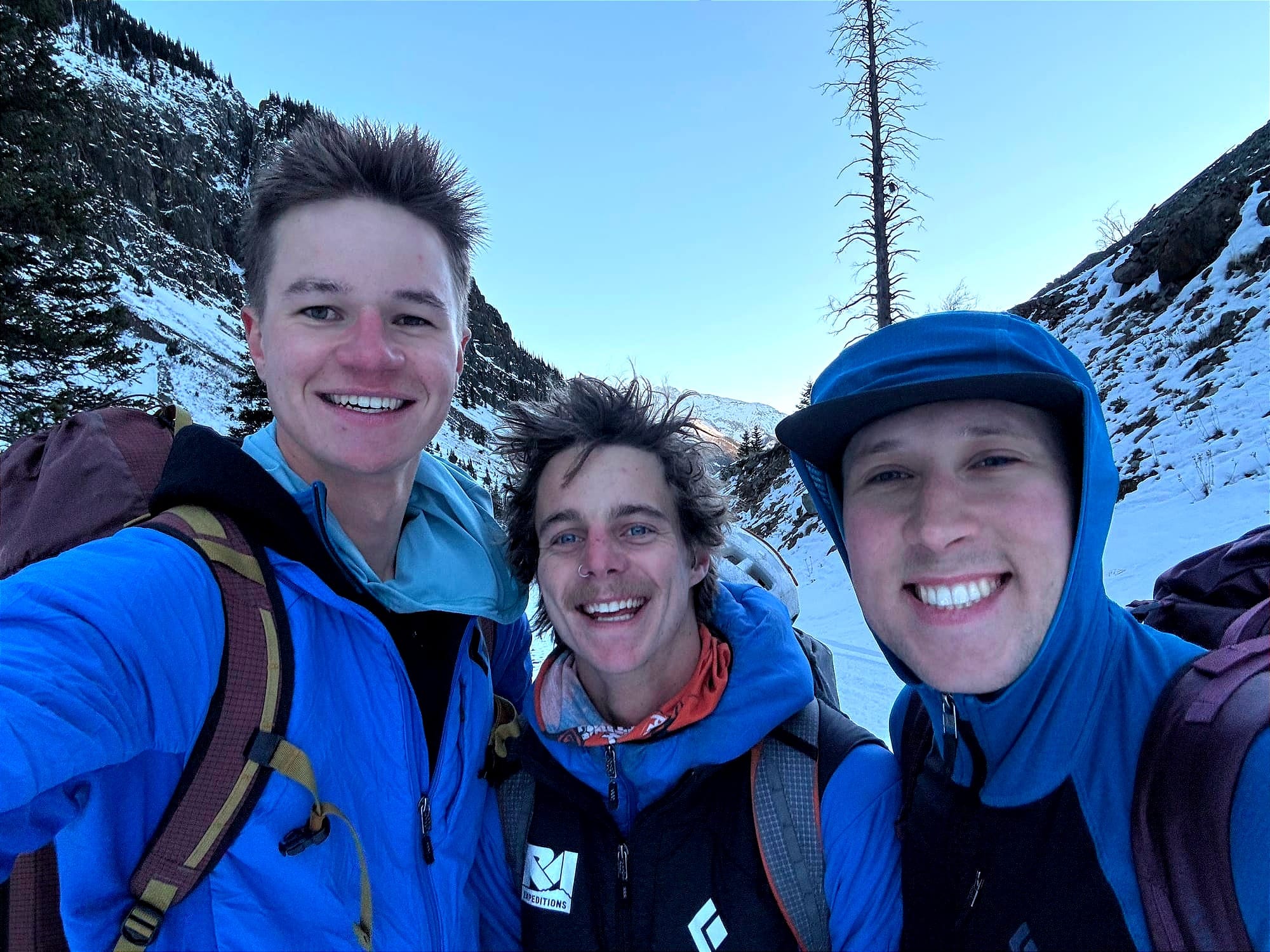
Earlier this winter, I had the opportunity to complete the American Mountain Guides Association (AMGA) Ice Instructor Course, a five-day immersion into the craft of teaching, guiding, and moving efficiently through technical ice and mixed terrain. I took the course alongside two RMI guides, Calvin Jiricko and Raymond Holt. This course is an important step in any alpine guides path for the pursuit of professional standards in guiding.
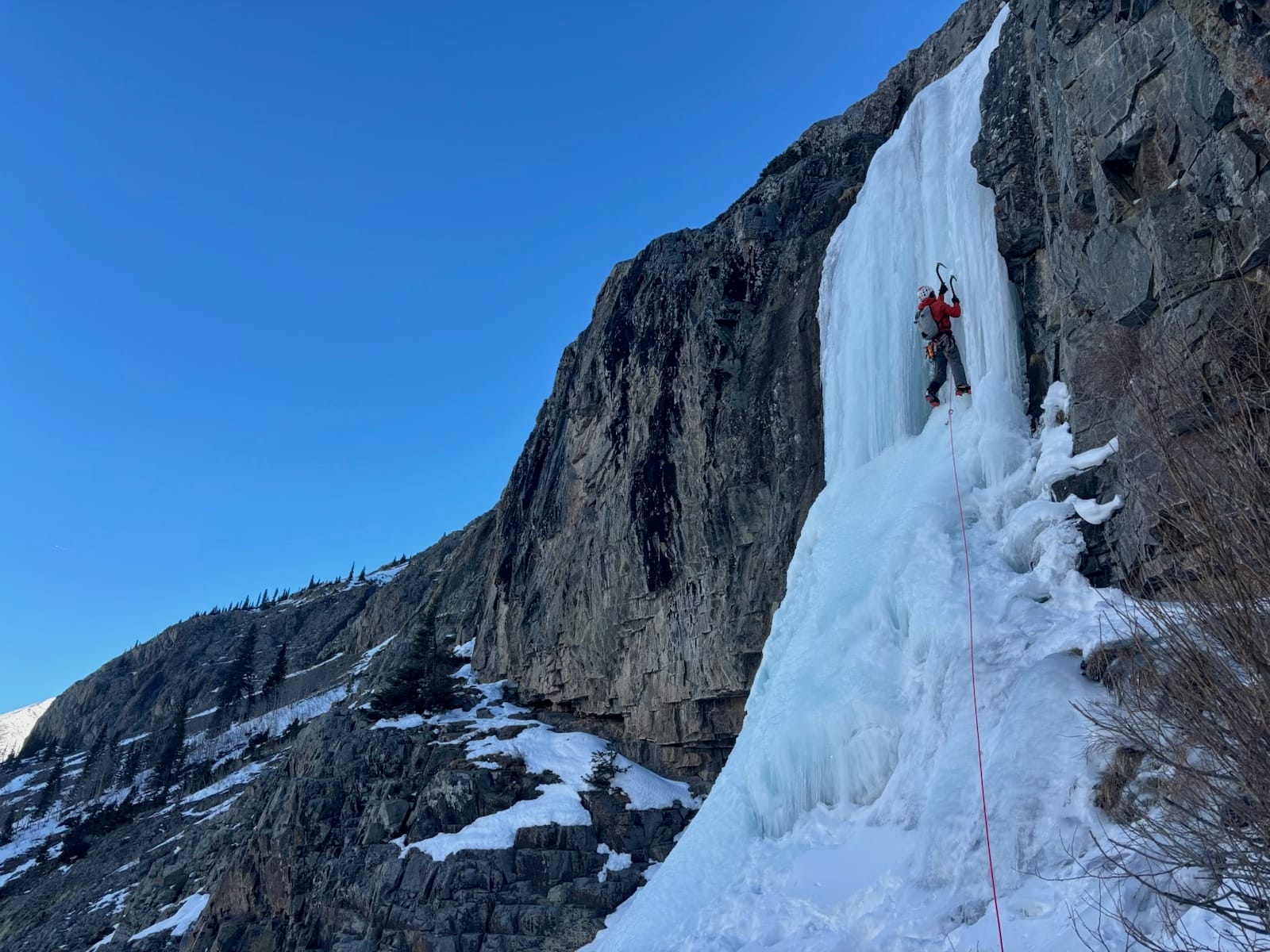
The course focused on the skills required to instruct and guide technical ice climbing at a high level. We spent our days refining systems for leading, belaying, and managing guests on steep ice, as well as practicing instructional techniques that translate complex movement and risk management into clear, effective teaching. Beyond individual skills, there was a strong emphasis on decision-making, terrain assessment, and adapting techniques to real-world objectives—the same objectives many of our guests aspire to climb.
We started with shorter mixed and dry-tooling routes along Camp Bird Road outside of Ouray, dialing in precise movement and efficient systems on steep, technical terrain. Drytooling and mixed climbing begs the question: Why are you rock climbing with ice-tools in your hands? While it seems silly from a far, this is an engaging climbing method that helps with body positioning and movement to climb larger objectives. As the week progressed, we transitioned to longer waterfall ice routes near Silverton, Colorado, climbing up to seven pitches in a day.
Throughout the week, it was impossible not to draw direct connections to classic routes that RMI guides regularly teach and guide. The techniques we practiced are directly applicable to climbs like the Kautz Glacier on Mount Rainier, the North Ridge of Mount Baker, and more technical objectives in the Alaska Range. The course reinforced how foundational ice skills support success on big mountain routes.
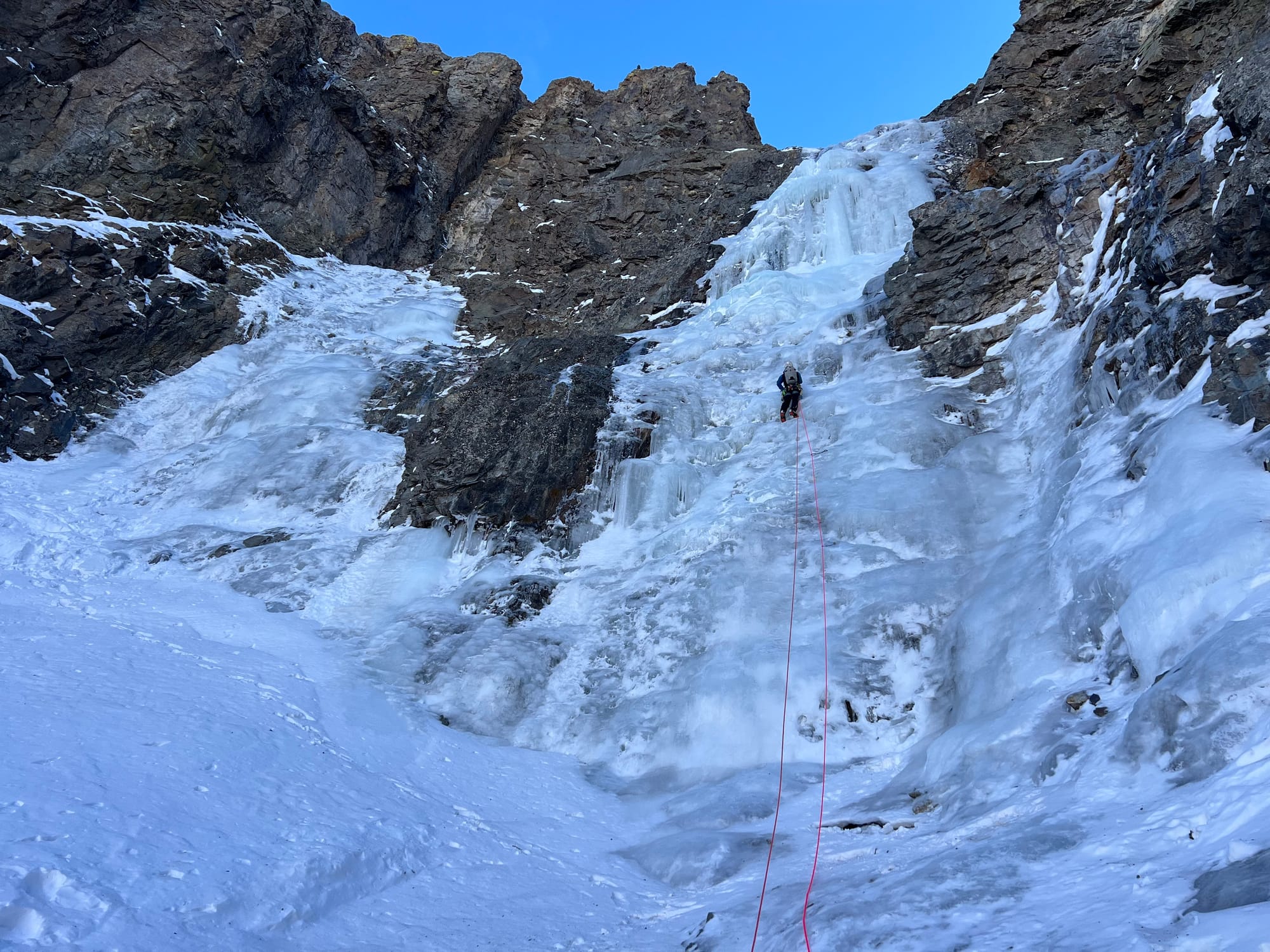
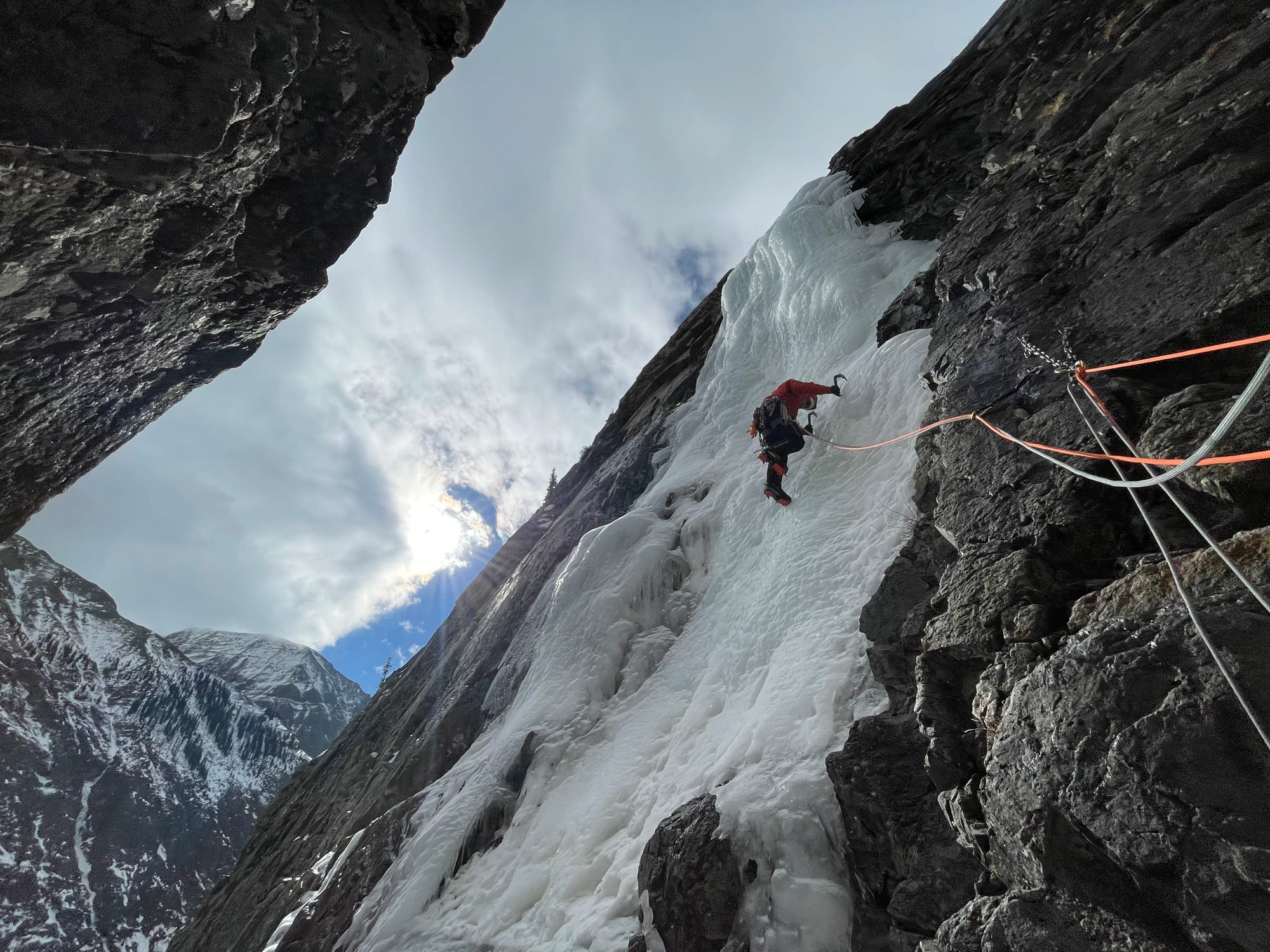
(Photos/Raymond Holt)
One of the most valuable aspects of the experience was working closely with other RMI guides. I feel lucky to work alongside side guides like Ray and Calvin who’s passion for the craft reflects that of RMI’s guide team. If you have been lucky enough to share the rope with these two, their character speaks for itself. When a member of the public joins an RMI program, they benefit from guides who are aligned not only in technical systems, but also in teaching philosophy and decision-making under pressure.
Weeks like this reinforce why I’m proud to be part of programs that value ongoing education and teamwork. A very big thank you to RMI’s management for the support, Colorado based RMI guides who helped us prepare and allowed us to stay with them for the duration of the course, and of course the AMGA Instructor Team.