



The mountains we climb are not ours to keep. They belong to the generations of climbers, hikers, and adventurers who will come after us. That's the foundational belief behind Leave No Trace, and it's one that RMI Expeditions has embraced, championed, and helped shape for more than two decades.
Leave No Trace (LNT) is a framework of outdoor ethics developed by the Leave No Trace Center for Outdoor Ethics, a national nonprofit dedicated to protecting the outdoors through education, research, and partnerships. Its Seven Principles provide practical, science-based guidance for minimizing human impact in any outdoor environment, from a local trail to the summit of Denali.
RMI and Leave No Trace: A Partnership Built on the Mountain

RMI's relationship with Leave No Trace goes far deeper than certification checkboxes. In the early 2000s, RMI's own Peter Whittaker completed a Leave No Trace Master Course and realized that established LNT principles didn't adequately address alpine environments. He got to work. RMI hosted a symposium bringing together concessionaires, climbing clubs like the Mazamas and Seattle Mountaineers, and park rangers to develop clear LNT guidelines for the Alpine Zone, protocols that are now applied on mountains worldwide.
That dedication led to RMI being recognized as the first Gold Standard Outfitter and Guide by the Leave No Trace Center for Outdoor Ethics. It's a distinction we're proud of, and one we work every single season to earn.
Today, that commitment shows up in concrete ways. All RMI guides must hold at least a Leave No Trace Level 1 Instructor certification; newly hired guides receive Level 2 training as part of onboarding. On Mt. Rainier, RMI guides contribute 40 volunteer days of Environmental Patrols each season, picking up trash, hauling out waste, and tracking progress by weight. RMI is currently the only guide service on Mount Rainier to conduct these environmental patrols. On Denali programs, an LNT Level 2 Instructor is staffed on every expedition, and Clean Mountain Cans are used to carry all solid human waste off the mountain.
RMI is also one of the few guiding services to offer a Leave No Trace Level 2 Instructor Course combined with a summit of Mount Baker, a five-day expedition that prepares participants to become LNT instructors themselves.

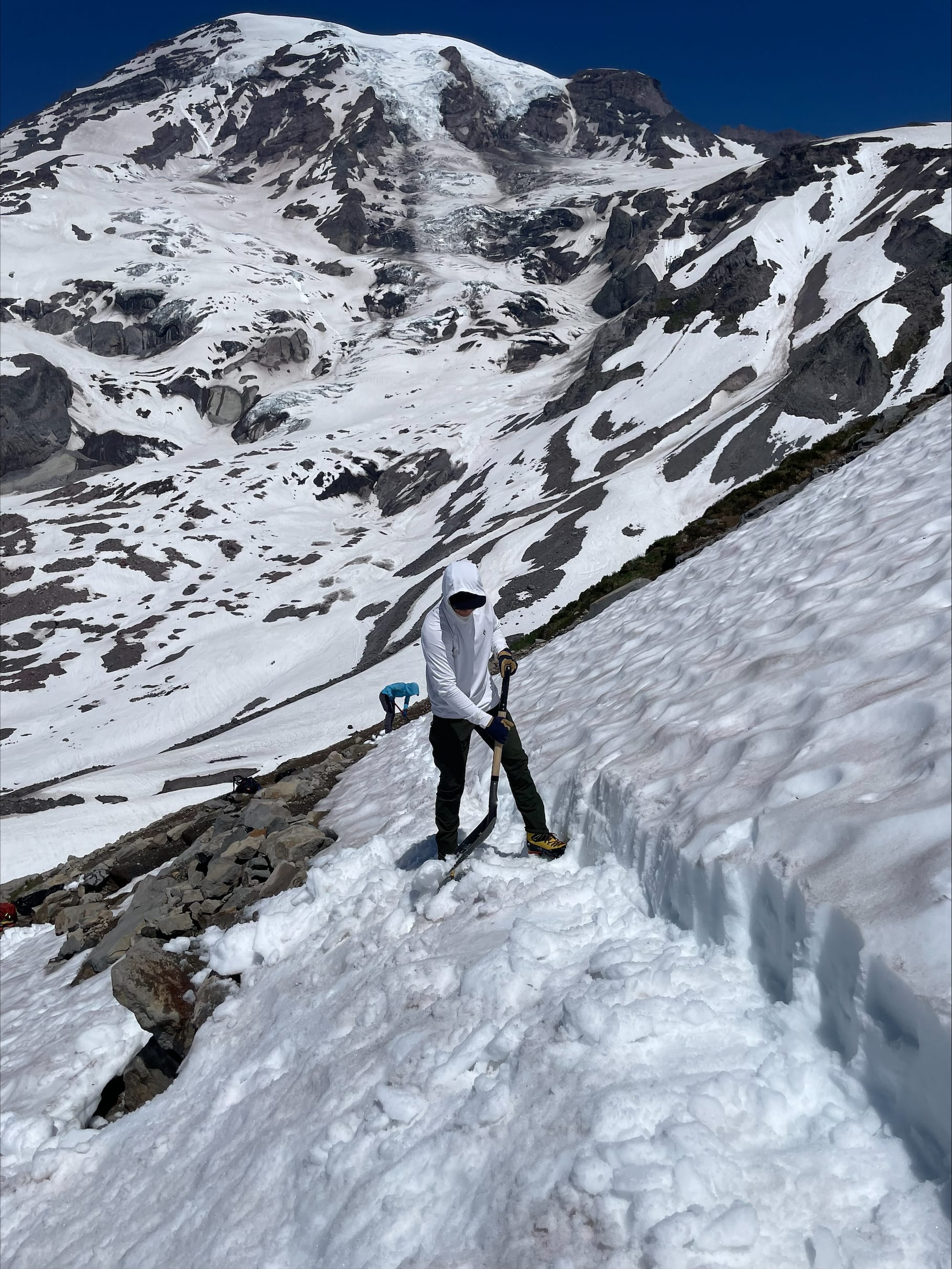
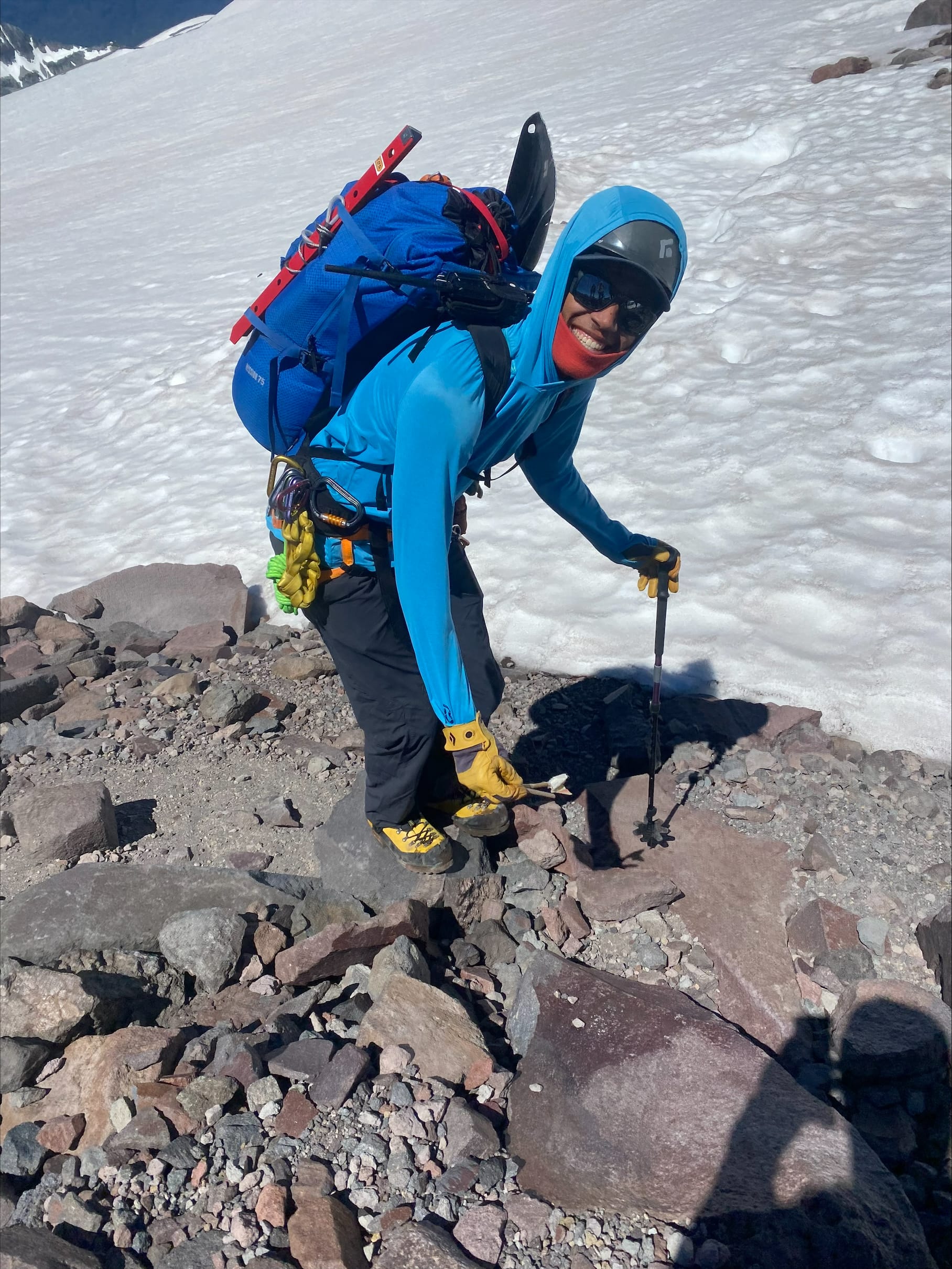
RMI Guides doing environmental patrols on Mount Rainier
Want the full story of RMI's sustainability legacy? Read: Leave No Trace: RMI's Sustainable Climbing Legacy
The Seven Principles
The Seven Principles of Leave No Trace aren't a set of rules handed down from above. They're a shared ethic, a way of moving through wild places with intention and care. Whether you're new to the outdoors or a seasoned alpinist, these principles apply everywhere you go. We've partnered with Leave No Trace to bring each one to life in the videos below.
Please note: The Principle of Travel and Camp on Durable Surfaces has been split into two videos.
1. Plan Ahead and Prepare
Good LNT practice begins before you ever set foot on the trail. Planning ahead means understanding the regulations and special concerns for the area you're visiting, preparing for extreme weather and emergencies, and scheduling your trip to avoid times of high use. It also means thinking carefully about food packaging, group size, and waste management before you leave home. The more intentional your preparation, the less impact you'll leave behind.
2. Travel and Camp on Durable Surfaces
In the mountains, where you put your feet and pitch your tent matters enormously. Durable surfaces like rock, gravel, dry grass, and snow can withstand repeated use without lasting damage. Fragile alpine vegetation, on the other hand, can take decades to recover from a single careless footstep. On established routes, concentrate use on existing trails and campsites. In pristine areas, spread out to avoid creating new impact zones.
3. Dispose of Waste Properly
Pack it in, pack it out. That applies to everything: food scraps, litter, and yes, human waste. In alpine environments, improper waste disposal contaminates water sources, spreads disease, and leaves a visual impact that degrades the experience for everyone who follows. On high-use peaks like Mt. Rainier and Denali, RMI requires the use of waste disposal systems, blue bags on Rainier and Clean Mountain Cans on Denali, to ensure nothing gets left behind.
4. Leave What You Find
The rock formation, the wildflower, the bleached bone on the glacier. Leave it exactly as you found it. Taking natural objects or disturbing historical structures removes something irreplaceable from the landscape. The principle extends to cultural and archaeological sites as well. Observe and photograph, but resist the urge to collect. The best souvenir is the memory.
5. Minimize Campfire Impacts
In alpine environments, campfires are rarely appropriate and often prohibited. Above treeline, there's no wood to burn, and the visual and ecological scars fires leave behind are long-lasting. Use a camp stove for cooking and a headlamp for light. Where fires are permitted at lower elevations, keep them small, use established fire rings, burn only small sticks found on the ground, and make sure the fire is completely out before you leave.
6. Respect Wildlife
Mountains are habitat for marmots, ravens, mountain goats, and dozens of other species that call the alpine zone home. Observe wildlife from a distance and never feed animals, even accidentally. Storing food and scented items properly protects both the wildlife and your group. Give animals space, especially during sensitive periods like nesting or denning season. On Rainier, that means being mindful of marmot burrows near popular campsites like Camp Muir.
7. Be Considerate of Other Visitors
The mountains are a shared space. Yield to uphill climbers on the trail, keep noise levels down, and be mindful of how your group's pace and behavior affects others on the route. In camp, maintain a respectful distance from other parties and keep communal areas clean. The goal is for everyone to have an experience worth returning for.
Leave No Trace isn't something you do once and check off a list. It's a practice, one that gets sharper the more time you spend in the mountains. Whether you're planning your first climb with RMI or your fifteenth, we encourage you to carry these principles with you on every trip, on every mountain, in every environment you're lucky enough to explore.
The mountains give us a lot. Let's give them back the same.


