Senior Guide
With RMI

Freedom, WI

Mount Hood

Playing drums and Ukulele, Kayaking, Backpacking with my dog, playing Pokémon, trail running, being a handyman.
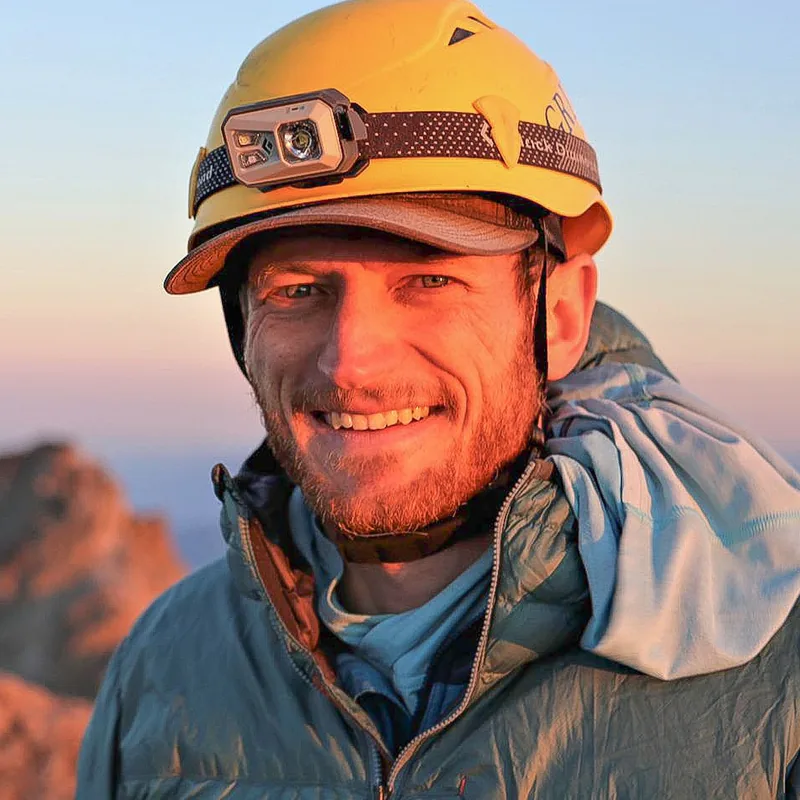
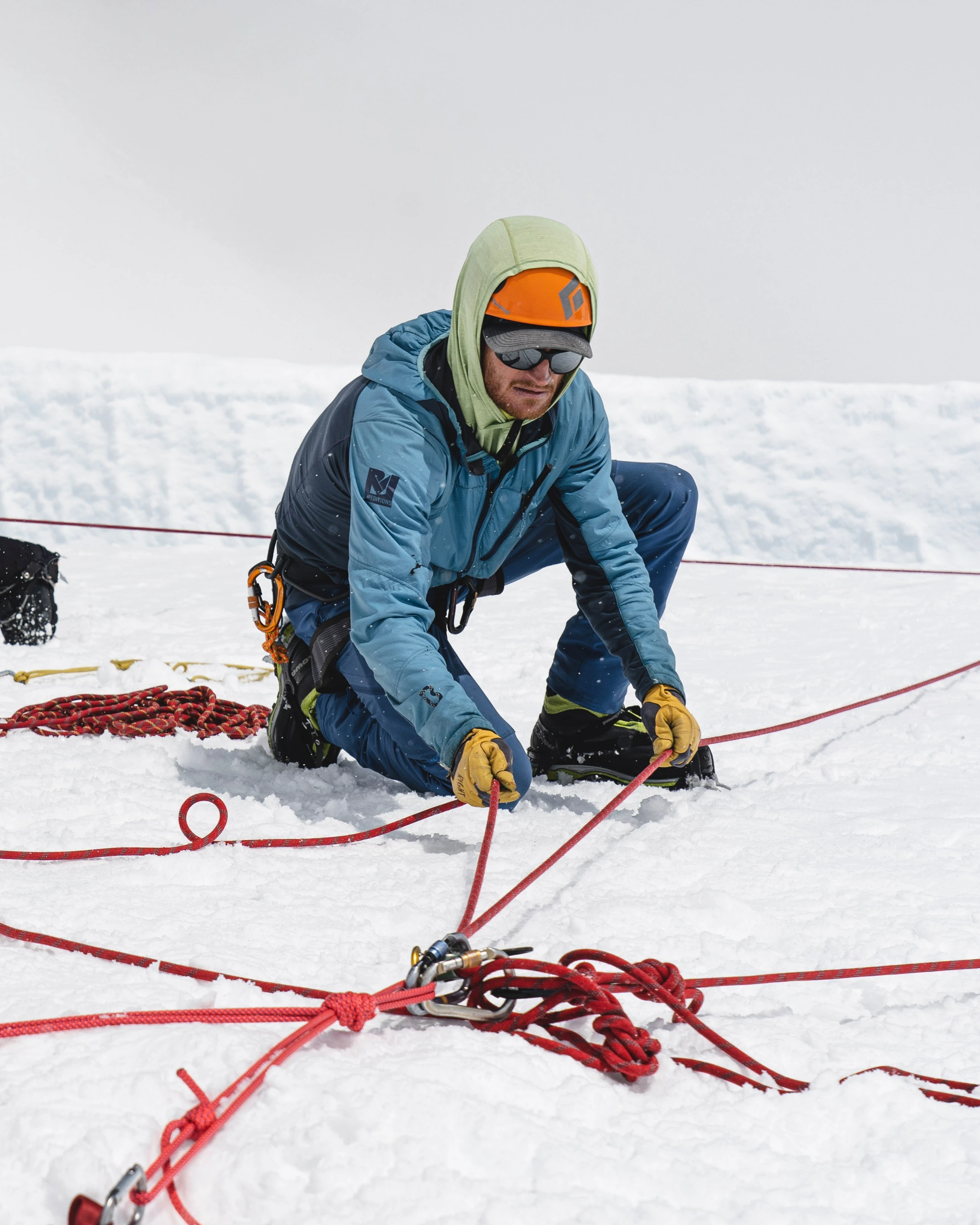
Born and raised in Freedom, WI, Ben grew up in the outdoors fishing, hunting, camping, kayaking, hiking, and backpacking. After completing college at UW-Madison with a BS in Landscape Architecture and a BS in Soils Science, he travelled and worked in California, Arizona, South Dakota, and Texas. Before long, he discovered that climbing and mountaineering was his true calling. Ben now travels and guides throughout the west coast, in Alaska, and internationally, setting up home wherever he decides to park his travel trailer for the season. Ben continues to develop and hone his skills with the goal to one day complete his full IFMGA certification. Always seeking adventure, Ben strives to be the best mountain guide he can be by making new connections, helping people obtain their goals, teaching others the skills he has learned, and sharing his love for the mountains.
Ben can always be found climbing new routes, trail running, rock climbing, ice climbing, snowboarding, or hiking and backpacking with friends. Whenever he is not climbing, his dog Echo is his companion. Echo likes long adventures out in the snow and string cheese (if you have any). Outside of spending time in the mountains, Ben enjoys playing the drums, going golfing, dancing, going on road trips, and meeting new people.
The best part of my job is the people I get to meet. I love making connections with climbers and learning about how they heard about Rainier and what or who got them to show up for it. Hearing about peoples’ training programs based on where they are from really intrigues me, and I love the ability to share stories with them. What puts a really big smile on my face is having people return for more trips, bigger trips, or second attempts. :)
Snowboarding, ice climbing, Rock climbing, travelling abroad or around the US, but mostly, spending time with my family.
I hope they learn something and they take away some kind of mountain sense. What I mean by that is this: Whether you have climbed a bunch and always made it to the top or it’s your first time, or you are trying Rainier because it’s the next big step, we all need to remember that we may have bad days, the mountain might say no, and we need to reflect and learn from what our experience was. Debriefing every climb or talking about how a climb went after we get home is a great way to do this and learn from one another as well as the mountain, so we always stay safe and always return home.
30+ | Mt. Rainier, Washington, USA | 14,410' (Ingraham Direct/Disappointment Cleaver, Kautz, Emmons & Gibraltar Ledges)
15+ | Mt. Hood, Oregon, USA | 11,249' (6 routes up to Grade IV)
Multiple | Mt. Baker, Washington, USA | 10,986' (Easton, Coleman-Deming & North Ridge)
Multiple | North Cascades Peaks (Forbidden Peak, Mt. Shuksan, Glacier Peak, others), Washington, USA
2 | Mt. McKinley, Alaska, USA | 20,310' (West Buttress expeditions)
1 | Kilimanjaro, Tanzania | 19,341' (Marangu Route)
1 | Aconcagua, Argentina | 22,837'
Multiple | Mt. Whitney, California, USA | 14,505' (Mountaineer’s Route, East Face & East Buttress)
Multiple | Alpine Climbing (Sierra Nevada, California, USA) | up to Grade V
Multiple | Rock & Ice Climbing (WA, OR, CO, WY, CA, NV, WI, AZ), USA | up to Grade IV
Multiple | Splitboarding (WA, OR, CO, CA), USA | up to 55°
RMI Expeditions Guides are required to hold a number of certifications, but many go above and beyond with their technical and outdoor training. We actively encourage (and provide funding for) our guides' continuing education.
November 2, 2025

Program Name
Lorem ipsum dolor sit amet, consectetur adipiscing elit. Suspendisse varius enim in eros elementum tristique. Duis cursus, mi quis viverra ornare, eros dolor interdum nulla, ut commodo diam libero vitae erat. Aenean faucibus nibh et justo cursus id rutrum lorem imperdiet. Nunc ut sem vitae risus tristique posuere.
- Name
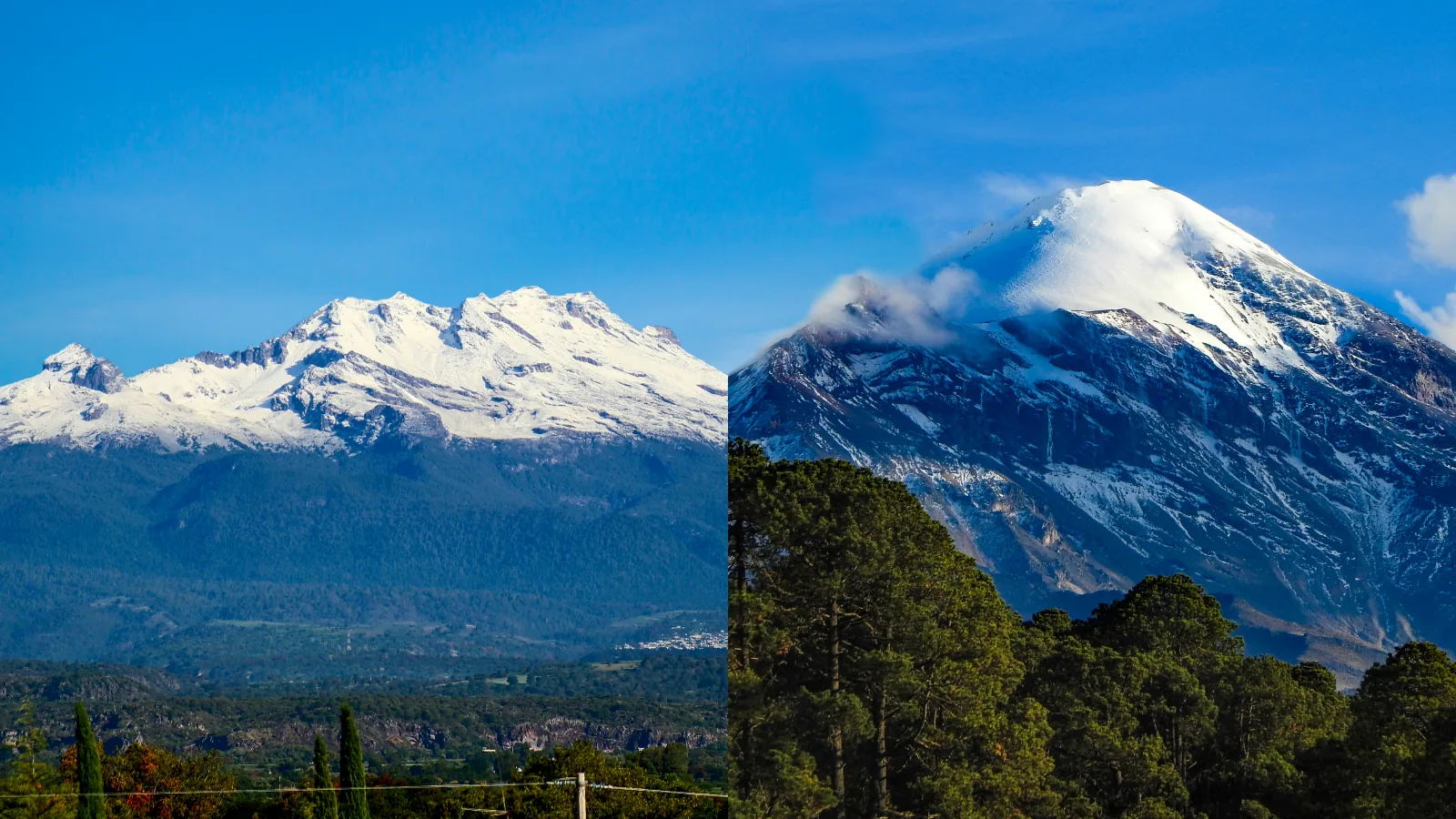
Mountaineering
Mexico's central highlands sit at the intersection of ancient culture and extraordinary mountain terrain, a landscape where colonial towns and traditional markets share the valley floor with some of the highest peaks in North America. This nine-day expedition climbs two of the finest: Ixtaccihuatl at 17,340 feet, whose broad ridgeline and Arista del Sol route approach lead to an airy summit walk above Mexico City, and Orizaba at 18,491 feet, the crown jewel of the Mexican volcanoes and the third highest peak on the continent.
The program builds deliberately. An overnight acclimatization hike on La Malinche, an extinct volcano rising above the Puebla Valley, introduces the team to altitude before Ixtaccihuatl and sets the stage for Orizaba's Jamapa Glacier. The sequence is efficient without feeling rushed, with each objective preparing climbers physically and technically for the one that follows.
What makes this program distinctive is the combination of serious high-altitude climbing and genuine cultural immersion. Mexico City, the Puebla Valley, and the small towns of the country's heartland are not backdrops to the climbing. They are part of the experience, and the program is designed to move through them with enough time to take them in.
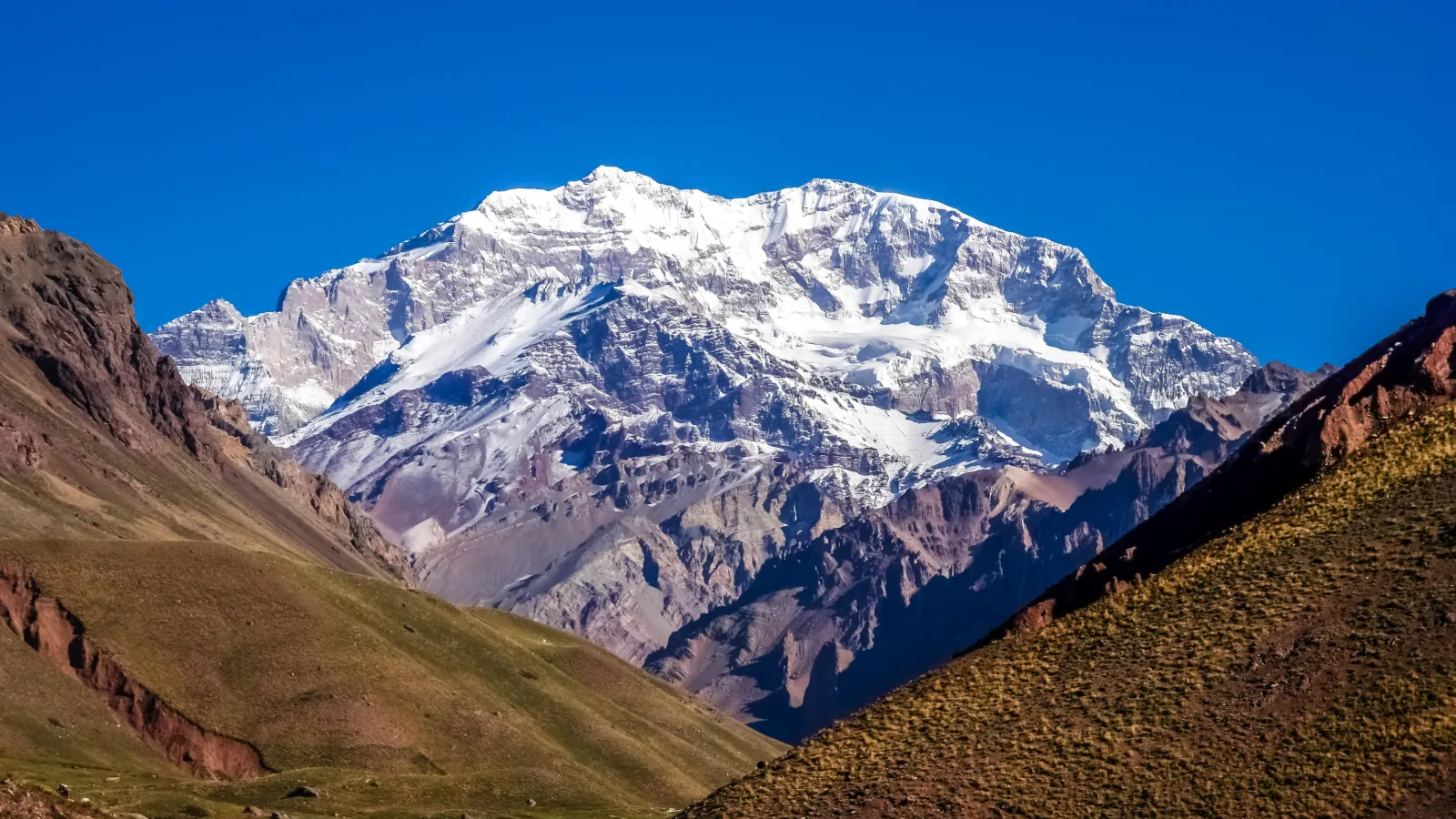
Mountaineering
Aconcagua pierces the sky above the rest of the Andes at 22,841 feet, the highest point in both the Western and Southern Hemispheres and one of the Seven Summits. It is a mountain that earns every foot of its elevation: the altitude is relentless, the weather is unpredictable, and the approach is a three-day trek through the winding Vacas Valley that gradually introduces climbers to the scale of what lies ahead. By the time Base Camp comes into view, the mountain has already made an impression.
RMI climbs the Guanacos Variation on Aconcagua's eastern side, a quieter and more aesthetic route that sees far fewer climbers than the standard approach. Three successive camps are established above Base Camp, navigating the mountain's sprawling rock moraines and towering snow penitentes on the way to high camp at 19,600 feet. The itinerary is built with acclimatization days and contingency time at each stage, because on a mountain of this altitude, patience and preparation determine outcomes more than anything else.
What separates this expedition from a standard high-altitude trek is the level of support RMI and Grajales Expeditions bring to the mountain. Fresh food and dining tents are maintained at Base Camp, medical staff are stationed on the mountain, and every logistical detail from airport transfers in Mendoza to equipment carried from the US is handled before climbers ever set foot on the glacier. The summit of Aconcagua is a serious objective. The experience of getting there should not feel like one.
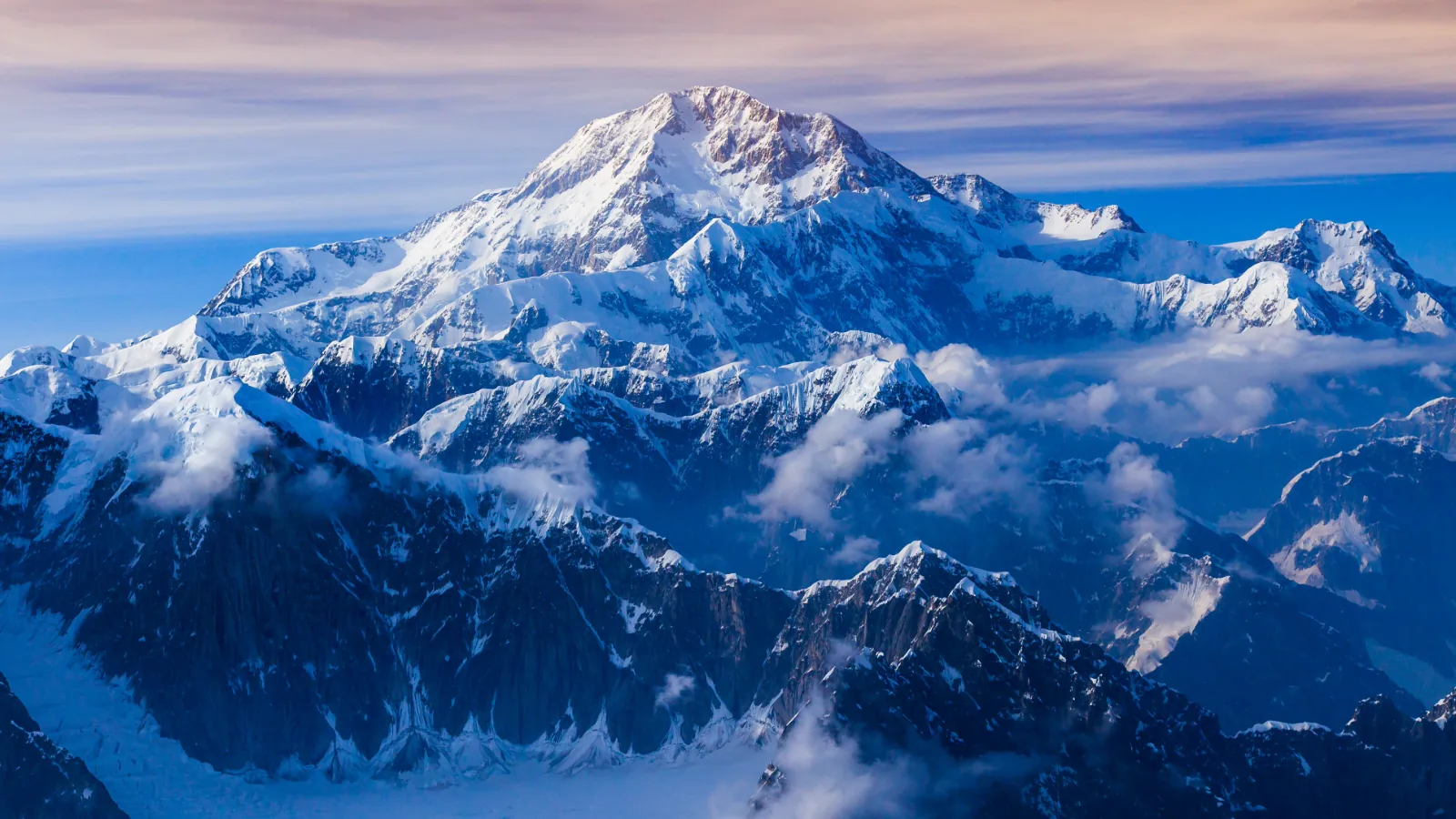
Mountaineering
At 20,310 feet, Mt. McKinley is the highest peak in North America and one of the most serious high-altitude objectives on the planet. The West Buttress is the standard route to the summit, and while it involves no technical rock or vertical ice climbing, that framing undersells the challenge. Miles of glaciated terrain, extreme cold, sustained altitude above 14,000 feet, and weather that can pin a team for days at a stretch are what define this climb. Above 15,000 feet the route steepens considerably, with fixed ropes on the most exposed sections. This is an expedition in every meaningful sense of the word.
Unlike most guide services operating on Mt. McKinley, RMI does not set a fixed end date for this program. The schedule moves with the mountain: conditions, acclimatization progress, and team readiness determine when the team pushes higher and when it waits. That flexibility is not a convenience; it is the approach that gives climbers the best realistic chance at the summit. Guides monitor performance and altitude response throughout, adjusting pace and plans as the situation demands rather than against an arbitrary calendar.
The West Buttress Expedition is a major commitment of time, fitness, and preparation. Climbers should expect to be on the mountain for three weeks or more and should arrive ready for the full weight of that. The mountain sets the terms here, and the program is built around accepting that.


November 2, 2025
tempor incididunt ut labore et dolore magna aliqua. Ut enim ad minim veniam, quis nostrud exercitation ullamco laboris nisi ut aliquip ex ea commodo consequat. Duis aute irure dolor in reprehenderit in voluptate velit esse cillum dolore eu fugiat nulla pariatur.
-Name
Leadership
tempor incididunt ut labore et dolore magna aliqua. Ut enim ad minim veniam, quis nostrud exercitation ullamco laboris nisi ut aliquip ex ea commodo consequat. Duis aute irure dolor in reprehenderit in voluptate velit esse cillum dolore eu fugiat nulla pariatur.