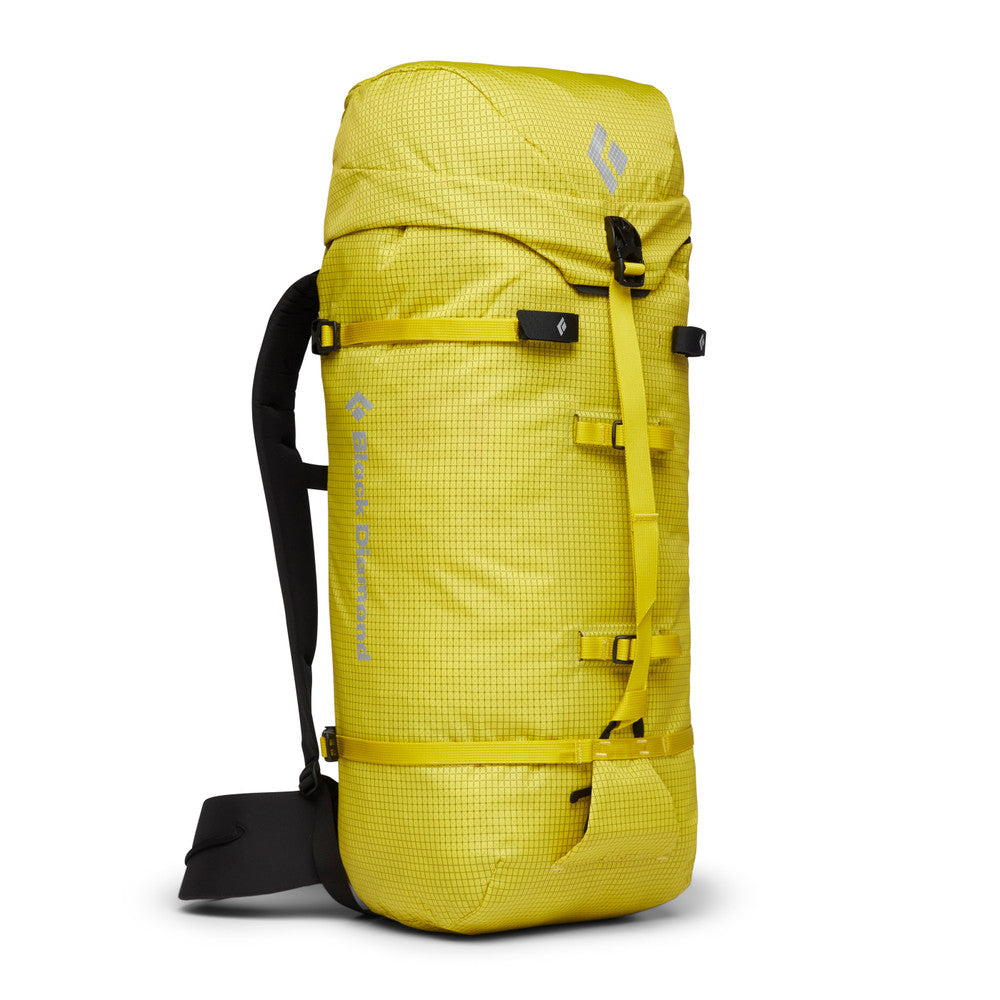
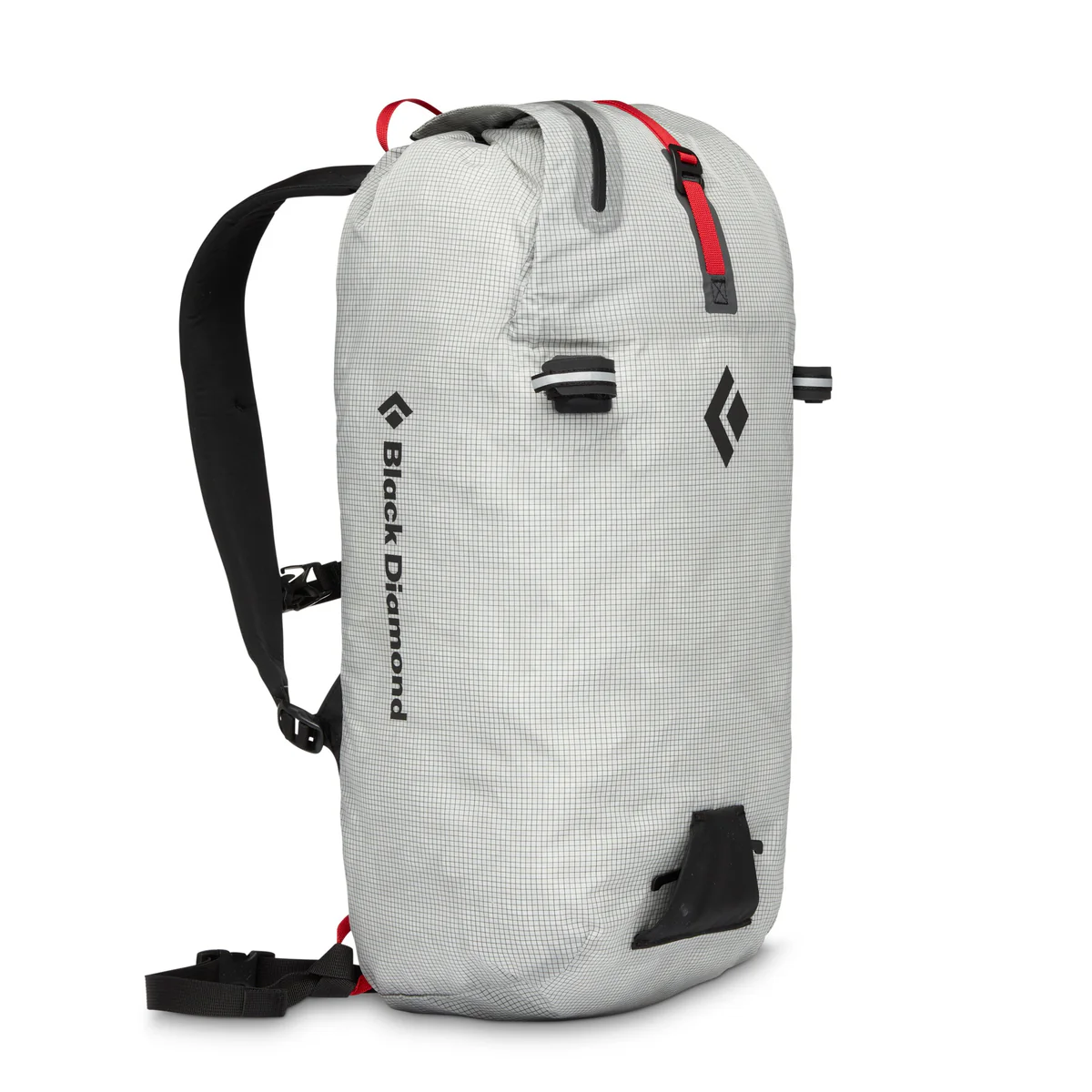
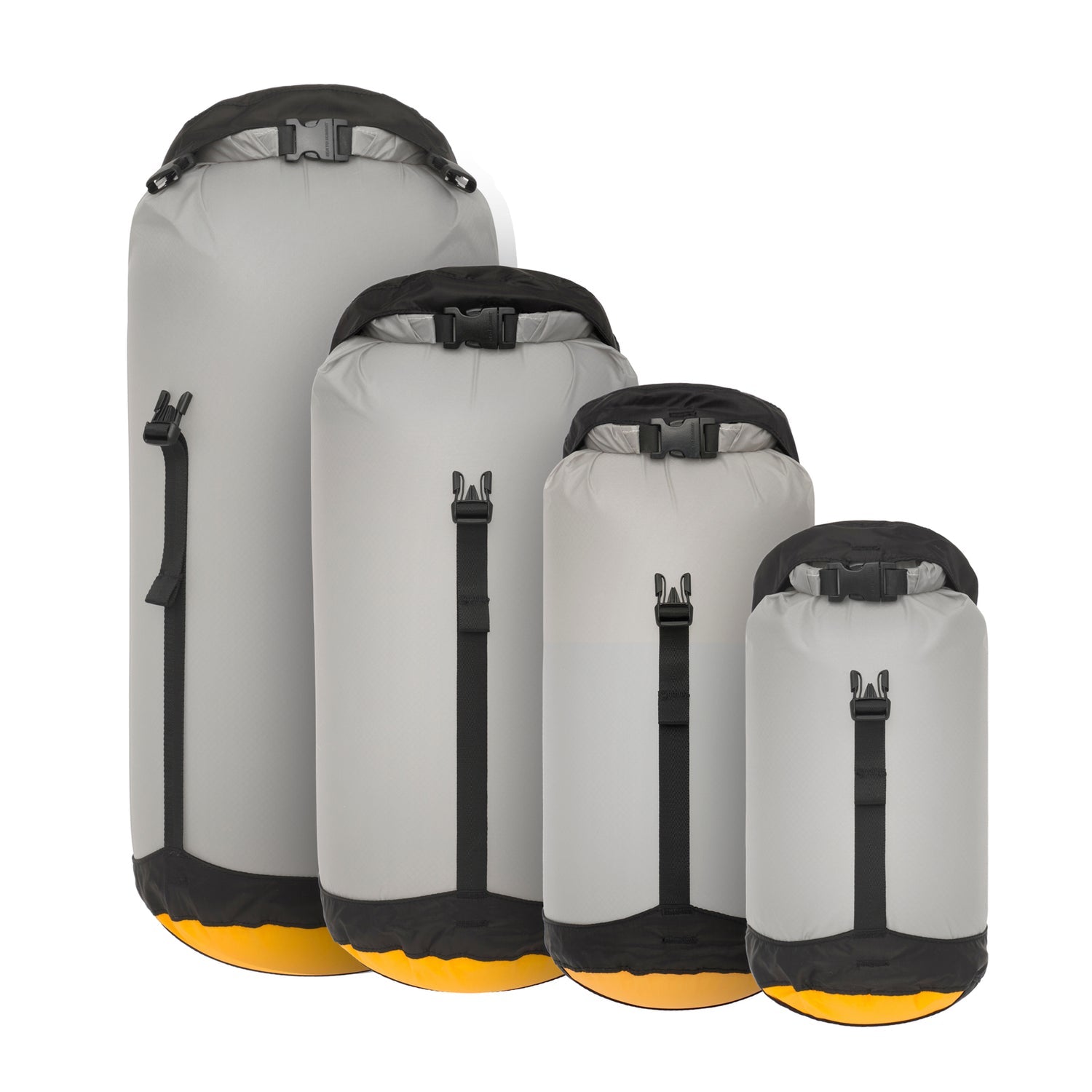
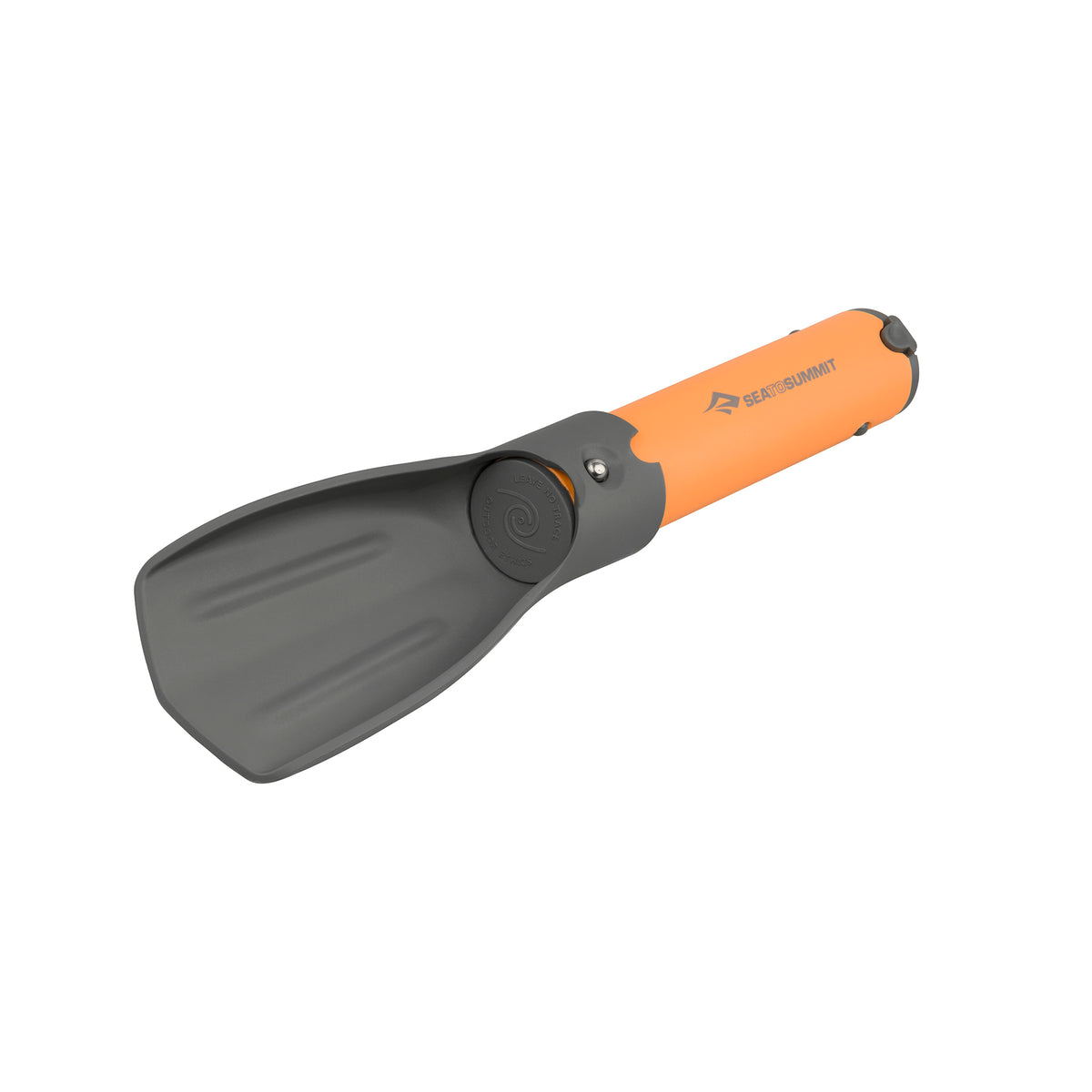
30+ Liter Backpack
A mid-sized pack for carrying personal gear, layers, food, and water during the climb. Can also serve as carry-on luggage and for sightseeing.

4 Days
|
Skill Development
|
$1,050
|
$400
Deposit
|
Novice


A four-day field-based course combining the full Leave No Trace Level 2 curriculum with RMI's specialized expertise in alpine and glacier environments.
Day-by-day program overview.
Fitness, experience, and preparation.
Gear requirements for this program.
Meals and nutrition on the mountain.
Getting there and local logistics.
Booking, cancellations, and requirements.
Common questions, direct answers.
What climbers are saying.

Four days of instruction that qualify you to teach and certify others as Leave No Trace Level 1 Instructors.

Beyond the standard curriculum, you work through Leave No Trace practices specific to glaciers, snow, and fragile alpine terrain.

Instruction moves from RMI's Mountain Haus classroom to camp in the forest behind BaseCamp and field days inside Mount Rainier National Park.
The Leave No Trace Level 2 Instructor Course is a four-day certification program for the people who shape how others use the outdoors: educators, guides, land managers, and recreation leaders. It combines the full Level 2 curriculum, the same standard recognized across the outdoor industry, with the alpine expertise RMI has built on Mount Rainier, so you leave qualified to teach and certify Level 1 Instructors for your own institution or program.
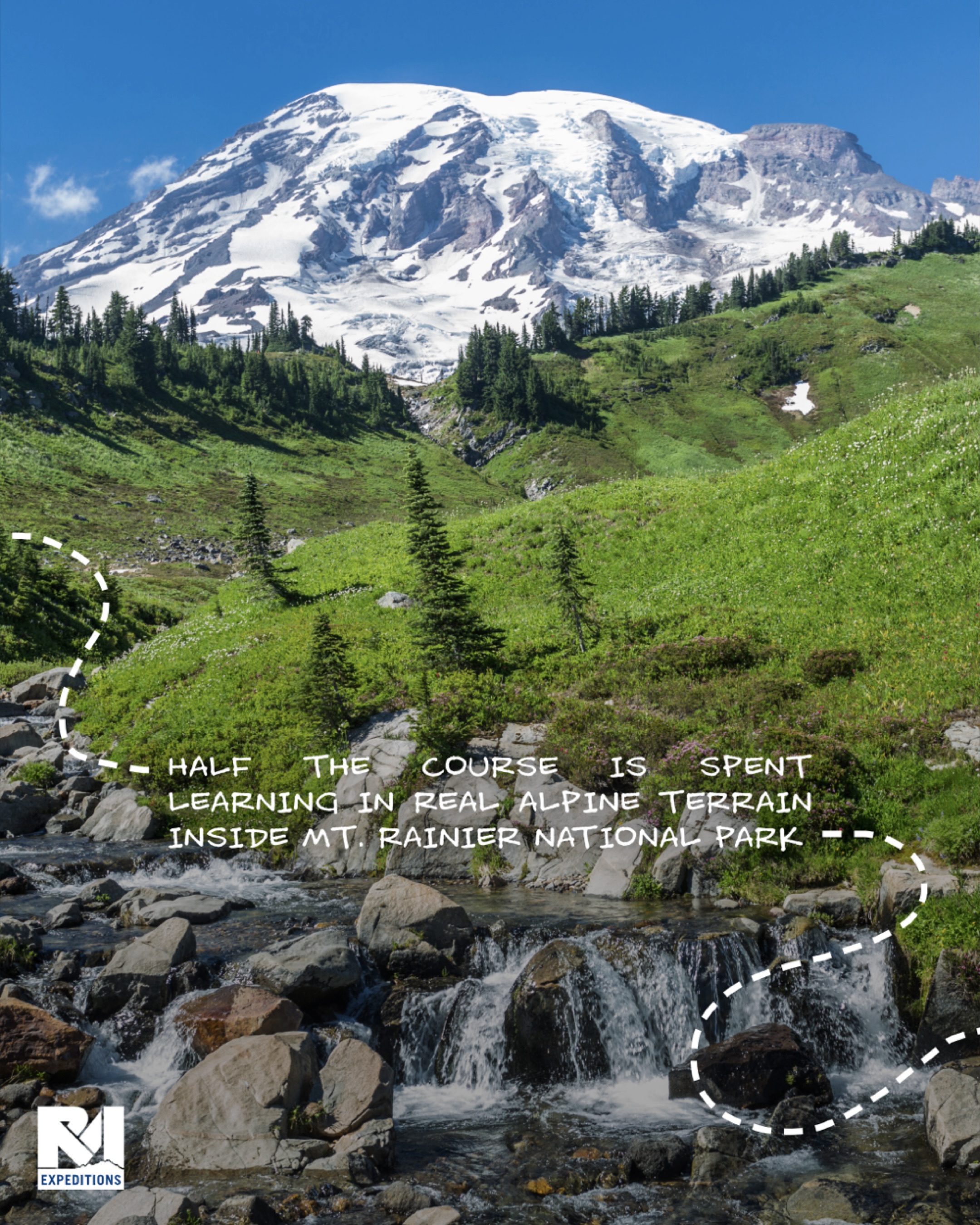
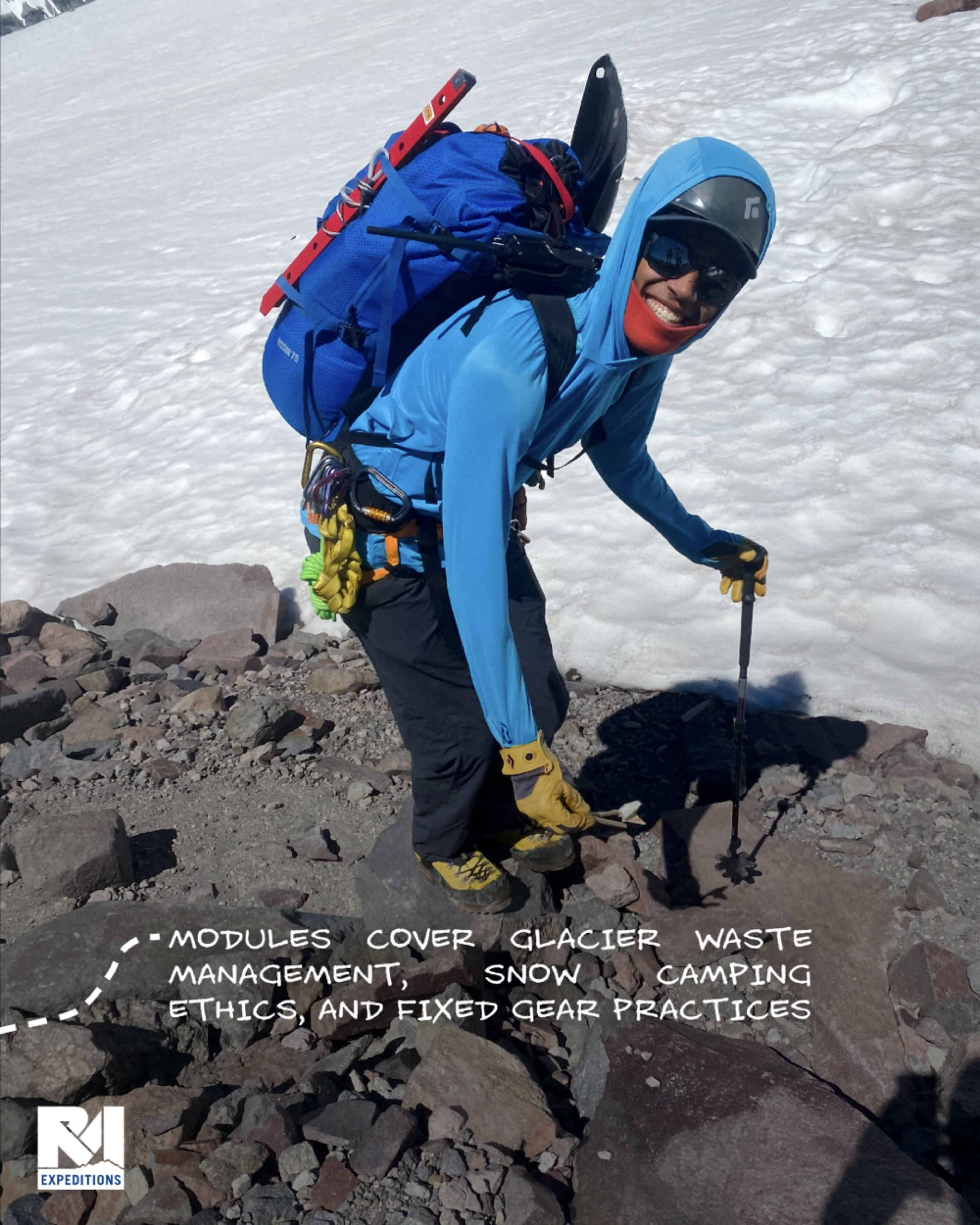
What sets this course apart is where the teaching happens. Most Leave No Trace instructor training stays in frontcountry and backcountry settings; here, half the course moves into real alpine terrain inside Mount Rainier National Park, where you work through the questions that only come up on snow and ice: waste management on a glacier, camping on durable snow, fixed-gear and anchor ethics, and travel through fragile high-elevation environments. RMI's decades of guiding on Rainier are what make that alpine module possible.
You leave with more than a card. You leave with a credential recognized worldwide, a personal Leave No Trace action plan built for your own organization, and real practice teaching these principles in the kind of terrain where the stakes are highest.
RMI helped write the book on Leave No Trace in the alpine zone - literally. In the early 2000s, recognizing a gap in established principles for high-elevation and glaciated environments, RMI's Peter Whittaker completed a Leave No Trace Master Course and convened a symposium bringing together concessionaires, climbing clubs, and National Park Service rangers to establish formal guidelines for alpine Leave No Trace practice. That work resulted in the official Leave No Trace Alpine Zone protocols now used worldwide. RMI was subsequently recognized as the first guide service to earn the Leave No Trace Gold Standard Outfitter and Guide designation. This course exists because of that history.
Operating inside Mount Rainier National Park for decades under strict NPS oversight, RMI manages high-use glaciated terrain as part of its daily guiding work - not as a classroom exercise. All RMI guides carry Leave No Trace Level 1 certifications, and every McKinley expedition includes at least one guide with Level 2 certification. RMI conducts annual environmental patrols on Rainier, is the only guide service on the mountain to do so, and has operated carbon-neutral McKinley expeditions since 2002. The alpine modules in this course reflect that operational depth, not what a standard curriculum extrapolates from frontcountry principles.
Risk management and participant security are built into RMI's approach to all field programs, including this one. Field days inside the park are led by certified guides with current wilderness medicine training, and course logistics are planned with appropriate margins for weather and terrain variability. To learn more about RMI's guiding history and environmental stewardship, visit our Responsible Climbing page.
Rainier Mountaineering, Inc. is an authorized Concessioner of the National Park Service, Department of the Interior. Rainier Mountaineering, Inc. is authorized to provide guided mountaineering services, mountaineering day school, alpine training, and guided winter activities within Mount Rainier National Park.
Address comments to:
Superintendent | Mount Rainier National Park
55210 238th Avenue East
Ashford, WA 98304
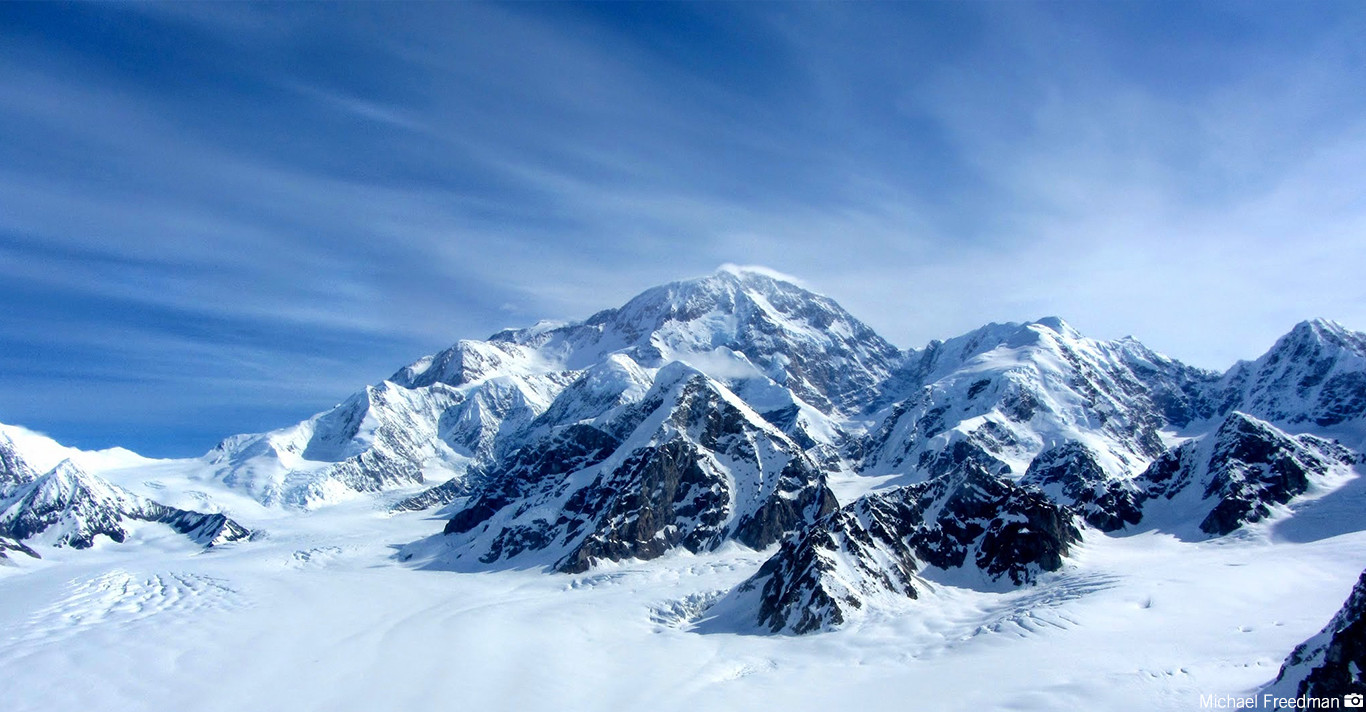

All our climbs in Mt. Rainier & Denali National Parks are 100% carbon neutral. We have acquired offsets for greenhouse gas emissions through our partnership with Ostrom Climate, Canada's top carbon management solutions provider. Their carbon offset projects undergo rigorous verification by third parties to validate that emission reductions are genuine and permanent, ensuring that our contribution is making a tangible impact.
The course opens at RMI's BaseCamp in Ashford with classroom sessions and front-country practice, then shifts into the field for hands-on teaching in Mount Rainier's alpine terrain. Days move between structured instruction, student-led lessons, and applied practice, building toward final teaching presentations and certification.
Ashford, WA (Rainier BaseCamp)
Golden Gate Zone, Mount Rainier National Park
4 Days
Leave No Trace Level 2 Instructor
5:1 Max
Tents
Skills in this course are taught the way RMI teaches everywhere on Mount Rainier: hands-on, in the field, with repeated practice at teaching each principle rather than just learning it. Because the course is built to certify instructors, much of the work is learning to explain and demonstrate Leave No Trace, not only to apply it yourself.
By the end of the course, participants will have practical experience with:
The course begins at RMI's Mountain Haus with welcome, introductions, and a full orientation to the Leave No Trace Level 2 curriculum. The day moves through the history and mission of Leave No Trace, an overview of the Seven Principles in depth, and an introduction to teaching methods and lesson planning. In the evening, the group transitions to the forest behind BaseCamp for camp setup and an orientation to the camping area that will serve as a practical teaching environment throughout the course.
Transportation is provided from BaseCamp to the Mount Rainier National Park trailhead. The day is spent in the Golden Gate zone with alpine-specific field modules covering glacier waste systems, blue bag management, snow anchor and fixed gear ethics, and group travel in fragile alpine terrain. Participants lead student-taught alpine sessions in the afternoon. The evening returns to the campsite for action plan development and a campfire ethics discussion.
.jpeg)
.png)
The morning returns to the Mountain Haus for student-led lessons and continued curriculum modules, with participants taking turns leading sessions and receiving structured feedback. The afternoon shifts to the forest behind BaseCamp for practical field sessions covering waste management systems, travel on durable surfaces, and group teaching practice in a real outdoor setting. The evening is reserved for group discussion and preparation for the final alpine field day.
The morning begins with a second alpine field session inside the park, focused on impact assessment, wildlife ethics, and alpine vegetation studies. The group returns to the campsite for closing lessons, final student teaching presentations, and action plan sharing. Course evaluations are completed and Leave No Trace Level 2 Instructor Certifications are awarded before the program concludes by 4:00 p.m.

You should be comfortable carrying a day pack of roughly 20 pounds on alpine trails for four to six hours at a time, camping for three nights, and generally fit for full days of outdoor activity.

No climbing experience is required. Prior backpacking or camping experience is recommended, since the course includes nights camping and field days in alpine terrain.

Field sessions take place in Mount Rainier's Golden Gate zone at moderate elevations that do not require prior altitude experience.
The Leave No Trace Level 2 Instructor Course is open to anyone 18 or older, and no climbing background is needed to take part. What the course does ask for is physical readiness for its field days: you will carry a day pack of roughly 20 pounds on alpine trails for several hours at a time and camp out for three nights, so you should arrive in good general condition and prepared to be on your feet through full days outdoors. Prior backpacking experience is not required, but it helps, since much of the learning happens while you are living and teaching in the field rather than sitting in a classroom. If you can handle sustained days of walking and camping with a day pack, you are ready for the physical side of this course and can put your attention where it belongs, on the curriculum and your own teaching.
Recommended climbing experiences include:
Your climbing resumé should include:

Comfortable carrying a 20 lb day pack for 4 to 6 hours
Able to camp outdoors for multiple nights
General fitness for full days of outdoor activity
Prior backpacking experience (recommended)
Interest in teaching Leave No Trace principles
Items marked with an Asterix (*) are considered mandatory prerequisites for this program.
Our guides have decades of experience training for alpine objectives, and we've done our best to put together relevant resources to help you with your expedition preparation.
Mountaineering is both an individual challenge and a team endeavor. Before any program begins, RMI works directly with prospective climbers to confirm that everyone joining a team is genuinely prepared for the demands ahead. Depending on the program, this may involve conversations with our office staff, a review of your climbing history, or feedback from guides and other climbers who know your abilities. The goal is straightforward: to ensure that every person on the rope belongs there. We ask that each climber hold themselves to the same standard:
The standards we set exist to protect everyone on the team. RMI holds all climbers accountable to them, and we take seriously our responsibility to build teams of people who are ready to be in the mountains together. RMI reserves the right to remove a participant from a program or send them to a lower altitude if our guide staff determines, in their sole discretion, that the participant is not physically, technically, or psychologically prepared or capable of participating, or for any other reason that may compromise the safety, health, or well-being of the participant or the group. In such cases, no refunds or credits will be issued, and the participant will be financially responsible for any additional costs associated with an early departure, including evacuation, transportation, lodging, and meals.
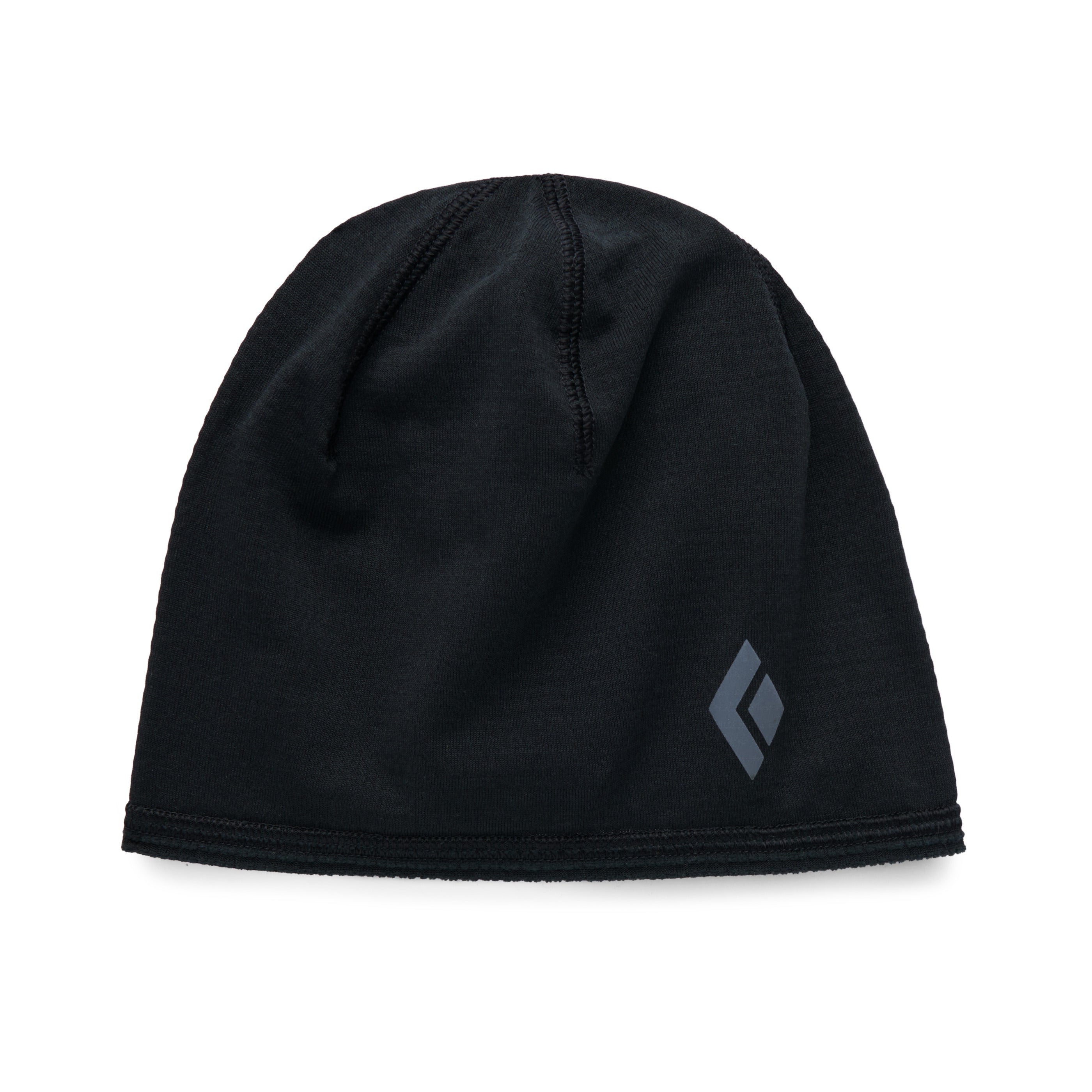
The Leave No Trace Level 2 Instructor Course calls for a straightforward personal kit built around camping and full days in the field rather than technical climbing gear. Plan for standard layering for cool fall weather on Mount Rainier, sturdy footwear for alpine trails, a day pack sized for a full field day (roughly 20 pounds loaded), and your own camping equipment for nights in the forest behind BaseCamp. RMI provides tents and group camping equipment along with the classroom facilities at the Mountain Haus.
A full equipment list is provided ahead of the course. This list reflects decades of RMI experience operating on and around Mount Rainier, and every participant refines their kit over time. Not every item will be used every day, but everything on the list should be brought and ready for the field days inside the national park.
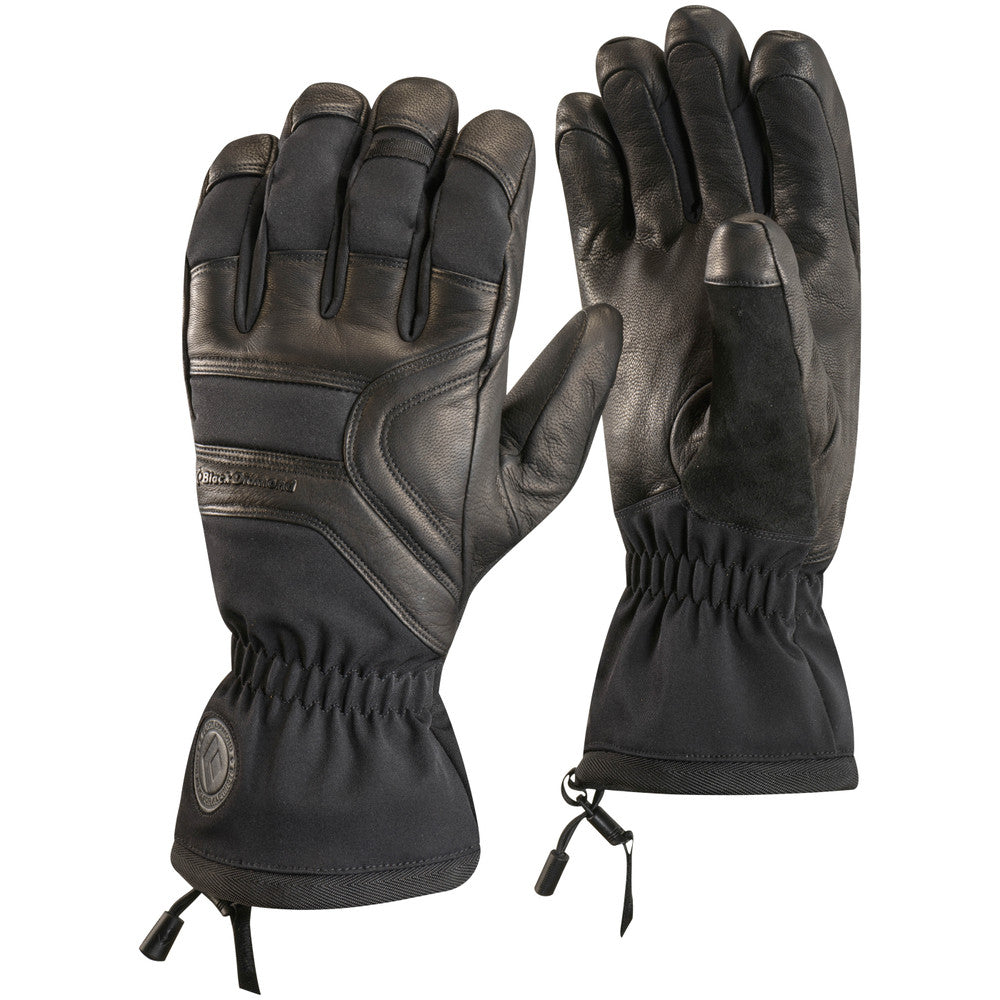
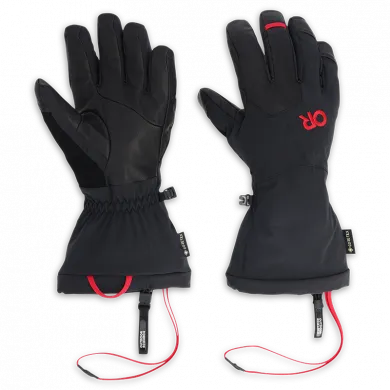
Each RMI program includes a required personal equipment list built around the specific terrain, conditions, and objectives of the climb. Every item serves a purpose and supports safety, efficiency, and comfort in the mountains.
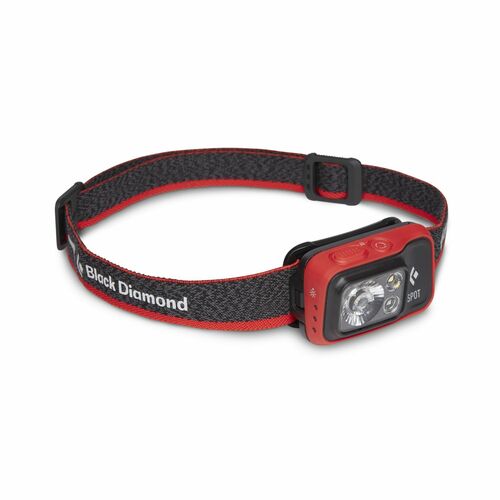
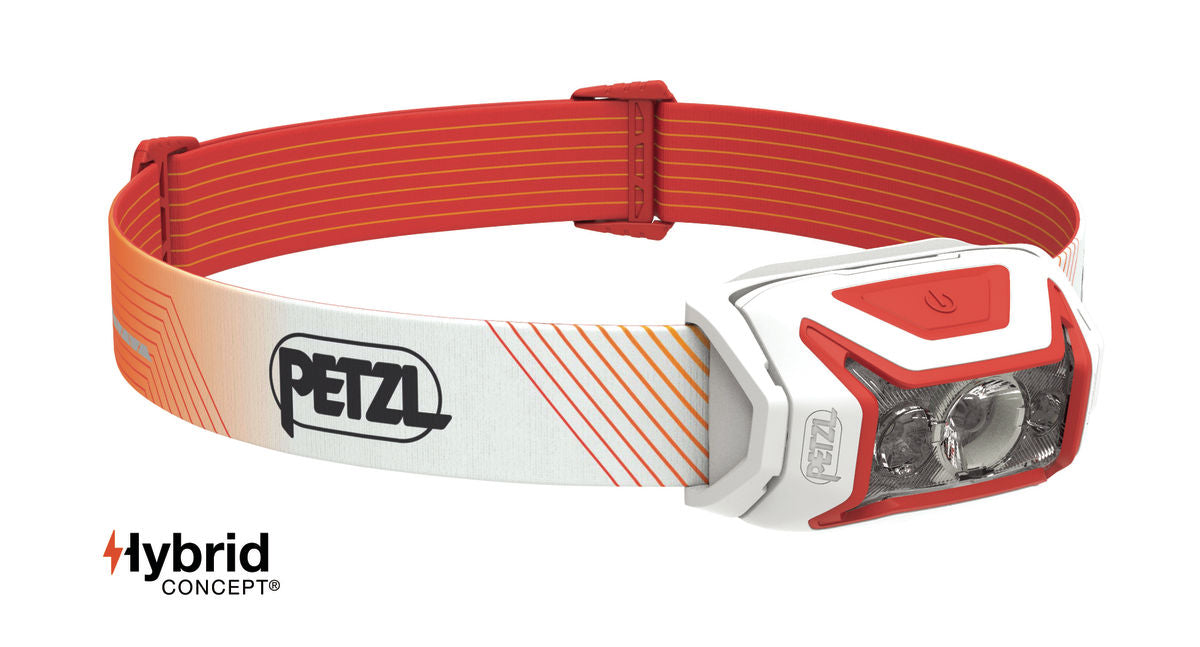
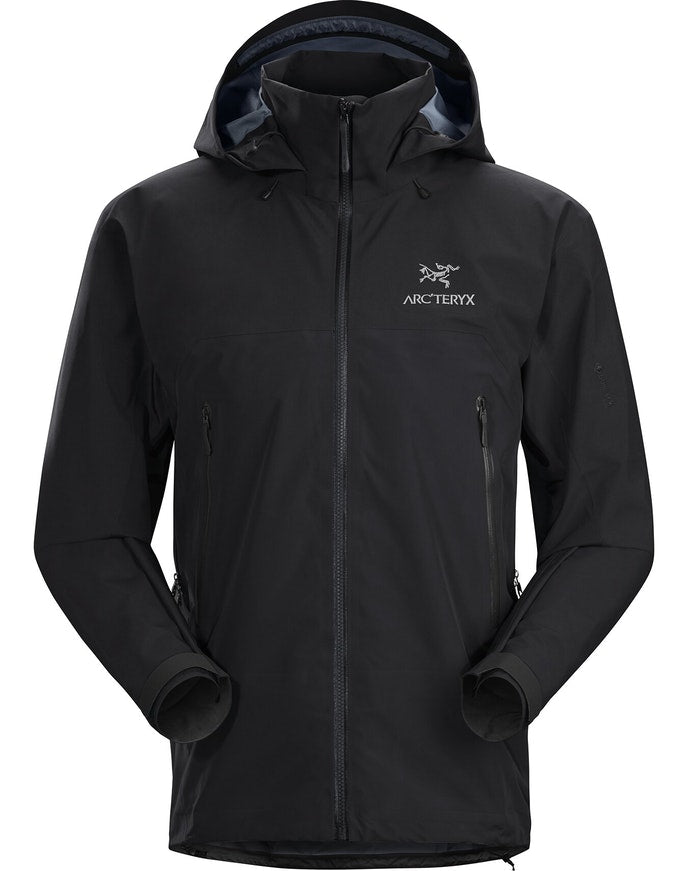
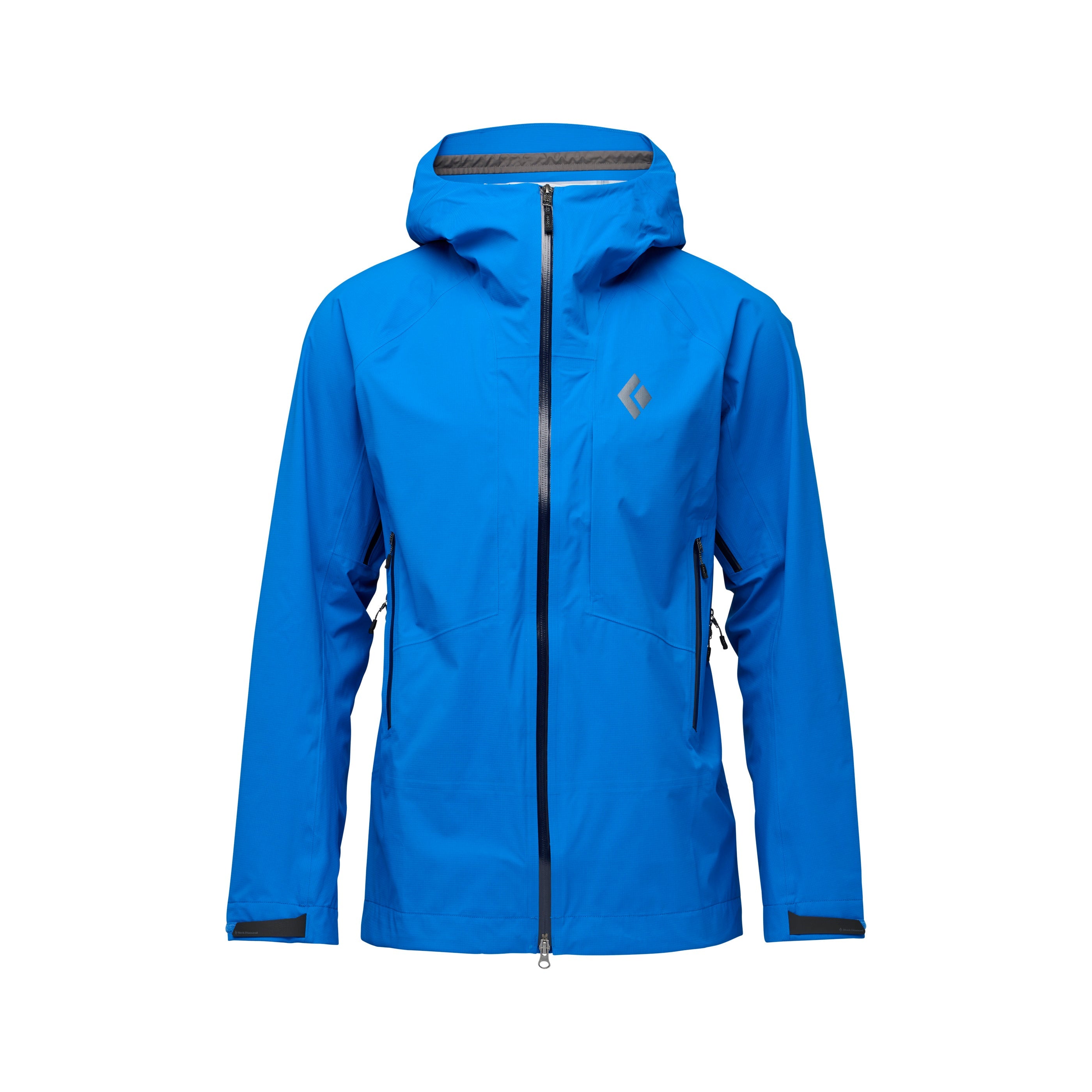
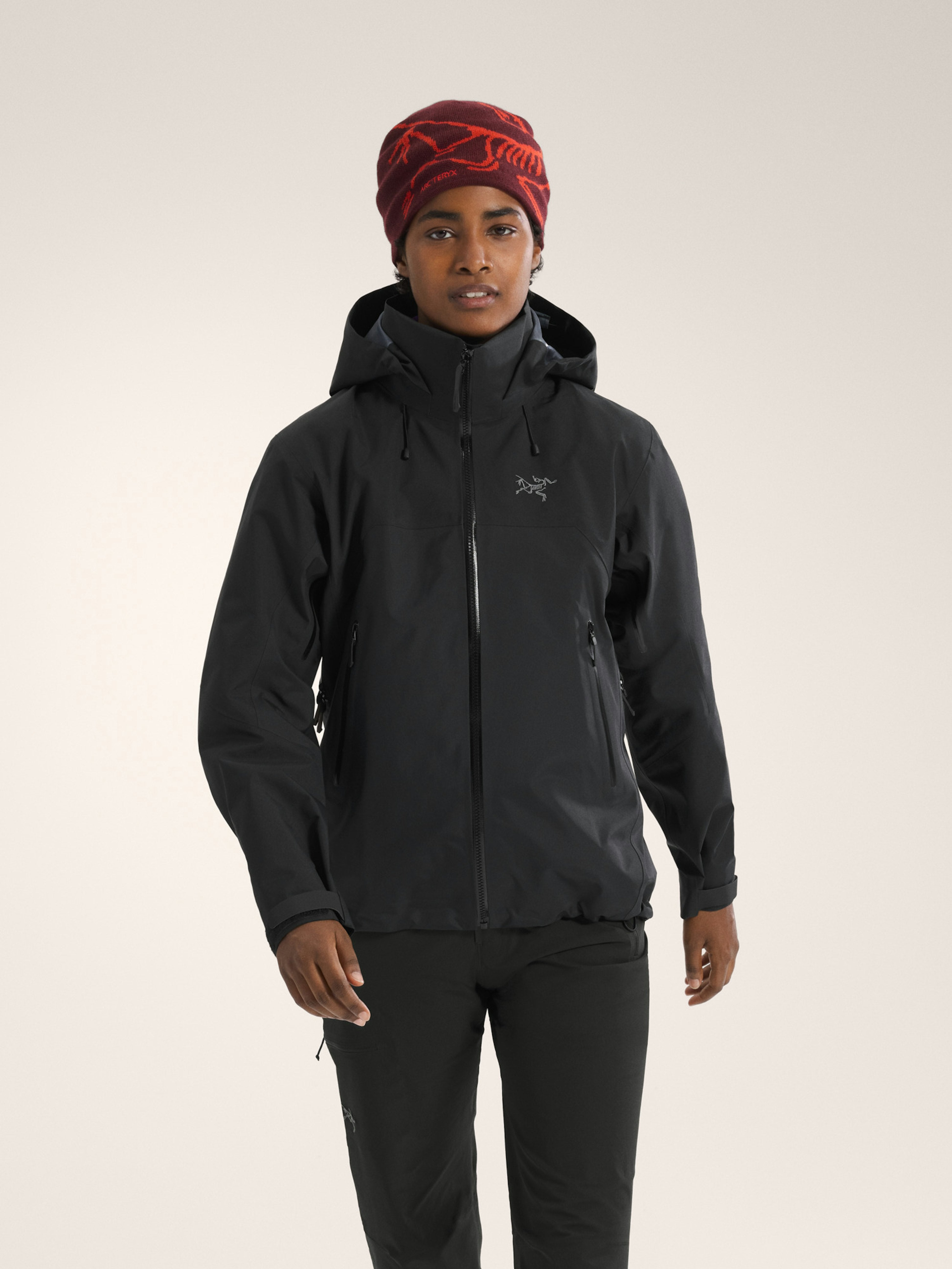
Guide Picks™ are examples that meet our performance standards and illustrate the type of gear we recommend. Each year, our partners at Whittaker Mountaineering survey our staff of 70+ guides to get a consensus on the best gear for the job. You do not need to purchase the exact item shown, but any alternative must offer comparable function and durability.
All listed items are required for the gear check. Final adjustments may be recommended by your guide based on conditions and team needs once the expedition begins.
Most of the required equipment is available for rent or purchase from our affiliate Whittaker Mountaineering. RMI climbers receive a 10% discount on new clothing and equipment items ordered from Whittaker Mountaineering.
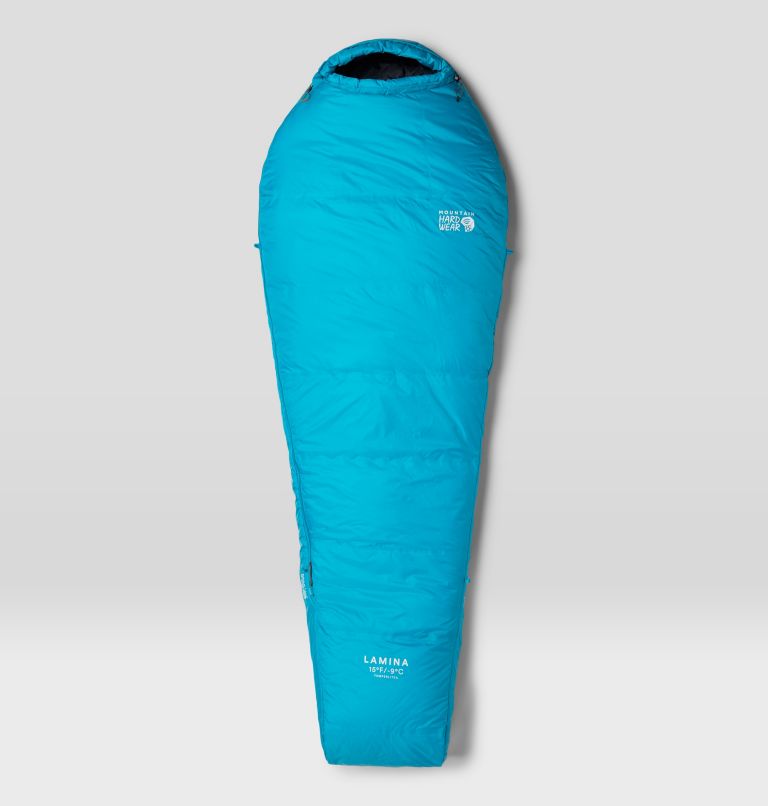
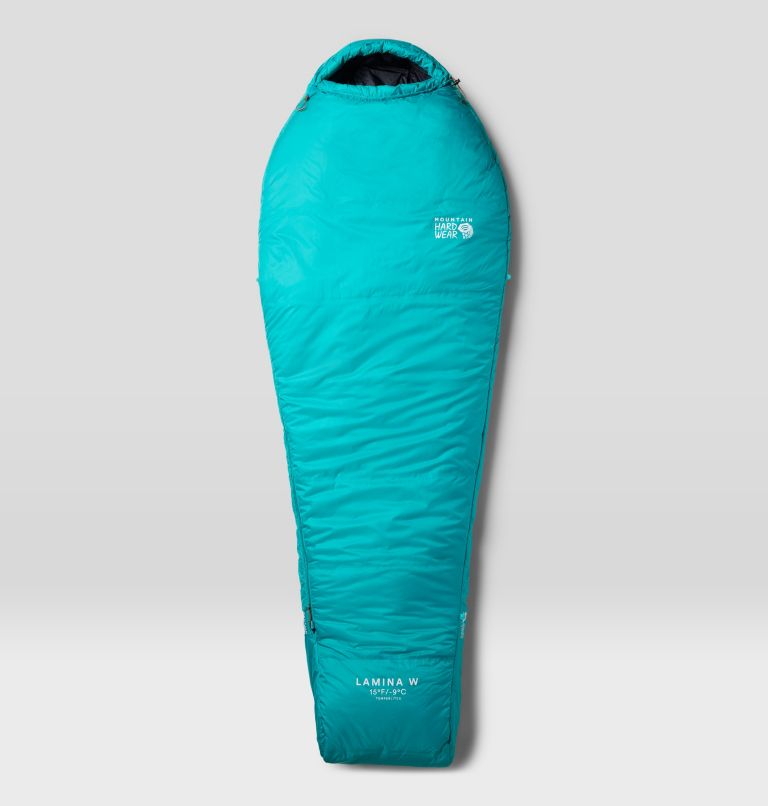
We recommend a bag rated between 20° and 0° F. Allow ample room for movement. We recommend down over synthetic for its light weight, warmth, and packability. If you know you sleep cold, consider a 0° F bag.
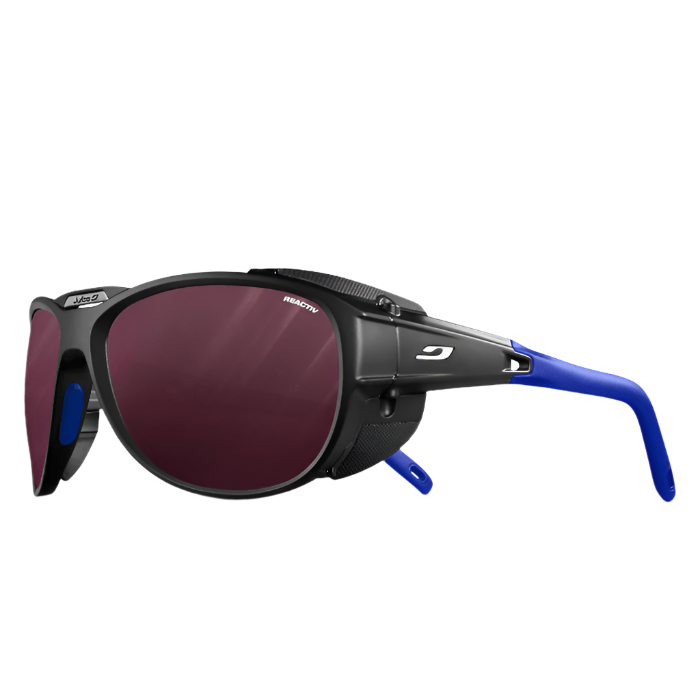
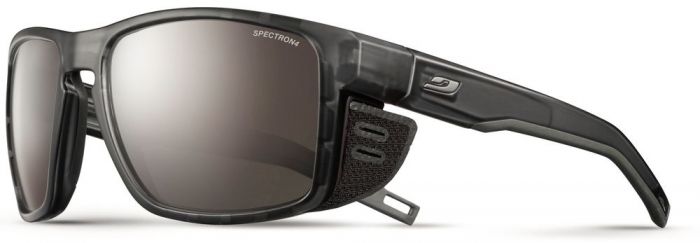
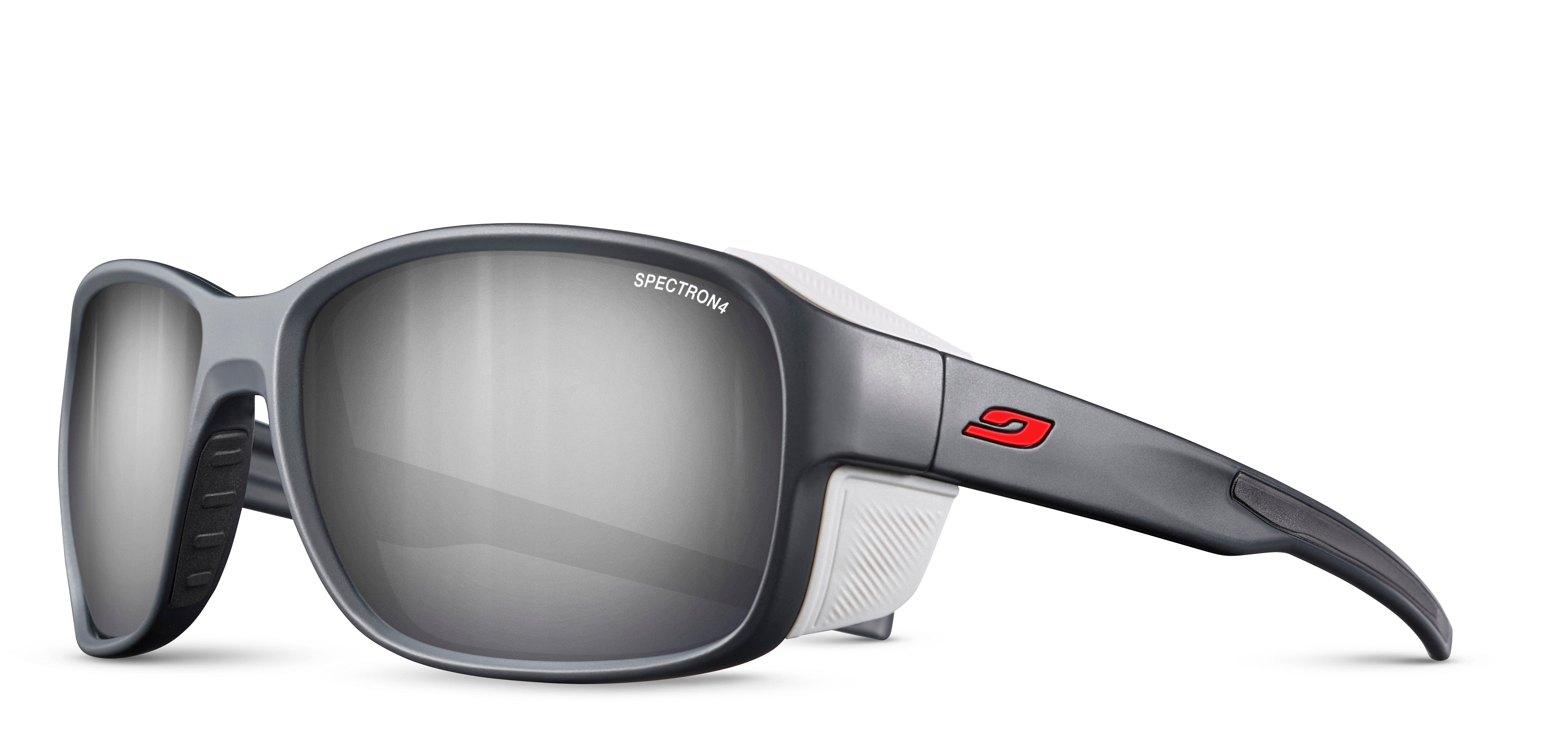
Glacier glasses are protective sunglasses that provide close to 100% frame coverage (wrap-around frames and side shields ensure no light can enter from the top, bottom, and sides of the glasses) and transmit less than 10% of visual light.
If Glacier Glasses are not required, regular sunglasses will suffice on this program.
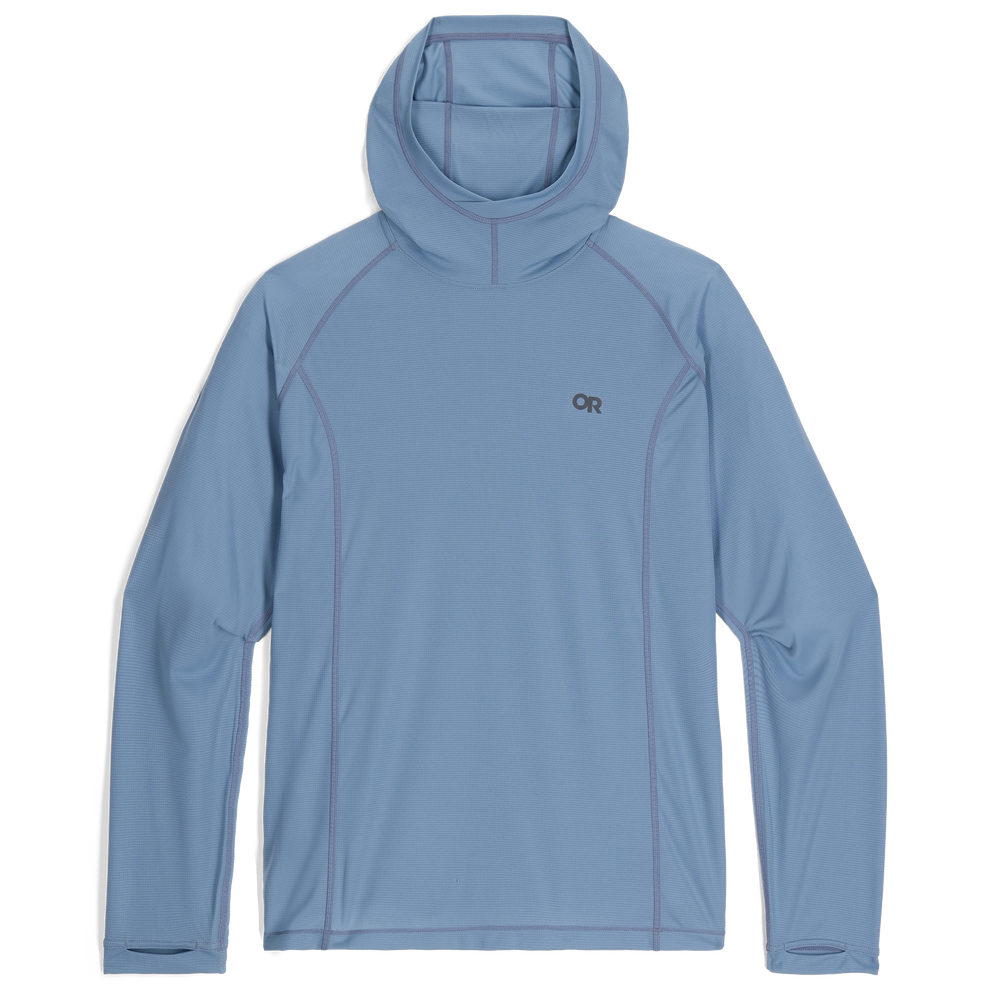
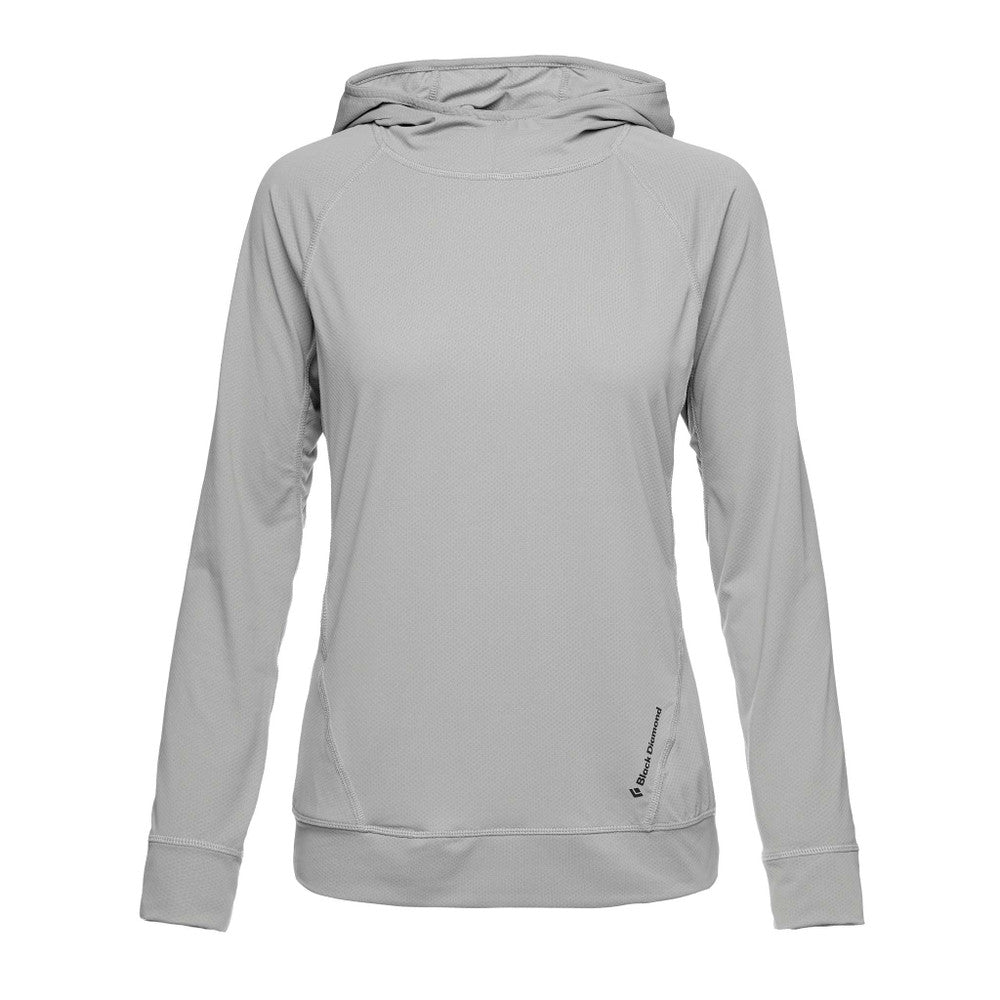
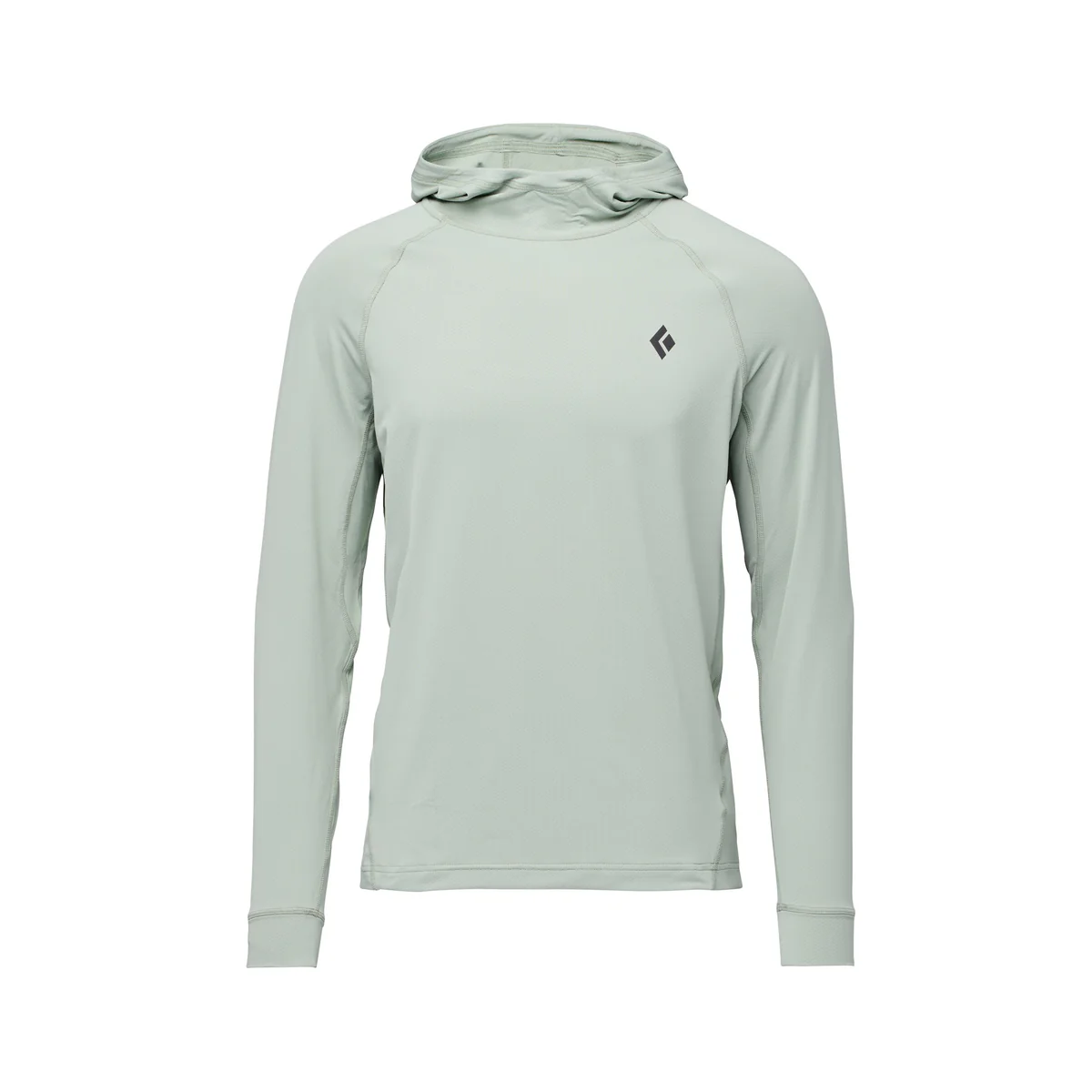
A lightweight, breathable long-sleeve shirt in synthetic or merino wool for sun protection and moisture management during active climbing.
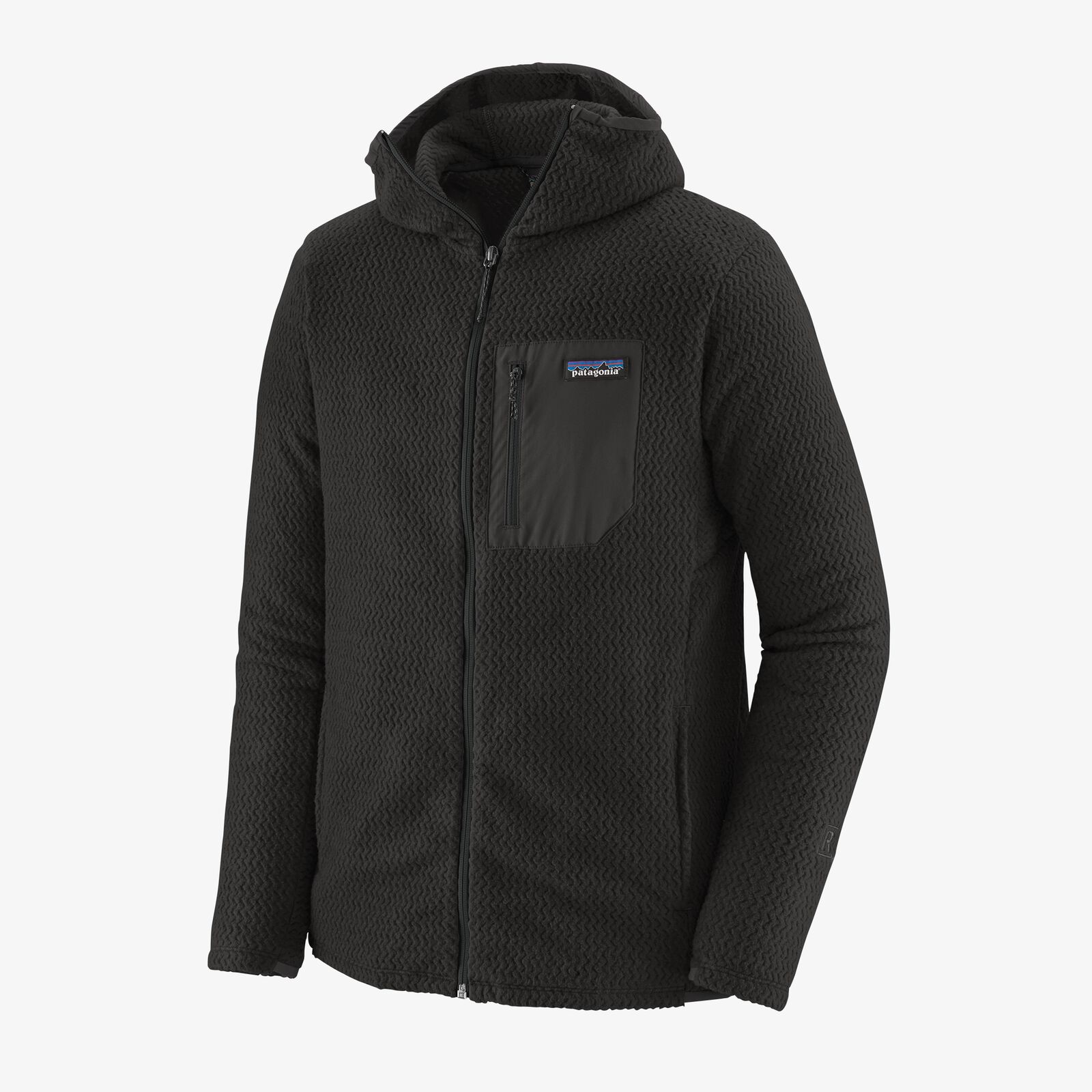
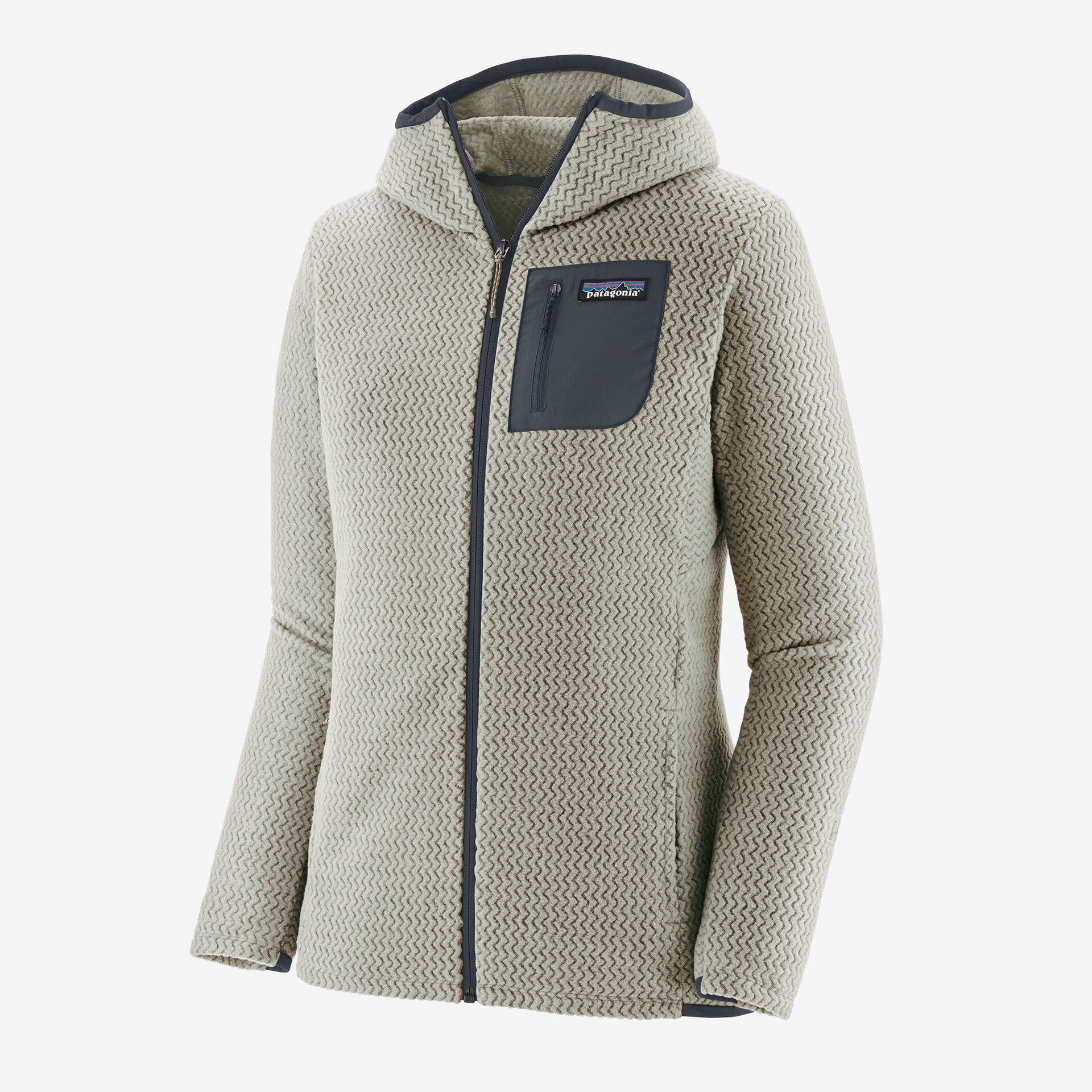
One step up in warmth and bulk from a baselayer. A technical fleece makes an ideal light weight insulating layer.
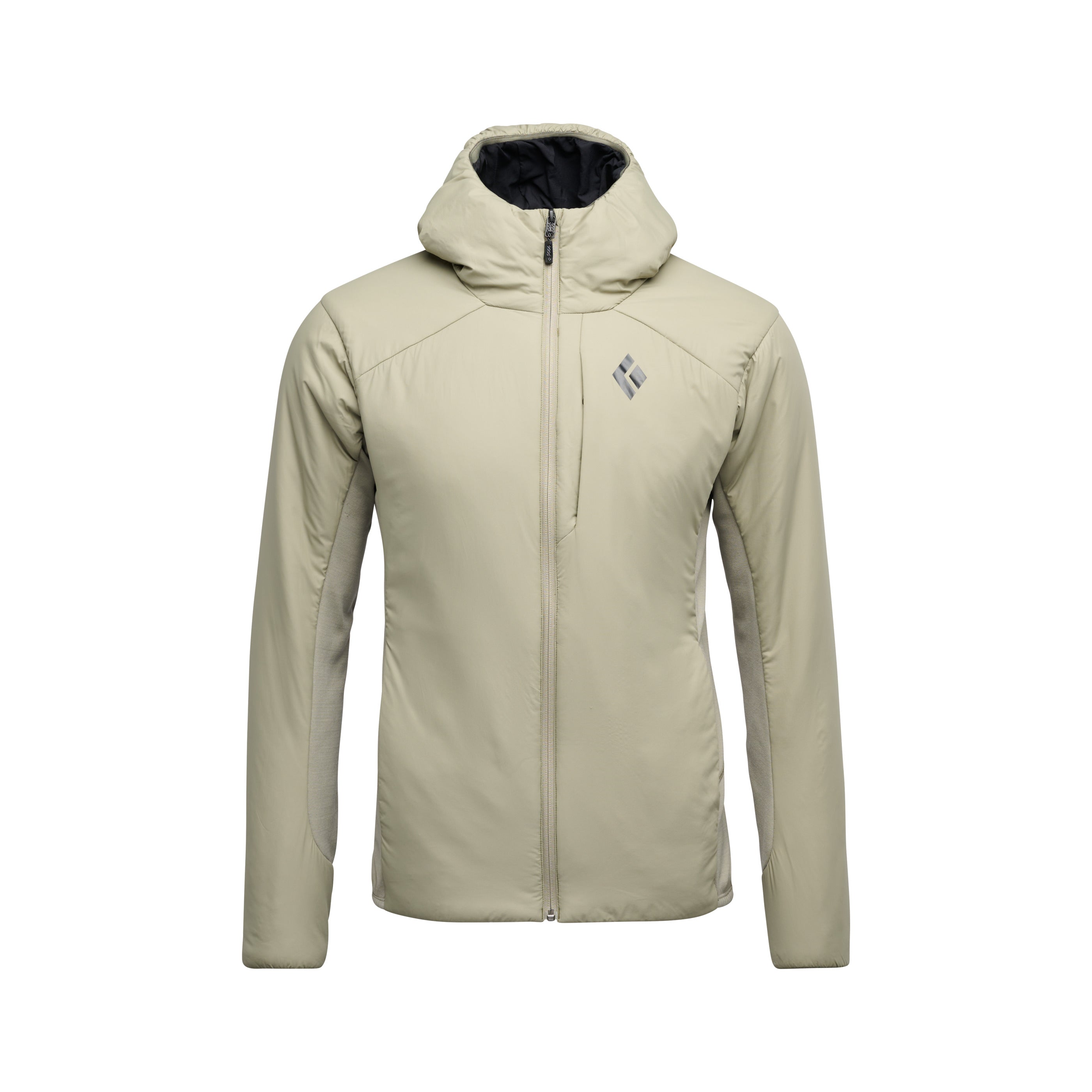
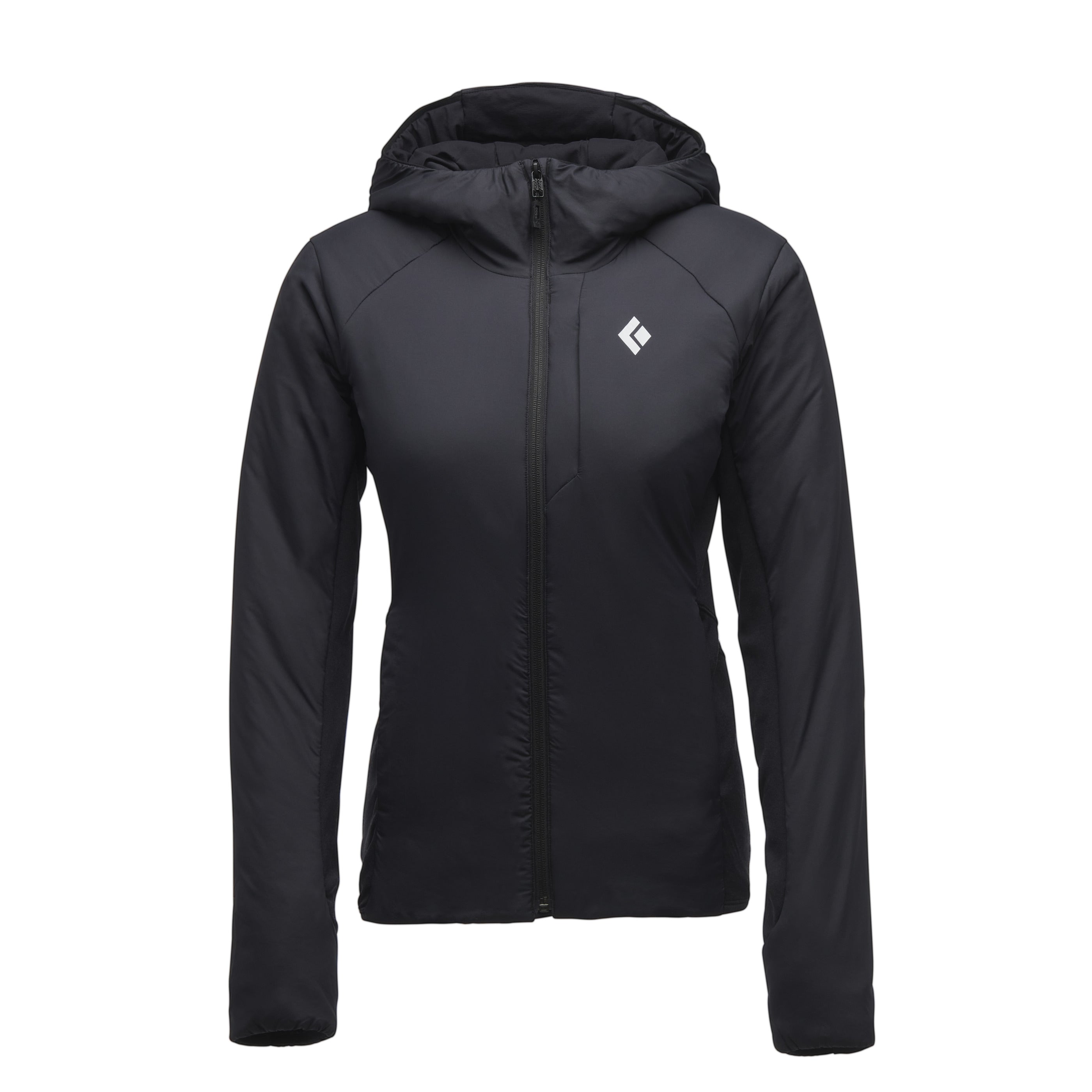
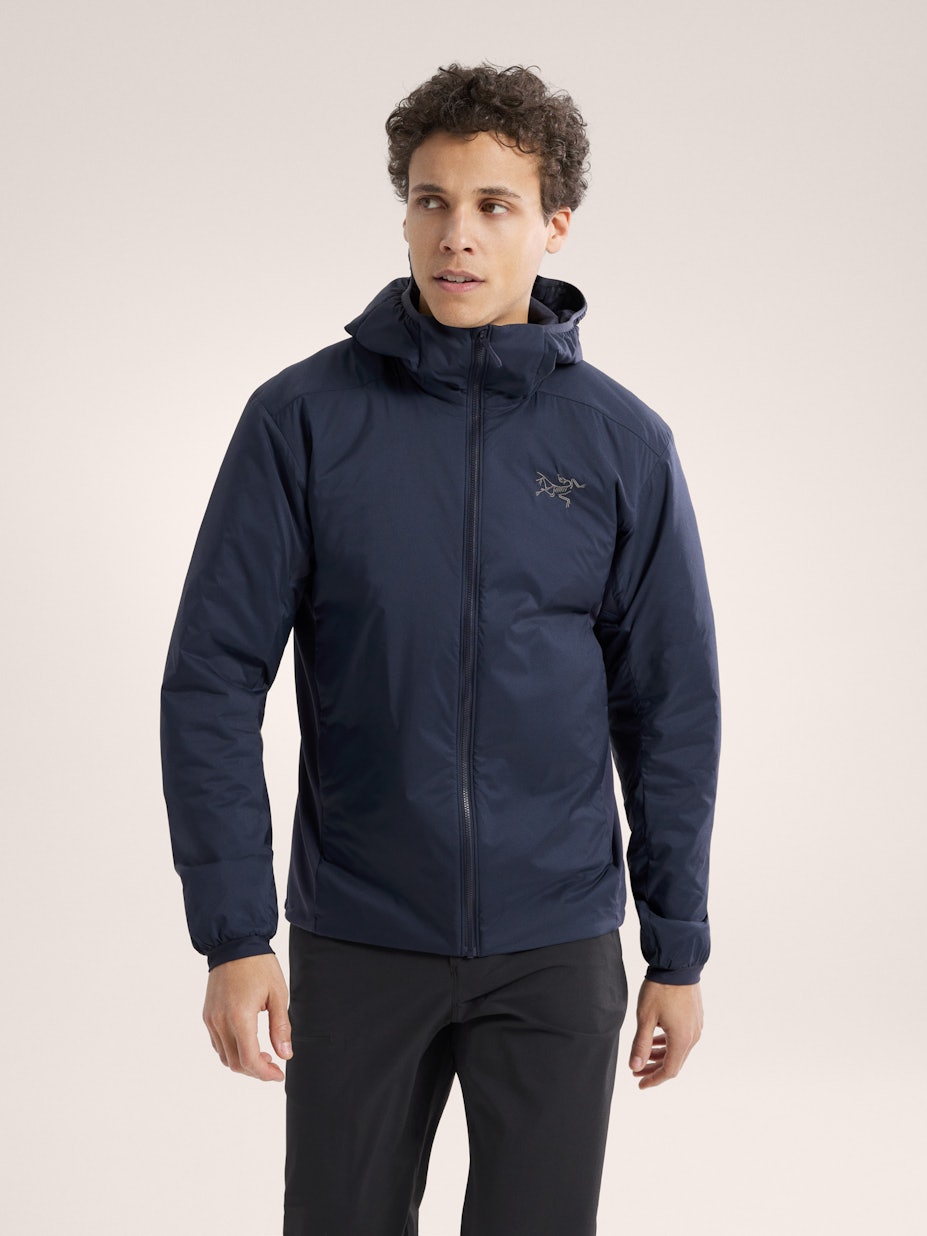
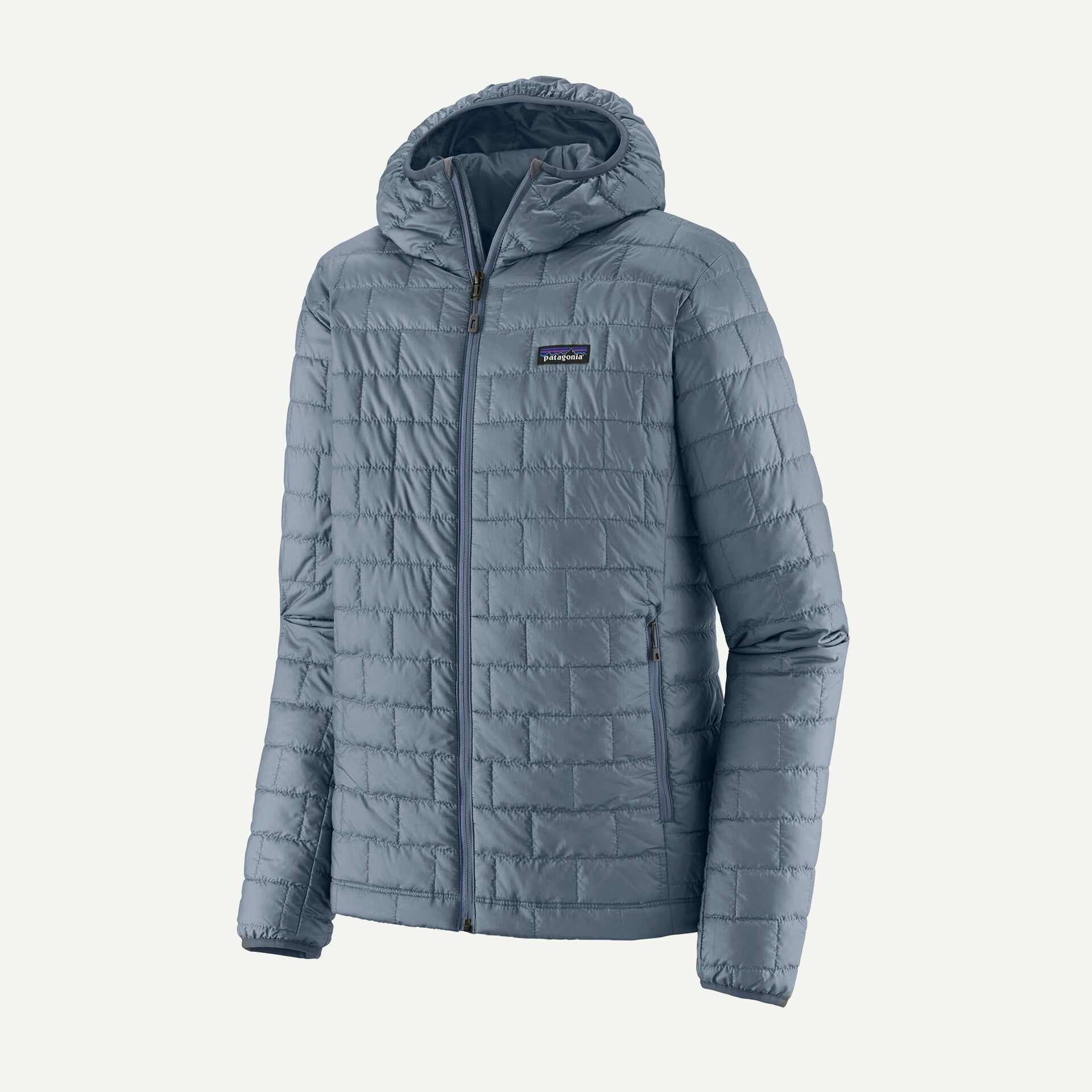
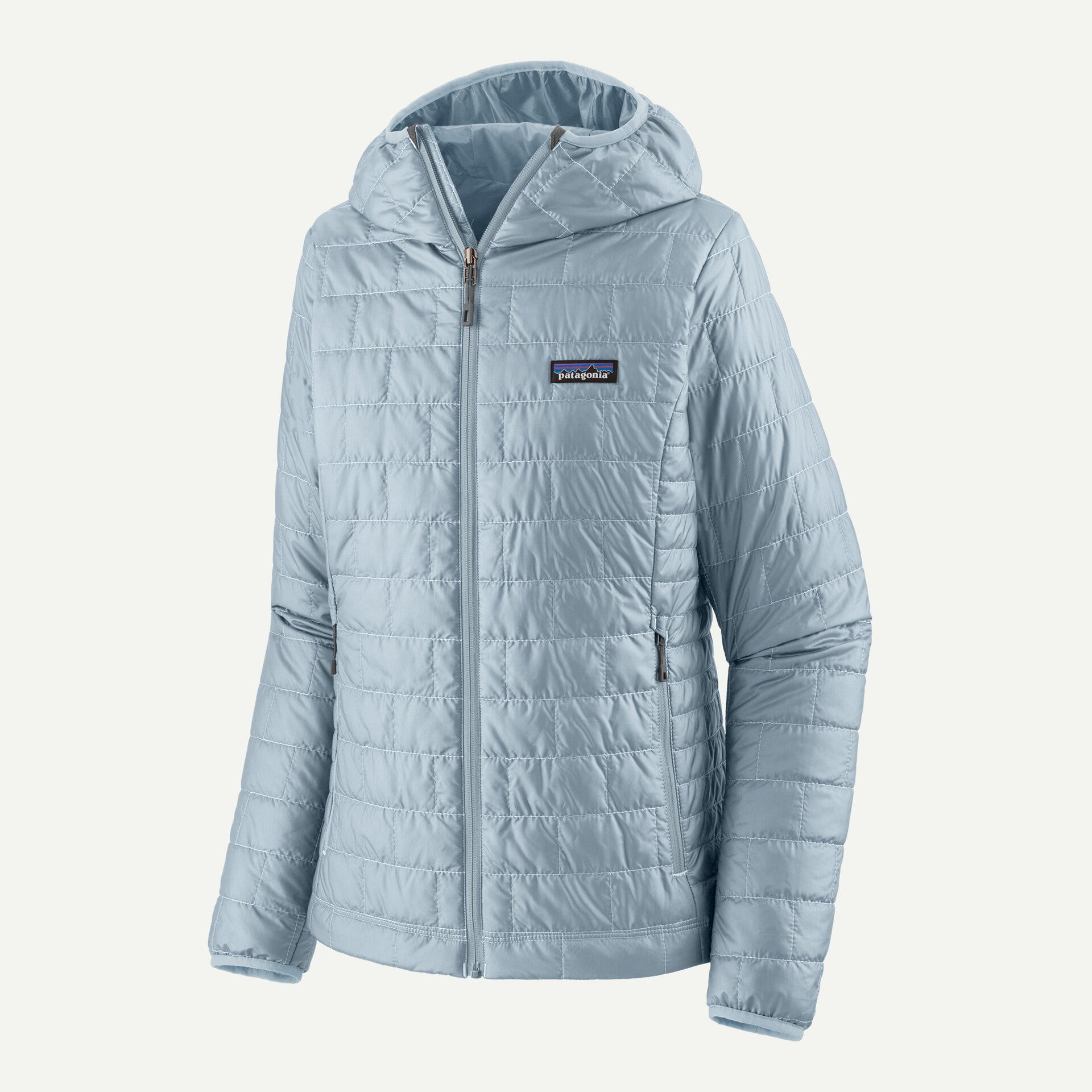
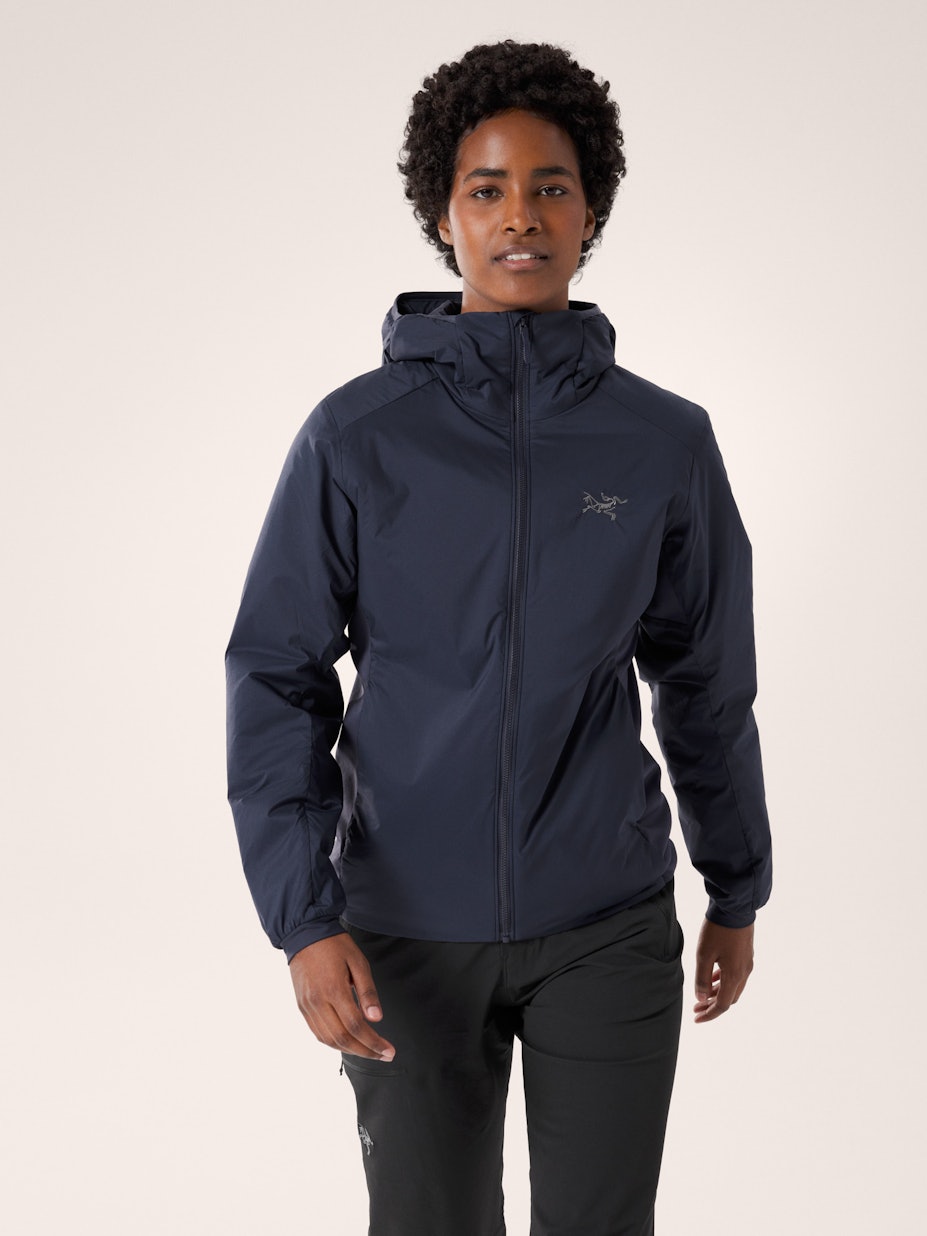
An insulated jacket or softshell for warmth during low-output activity and extended rest breaks. Should fit over baselayers and midlayers, and under a shell.
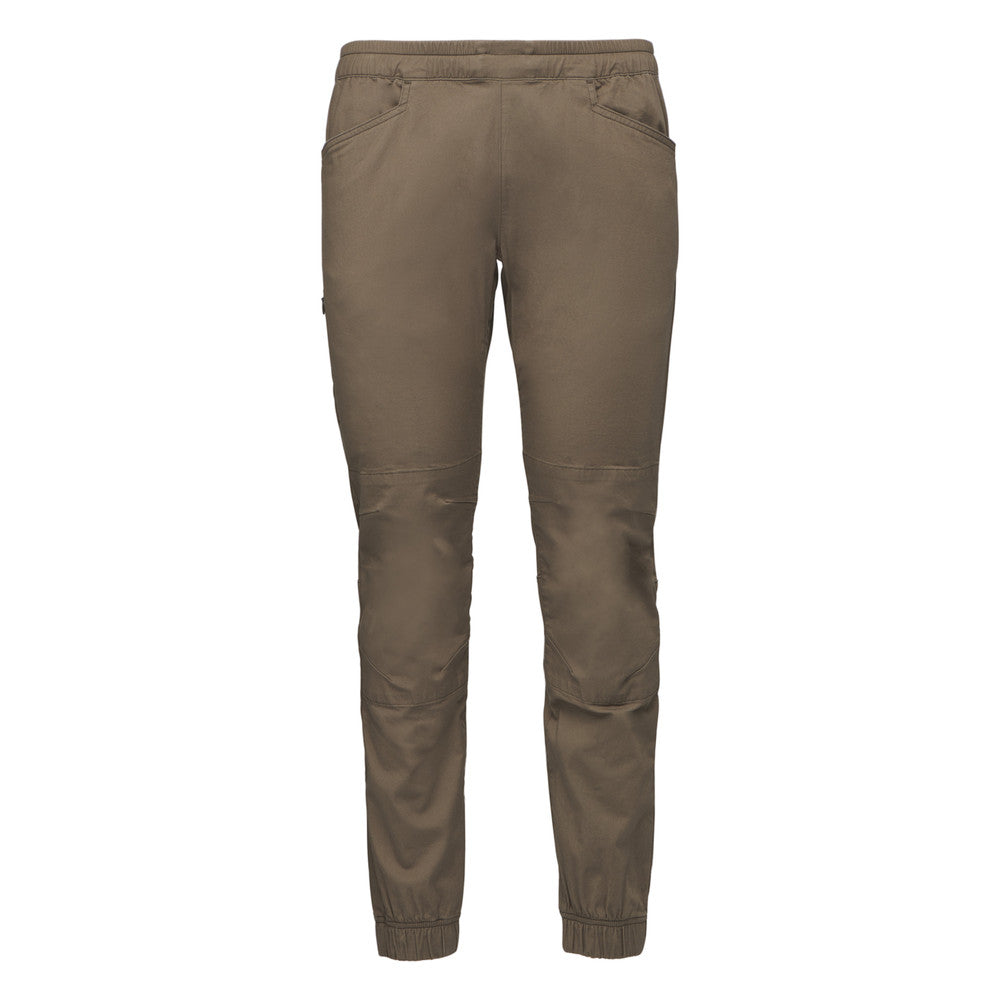
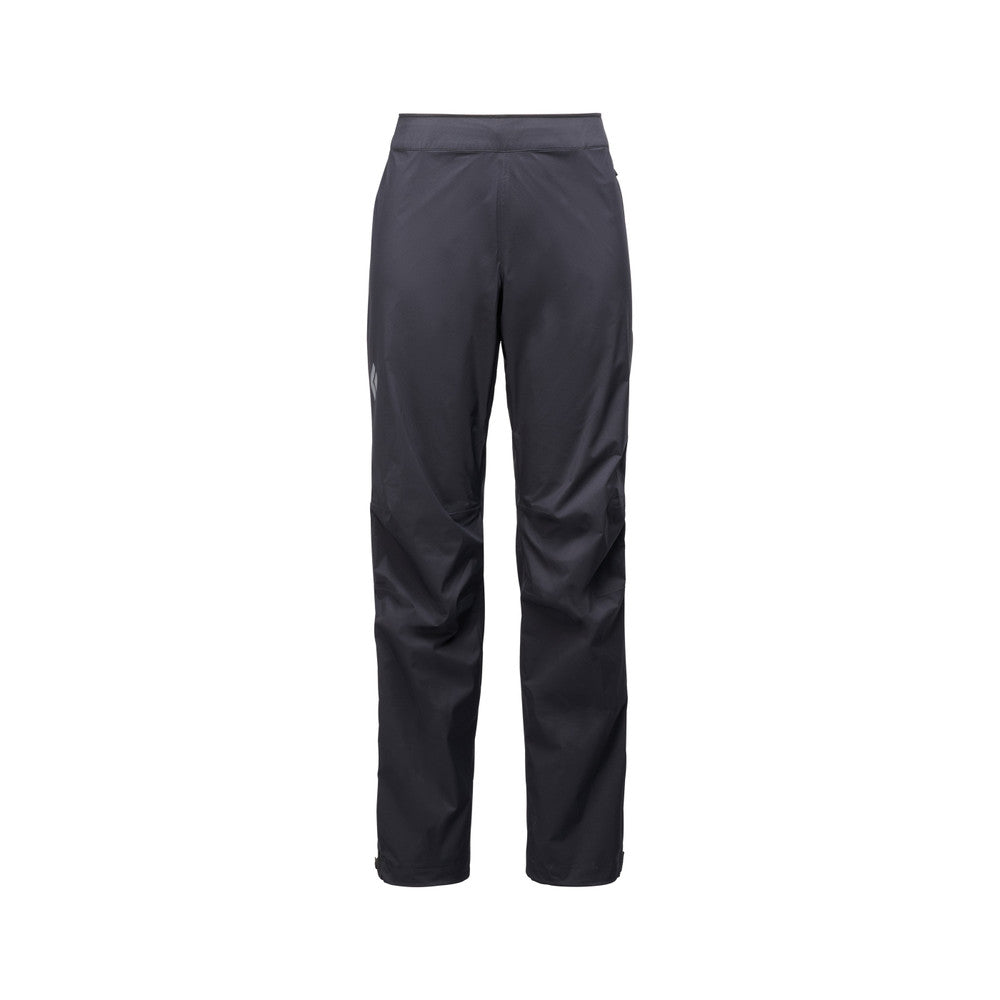
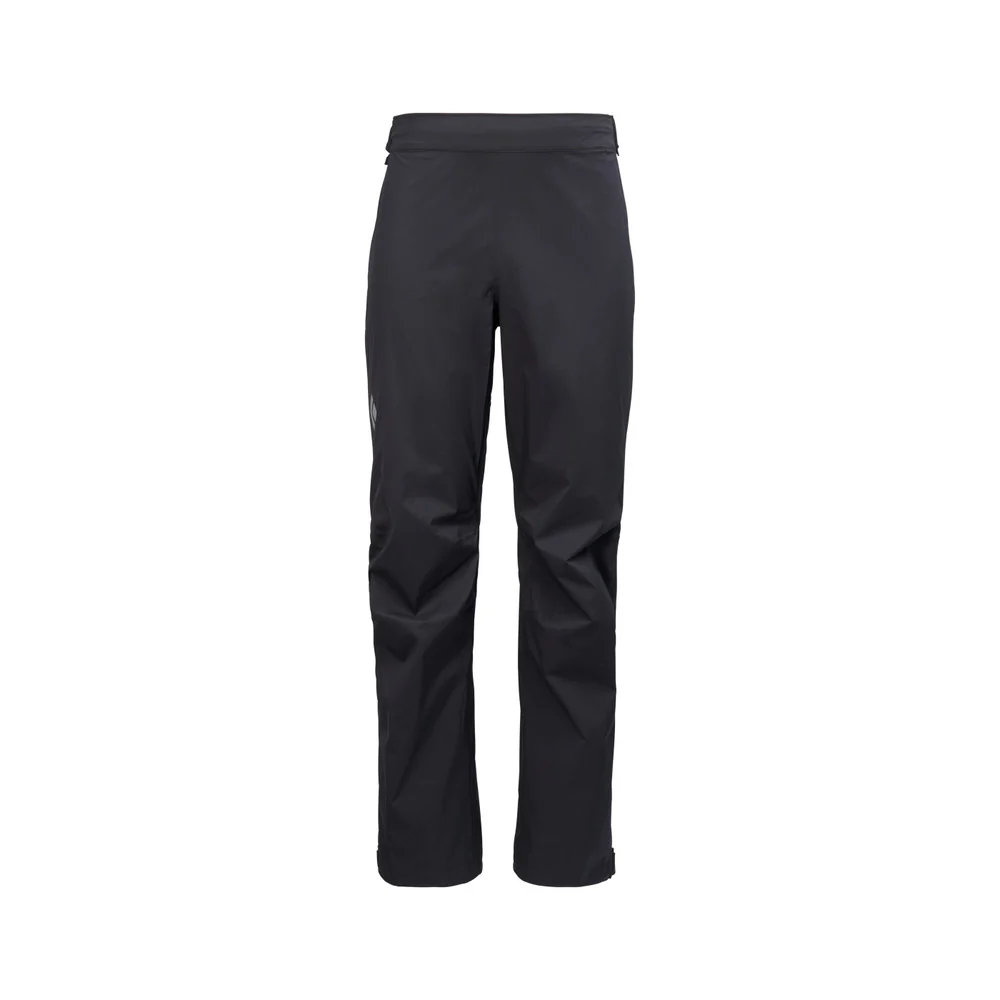
Non-insulated, waterproof shell pants must be able to fit comfortable over your baselayer bottoms and softshell climbing pants. Full side zippers or 7/8 side zippers are required so that shell pants can be put on while wearing boots and crampons.
Great for traveling and wearing around town or camp. A pair of tennis shoes or light hikers works well.
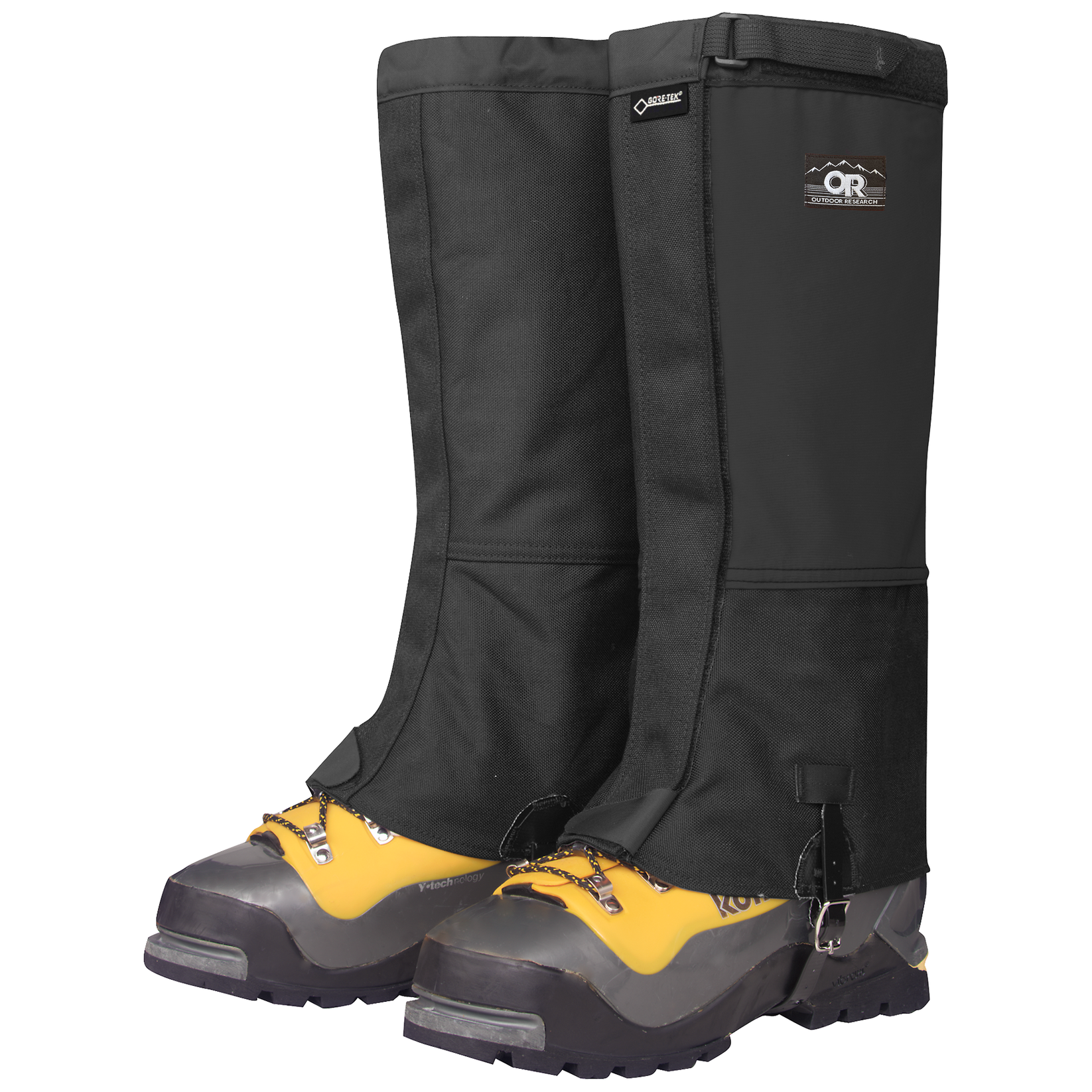
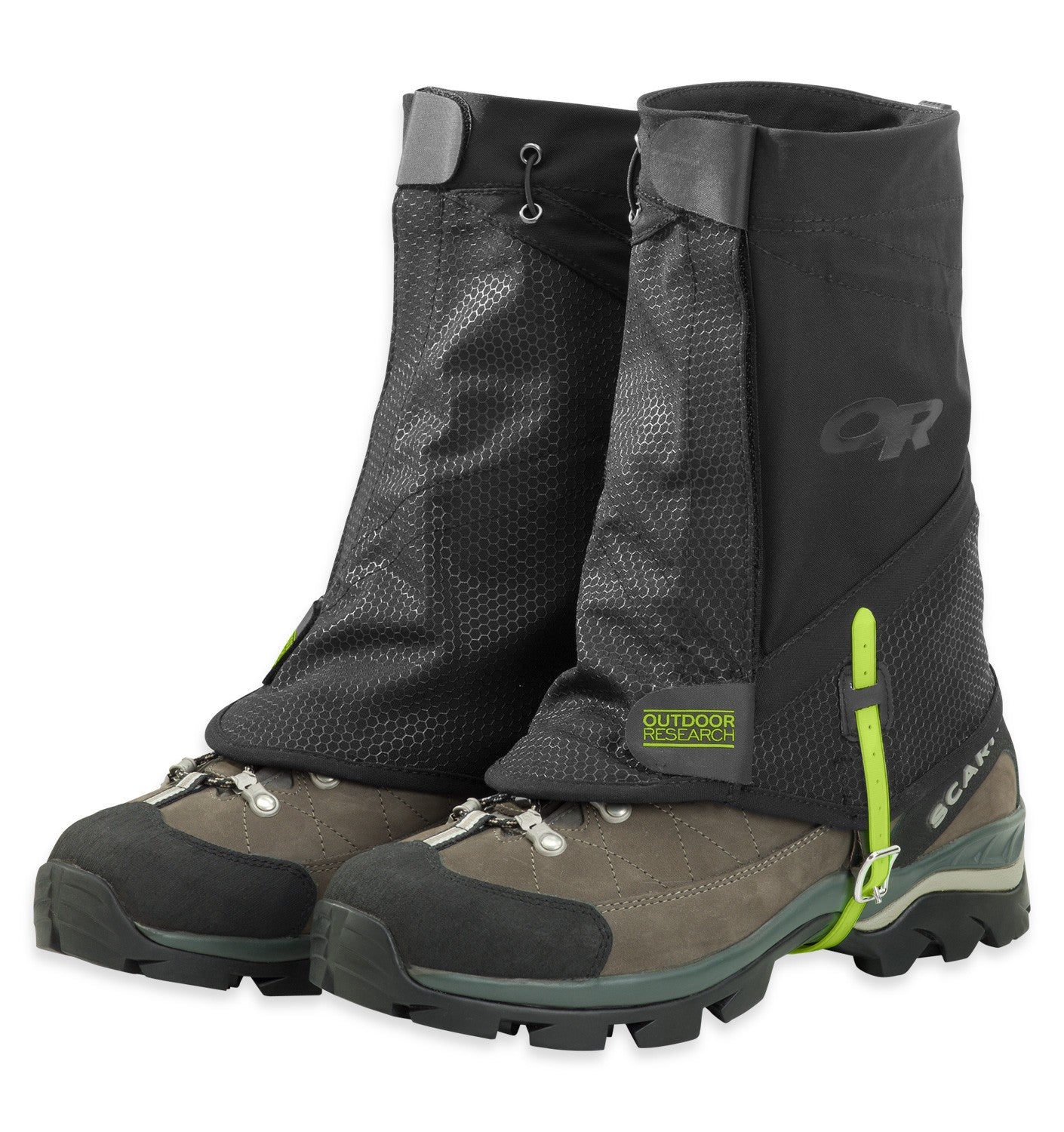
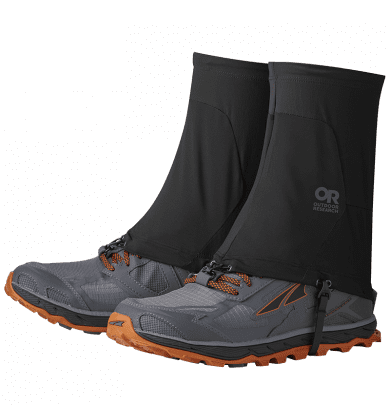
A knee-length pair of gaiters, large enough to fit over your mountaineering boots. This will protect you from catching your crampon spikes on loose clothing. Not needed if using a boot with an integrated gaiter.
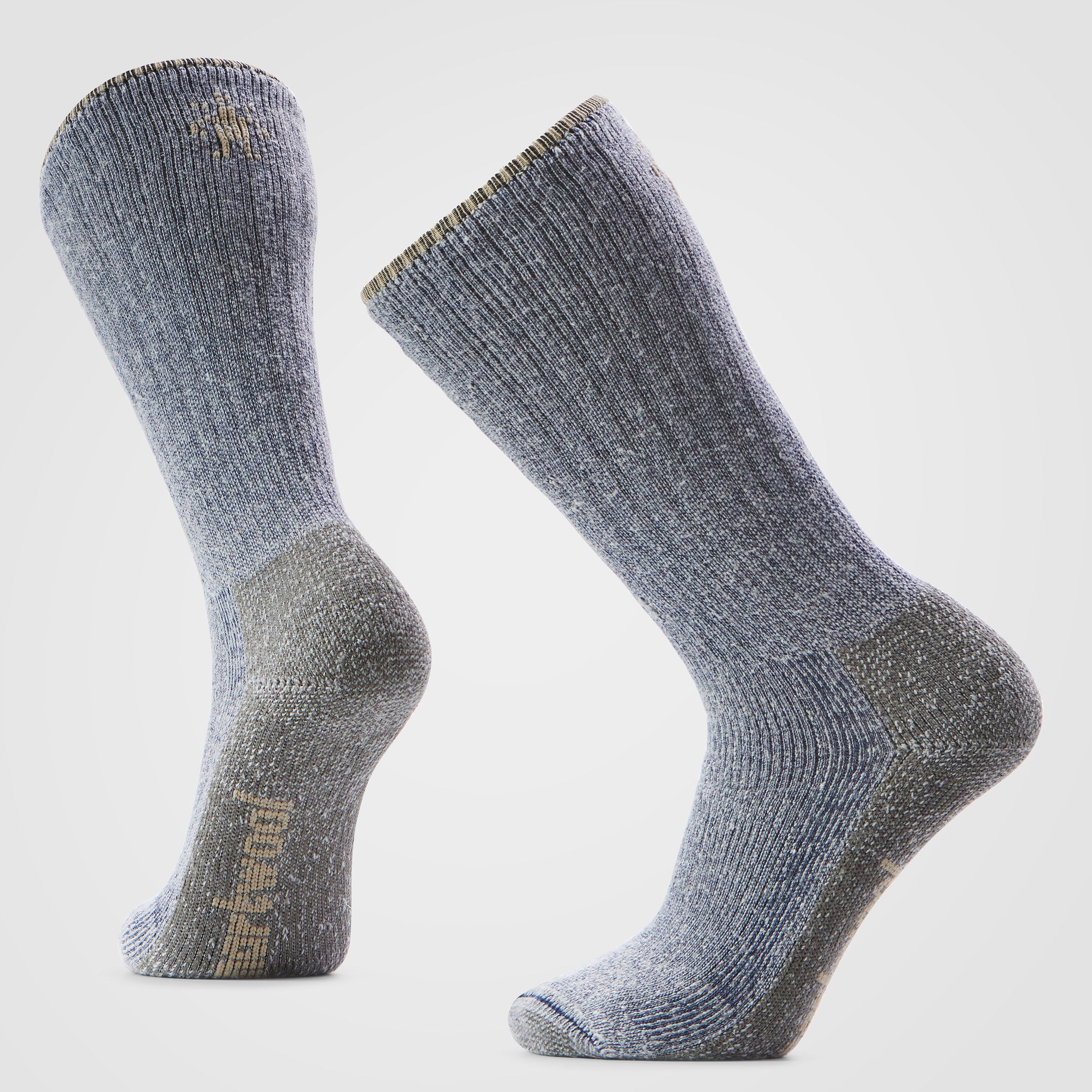
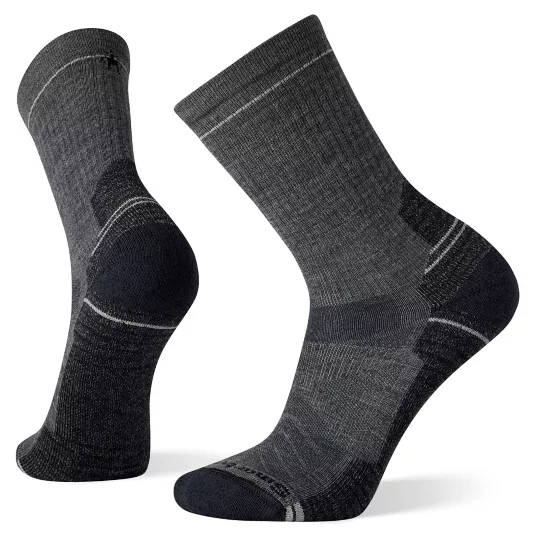
Either wool or synthetic. Whatever sock combination you are accustomed to wearing during your training or previous adventures (whether single medium weight socks, a medium weight with a liner sock, two medium weight socks together, etc.), should work just fine for this climb.
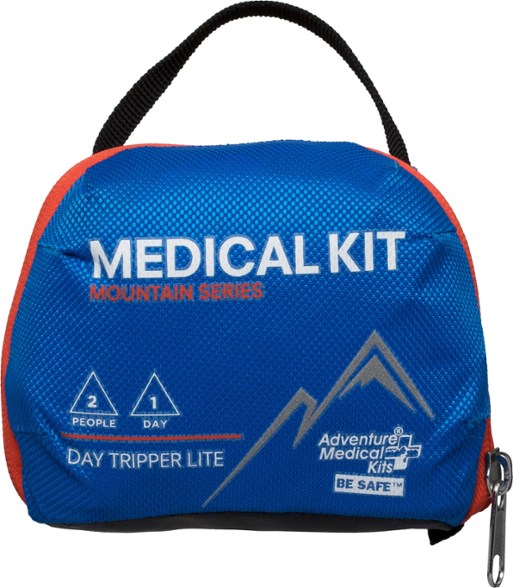
Our guides carry comprehensive medical kits, so keep yours small and light. We recommend a selection of adhesive bandages, antibiotic ointment, Moleskin and blister care, medical tape and/or duct tape, basic pain reliever, and personal medications.
You are responsible for providing your own meals and snack food in town and while on your program. See the Food tab for suggestions and quantities.
This will be your personal trash bag.
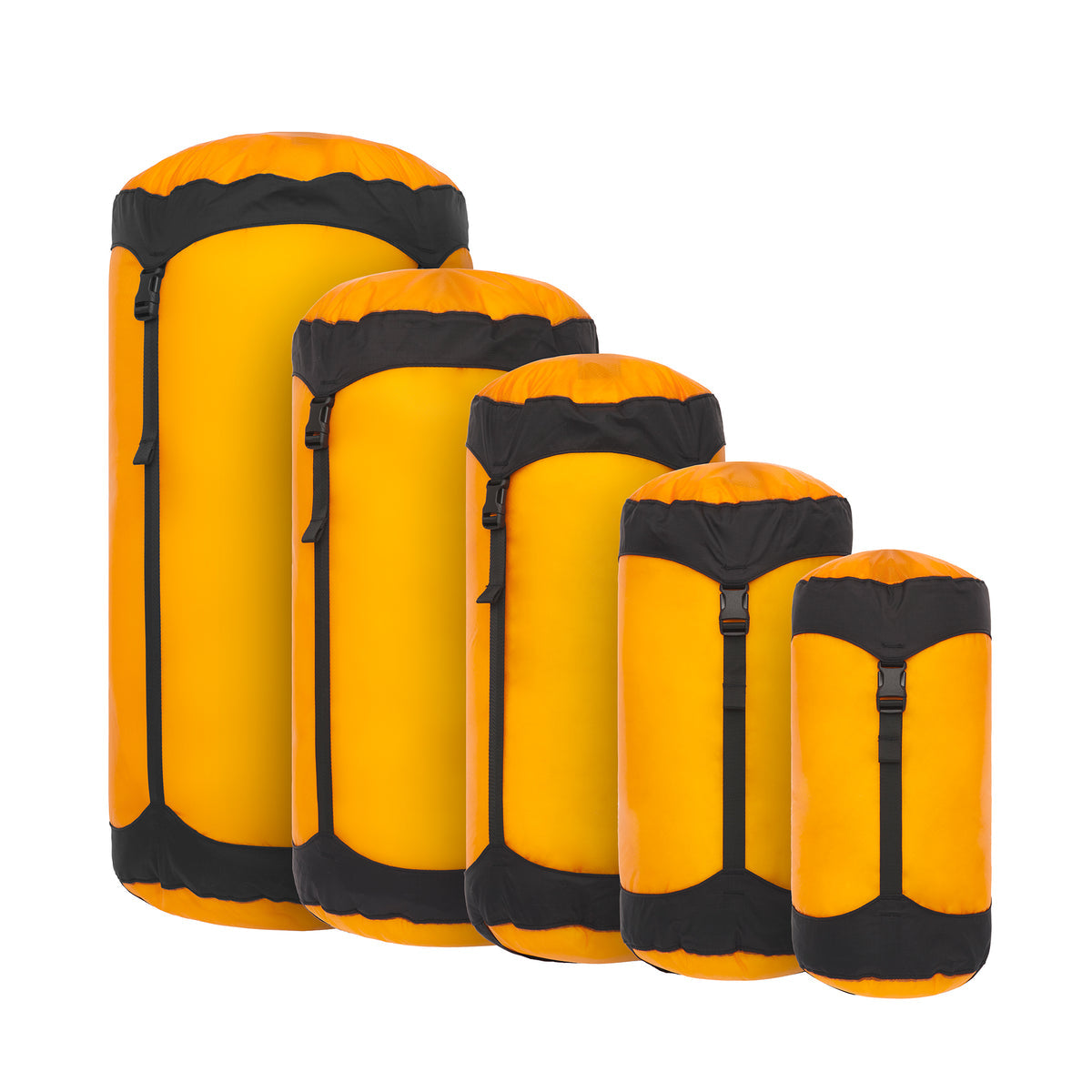
Heavy-duty trash compacter bags for use as waterproof pack/stuff sack liners. You can also use a waterproof pack liner.
Books, magazines, or a journal for downtime at camp; a Kindle or similar e-reader is a practical alternative for longer expeditions where weight and bulk matter. Choose based on program length and personal preference.
A reliable pen for completing permits, customs forms, and personal journaling.
Disposable or reusable ear plugs for sleeping in shared tent or hut accommodations.
Spare prescription glasses if you wear contact lenses/eyeglasses.
For use in tea houses that provide showers during trek.
Daily wash water provided. Towel is used to dry face and hands.
Many smartphones have excellent cameras. Action cameras, small point-and-shoots, and compact dSLRs are lightweight and work well at altitude.
A small power bank, enough to charge a phone or e-reader several times.
A small Rite in the Rain or similar journal for Leave No Trace Level 2 Instructor Course work and notes.
A pen or pencil for use in your journal, logbook, or note-taking during the program. Pencil works reliably in cold conditions.
We recommend bringing a selection of clothing to wear while traveling, sightseeing and dining.
Purchase travel insurance.
Purchase airplane tickets.
Reserve rental equipment.
Arrange transportation to Ashford.
The Leave No Trace Level 2 Instructor Course is based out of RMI's Mountain Haus and the forest camp at Rainier BaseCamp for three nights, which means your food situation is more flexible than a traditional backcountry program. You are responsible for all of your own meals throughout the course, but you have real options for how you handle them.
Whittaker's Bunkhouse and the Rainier BaseCamp Bar and Grill are both on-site and available for breakfast, dinner, or both if you prefer to keep things simple. The Bar and Grill also serves lunch, which covers the two classroom days. For participants who do not want to plan and pack meals, this is an easy and comfortable option.
Bringing your own meals to prepare at the campsite is the more economical option -- and for a Leave No Trace instructor course, it is also the more fitting one. Planning low-waste meals, managing a camp kitchen, and packing out what you bring in are all direct applications of the curriculum you will be teaching. Participants who cook at the campsite should plan for three dinners and three breakfasts at camp, field lunches for the two days inside Mount Rainier National Park, and lunches for the two classroom days — ten meals in total.
On Days 2 and 4, the group travels into the Golden Gate zone of Mount Rainier National Park for full alpine field days. Pack a lunch you can eat on the trail without preparation -- sandwiches, wraps, bars, trail mix, and similar foods work well. Keep packaging minimal and plan to carry everything out. This is Leave No Trace in practice.
How you plan and manage your food during this course is an opportunity to model the principles you are here to teach. Minimal packaging, thoughtful waste management, and low-impact camp kitchen practices are all worth being intentional about.
This page covers the practical details you’ll want to review before your trip, including travel logistics, entry requirements, local considerations, and required policies. Taking time to understand these details ahead of departure helps ensure a smoother experience once you’re on the ground and focused on the climb.
The Leave No Trace Level 2 Instructor Course meets at RMI's BaseCamp in Ashford, Washington. Transportation to and from Ashford is not included, so most participants drive in; if you are traveling from out of town, plan to arrive the day before the course begins. Transportation between BaseCamp and Mount Rainier National Park during the course is provided.
Rainier BaseCamp is located in Ashford, WA, and is the home of RMI Expeditions, Whittaker Mountaineering, Whittaker's Bunkhouse, and BaseCamp Bar and Grill. Ashford is located 75 miles from the Sea-Tac Airport.
Note: Every air traveler 18 years of age and older needs a REAL ID compliant driver’s license, state-issued enhanced driver’s license, or another acceptable form of ID to fly within the United States.
Most climbers traveling to Ashford will want to rent a car from the airport. This is the most convenient and reliable way to get here.
Ride Share: If you are interested in sharing a ride, please go to your RMI Account, then to "Discussion Board" and "Ride Share" to post your information.
Seattle Airport Car Service
Phone: 206-375-4000
Email: [email protected]
All our Mt. Rainier programs begin at Rainier BaseCamp in Ashford. All Mt. Rainier climbs, seminars and schools include transportation and park entry for our climbers from Rainier BaseCamp to Paradise or to the White River Entrance.
Your travel insurance policy should include trip cancellation, trip interruption, travel delay, baggage loss or delay, medical expenses, and evacuation.
Navigating through the different options for travel insurance can be challenging. When purchasing Travel Insurance, here are a few items to consider:

In today’s changing travel environment, it’s important to protect your travel investment. Unforeseen events such as flight delays, baggage loss or even a sudden sickness or injury could impact your travel plans. For your convenience, we offer Travelex Insurance protection plans to help protect you and your travel investment against the unexpected.
For more information on the available plans visit Travelex Insurance Services or contact Travelex Insurance (800) 228-9792 and reference location number 47-0370.
The product descriptions provided here are only brief summaries and may be changed without notice. The full coverage terms and details, including limitations and exclusions, are contained in the insurance policy. Travelex Insurance Services, Inc. CA Agency License #0D10209. Insurance coverages underwritten by individual member companies of Zurich in North America, including Zurich American Insurance Company (NAIC #16535, state of domicile: New York). RETWEB

Harbor Travel Insurance covers the following critical benefits:
Harbor Travel Insurance is powered by Redpoint Resolutions, a medical and travel security risk company. Their team is comprised of special operations veterans, paramedics, Stanford Medicine affiliated physicians, former intelligence officers, insurance actuaries, and global security experts with dozens of years of experience in theaters around the world. The Redpoint network covers the globe, making them uniquely equipped to provide elite rescue travel insurance – in every sense of the word.
RMI has partnered with Erin Rountree to provide travel planning support. Erin is an independent agent with extensive experience booking travel for adventure programs worldwide and understands the specific needs of RMI expeditions.
Phone: (208) 788-2870
Email: [email protected]
It is your responsibility to ensure that your travel insurance policy provides appropriate coverage for your specific program and activities. Review policy details carefully before purchasing, and confirm coverage well in advance of your departure.
For updated Mt. Rainier weather forecasts, click here.
Please click on the links below to see the Mt. Rainier webcams:
Our guides put considerable effort into ensuring your safety and success on the mountain. If you had a positive experience, leaving a gratuity is a wonderful gesture to show your appreciation. The amount is up to you and should reflect how much you enjoyed the service. Typically, tips for excellent service range from 10% to 15% of the program cost. Guides can accept gratuities in cash, Venmo, or by check. If you prefer, you can also pay tips using a credit card through the RMI Office.
Mt Rainier became the nation's fifth National Park in 1899, some twenty-nine years after it was first climbed. Mt. Rainier National Park encompasses 235,625 acres and is 97% wilderness and 3% National Historic Landmark District. At 14,410', Mt. Rainier is the most prominent peak in the Cascade Range. It is an active volcano; its most recent confirmed eruptive activity was in the 1890s.
Guided mountaineering activity has taken place since the late 1800s, and The Mountain is still considered a prime training ground for climbing in Alaska, South America, and the Himalayas. With more than 20 active glaciers encompassing some 36 square miles of ice, Rainier boasts the largest ice cover of any peak in the lower 48 United States. Its weather can be deceptively gentle or as fierce as encountered on any high mountain anywhere in the world. There is a wealth of information on the Mt. Rainier National Park website. We encourage you to enhance your enjoyment of the climb with some fun facts about the Park and the history of climbing there.
General Information on Mt. Rainier National Park (MRNP) - www.nps.gov/mora
The Mountaineers Book - www.mountaineersbooks.org
Gateway Communities & Activities outside Mt. Rainier National Park - www.visitrainier.com
The Challenge of Rainier, by Dee Molenaar
Mt. Rainier - A Climbing Guide, by Mike Gauthier
Mt. Rainier: The Story Behind the Scenery, by Ray Snow
National Geographic Trails Illustrated MRNP topo map
The following policies are applicable for this expedition.
Rainier Mountaineering, Inc. reserves the right to modify the land cost of a trip at any time before departure.
Deposit Payments: A non-refundable deposit of $400 per person is required to secure your reservation.
Balance Payments: The remaining balance is due 120 days before your program's start date.
*Note: A 3% surcharge applies to all credit/debit card transactions.
**Wire transfers must include all fees charged by your bank. The amount received by our bank must match the deposit amount.
The $400 deposit is non-refundable and non-transferable.
We do not offer refunds. Please remember this before registering for this program. Due to the time-sensitive nature of this program, no exceptions will be made to the cancellation policy.
We highly recommend travel insurance for this trip. Please see our Travel Tab for details.
Date changes are subject to availability and can only be applied to the current climbing season. Changes must be requested at least 90 days before the departure date and will incur a $200 fee per person. No date changes are allowed within 90 days of departure.
Please clearly understand that mountaineering is inherently hazardous. Managing risk is RMI’s number one priority. Our guides manage significant hazards inherent in mountaineering, but they cannot eliminate them. Objective hazards include rockfall, icefall, avalanches, slides or falls by individuals and rope teams on steeper slopes, weather-related problems including cold, heat, high winds, and other unnamed dangers that can occur while climbing.
You are choosing to engage in an activity in which guided and non-guided climbers have been injured or killed. While those accidents are indeed infrequent, they may occur at any time and be out of our control. We ask that participants acknowledge the risks and hazards of mountaineering and make their own choices about whether or not to engage in this activity.
Mountaineering is both an individual challenge and a team effort. Each participant shares responsibility for the safety and success of the group. Therefore, we ask that each participant:
RMI reserves the right to remove a participant from the program or to send them to a lower altitude if the guide staff determines, at their discretion, that the participant is not adequately prepared or capable of participating safely. This decision may be based on physical, technical, or psychological factors, or any other reason that might affect the safety, health, or well-being of the participant or the group. If removed, the participant will not receive refunds or credits and will be responsible for all additional costs associated with early departure, including evacuation, transportation, hotel reservations, and meals.
Rainier Mountaineering, Inc. (RMI) does not tolerate harassment or mistreatment of our participants or employees. Inappropriate conduct under this policy may include conduct that creates a disrespectful, intimidating, hostile, degrading, humiliating, or offensive environment for a participant or employee. Engaging in such conduct is a violation of this policy.
RMI may consider conduct to violate the policy even if it falls short of unlawful harassment under applicable law. When determining whether conduct violates this policy, we will consider whether a reasonable person could conclude that the conduct created an intimidating, hostile, degrading, or demeaning environment.
Violation of this policy may result in removal from a program, as well as refusal to provide services indefinitely. We place the utmost value on the safety of our participants and employees. Please report any incidents to RMI management.
All participants must be 18 years old at the time of registration.
RMI’s Photo Release outlines the terms and conditions for using your likeness in photographs, videos, or other digital media.
I hereby grant Rainier Mountaineering, Inc. (RMI) or its affiliates permission to use my likeness in a photograph, video, or other digital media (“photo”) in any and all of its publications, including web-based publications. By granting permission, you allow RMI to utilize these media for lawful purposes.
Here are the key points:
RMI’s program schedule and itineraries are subject to change or adjustment based on a number of factors. These include, but are not limited to, route conditions, weather, group strength, terrain, or other environmental factors, and many other factors. RMI has complete discretion to change plans to accommodate any of these or other factors, including but not limited to, increases in program fees, changes to program schedule or itinerary, and changes to guides or staff, as necessary for the proper and safe conduct of the program. Once the program has started, the Lead Guide will decide on any changes to the itinerary, including ending the program early if the continuation of the program may compromise the safety, health, or well-being of the group.
We reserve the right to cancel any program due to inadequate signups, weather, route conditions, or for any other reason. In such a case, we will make every effort to reschedule the Participant on a different program date. If rescheduling is not possible, we will issue the Participant a refund for all program fees paid to RMI, less any non-refundable payments made on behalf of the Participant to secure any of the included land costs provided for this program, including but not limited to, hotel accommodations, transportation, transfers, tours, group equipment and food, permits, and local outfitter services, prior to the cancellation of the program. Additionally, RMI cannot be responsible for any non-refundable expenses the Participant incurred in preparation for the program (i.e., airline tickets, hotel reservations, rental cars, equipment purchases or rentals, etc.).
Once a program begins, there are no refunds or credits for weather-related cancellations or for a program that may end early due to weather, route conditions, or any other circumstances that may compromise the health, safety, or well-being of the group. Furthermore, if the Participant decides for any reason not to begin a program or discontinue a program at any time, no refunds or credits will be issued. The Participant will be responsible for all additional costs associated with an early departure, including but not limited to evacuation, transportation, hotel reservations, meals, etc.
Land Costs are provided as a package, and refunds or credits will not be issued for any unused meals, accommodations, group transportation, or other unused costs. Accommodations are based on double occupancy. A Single Supplement Fee will be charged to those Participants occupying single accommodations either by choice or circumstance. If you are willing to share a room, we will make every effort to pair you with another same-gender team member. We will match willing same-gender team members based on the order of registration date. If we are unable to match you with another same- gender team member, a single supplement fee will be charged. The availability of single accommodations is limited in most of the hotels where we stay, and single accommodations are not available while in the mountains.
The Participant understands and agrees that RMI assumes no responsibility or liability in connection with any travel and hospitality services provided to the Participant by other companies in connection with the program, including but not limited to, the services provided by airlines, hotels, rental cars, and transportation companies. In addition, RMI is not responsible for any act, error, omission, or any injury, loss, accident, delay, irregularity, or danger by a supplier of travel or hospitality services to the Participant in connection with the RMI program. The Participant will be responsible for all costs associated with any travel delays, missed connections, or missing baggage that requires additional arrangements (separate transportation, hotel accommodations, meals, etc.) to be made on your behalf for you or your baggage to rejoin the program.
The Leave No Trace Level 2 Instructor Course raises different questions than a guided climb, since it is a certification program built around teaching rather than summiting. The answers below cover who the course is for, how it is structured, what the certification allows you to do, and how to prepare for four days that move between the classroom and the field.
As a certified Leave No Trace Level 2 Instructor, you are qualified to teach Leave No Trace principles and to certify others as Level 1 Instructors within your own program, institution, or organization.
The core curriculum is the same standardized Leave No Trace Level 2 material used across the industry. What RMI adds is alpine-specific instruction, including glacier waste management, snow camping, and fixed-gear ethics, taught on real terrain inside Mount Rainier National Park.
No. The course involves camping and hiking on alpine trails, but no climbing skills or mountaineering background are required.
The course runs out of RMI's Mountain Haus classroom and BaseCamp in Ashford, Washington, with camping in the forest behind BaseCamp and field days in Mount Rainier National Park's Golden Gate zone. Transportation between BaseCamp and the national park is provided.
The course is offered in the fall, September through October, after the peak climbing season.
Participants camp in the forest behind RMI's BaseCamp for the nights of the course. Tents and group camping equipment are provided.
The price includes instruction from RMI's certified Leave No Trace Level 2 Instructors, classroom facilities at the Mountain Haus, tents and camping in the forest behind BaseCamp, transportation to and from Mount Rainier National Park, the Level 2 Instructor Handbook, and all required permits and entry fees.
Personal gear and meals, transportation to and from Ashford, and gratuities for instructors are not included.
You should be able to carry a day pack of roughly 20 pounds on alpine trails for four to six hours and be comfortable camping outdoors for several nights. Prior backpacking experience is recommended but not required.
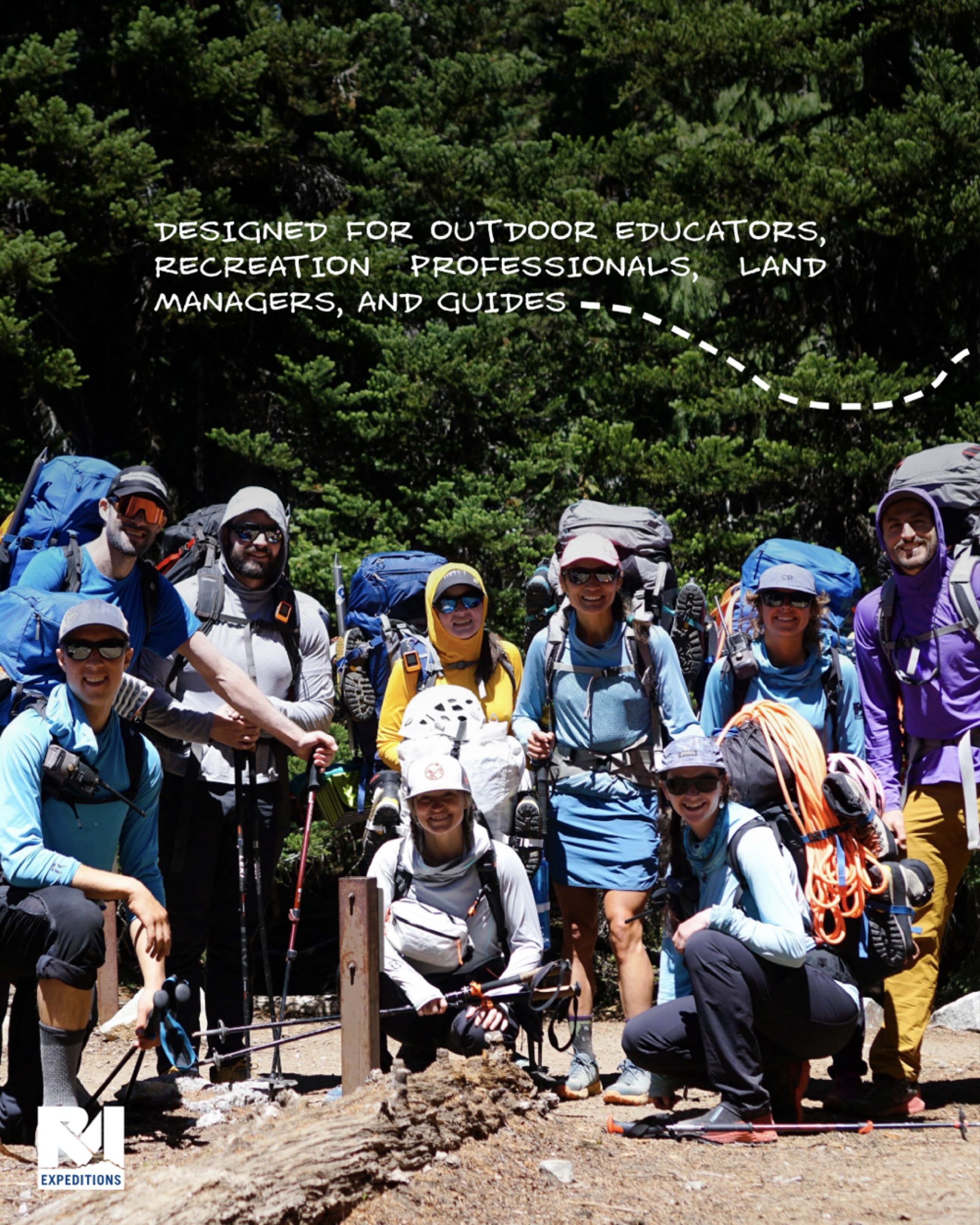
The course is designed for outdoor educators, guides, land managers, university staff, and recreation leaders who want a professional Leave No Trace credential with added alpine-specific training.
When you've been in business since 1969, you pick up a thing or two about mountains you guide. Below are the resources relevant to this program, but you can check out our full Resources section for all of our hard earned knowledge.

Learn how RMI Expeditions practices sustainability in mountaineering through Leave No Trace principles and environmental stewardship. Learn more.
Rainier
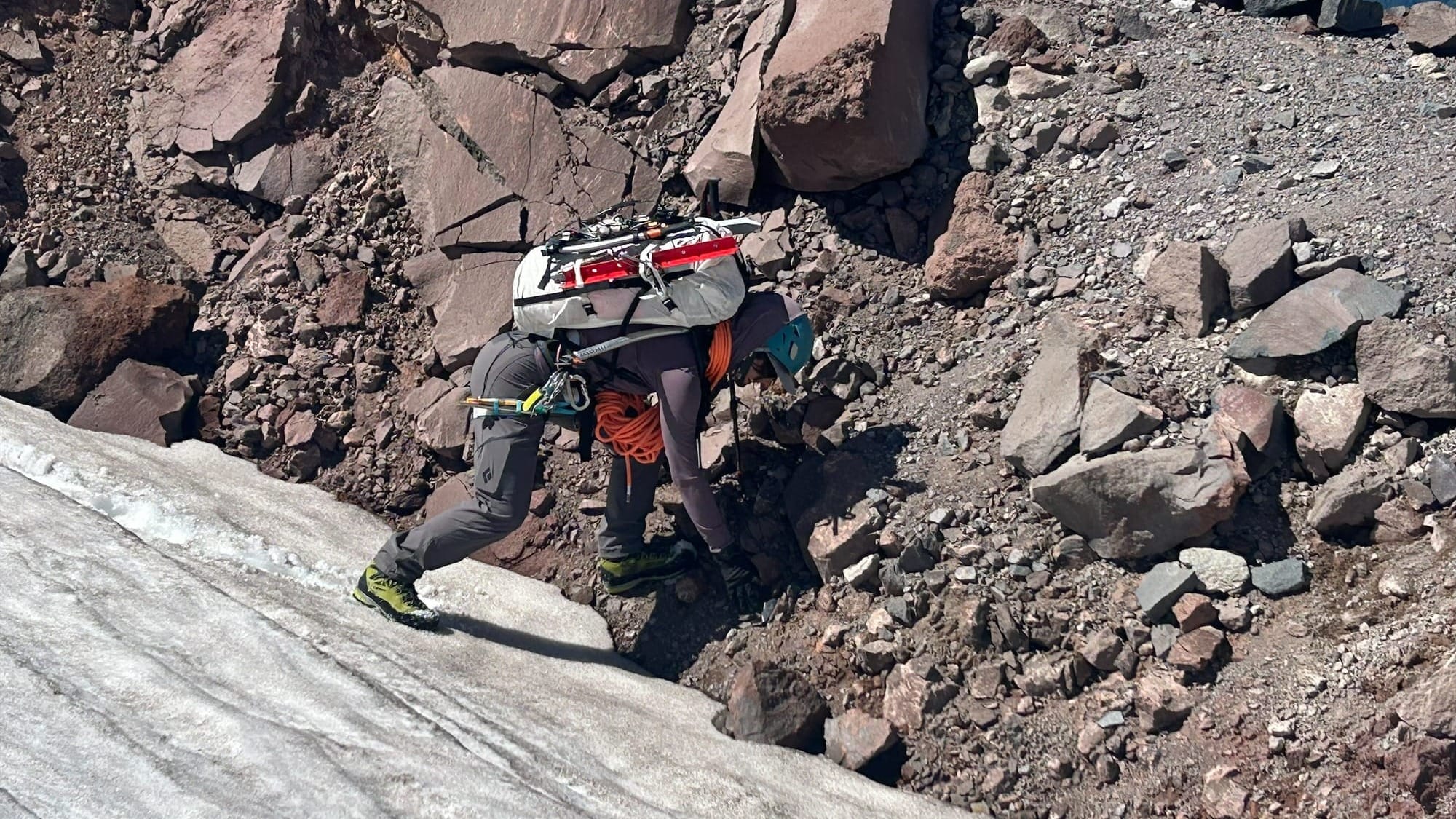
Whether you're stepping onto a trail for the first time or preparing for a high-altitude expedition, the Seven Principles of Leave No Trace are the foundation of responsible outdoor travel.
Rainier
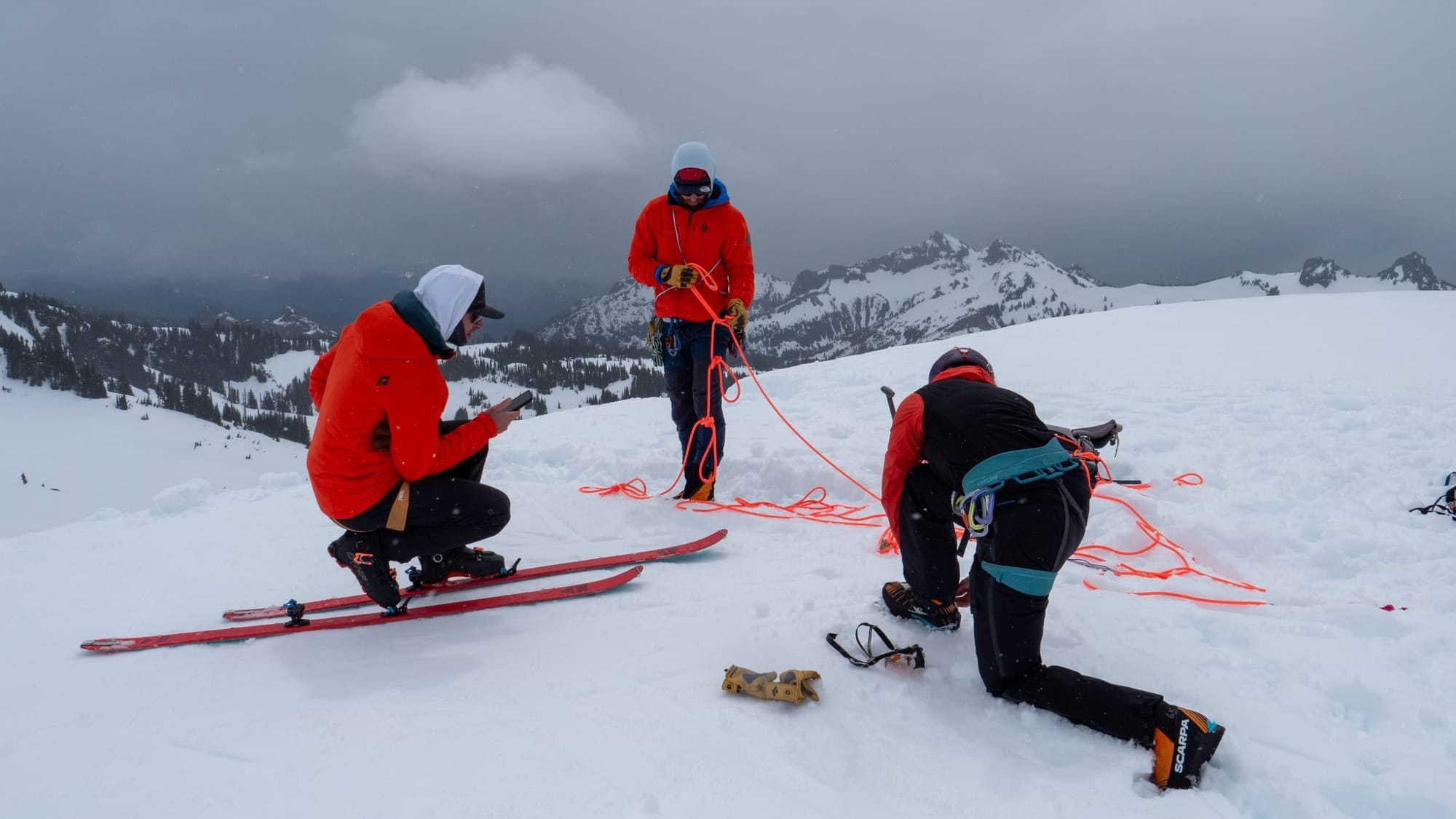
At RMI Expeditions, guiding is more than a job. It’s a profession built on expert training, mentorship, and continual development. Discover how our guides prepare to lead with skill, safety, and purpose in every step of your climb.
Rainier
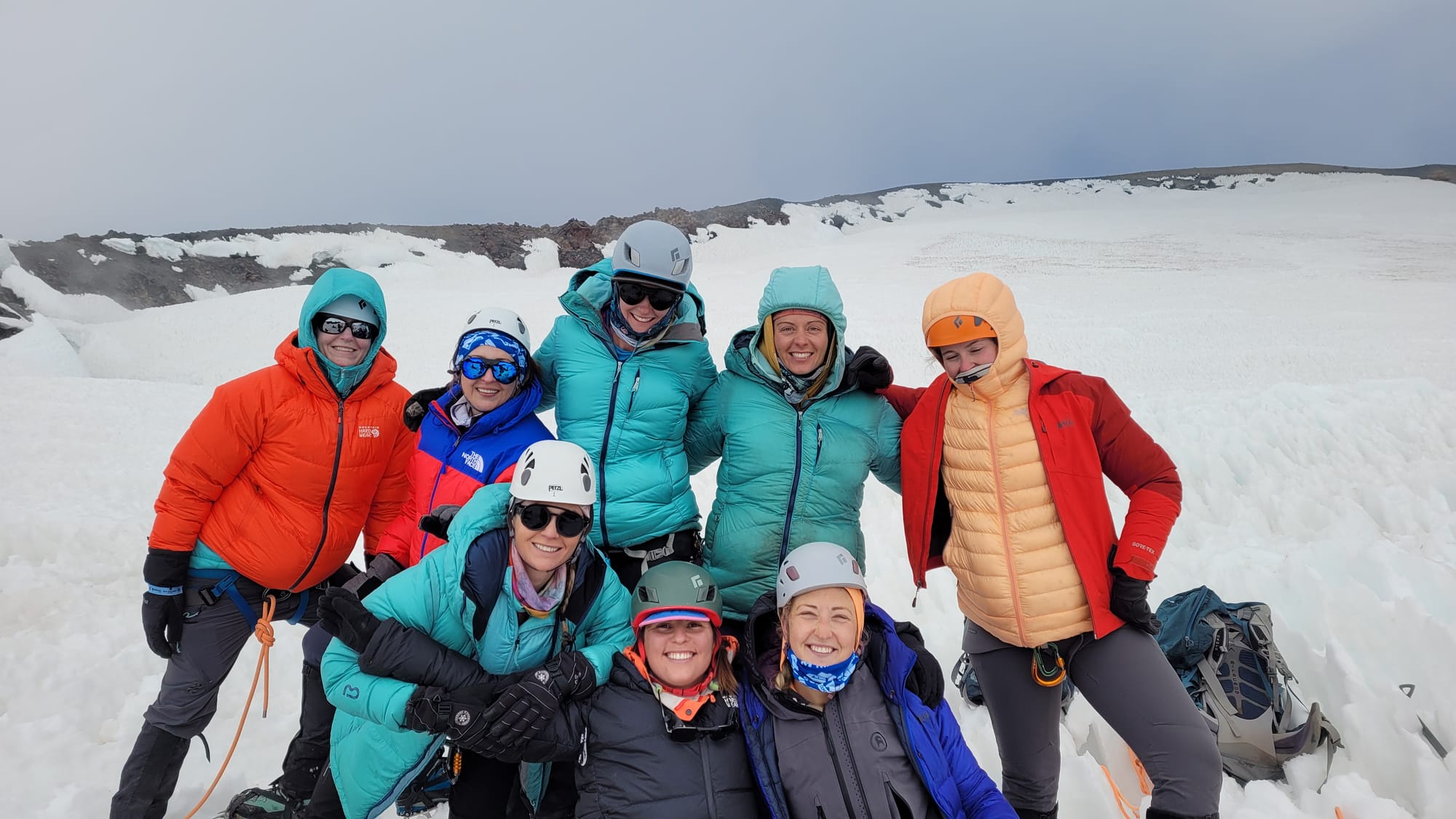
Easier said than done; having a period is nothing to be ashamed of, even in the backcountry. It can be inconvenient, stressful, and painful at times, and being away from the comforts of society can escalate the negatives of having a monthly bleed.
Rainier
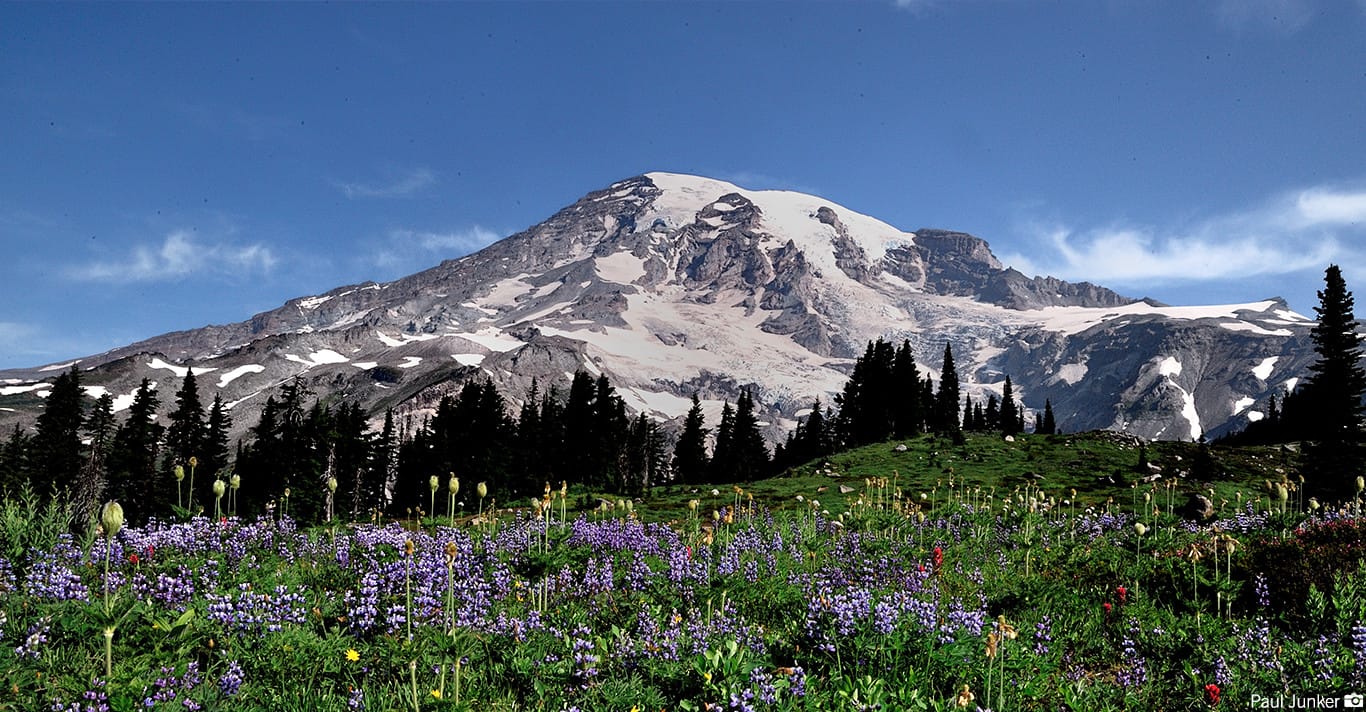
A cultural landscape is a geographic area, including both cultural and natural resources and the wildlife or domestic animals therein, associated with an historic event, activity, or person, or exhibiting other cultural or aesthetic values.
Rainier

Climbers rated RMI with an average of 5 stars across 0 ratings

Sorry! there are no available dates that meet your current criteria
You might consdier one of these trips instead:
Mt. Rainier - Four Day Climb
May 5, 2026
Guides: Jack Delaney, Jess Wedel, Calvin Jiricko
Mt McKinley - West Buttress Expedition
May 5, 2026
Mt. Rainier - Four Day Climb
May 5, 2026