
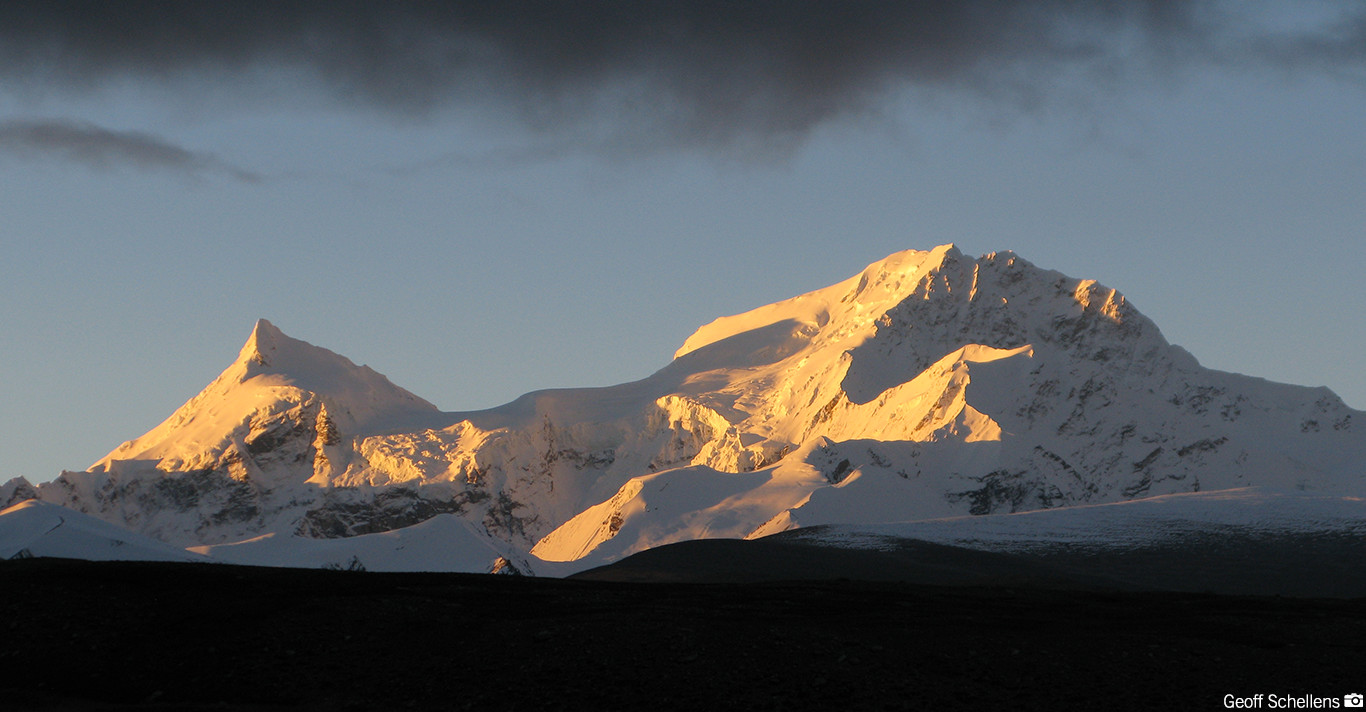
RMI has operated in some of the world's most demanding mountain environments for more than 55 years. That reach comes with obligations; to the landscapes we travel through, the communities we work in, and the guides who lead every program.
Responsible climbing is not a policy we adopted. It is how this company has operated since 1969.
More than 55 years of operating in places like Rainier, Mt. McKinley, Kilimanjaro, and Everest has shaped how RMI thinks about its responsibilities. To the mountain environments that define this work. To the local communities and partners who make international programs possible. To the guides who carry the standard of this profession. And to the climbers who trust us with serious objectives.
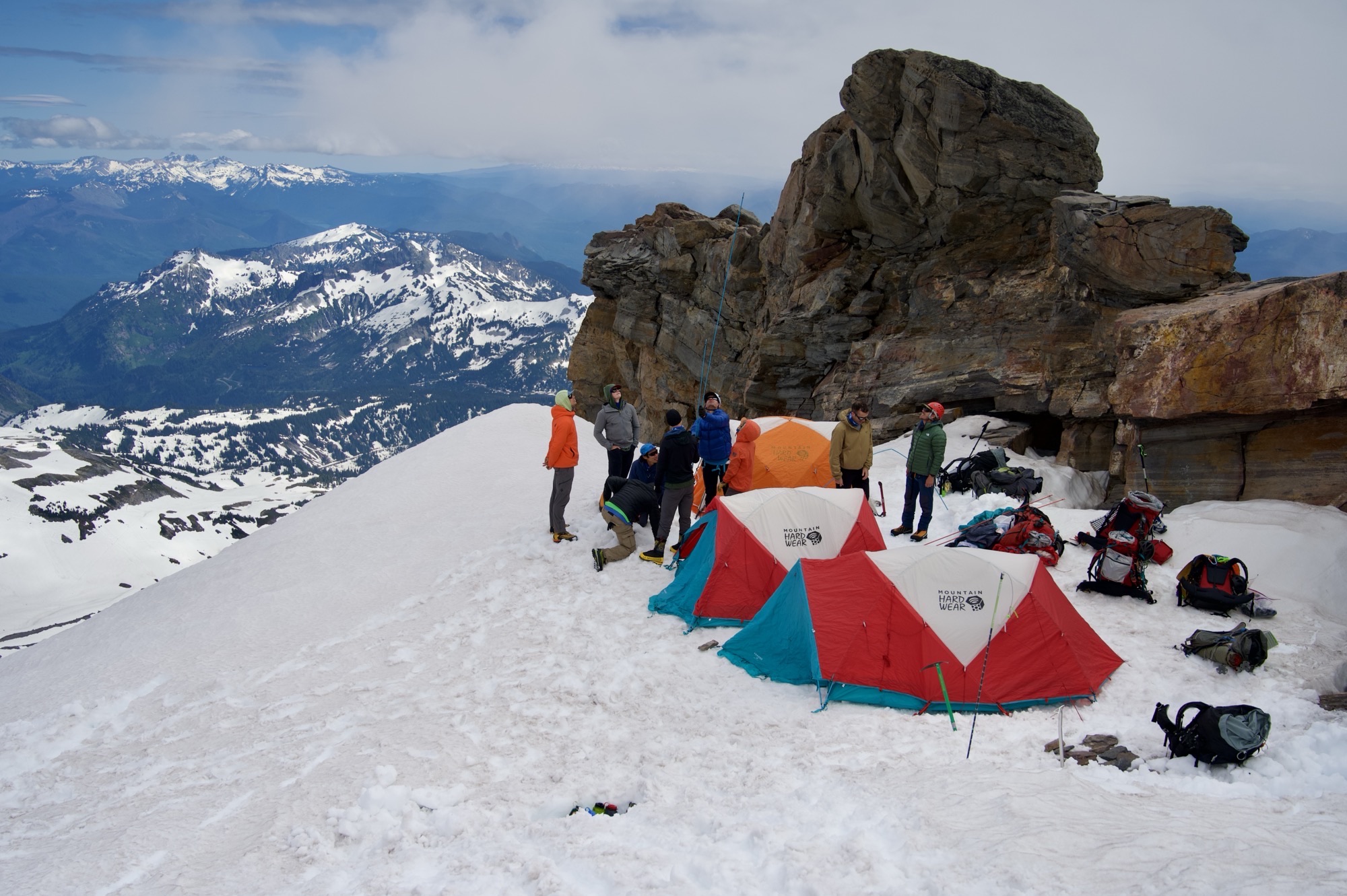
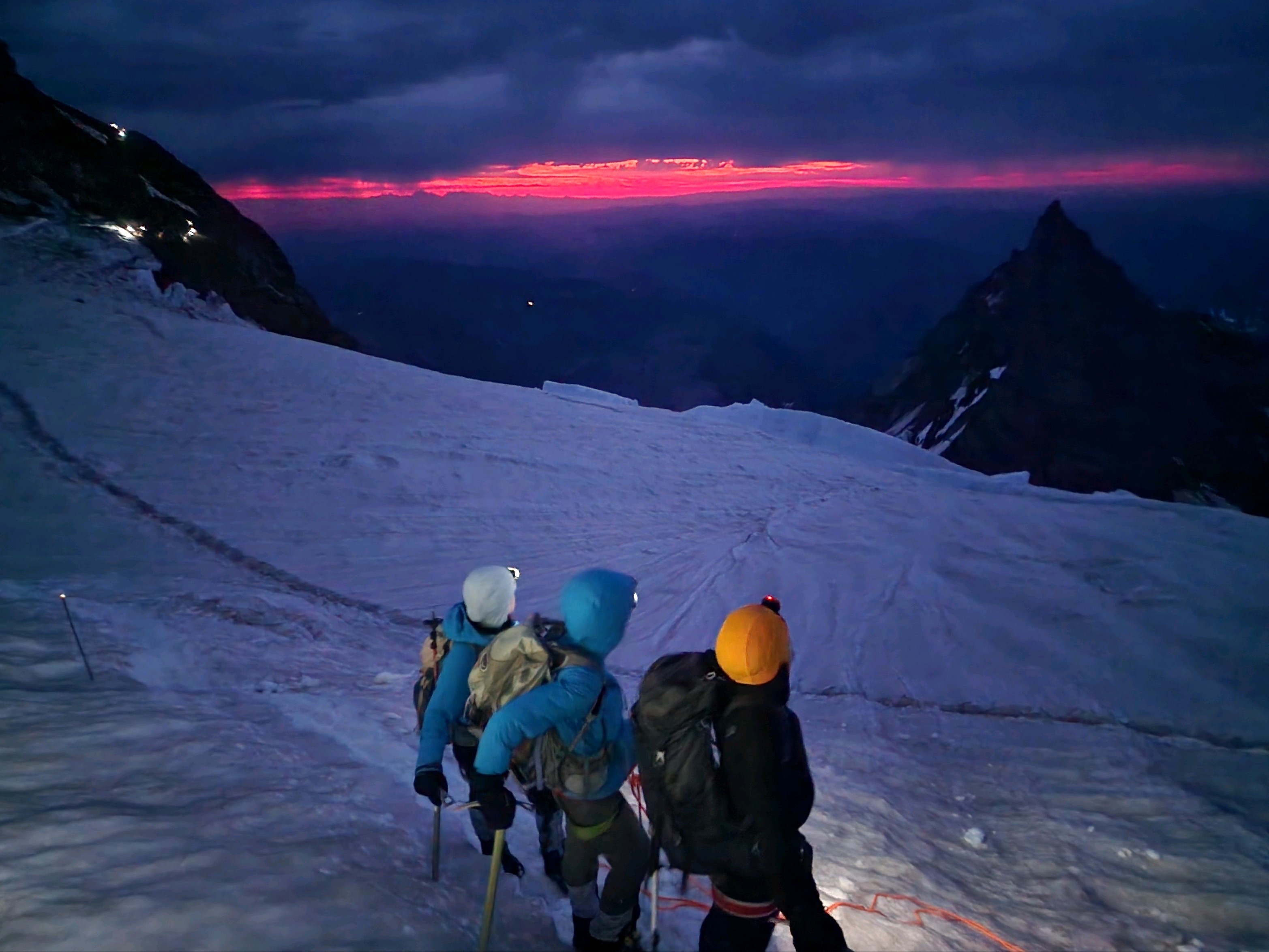


How responsible practice became part of how RMI operates.
Managing our footprint on the mountain and beyond.
Carbon neutral operations in Mount Rainier and Denali National Parks.
Showing up for the communities that make this work possible.
Investing in the guides who lead every program.
RMI has operated in serious mountain environments for more than 55 years. That history comes with obligations that go beyond getting climbers safely up and down a mountain. How we manage our environmental footprint, how we treat the communities we work in, how we develop the guides who lead every program; these are not peripheral concerns. They are central to how this company runs.
The commitments on this page are not recent additions to how RMI presents itself. They reflect decisions made over decades, partnerships built over multiple seasons, and standards held even when no one was watching. Some of that record is still active. Some of it is history. All of it is part of what RMI is.
Resources from RMI guides on environmental practice, mountain stewardship, and responsible expedition planning.
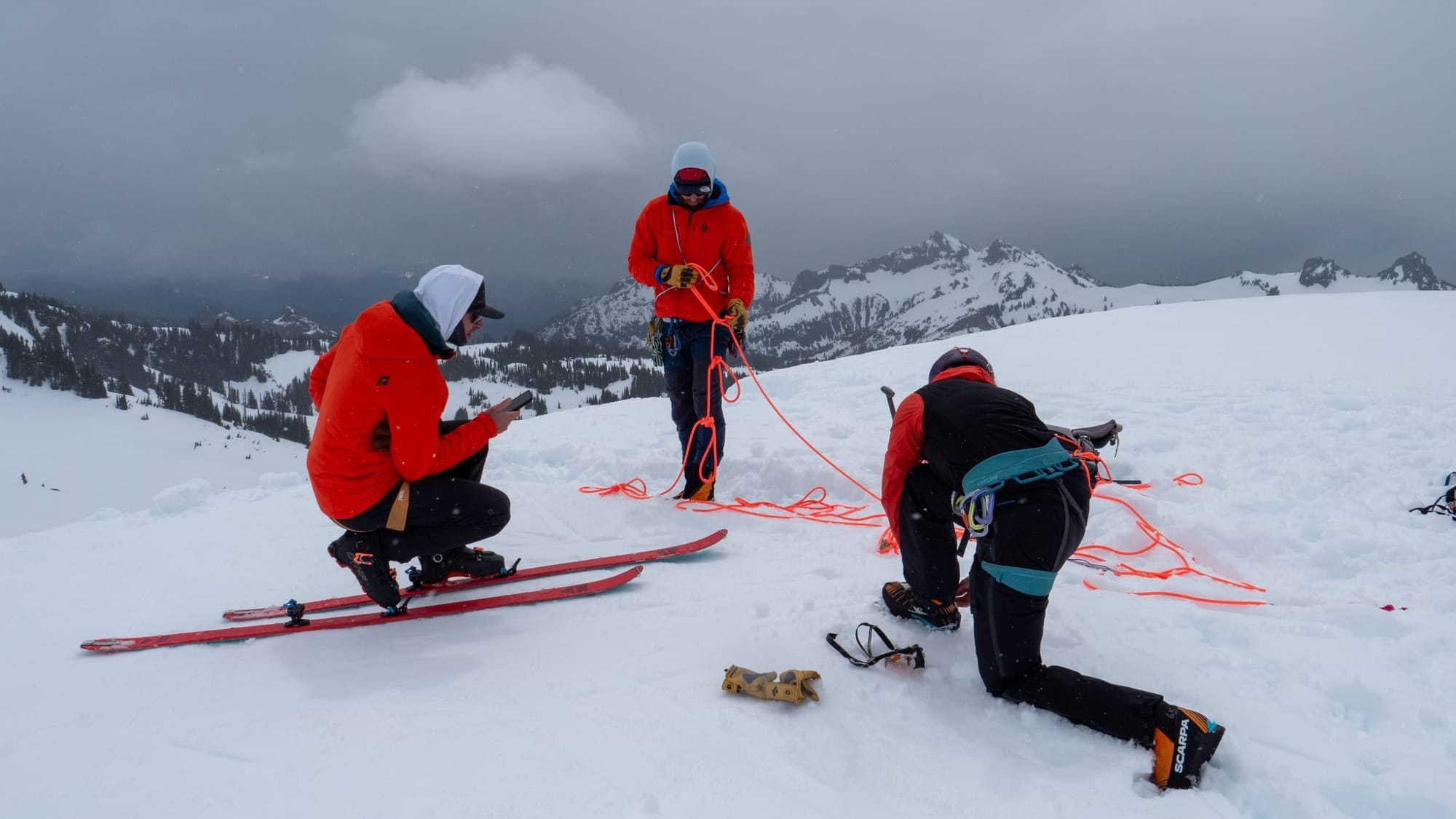
At RMI Expeditions, guiding is more than a job. It’s a profession built on expert training, mentorship, and continual development. Discover how our guides prepare to lead with skill, safety, and purpose in every step of your climb.
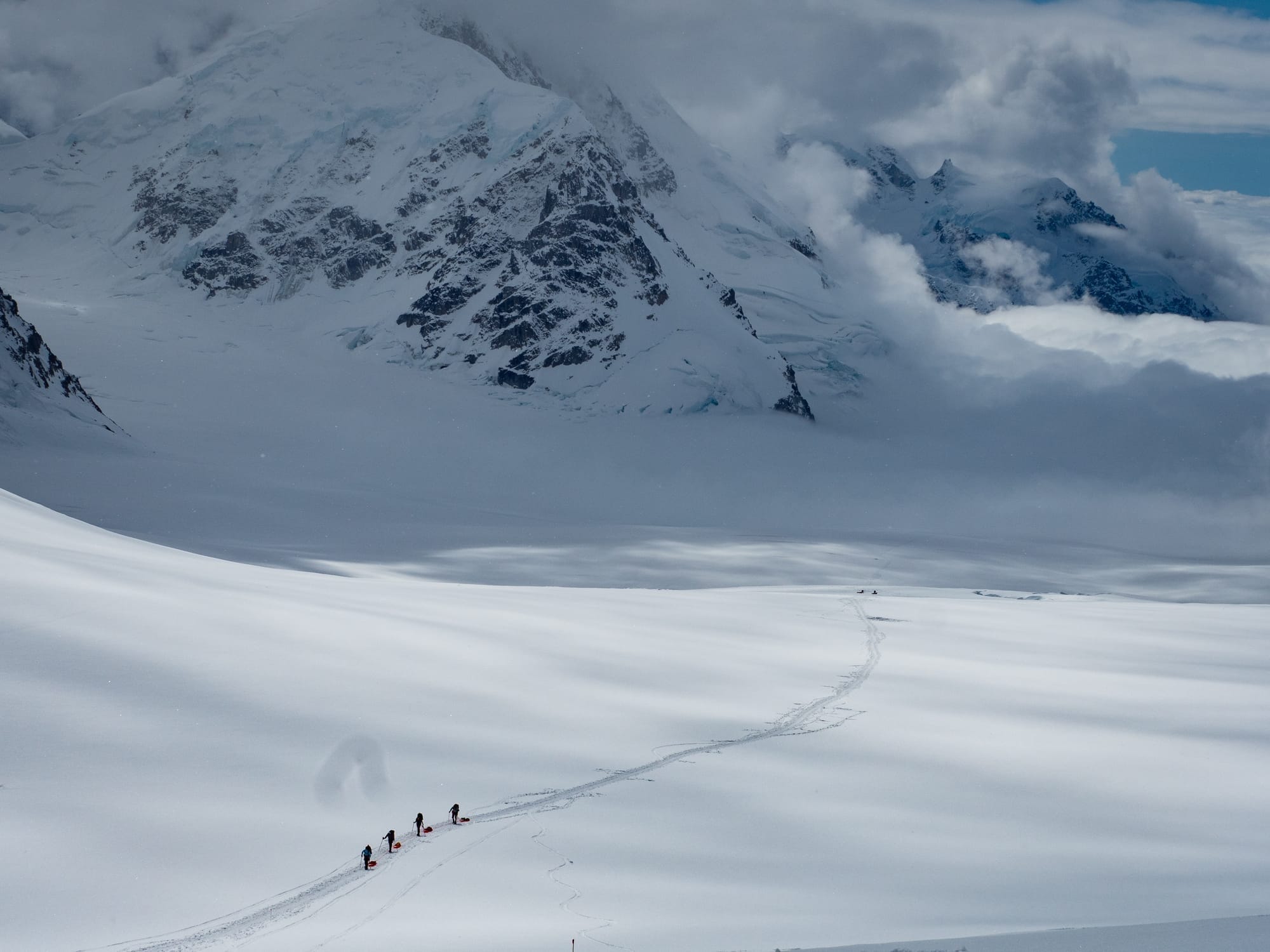
When we learn about risk, we’re not learning to avoid danger. We’re building the judgment to recognize when it is time to pivot, pause, or call it. That’s the true mark of a mountain professional.
Learn how RMI Expeditions practices sustainability in mountaineering through Leave No Trace principles and environmental stewardship. Learn more.
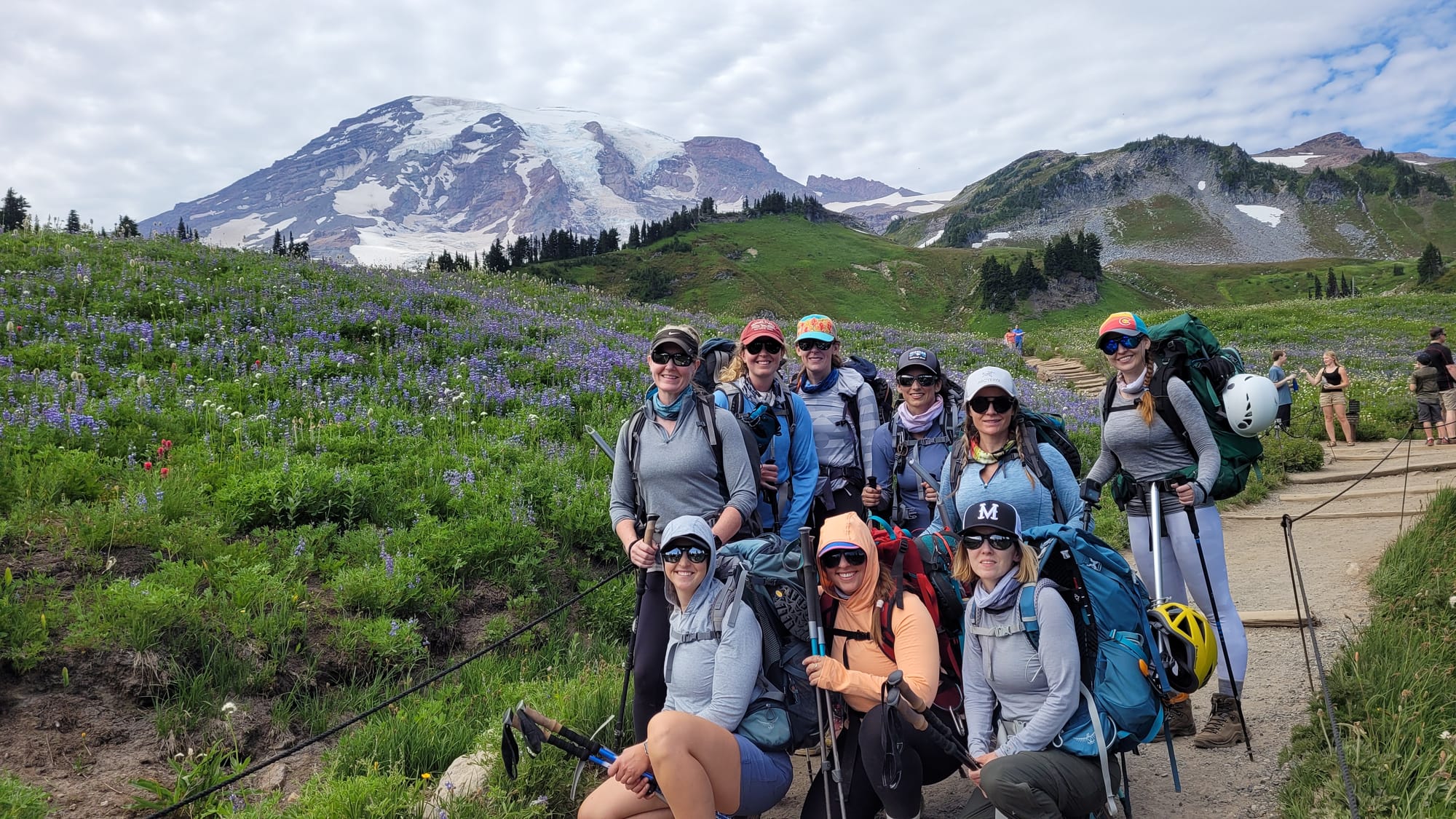
Meet the women who’ve shaped RMI’s legacy in the mountains and inspired generations of climbers around the world. Discover more now.
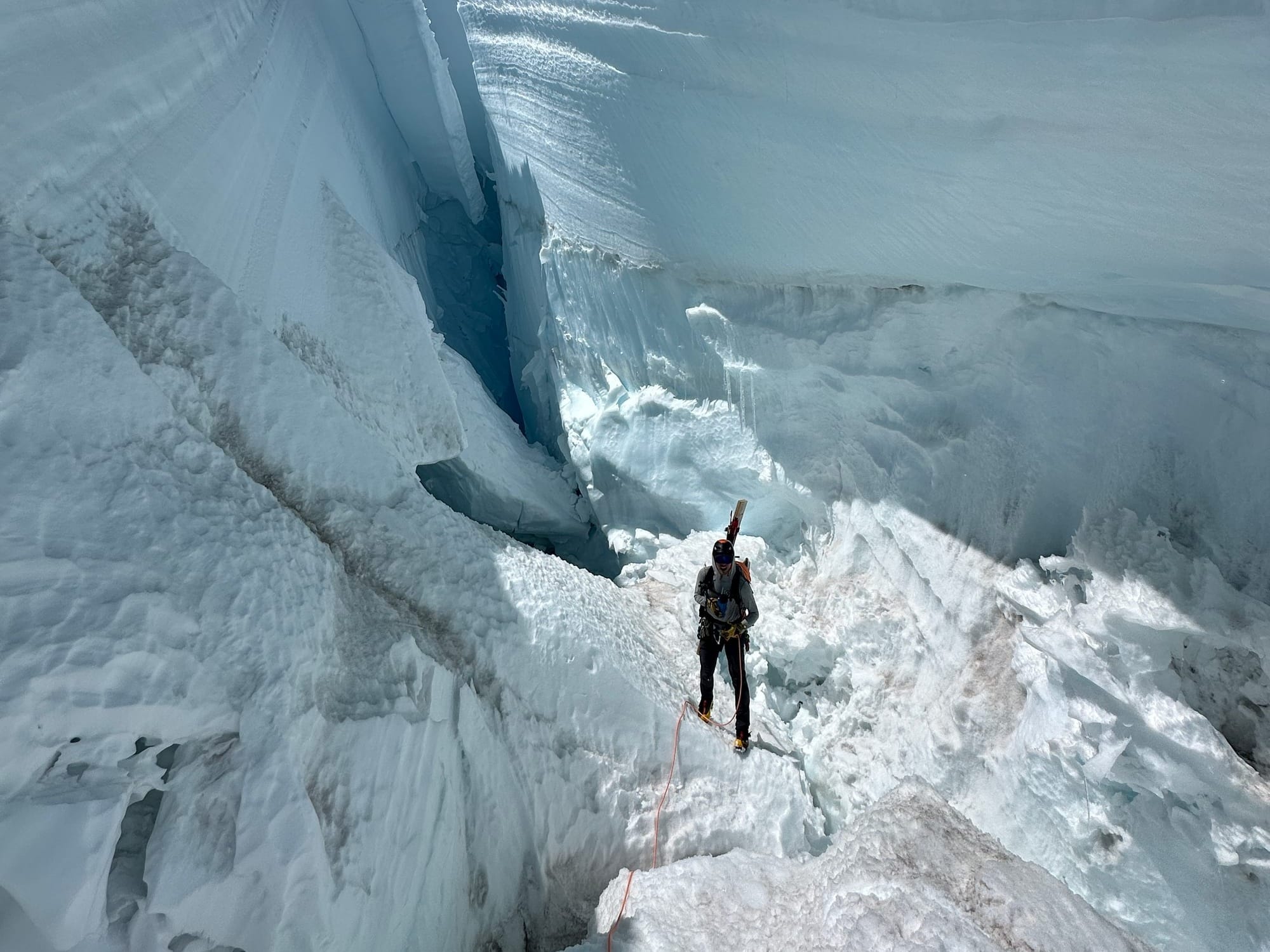
In climbing, the margin of safety is the buffer between risk and return. Learn what it means, how to build it on the mountain, and how RMI guides set the standard for risk management.

Discover eco-conscious climbing tips for reducing your environmental impact on mountains and climbing responsibly with RMI. Explore now.
RMI's environmental practices predate most of the standards that now govern commercial guiding in U.S. National Parks. In several cases, RMI helped write those standards. What follows is the operational record of how that commitment has been built and maintained across more than 55 years.

How RMI helped write the standard, then built a program around it.
Learn more about how RMI Expeditions was the first ever guide service to be recognized as a Gold Standard Outfitter.

Operational decisions that reduce footprint on every program.
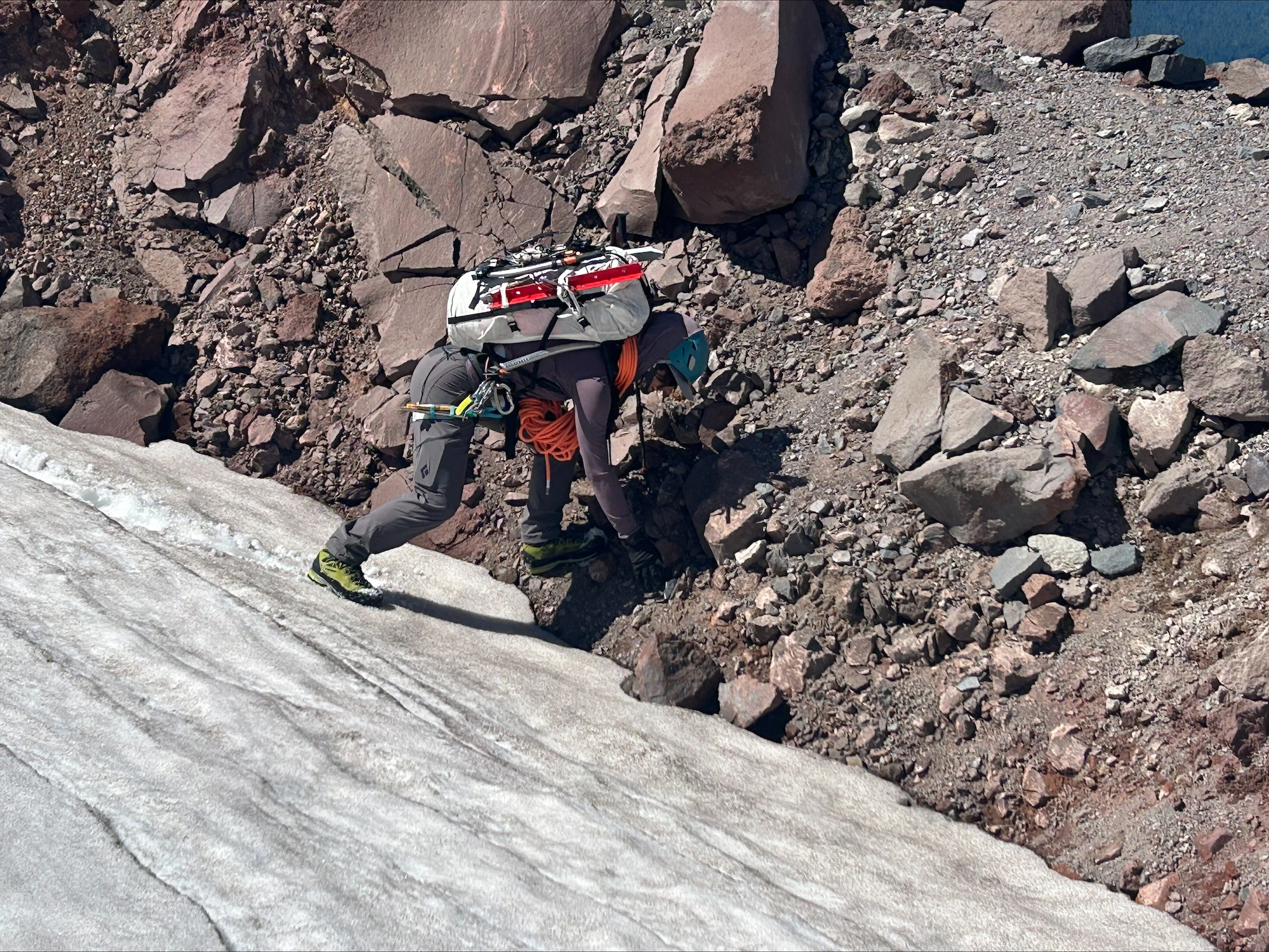
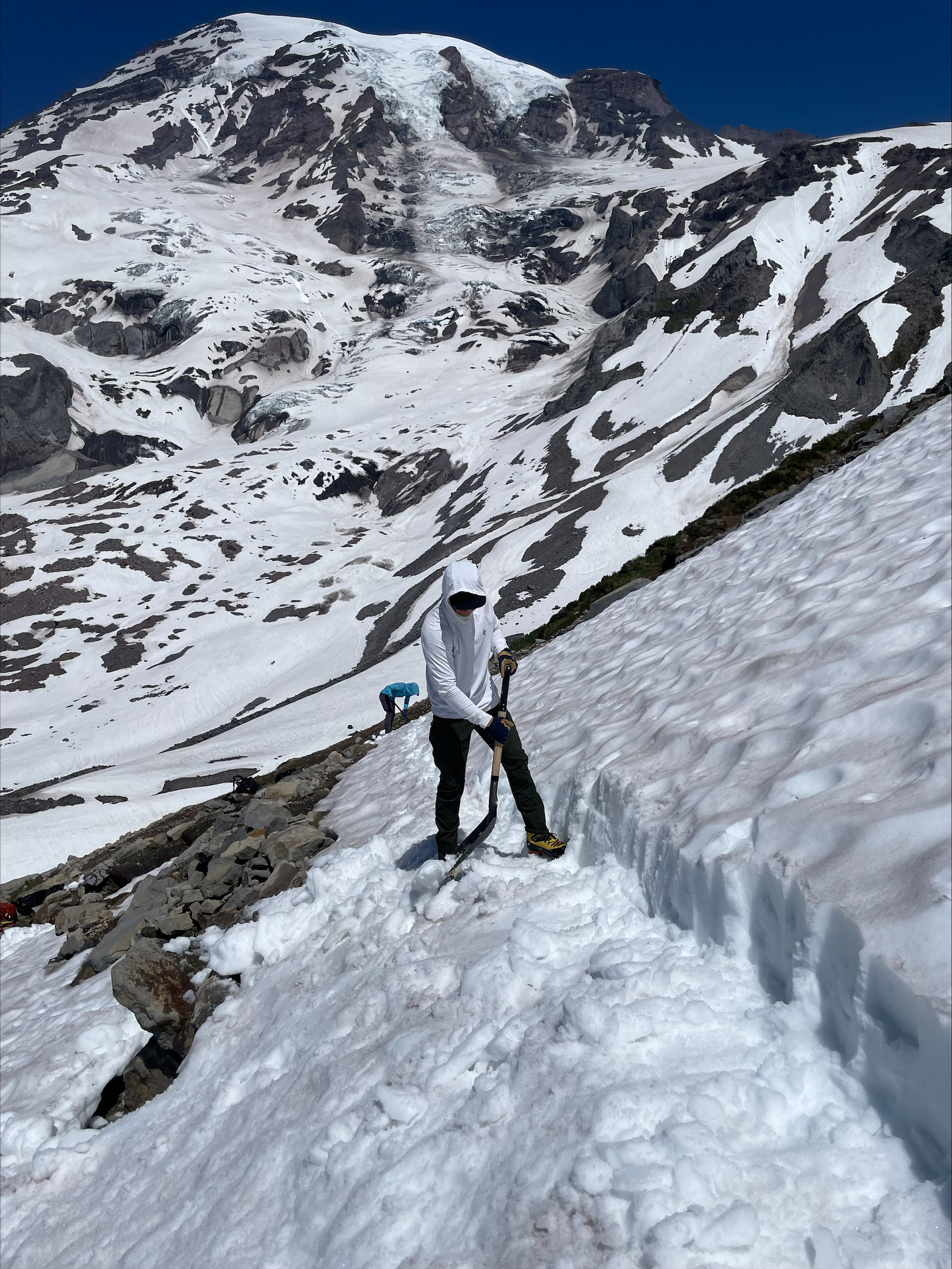
The operational choices RMI makes on the mountain are deliberate and specific. In 2002, an RMI expedition led by guide Dave Hahn became the first commercially guided team to carry all of its waste off Mt. McKinley. RMI adopted Denali National Park's Clean Mountain Can program from its inception and continues to work directly with land managers on best environmental practices for high-altitude environments. Every year, RMI guides contribute 40 volunteer days to Environmental Patrol on Mount Rainier, collecting and weighing waste to track progress over time. RMI is currently the only guide service on Rainier running this program.
That same commitment shaped infrastructure decisions. RMI does not use helicopters to carry supplies to Camp Muir -- propane, food, tents, and gear all move by human power, a deliberate choice to preserve the wilderness character of the mountain. Solar installations on both Everest and Mount Rainier reduce fuel consumption and the logistical footprint of high-camp operations. At the base of Rainier, RMI runs electric hybrid shuttles for climbers, a recycling program covering office and mountain operations, and guide housing that keeps vehicles off the road.

Active relationships with the parks we call home.
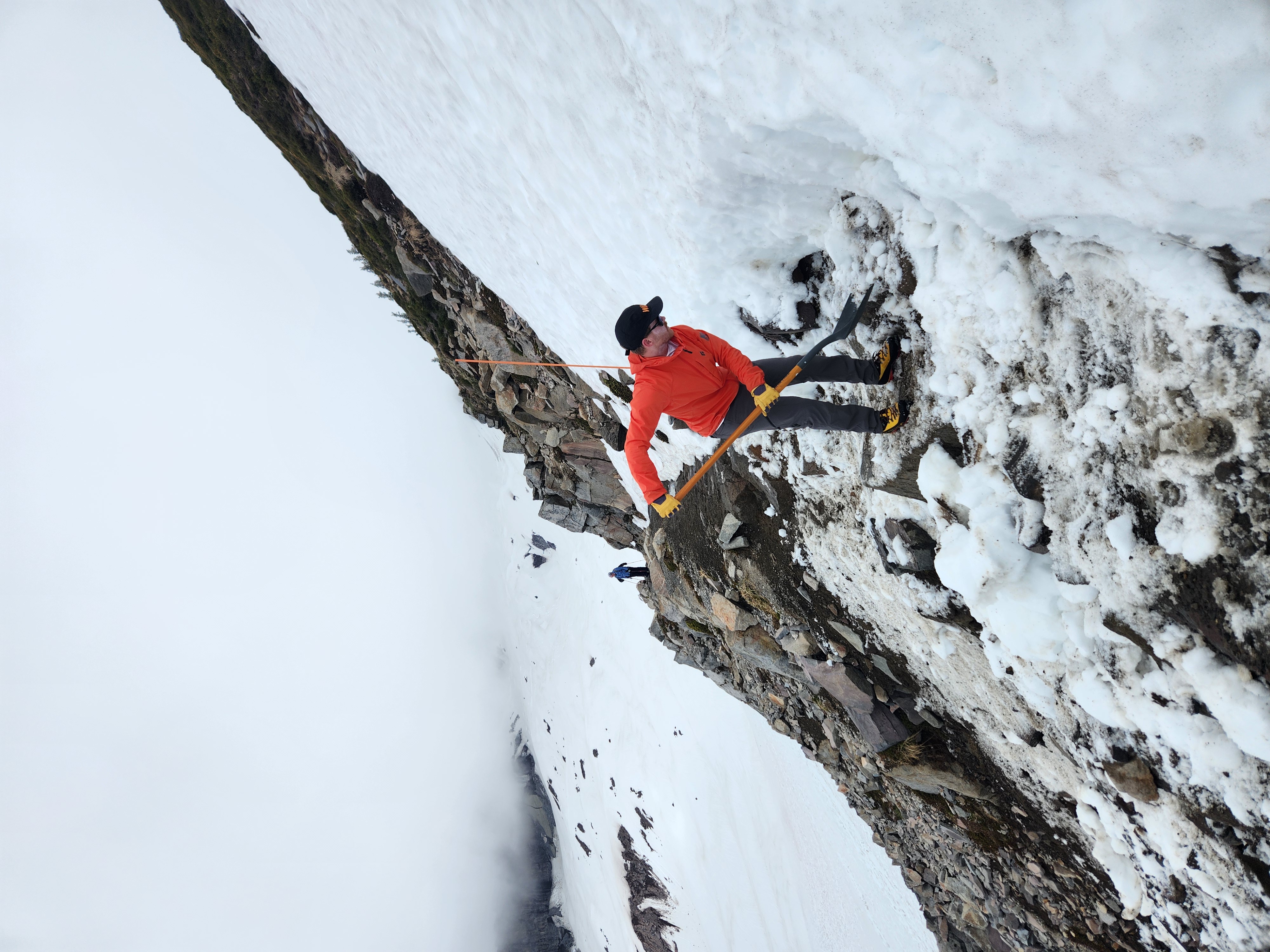
RMI operates primarily within Mt. Rainier National Park and Denali National Park and Preserve, and those relationships are substantive. A portion of revenues from climbs within those parks goes directly back to support park operations. RMI was instrumental in leading the shift that required guide services in Mount Rainier National Park to use shuttles rather than allowing climbers to drive individual vehicles to Paradise, a change that reduced emissions, cut entrance line wait times, and freed up parking for non-guided park visitors. A Department of Interior Environmental Audit recognized RMI's voluntary stewardship efforts with commendations of excellence, reflecting practices that were already standard rather than ones adopted in response to the audit.

The same standards, applied everywhere we climb.
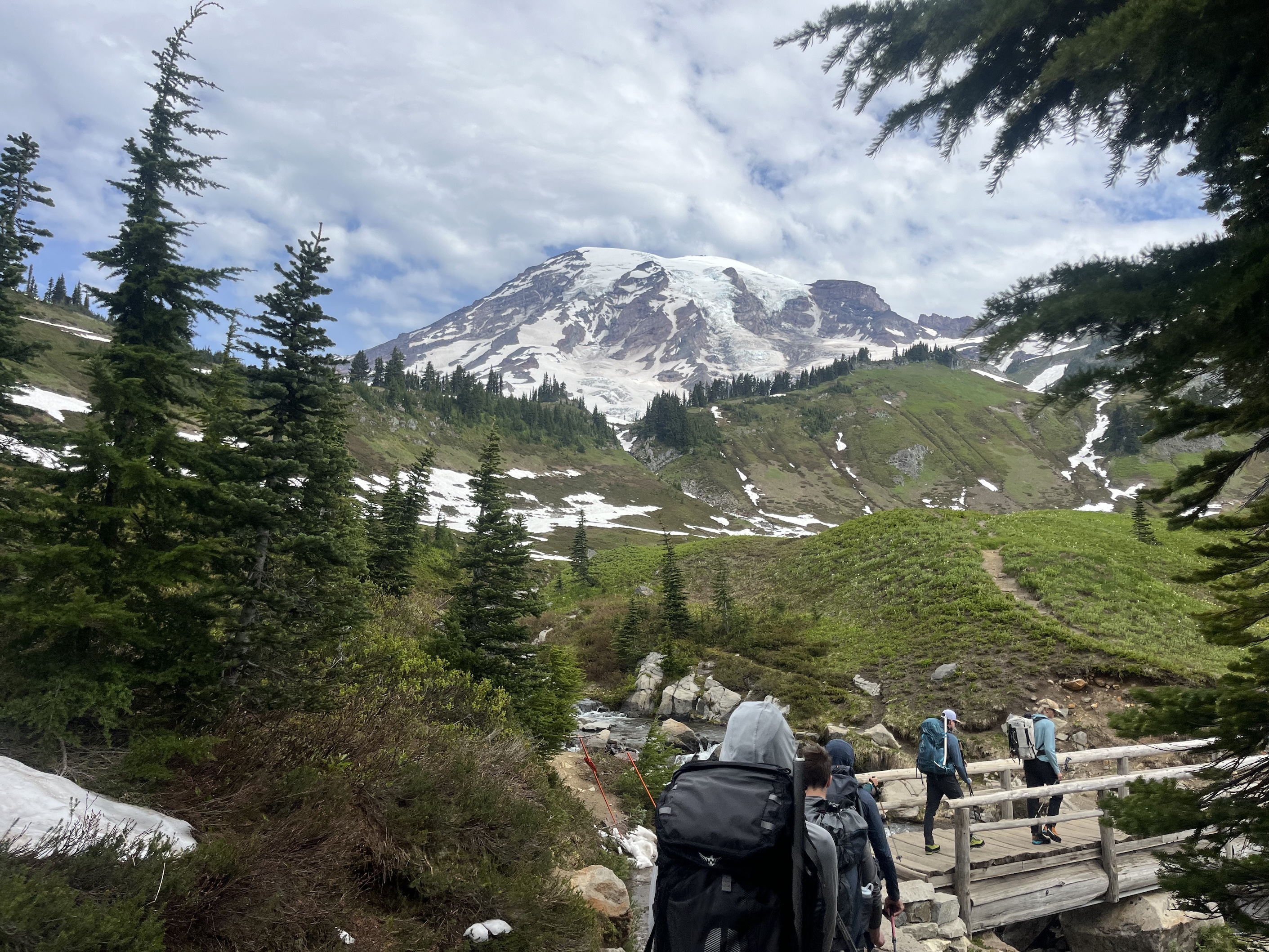
RMI applies the same environmental standards to its international programs that it holds itself to domestically. On Kilimanjaro, RMI groups have returned from the summit with over 20 pounds of collected trash after guides began picking up discarded hand warmers and waste left by other teams. On Aconcagua, Everest, and Carstensz Pyramid, RMI works with local guide partners to promote LNT practices in environments where no federal mandate exists. RMI has also participated in the Sustainable Summits Conference, hosted by the American Alpine Club, where land managers, climbers, and scientists gather to develop global environmental standards for mountain regions. The ethos travels with the team regardless of which permit system governs the mountain.
How RMI accounts for its emissions in the parks it operates in.
Ostrom Climate manages carbon offset projects that undergo rigorous third-party verification to confirm that emission reductions are genuine and permanent. RMI's partnership focuses specifically on operations within Mt. Rainier National Park and Denali National Park and Preserve, where the company has the deepest and longest-running presence. The offsets purchased through this partnership directly counterbalance the greenhouse gas emissions generated by those programs, ensuring that RMI's footprint in these federally protected landscapes is net zero.
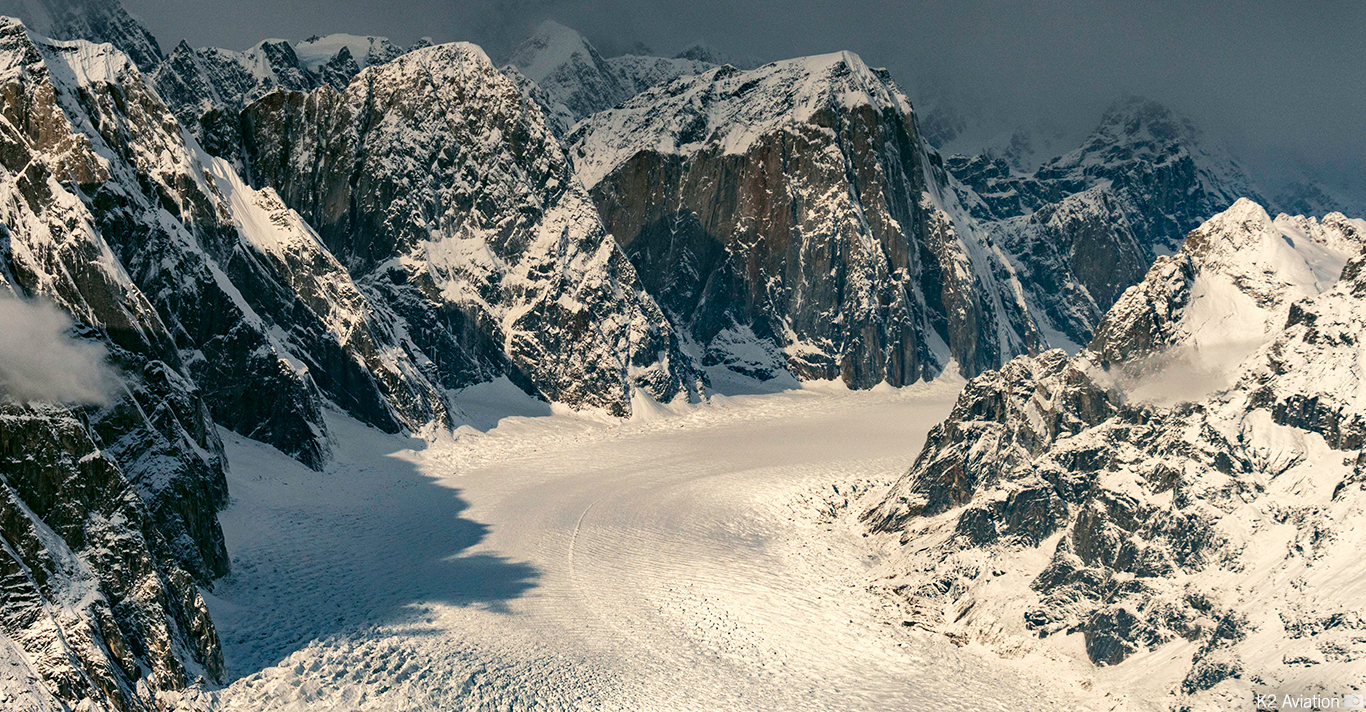
RMI partners with Ostrom Climate, Canada's leading carbon management solutions provider, to purchase verified offsets for greenhouse gas emissions generated by its operations in Mount Rainier National Park and Denali National Park and Preserve.
Where RMI's Offset Investment Goes
RMI's offsets directly benefit the Great Bear Rainforest Carbon Project, an Improved Forest Management initiative that generates emission reductions by protecting forest areas previously designated for commercial logging. Located on the traditional territory of indigenous peoples with unextinguished aboriginal rights and title, it is the first carbon project of its kind in North America to balance ecological integrity and human well-being through carbon finance. By supporting this project, RMI prevents an equivalent volume of greenhouse gas from being emitted elsewhere, making the offset contribution tangible rather than theoretical.
Guiding people into serious mountain environments means operating in someone else's home. In Tanzania, Nepal, Papua, Mexico, and the American West, RMI's programs run through communities that depend on the mountains as much as we do. The social commitments on this page reflect what it means to take that seriously -- fair wages, community investment, medical access, and opening the outdoors to people who wouldn't otherwise have it.

Ensuring the people who make our climbs possible are treated fairly.
RMI partners with the Kilimanjaro Porters Assistance Project (KPAP) on all Kilimanjaro programs. KPAP, an initiative of the International Mountain Explorers Connection, monitors climbing companies for compliance with fair wage standards, proper equipment, adequate food, and ethical working conditions for the mountain crew that makes every ascent possible. Partnering with KPAP is a choice, not a requirement, and it reflects RMI's position that the economics of a guided climb should benefit everyone involved. In 2010, RMI shipped an entire container of hiking and climbing gear to KPAP to distribute to porters and guides on Kilimanjaro. On every international program, RMI also encourages climbers to bring gear to donate to local mountain staff who have limited access to proper equipment.
.JPG)
.jpg)
Building relationships that outlast any single season.

Supporting healthcare in the remote places we operate.
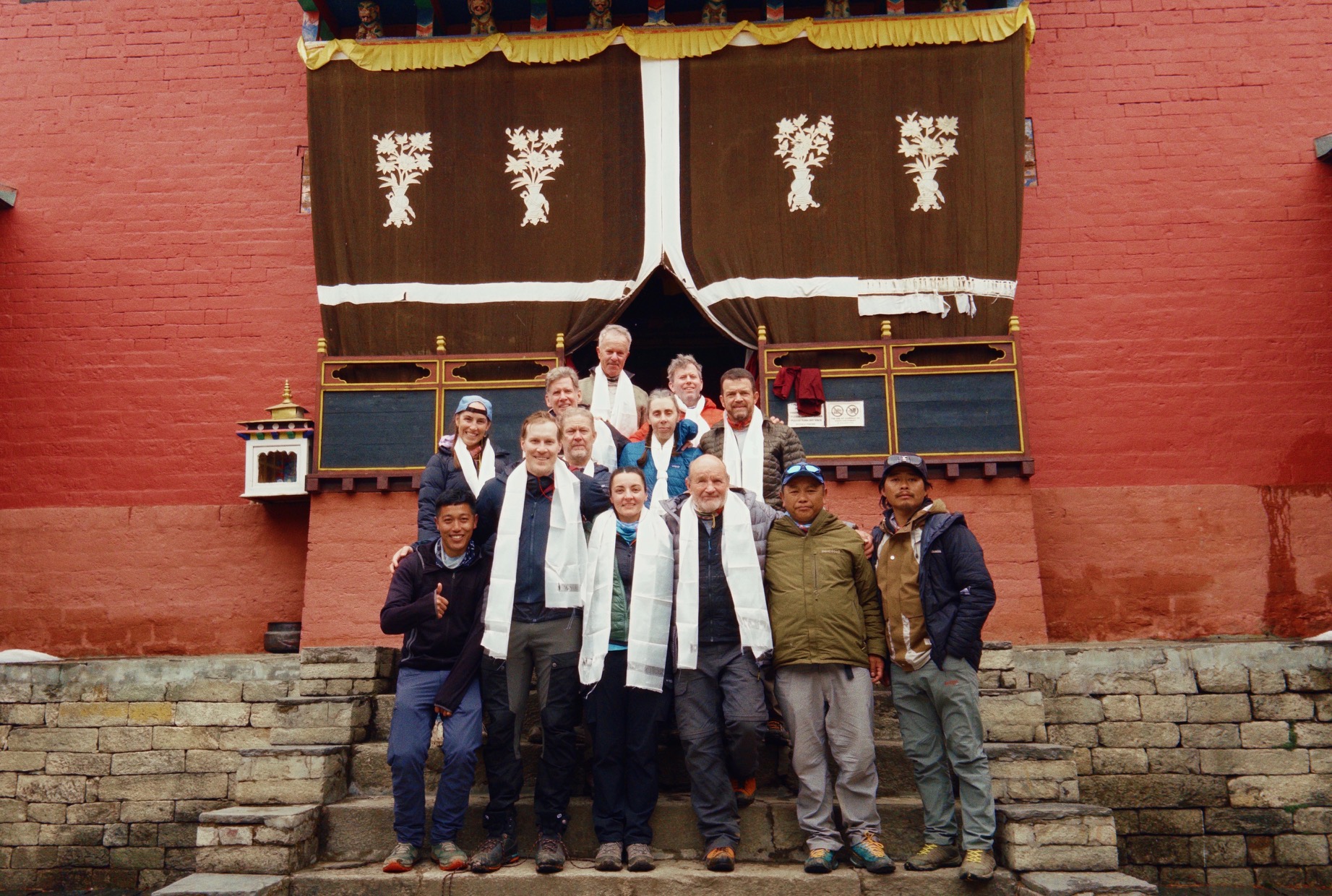
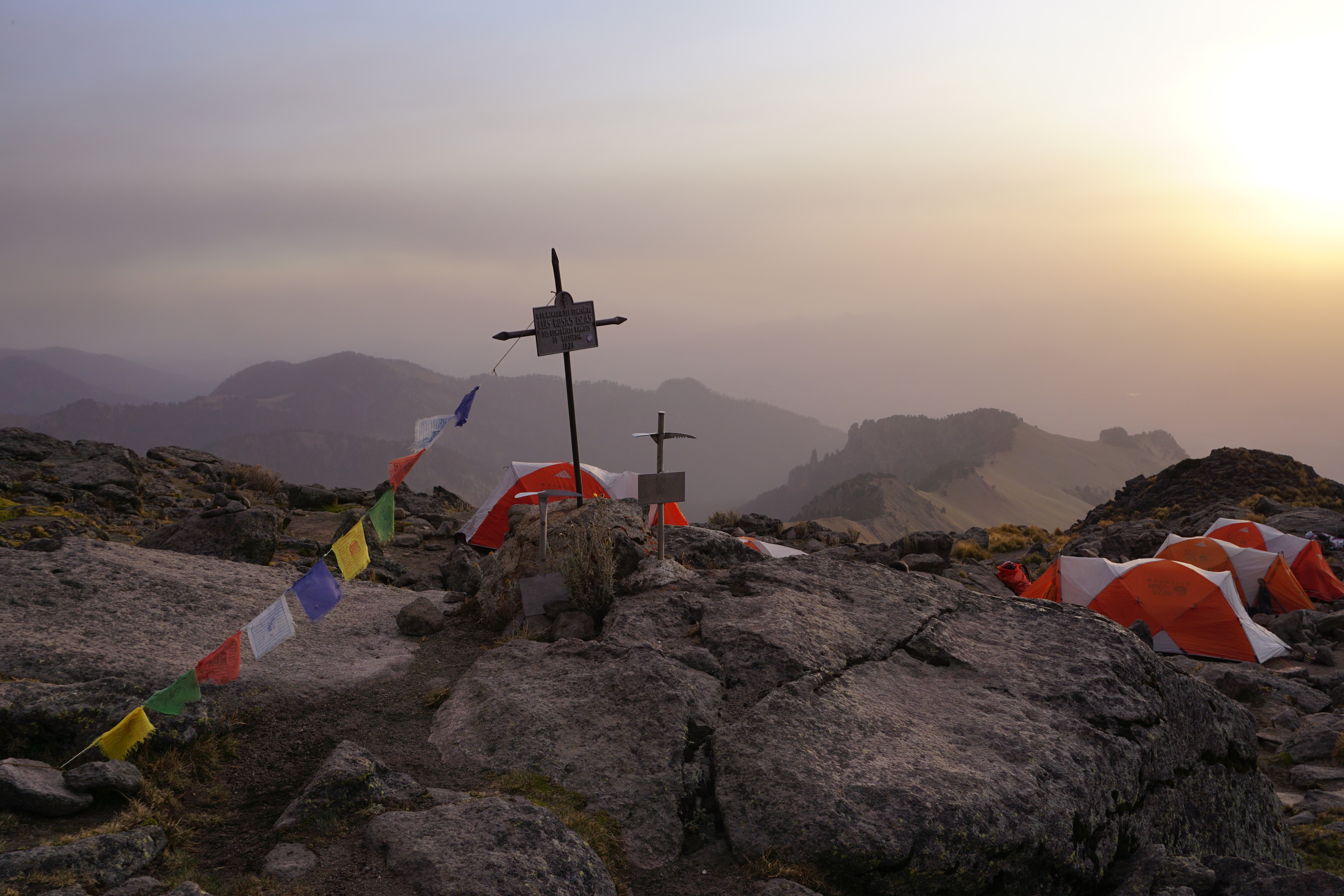
In Mexico, at the base of Pico de Orizaba, RMI works closely with its local outfitter to support the MEX-AMbulance Project, an initiative that brings medical services to both the mountain and remote communities in the surrounding area. In the Himalayas, RMI partners with the Himalayan Rescue Association, a nonprofit established in 1973 that operates high-altitude aid posts in the Khumbu and Annapurna regions, providing medical care to trekkers and local Nepali communities alike. Both partnerships reflect a consistent position: that operating in remote mountain environments carries an obligation to support the infrastructure that keeps those places safe for everyone in them, not just paying climbers.
Bringing the mountains to people who wouldn't otherwise have access.
In the United States, RMI has partnered with Big City Mountaineers, a nonprofit that provides free, fully outfitted wilderness experiences for youth from under-resourced communities across the country. RMI has led Summit for Someone climbs on Mount Rainier in support of BCM, raising funds that directly support their programs. RMI has also partnered with the Northwest Avalanche Center and led fundraising climbs for the St. Baldrick's Foundation, which supports childhood cancer research. These domestic commitments share the same logic as RMI's international social work: the mountains are a resource, and access to them should extend beyond those who can already afford it.
RMI's founder Lou Whittaker was considered the Godfather of American Mountain Guiding. That title was not honorary. It reflected a belief that guiding is a true profession -- one that deserves the same investment, standards, and career infrastructure as any other skilled vocation. That belief still drives how RMI operates. We demand professionalism from our guides. We offer professional conditions in return.

Fair compensation, professional benefits, and an environment where guides can build a life.
RMI believes that career mountain guides deserve career-level professional support. That means fair compensation, continuing education investment, housing, SIMPLE IRAs, and access to HR resources -- the kind of professional infrastructure that makes guiding a sustainable vocation rather than a seasonal side income. Every RMI program is led by an RMI guide. On international programs, RMI guides lead alongside vetted local partners who meet RMI's operational standards. That direct employment model is what makes consistent professional standards possible across every program, every season, on every mountain RMI operates on. It is also what makes it possible for guides to build careers worth having -- careers that attract the kind of talent that Lou Whittaker believed the profession deserved from the beginning.

The industry's most rigorous standard for guide services, voluntarily maintained.
AMGA accreditation is not a requirement for operating a guide service in the United States. It is a voluntary, comprehensive professional review that evaluates a business across staff training and certification, risk management systems, operational guidelines, and administrative practices. Guide services that pursue and maintain it do so because they take the profession seriously. RMI is an AMGA accredited guide service, meaning every program operates within a framework that has been independently verified to meet the highest standards in American mountain guiding. That accreditation is not a marketing credential. It is a reflection of how RMI believes a guide service should be run.
.jpeg)

Developing guides who raise the standards of the profession, not just our own programs.
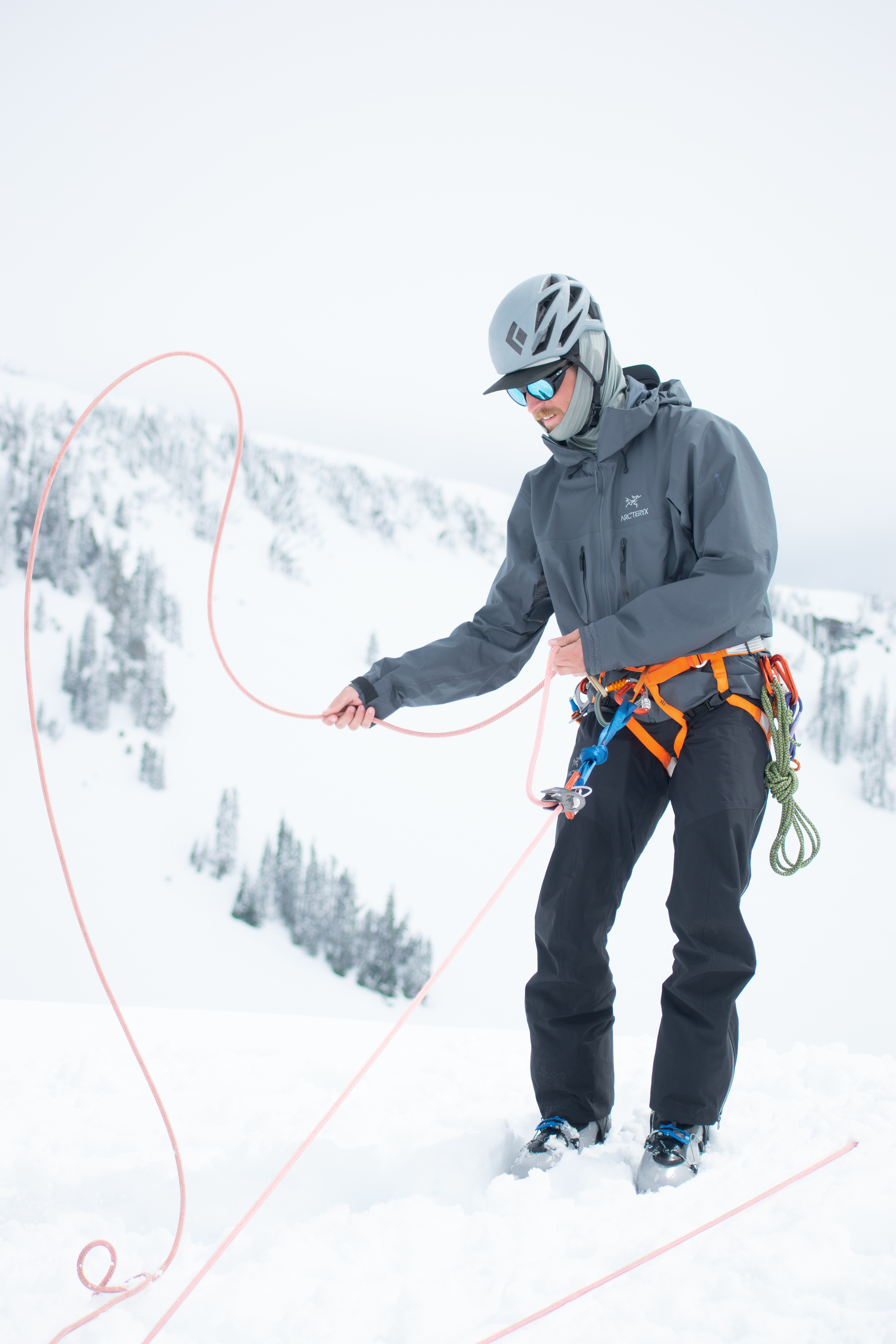
Terminal AMGA certification across all three disciplines -- Alpine, Rock, and Ski -- requires a minimum of 86 days of instruction and examination, plus years of accumulated guiding experience. It is one of the most demanding professional credentialing processes in any outdoor field. RMI has invested more than $100,000 in guide education grants to help its guides complete that process. That investment reflects a straightforward conviction: the quality of a guided program is determined by the guides who lead it, and developing those guides is worth the cost. Guides who train and certify through RMI carry those standards wherever their careers take them. Over 300 guides have built careers through RMI since 1969, many going on to establish guide services of their own across the country.


