

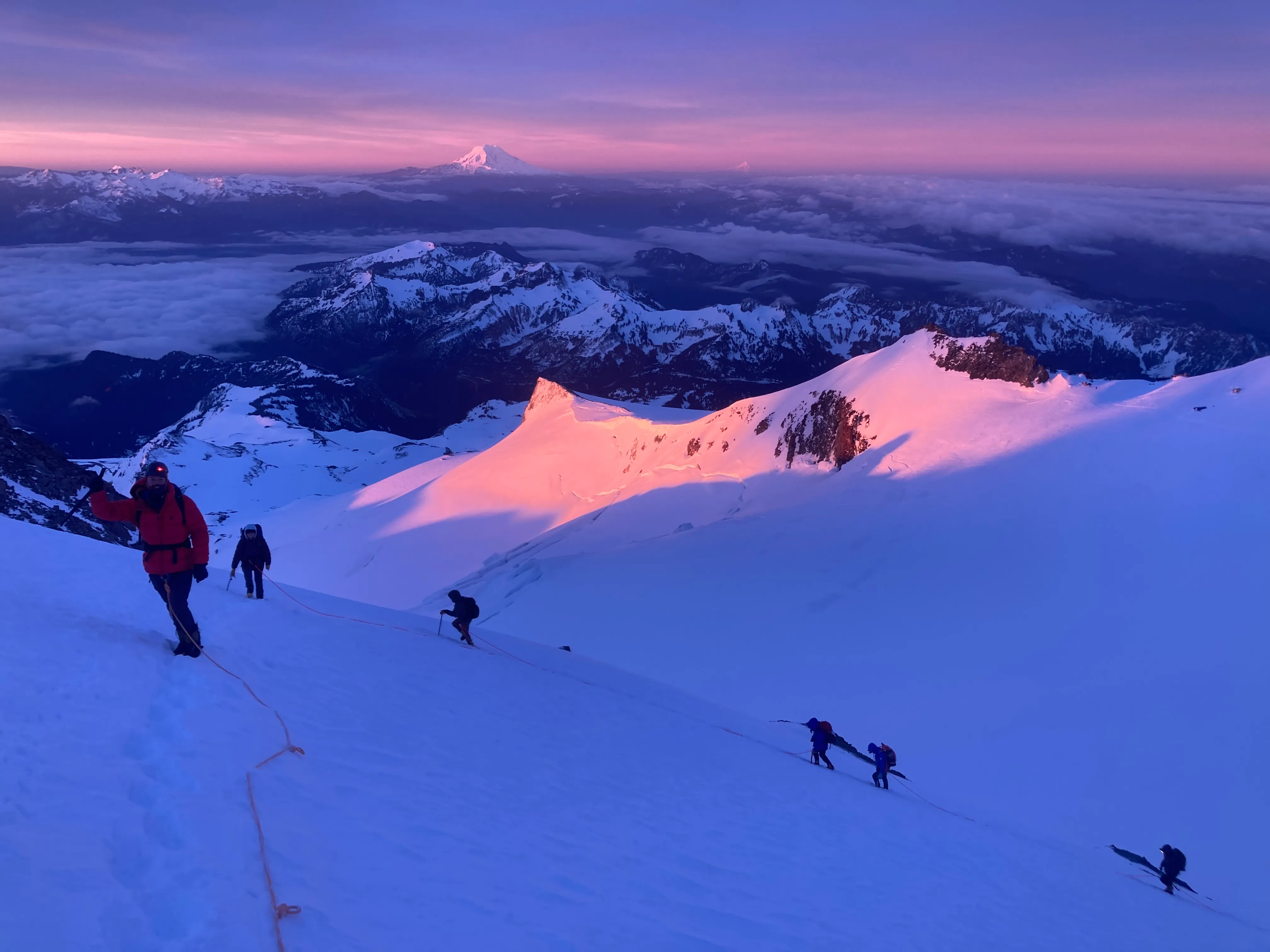
RMI Expeditions was founded in 1969 by Lou Whittaker and Jerry Lynch with a conviction that guides should teach, not just lead. What started on one mountain now spans seven continents, 40+ programs, and more than 100,000 climbers guided. But the number that matters most isn't in the stat row below. It's the one that's harder to count; the people who came back from a climb seeing things differently. Our guides are the product. When you tie in with RMI, you don't hire a service. You join a team.
When our climbers tie onto our rope, they become part of OUR team.
Peter Whittaker
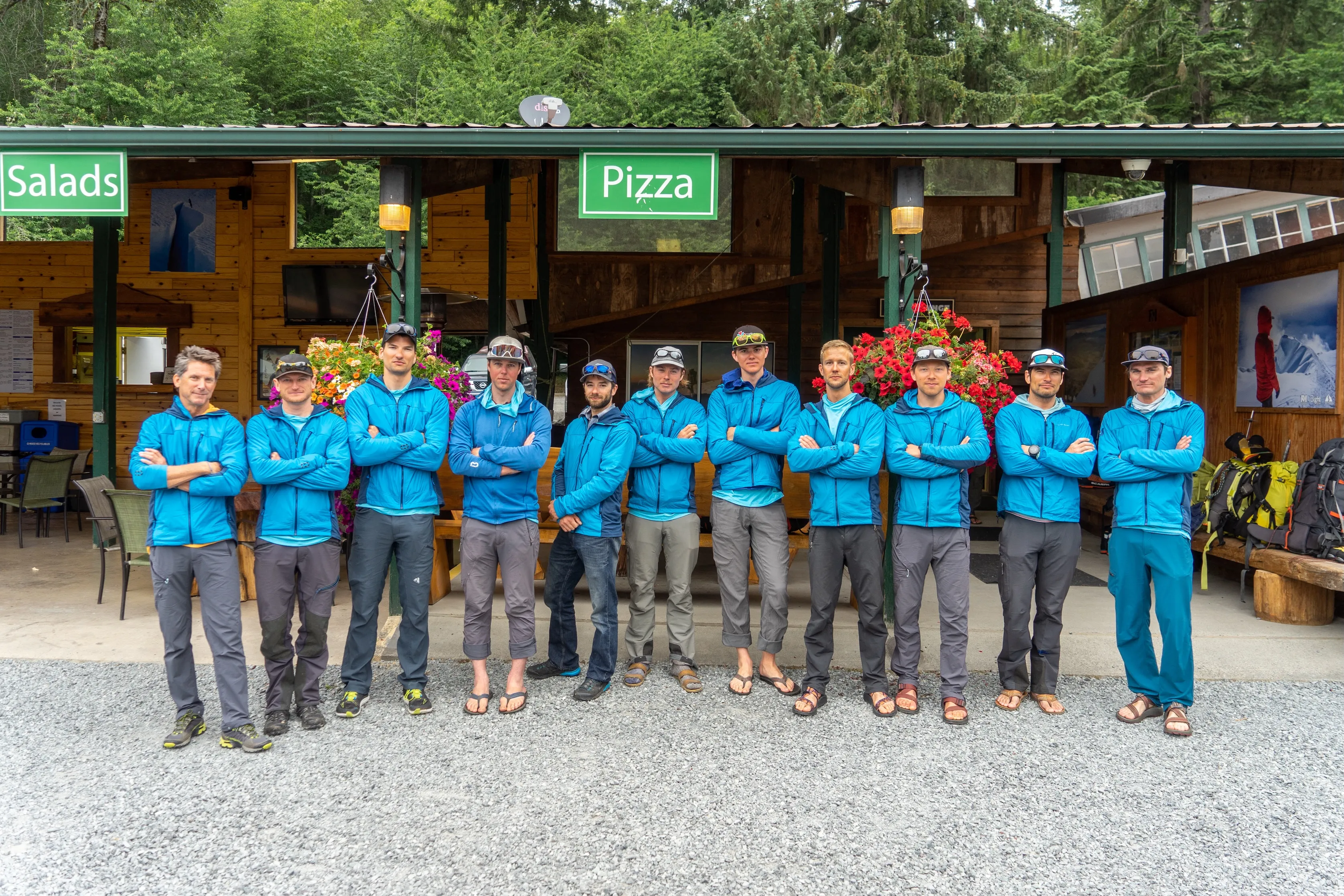
That team is now in its third generation of Whittaker family leadership, backed by 70+ professional guides who represent the deepest concentration of high-altitude experience in North America, and a 55+ year concessionaire record on Mount Rainier that no competitor can match.
.webp)
.webp)


Our Mission, Values, and What We Stand For
What 55+ years of operational experience actually looks like on the mountain.
RMI's Legacy & The History of American Alpinism
Our partners, from gear & apparel to local outfitters and NGOs.
Firsthand accounts from the rope team.
Every decision RMI makes (who we hire, how we train, where we operate, and how we leave a place) comes back to the same question Lou Whittaker asked in 1969: what does it actually mean to take someone into the mountains responsibly? Guiding isn't a transaction. When you rope up with RMI, you join a team built on five decades of hard-won mountain knowledge, and a set of values that govern every hire, every program, and every decision made above the trailhead. These are the principles we operate by.
The mountains we guide on are not backdrops. They are places that ask something real of the people who enter them, and give something real back. Every value below exists in service of that exchange; getting you to a place where the view changes how you see things, and making sure you get there and back with the skills, the support, and the team to do it right.

No one can promise safety. But we're very good at managing it.
RMI operates as a High Reliability Organization - the same framework used by aircraft carriers and nuclear power plants, industries where the cost of failure is absolute. We were the first guide service in Mount Rainier National Park to implement an OSHA-recognized Safety Committee, and our protocols have held up under Washington Labor and Industries' voluntary safety audit. But credentials don't keep people safe. Culture does. Every RMI guide is trained in technical rescue, remote medicine, and risk decision-making, and every one of them operates under the same standard: maintain a margin of safety at all times, not just on summit day, and not as a slogan. We cannot guarantee safety. No honest guide service can. What we can guarantee is that every guide on your rope has been trained to recognize the moment before things go wrong, and to act on it.

Technical skills can be taught. Character cannot.
RMI guides are hired for who they are before what they can do. Technical proficiency matters, and we've put over $100,000 in AMGA education grants behind developing it, but the guides who make a climb memorable are the ones who are genuinely good to be around at altitude, in a tent, on a hard day. Every RMI program is led by an RMI guide. On international programs, RMI guides lead alongside vetted local partners who meet RMI's operational standards. When you tie in, you get someone who has spent more time on this mountain than they can count, who knows what you're feeling before you say it, and who considers getting you there and back the best part of their job. That relationship is the product. Everything else supports it.
.webp)
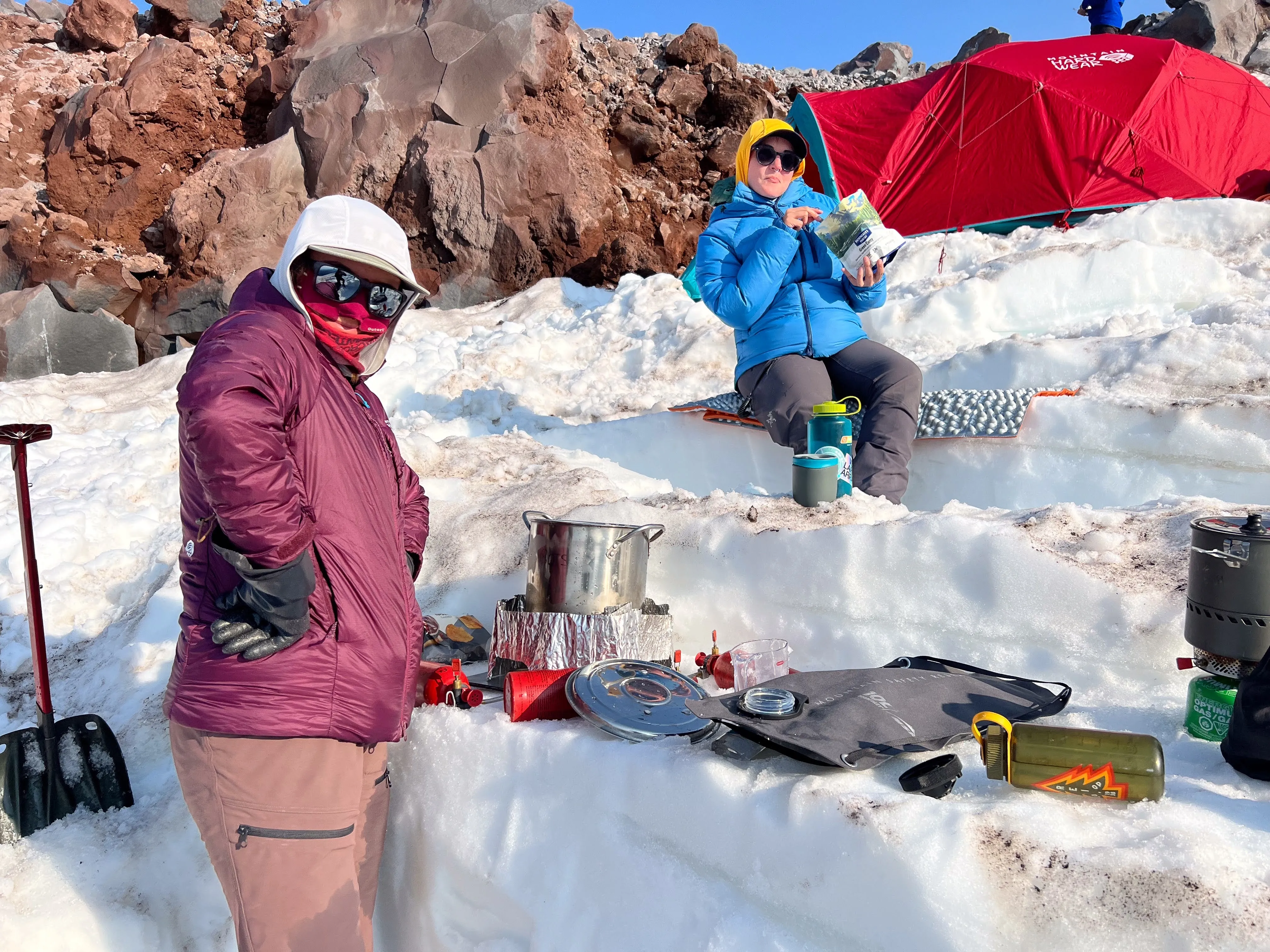

We don't just follow best practices. We helped build them.
RMI has been operating in some of the most fragile environments on earth for over five decades. Leave No Trace isn't a checkbox for us, we helped write the Alpine Zone curriculum. Carbon-neutral National Park operations, human-powered carries, waste removal standards on Mt. McKinley, these are practices, not pledges. But responsible climbing isn't only about what we leave behind. It's about what we give back. Since 1988, RMI has raised $4.4 million for the American Lung Association and led breast cancer survivors to the summit of Aconcagua. The mountains have given us everything. We've been trying to return the favor for 55+ years.

The summit is the goal. The experience is the point.
RMI exists to get people into the mountains and back down safely. But the guides who have spent decades on these routes will tell you the summit is only part of it. Something happens when you push past what you thought you were capable of, when you move through terrain that demands everything you have, when you stand somewhere most people will never stand. You come back different. Not because the mountain changed you, but because you found out what you were made of when it asked. That's what we're actually in the business of. The summit is how we get you there.
Learn more about how RMI puts our principles to practice all over the world.
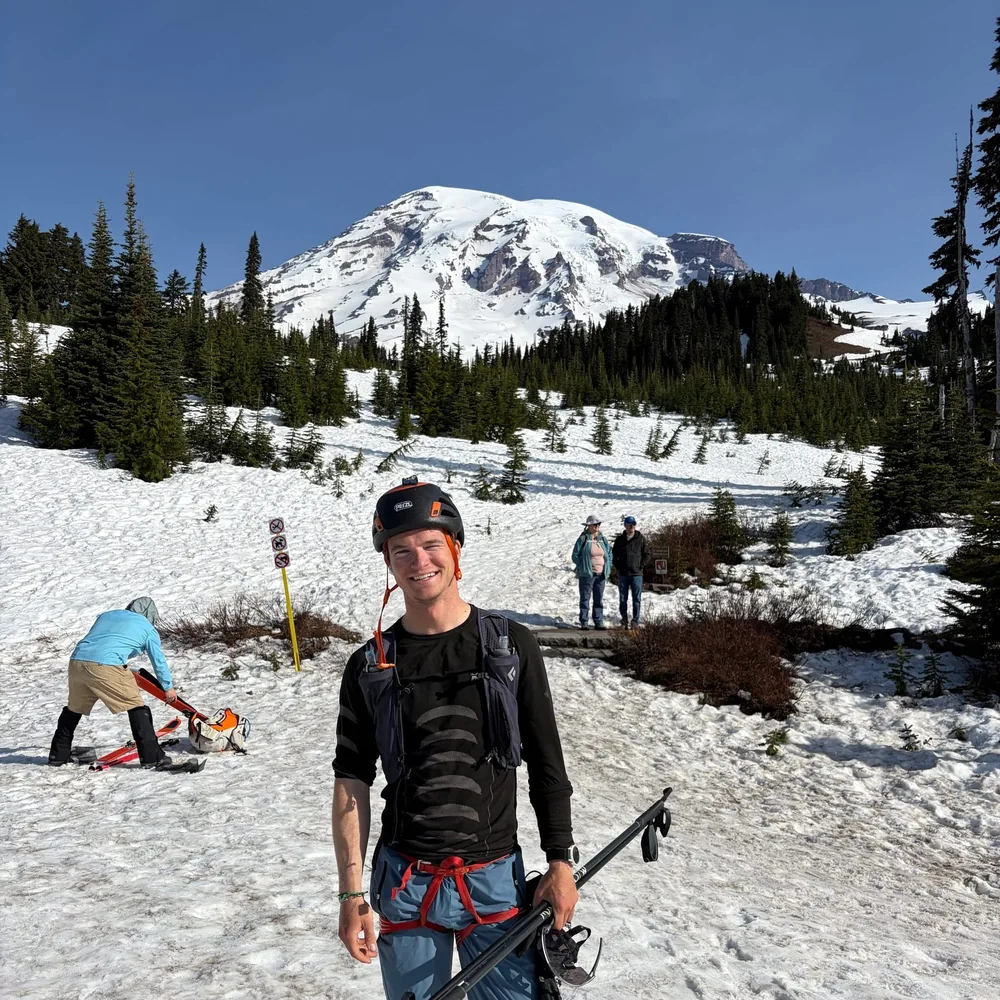
After two failed attempts and 13 years of dreaming, the RMI guide made history on May 9th.
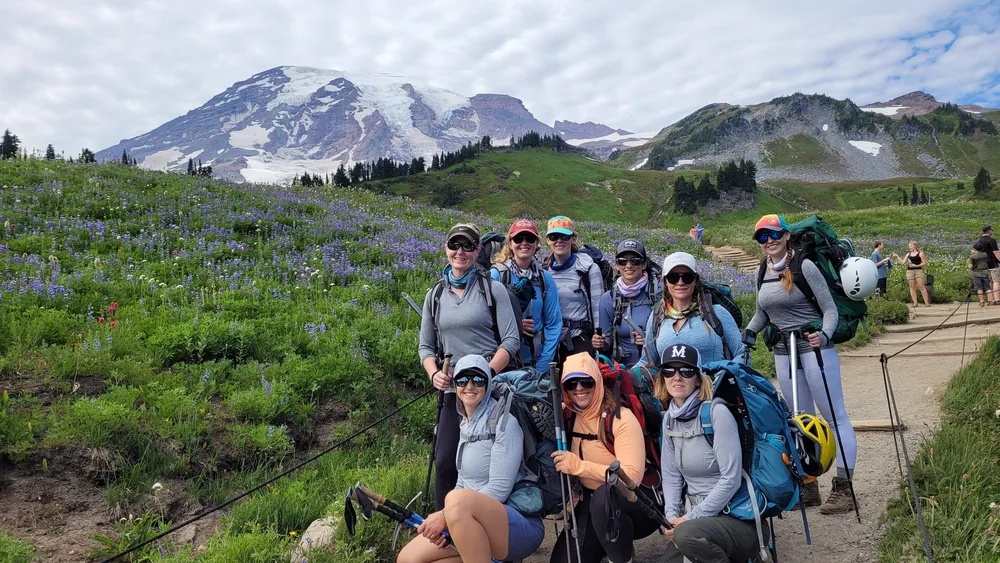
Meet the women who’ve shaped RMI’s legacy in the mountains and inspired generations of climbers around the world. Discover more now.
Learn how RMI Expeditions practices sustainability in mountaineering through Leave No Trace principles and environmental stewardship. Learn more.
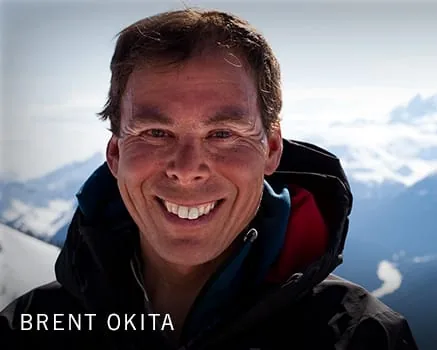
RMI guide Brent Okita becomes the first person to summit Mount Rainier 600 times. With nearly four decades of guiding experience, Okita’s record reflects a lifetime of leadership, resilience, and dedication to mountaineering.
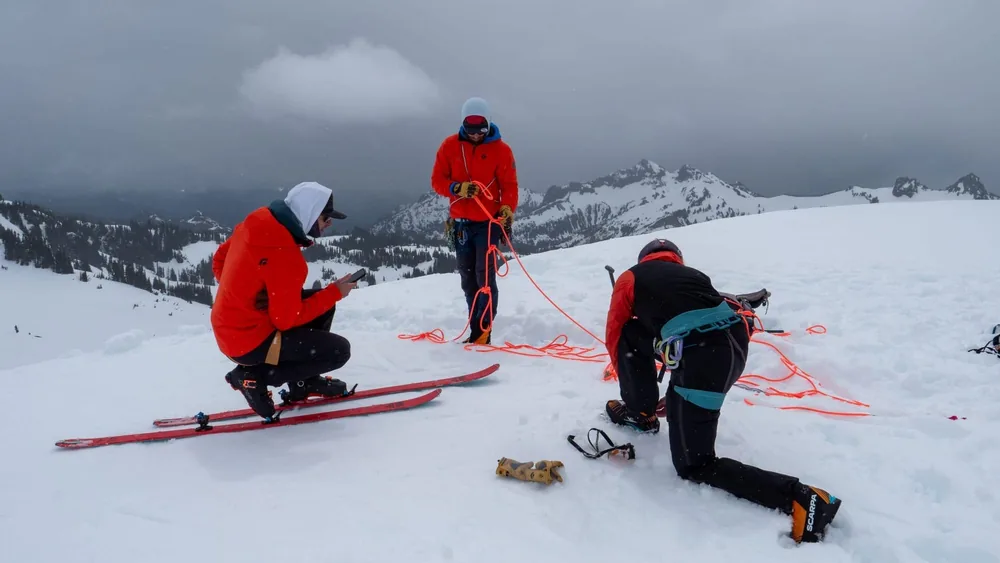
At RMI Expeditions, guiding is more than a job. It’s a profession built on expert training, mentorship, and continual development. Discover how our guides prepare to lead with skill, safety, and purpose in every step of your climb.
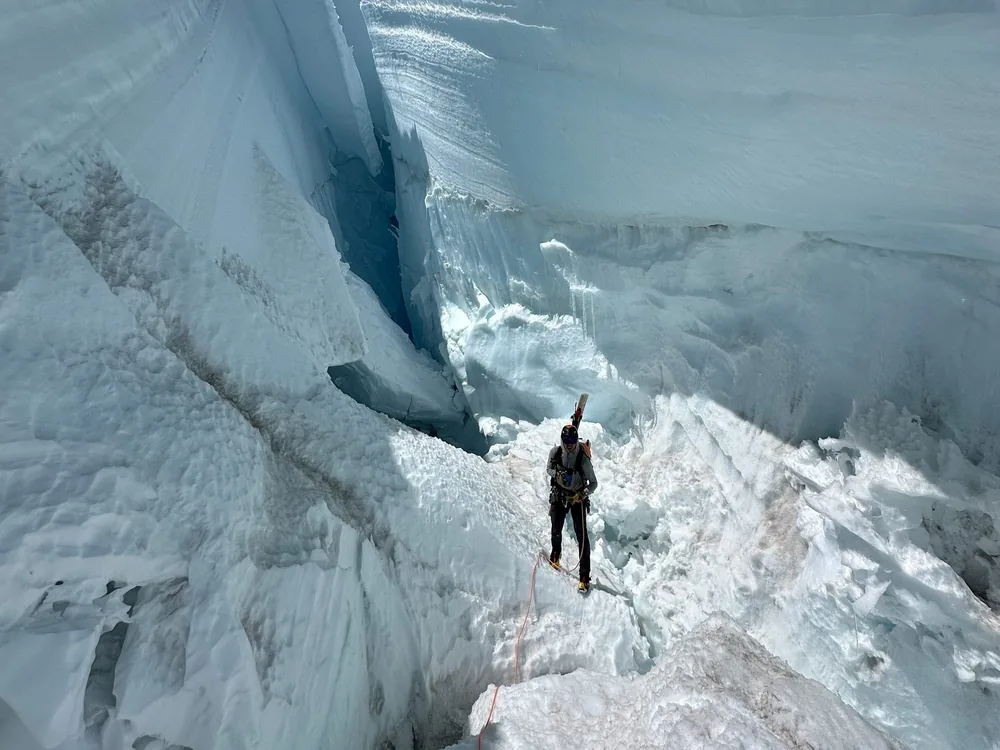
In climbing, the margin of safety is the buffer between risk and return. Learn what it means, how to build it on the mountain, and how RMI guides set the standard for risk management.
Most guide services can get you to the mountain. The difference is what happens once you're there — how decisions get made, how guides are trained, how logistics hold up when conditions change, and whether the team leading you has been on this route enough times to know what the mountain looks like on a bad day. RMI has been building the answer to those questions since 1969. What follows is the operational reality behind 55+ years of guided climbing.
Every trip RMI runs worldwide is led by an RMI guide.
Every trip RMI runs worldwide is led by an RMI guide. That's not a policy statement, it's a structural commitment that shapes how we hire, how we train, and how we staff every program from Rainier to Vinson. New hires go through a multi-stage evaluation process that weights interpersonal judgment above technical credentials, because technical skills can be developed and character cannot. Once hired, guides progress through a defined pathway from assistant guide to school lead to lead guide, with AMGA certification requirements and over $100,000 in education grants backing that development at every stage. Senior guides like Brent Okita, who has led clients to the summit of Rainier 600 times, and Dave Hahn, with 15 Everest summits and 300-plus Rainier ascents, are still on the mountain, still leading rope teams, still setting the standard that everyone below them is working toward. When you hire RMI, you get a guide who has been on your route more times than most people have been in the mountains at all.
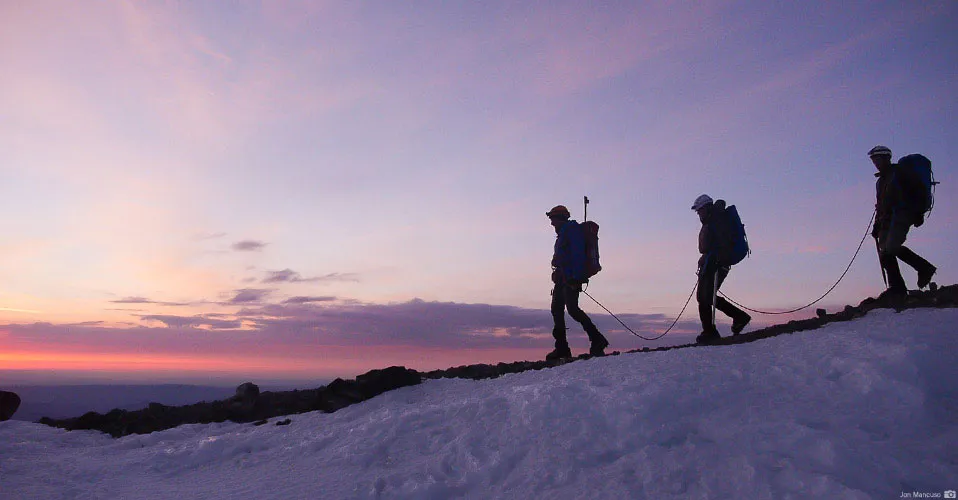
Every RMI program worldwide is led by an RMI guide. Get to know the people who will be on your rope.
Every guide on your rope has been trained to recognize the moment BEFORE things go wrong.
Risk management at RMI is not a summit-day protocol. It begins in the planning stage, runs through every camp transition, and governs every turnaround decision regardless of how close the summit is. Weather windows are evaluated against conservative thresholds, not optimistic ones. Turnaround times are set before the climb starts and held when the moment arrives. On technical routes, guides are continuously assessing snow stability, crevasse patterns, rope team fatigue, and overhead hazard, not as a checklist but as a running calculation that informs every step. When conditions shift, the guide making the call has made it before on this route, often in worse conditions. That depth of route-specific experience is what a 55+ year operational history on a single mountain actually produces, and it is what our international programs draw on when we select local partners and design expedition logistics on peaks we don't guide every season.
.webp)
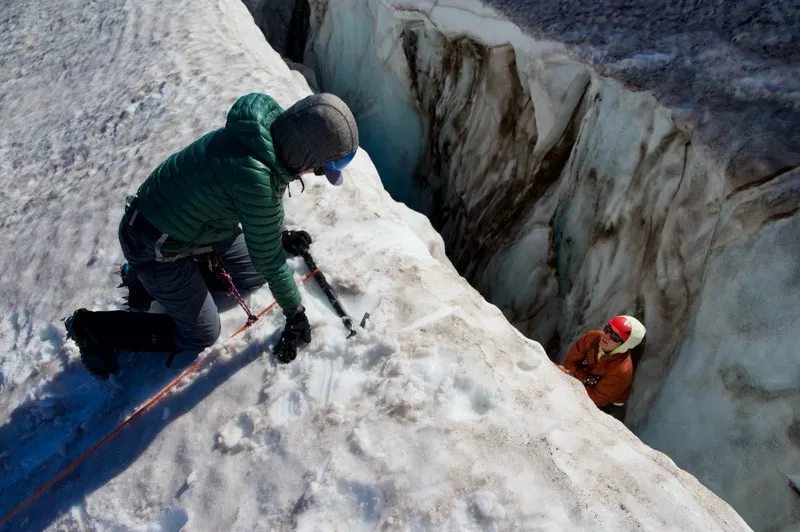

The people who run RMI's operations have been doing it for a long time. That matters more than it sounds.
Most of RMI's office and operations staff have been with the company for 15 to 20 years. They have handled permit renewals, flight cancellations, gear emergencies, inclement weather protocols, local outfitter communication, and the kind of complex political climates that can shut down an international expedition with 48 hours notice. Bridging the office and the mountain are RMI's Mountain Managers — senior guides who also coordinate logistics, communicate with clients before and during programs, oversee guide divisions, and handle the operational details that keep a program running when conditions change. When something goes wrong on a program, the person fielding that call has almost certainly dealt with a version of it before, and the guide on the other end of the radio has too. That depth of institutional knowledge doesn't come from a manual. It accumulates over decades of running the same routes, in the same parks, with the same partners, through the same seasonal variables.

More than 55 years of continuous operation in a federal park doesn't happen by accident.
RMI has held the Mount Rainier National Park guiding concession since 1969, longer than any other guide service on the mountain. Maintaining a federal concession requires ongoing compliance with National Park Service standards across safety, environmental practice, guide qualifications, group size management, and operational conduct. That permit has been renewed consistently across more than five decades of changing regulations, administrations, and environmental requirements. In Denali National Park, RMI has run more than 300 expeditions since 1975, building a relationship with the National Park Service in Alaska that reflects the same operational consistency. These aren't legacy credentials. They are active requirements that RMI meets every season, on every program, across every mountain where a federal permit governs the right to operate.
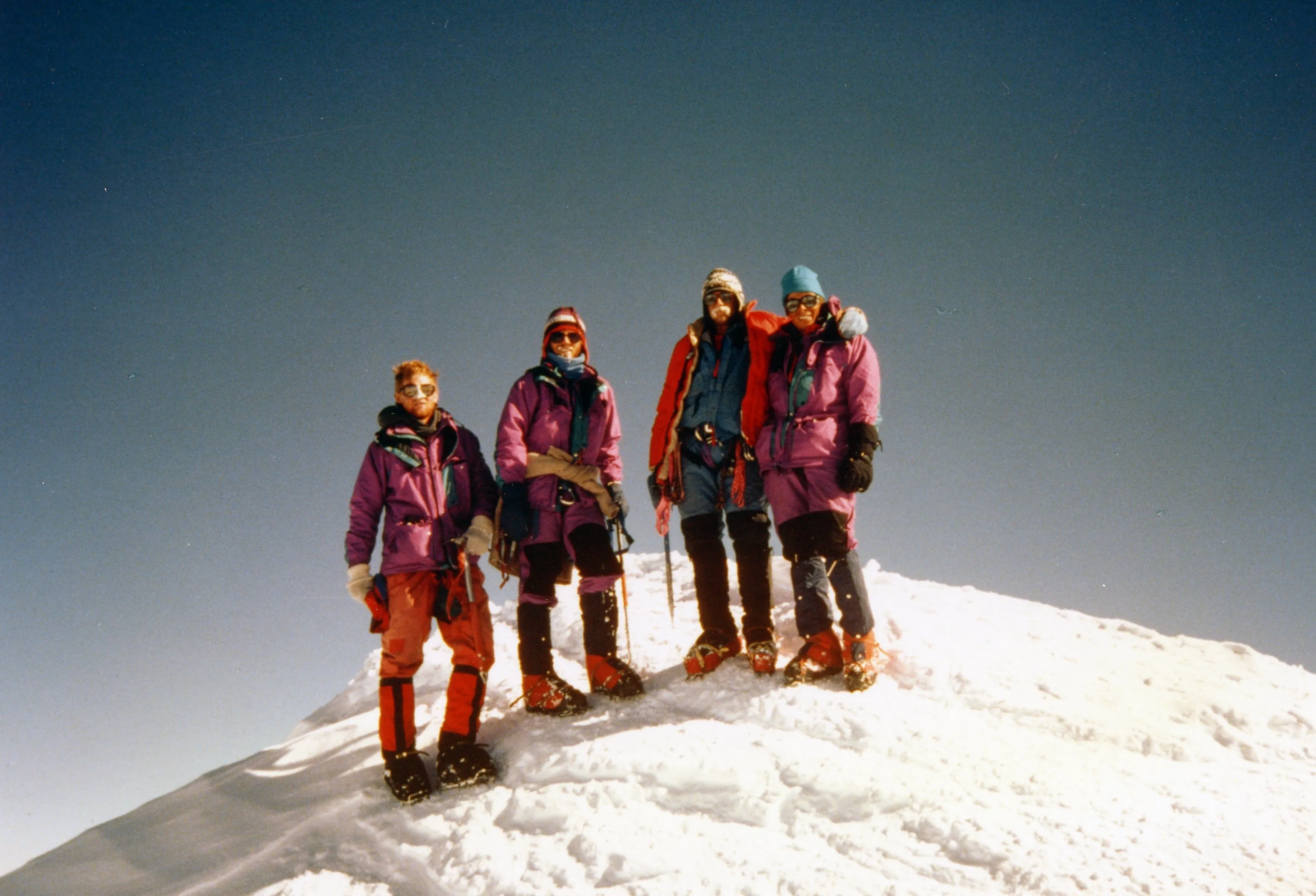
What Lou Whittaker started at the base of Mount Rainier in 1969 has become something neither he nor Jerry Lynch could have mapped out on a napkin. A regional guide service built on a single conviction (that guides should teach, not just lead) has grown into five and a half decades of Himalayan firsts, environmental standards, world records, and a guide roster that reads like a who's who of American mountaineering. The Whittaker family has been at the center of all of it, from Lou and Jim scrambling the Cascades as teenagers to the third generation now helping run the company. This is how it happened.
The story of RMI starts not with a business plan, but with two boys from West Seattle and a mountain that wouldn't leave them alone. From that first summit in 1945 to the founding of Rainier Mountaineering, Inc. in 1969, everything that RMI became grew out of what Lou and Jim Whittaker learned by spending their lives on the mountain.
Lou and Jim Whittaker grew up in the Arbor Heights neighborhood of West Seattle and started climbing with the Boy Scouts at twelve. They joined The Mountaineers, and in the summer of 1945 made their first ascent of Mount Rainier together at sixteen, via the Emmons Glacier. By eighteen, Lou had climbed every major peak in Washington. By nineteen, both brothers were guiding on Rainier and had taken over management of the national park's guide service. The Cascades were their backyard, Rainier their classroom, and guiding their livelihood before either of them had figured out what came next.
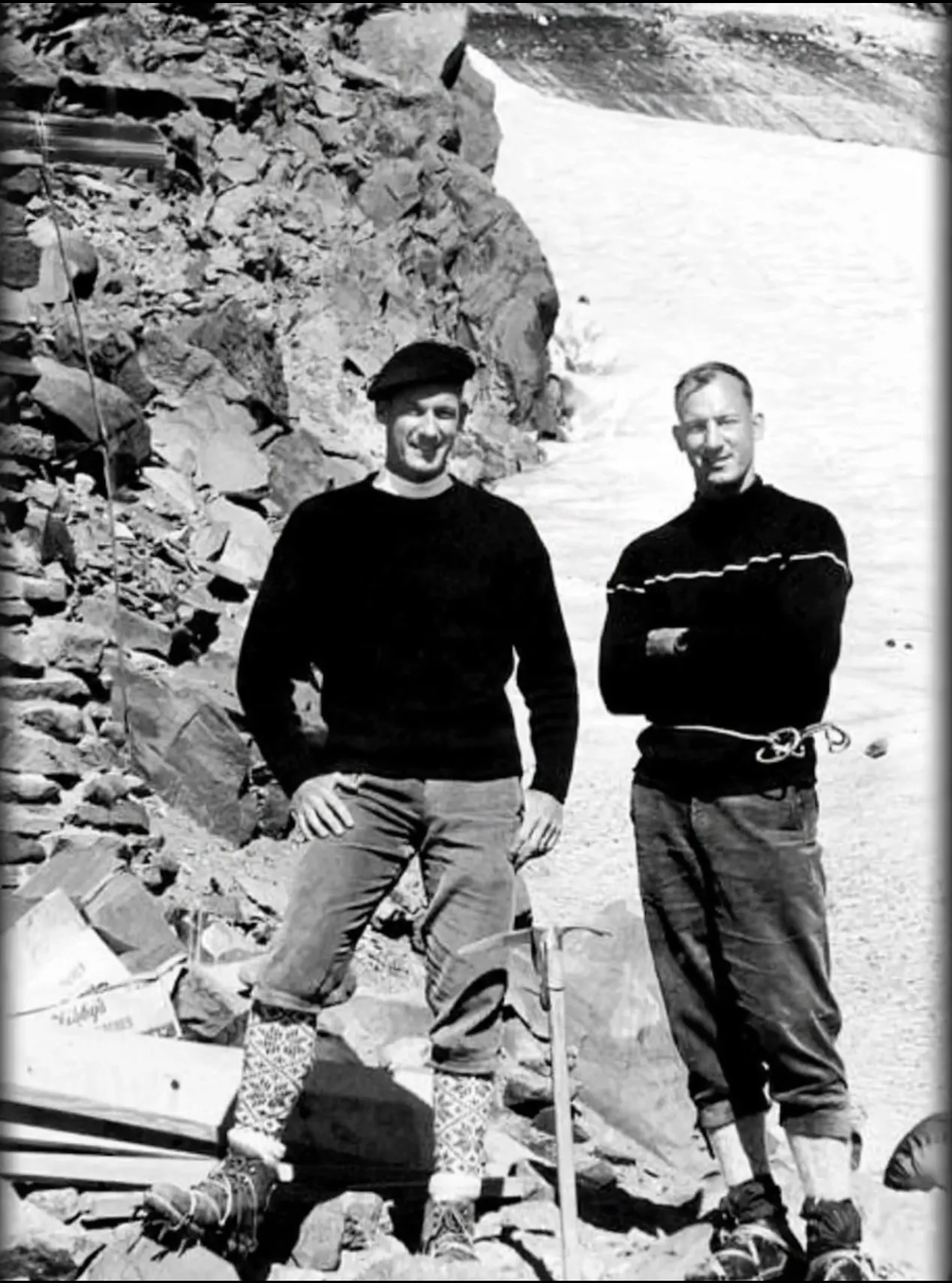
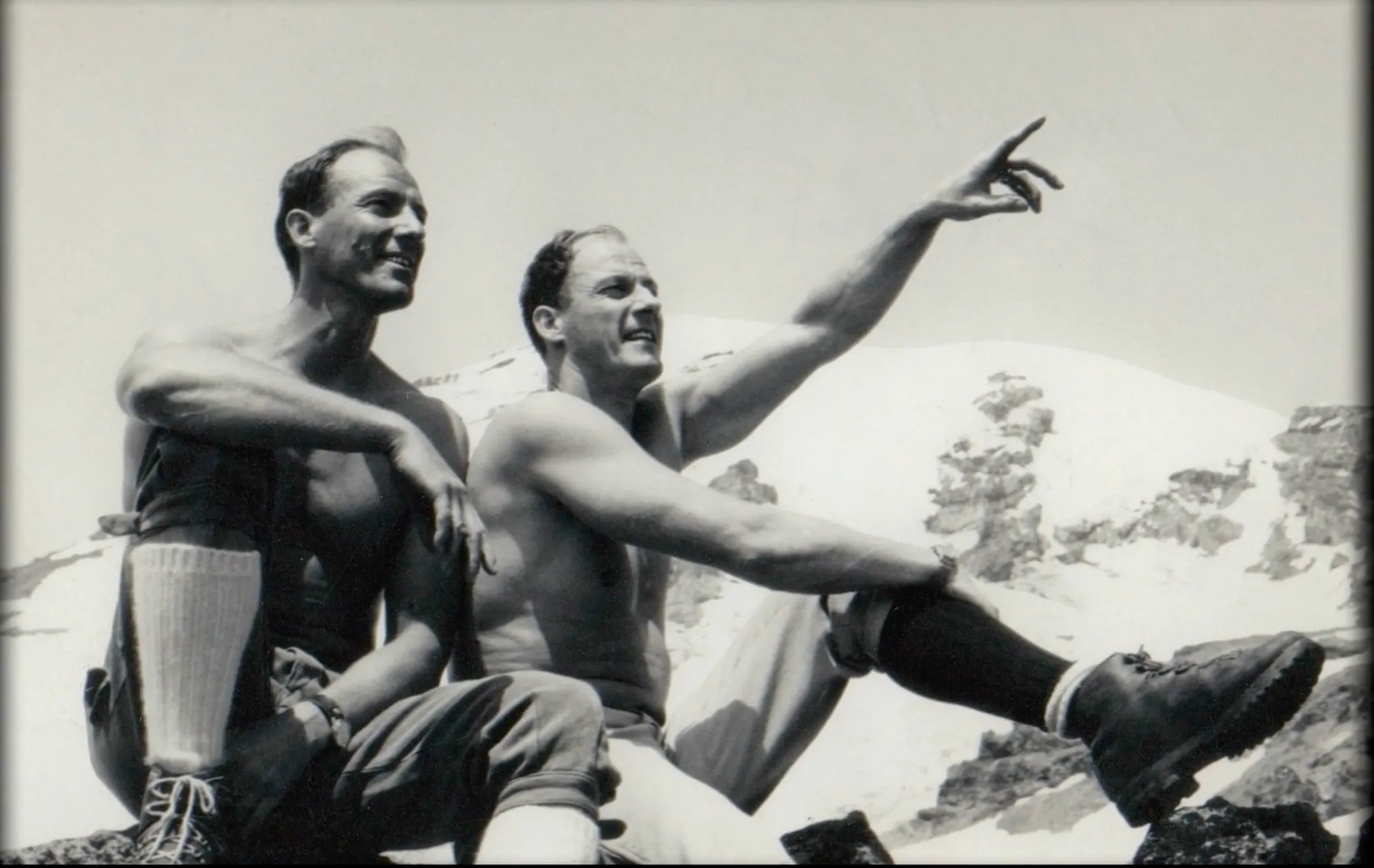
When the Korean War broke out, Lou and Jim were drafted and assigned to Camp Hale, Colorado, where they trained 10th Mountain Division soldiers in alpine climbing, skiing, and cold-weather survival using skills sharpened on Rainier. Discharged in 1954, the twins returned to Seattle and went separate directions. Jim built REI into America's largest outdoor specialty retailer, and in 1963 became the first American to summit Everest, receiving the Hubbard Medal from President Kennedy. Lou had been invited on the expedition and declined, feeling a growing sense of responsibility at home. He stayed on the mountain, kept guiding, and spent the next fifteen years building toward something of his own.
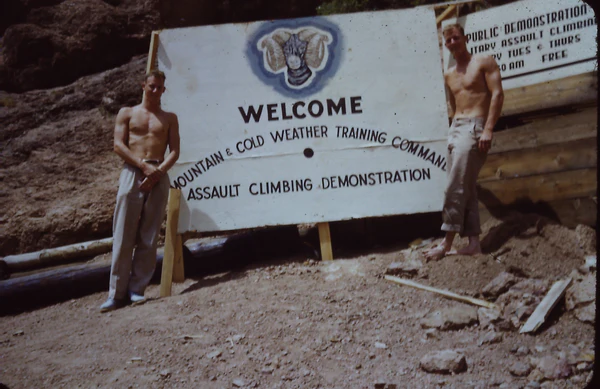
After fourteen years as chief guide under Rainier's main concessionaire, Lou purchased the guiding concession and co-founded Rainier Mountaineering, Inc. with business partner Jerry Lynch in 1969. His founding philosophy was straightforward: guides should teach, not just lead. Climbers weren't passengers to be escorted to a summit. They were rope team members, expected to learn, contribute, and be accountable to everyone tied in with them. That philosophy was a deliberate departure from how guiding worked at the time, and it remains the operating standard at RMI today.
Lou passed away on March 24, 2024, at his home near the mountain, surrounded by family. Jim followed in April 2026 at 97. Between them, they shaped American mountaineering more than any other pair of siblings the sport has produced.
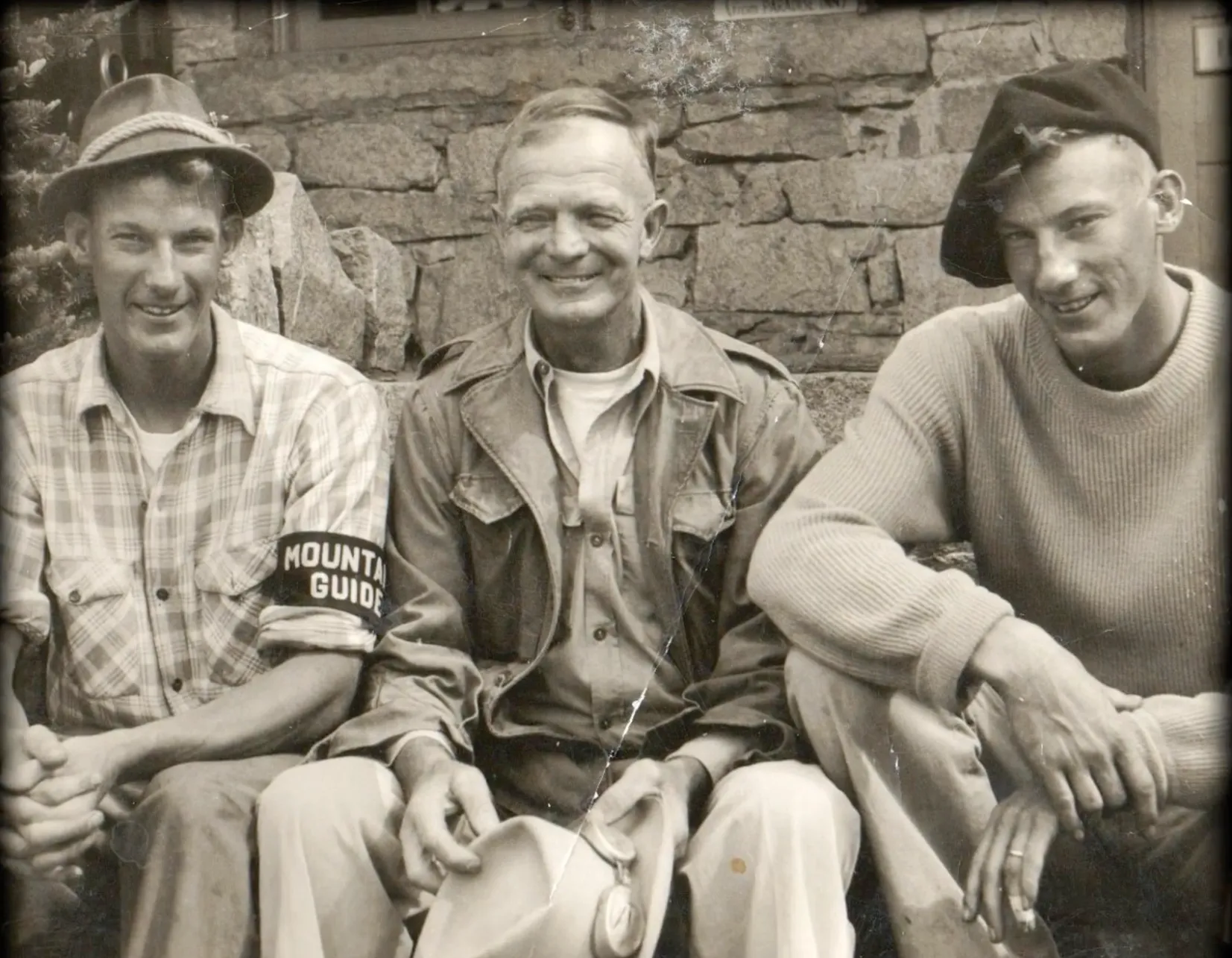
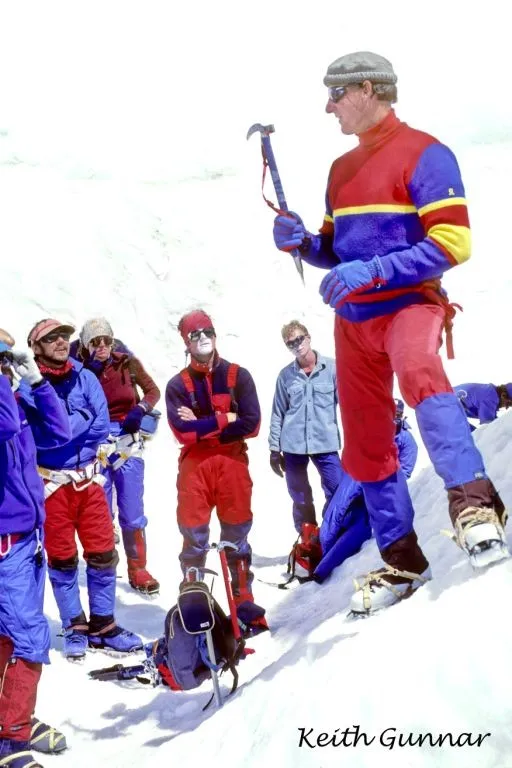
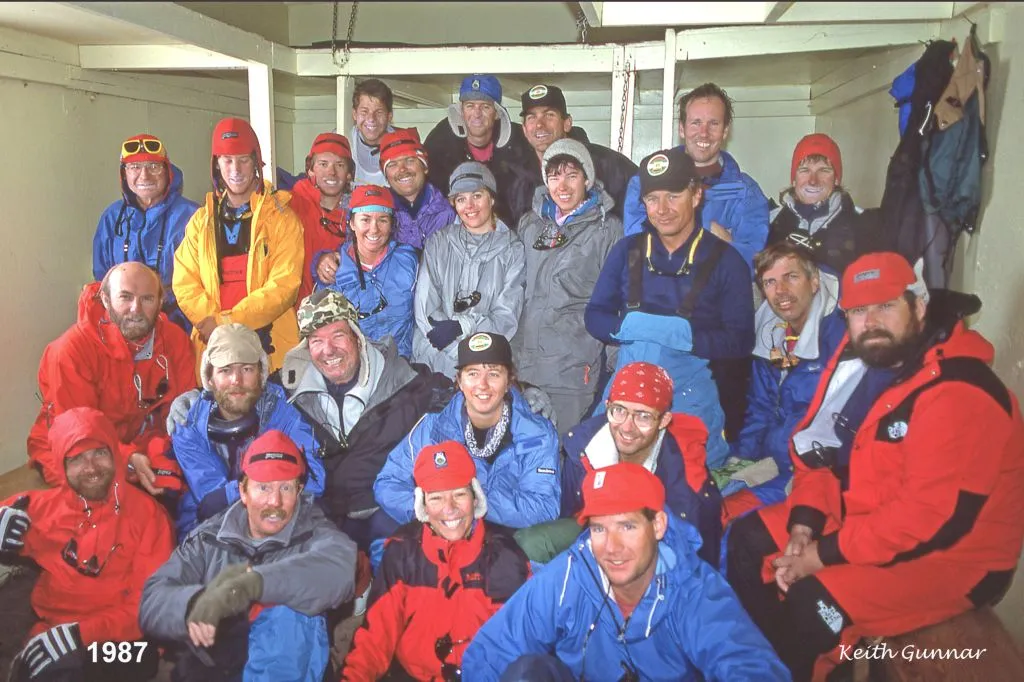
The company Lou built around a single mountain spent the next two decades proving it could operate anywhere. From Mt. McKinley to the Himalayas, RMI guides were pushing into terrain that defined a generation of American mountaineering — and bringing the same teaching philosophy with them.
RMI's first Mt. McKinley summit came on May 18, 1974, when guides John Kalbrener, Laury Bye, and Joe Horiskey reached the top after eighteen days on the mountain. The following year, RMI led its first guided client expedition to Mt. McKinley, again under Horiskey's leadership. In the decades since, RMI has led more than 300 Mt. McKinley expeditions, more than any other guide service on the mountain. Joe Horiskey, who began guiding on Mount Rainier at seventeen in 1968, a year before RMI was founded, went on to lead 23 Mt. McKinley expeditions and accumulate 235 Rainier summits.
.webp)
Peter Whittaker spent summers at Camp Muir as a cabin boy starting at age ten, learning the mountain the same way his father had; by living on it. He began guiding at sixteen, the youngest on the roster. His brother Win started guiding in his teenage years as well. Lou's son and his guides were becoming the backbone of what RMI would grow into, and the mountain that shaped Lou was shaping them the same way.
Marty Hoey joined RMI in the early 1970s as a cabin girl and became the company's first female guide. For more than a decade, she guided Rainier over 100 times, led expeditions on McKinley and Aconcagua, and was considered one of the finest high-altitude female mountaineers in the world. In 1982, Lou invited her to join his North Wall Everest expedition. She was within a day or two of what would have been the first American woman's summit when she fell from a fixed rope at 26,600 feet. Her body was never recovered. Lou said afterward: "If Marty had been with us, we would have made it." Her legacy lives on in every female guide who has worked for RMI since.
In 1982, Lou led an expedition to Everest's North Wall; the deepest concentration of RMI talent ever assembled on a single climb, including Eric Simonson, Phil Ershler, George Dunn, Joe Horiskey, and Larry Nielson. The summit eluded them. Two years later Lou returned, leading the first American ascent of Everest's North Col in 1984, with Phil Ershler making a solo summit push. Peter, twenty-four, was on that expedition carrying loads to high camp. In 1983, Larry Nielson became the first American to summit Everest without supplemental oxygen. A few years later, Lou led the first American ascent of Kangchenjunga in 1989, the world's third-highest peak. On that expedition, a young Ed Viesturs reached his first 8,000-meter summit, the beginning of a quest that would end with him becoming the only American to climb all fourteen without supplemental oxygen.
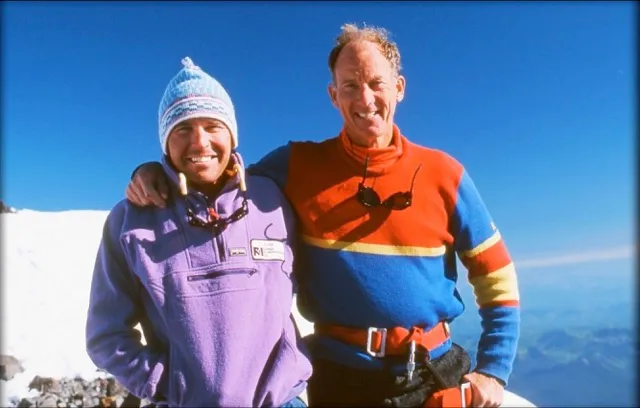
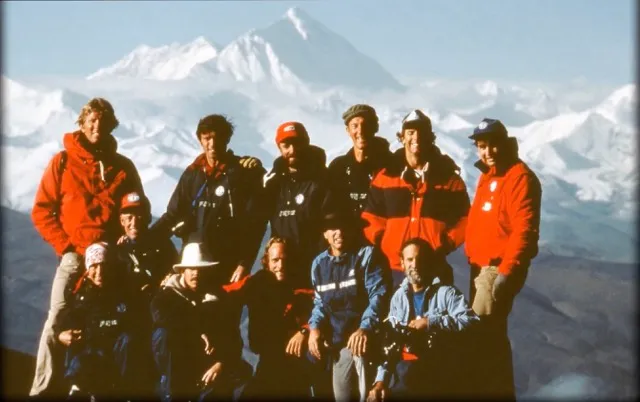
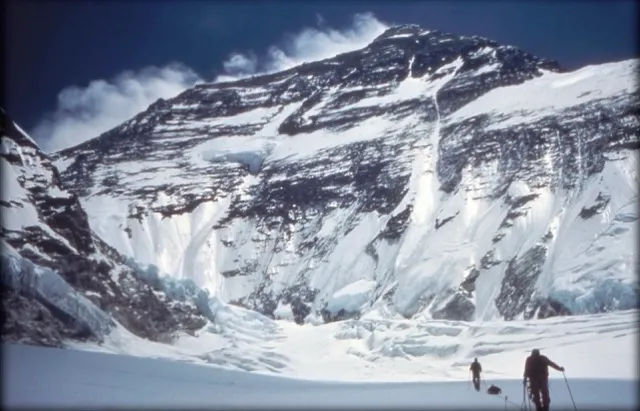
While Lou's Himalayan record was being written in the 1980s, Peter was building his own. The decade that followed would see Peter complete the Seven Summits, lead one of the most memorable climbs in RMI's history, and return home to take the helm of a company that had spent thirty years becoming something worth leading.
Before Peter came back to RMI, he spent fourteen years running his own global expedition company, Summits Adventure Travel, leading more than seventy expeditions across all seven continents. He completed the Seven Summits himself during that period, and developed the international relationships, logistics, and expedition management experience that no amount of time on Rainier alone could have built. When he returned to Washington in 1995, he brought all of it with him.
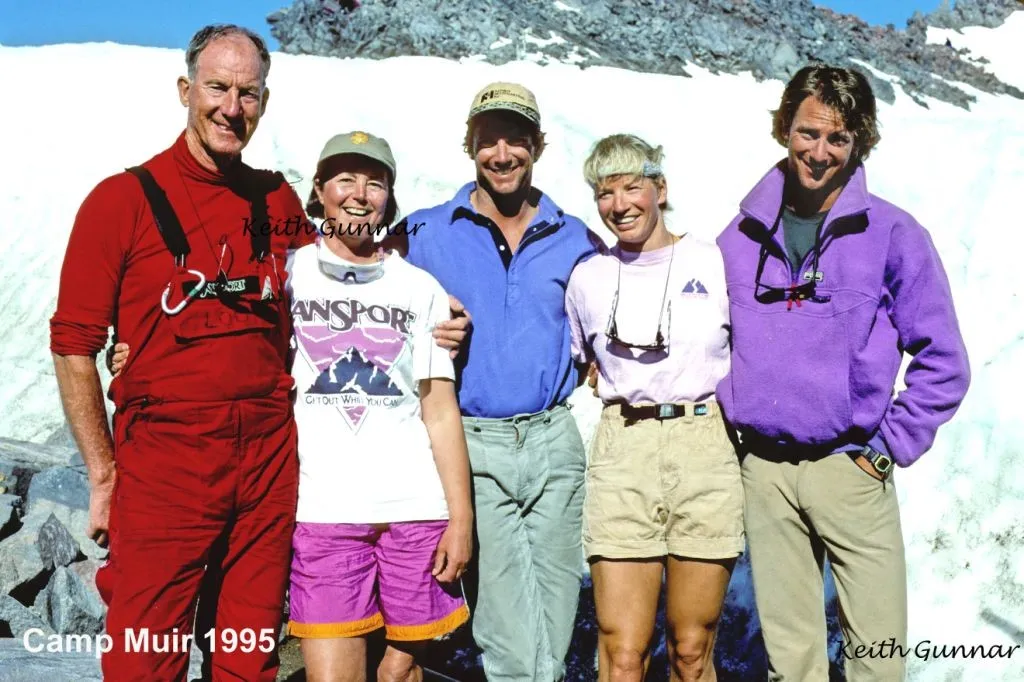
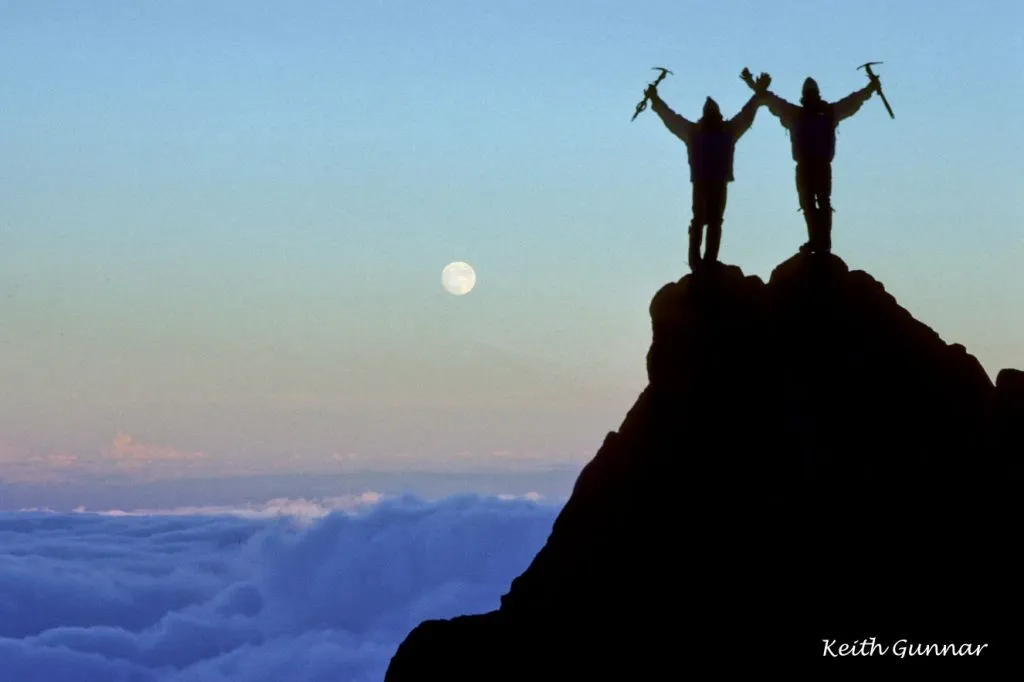
In 1995, Peter organized and led Expedition Inspiration; a team of breast cancer survivors to the summit of Aconcagua in Argentina. The climb raised $2.3 million for breast cancer research and was documented in a PBS film produced by Bill Curtis Productions. It remains one of the most deliberate uses of a mountain in RMI's history: not as a backdrop, but as the thing itself, used to show what people are capable of when the stakes are real and the team is right.
Peter assumed leadership of RMI in 1999, folding the international infrastructure of Summits Adventure Travel into the company. What had been a Pacific Northwest guide service with a strong Himalayan track record became, under Peter's leadership, a genuinely global operation. The same teaching philosophy Lou built in 1969 was now backed by expedition experience on every continent and a growing roster of guides who had climbed with Peter around the world. Lou stayed connected. The rope just got longer.
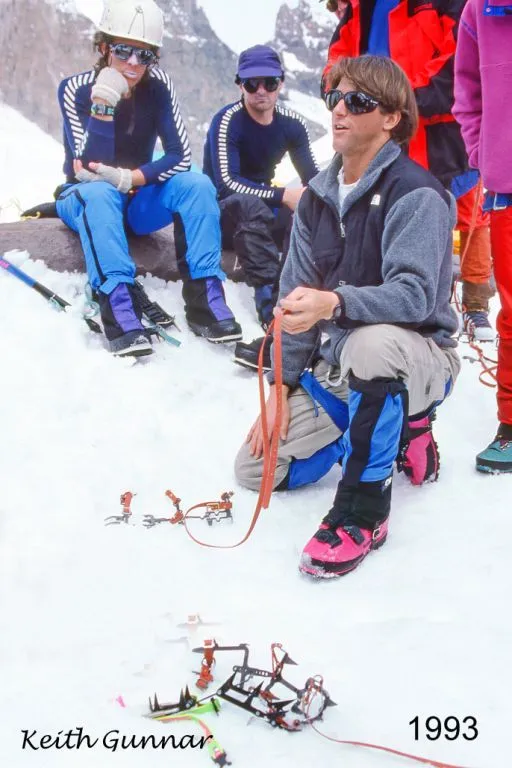
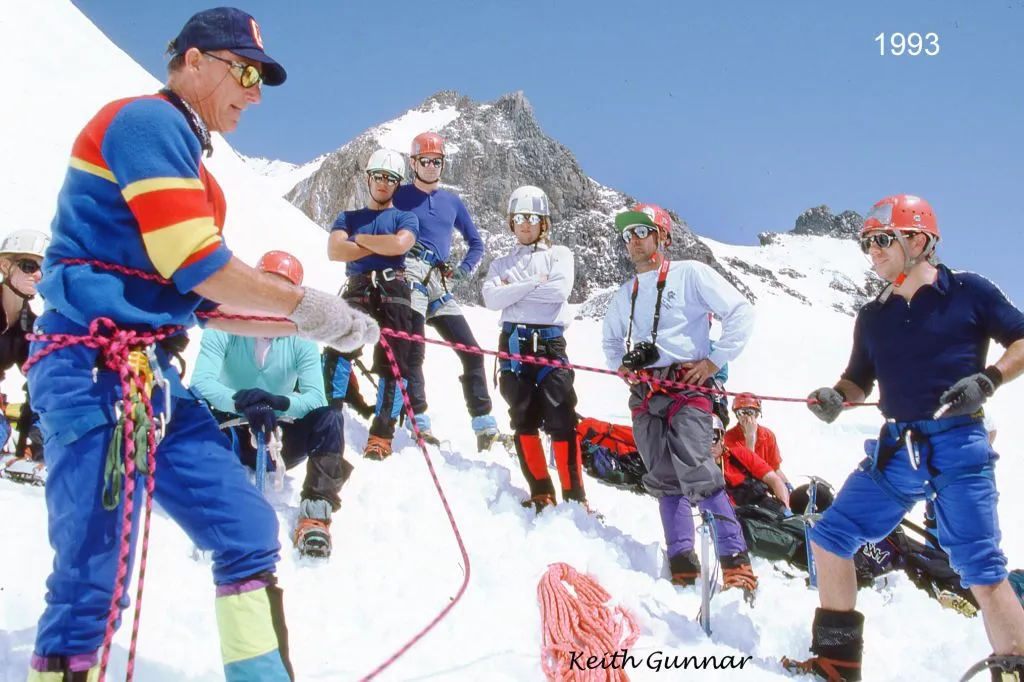
Peter took over a company with deep roots and a strong domestic reputation. What he built over the next fifteen years was something Lou hadn't set out to create in 1969: a truly global guide service, operating on seven continents, with an environmental track record and a guide roster that kept producing firsts.
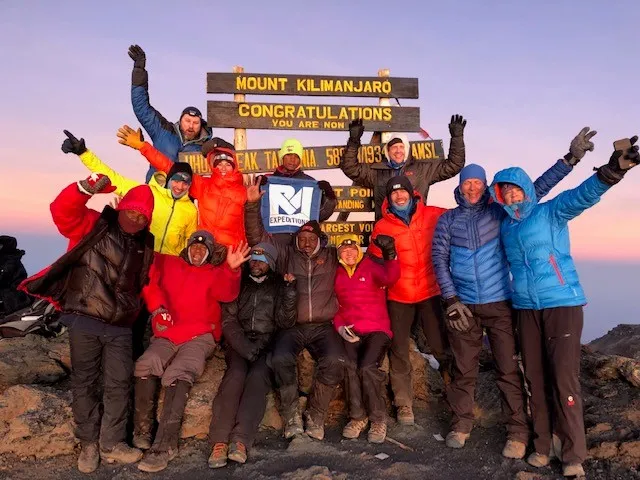
When Peter folded Summits Adventure Travel into RMI in 1999, the company's international reach expanded overnight. The relationships, logistics, and expedition infrastructure Peter had built across fourteen years and seventy expeditions became RMI's. Programs that had existed on Rainier and Mt. McKinley now extended to Kilimanjaro, Aconcagua, Vinson, Everest, and beyond. By the time Peter's first decade of leadership was complete, RMI was operating on all seven continents with established local partnerships on every one of them.
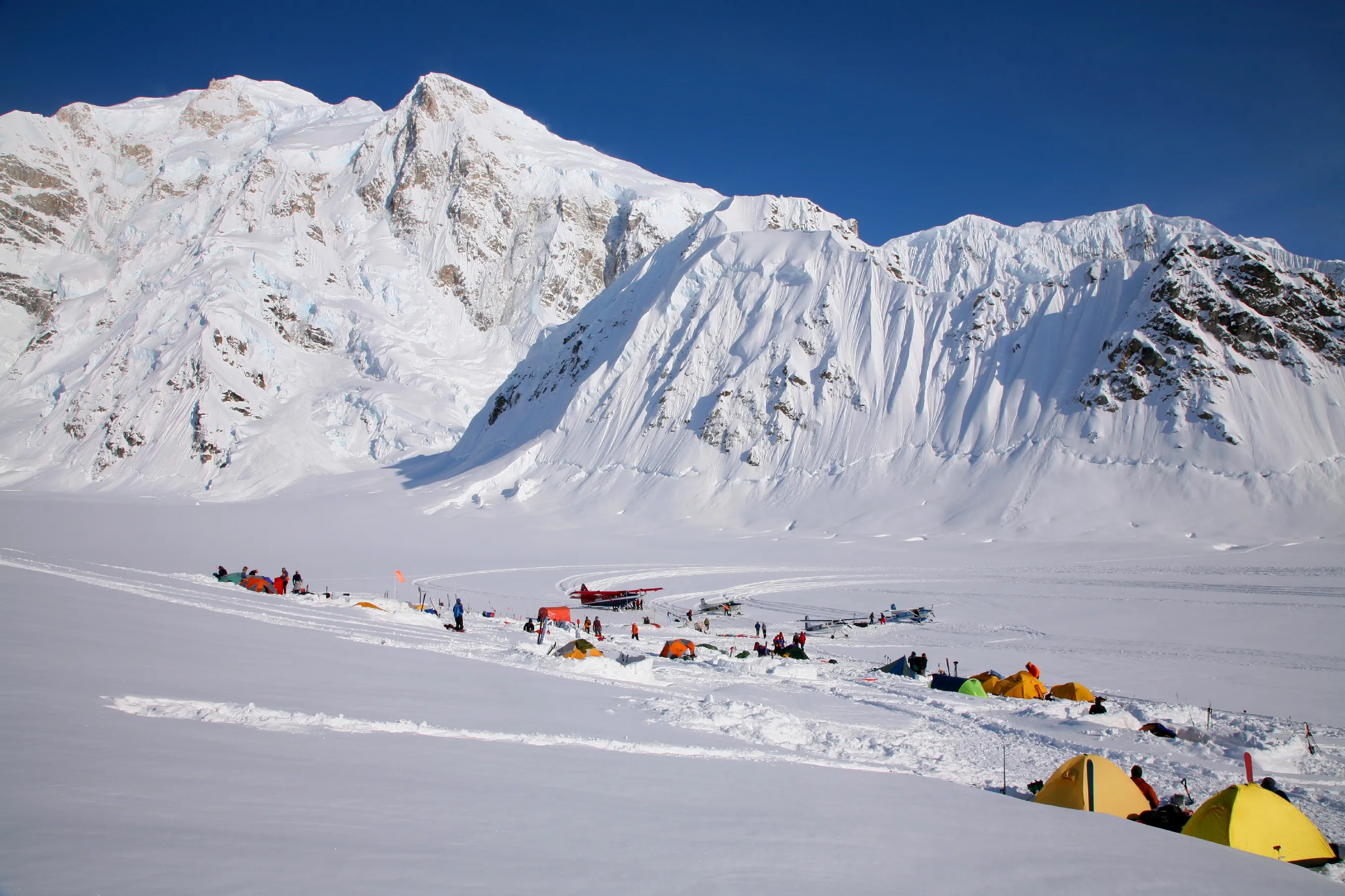
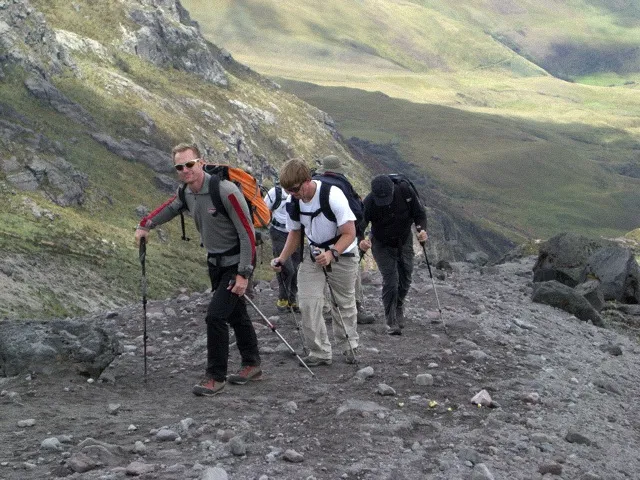
Peter's most lasting operational change wasn't programmatic; it was environmental. RMI implemented a concessionaire shuttle system to reduce vehicle traffic at the park, stopped using helicopters to stock high camp and switched to human-powered carries, reduced group sizes to meet wilderness backcountry guidelines, and in 2002 guide Dave Hahn led the first commercially guided expedition to carry all human waste off Mt. McKinley. From 2001 to 2003, RMI co-developed the Leave No Trace Alpine Zone curriculum with the National Park Service and other concessionaires. LNT adopted it nationally in 2011. These weren't responses to pressure. They were decisions made before anyone was asking.
In the 2010s, RMI expanded into the North Cascades, adding Baker, Shuksan, Forbidden Peak, and Glacier Peak to the program catalog. The expansion brought RMI's teaching philosophy to a range of technically demanding objectives that had long attracted serious climbers but lacked the structured, guide-led programs RMI had built on Rainier and in Alaska. It also brought RMI closer to its Pacific Northwest roots; the same mountains Lou and Jim had scrambled as teenagers were now part of the program.
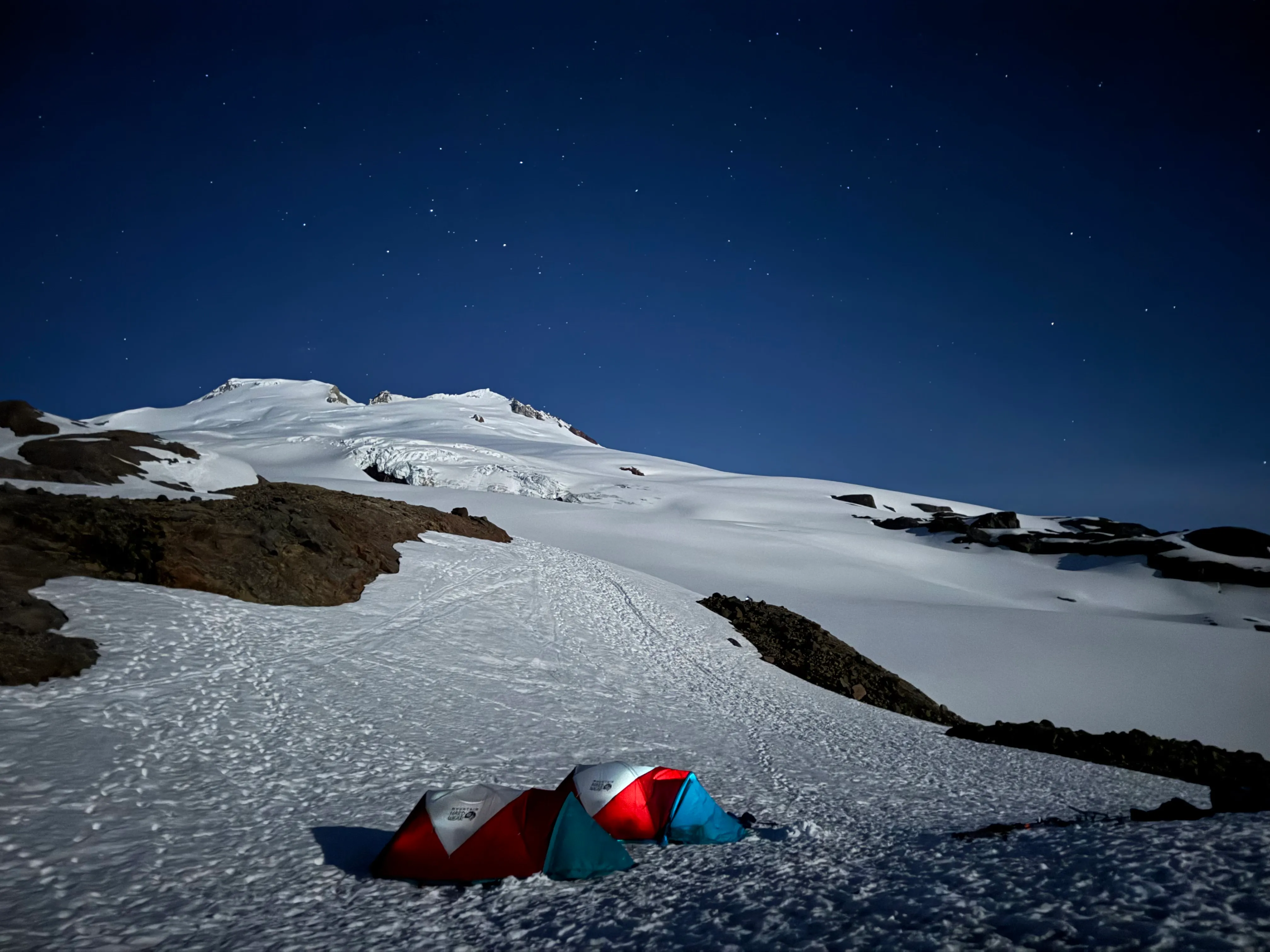
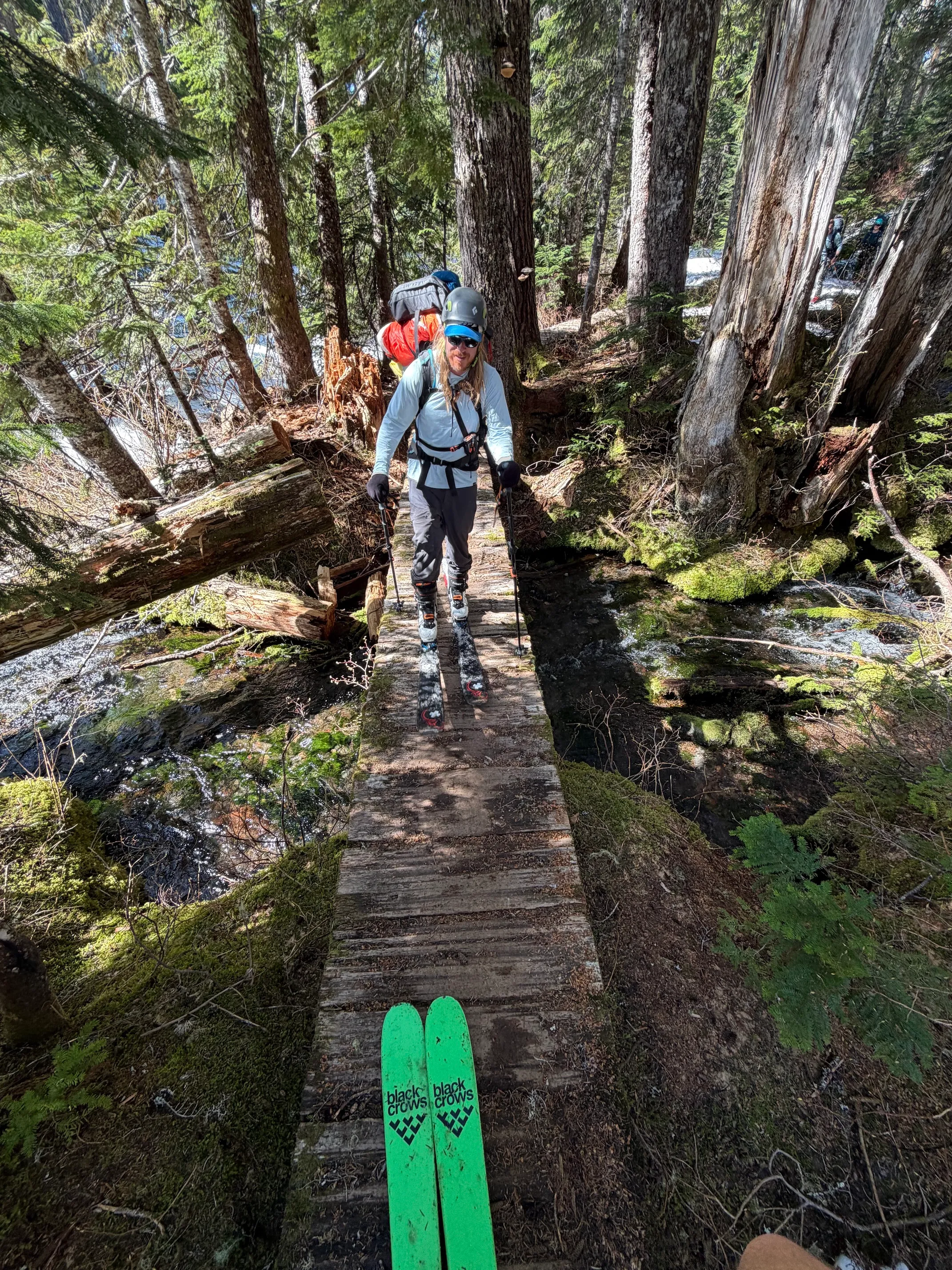
The guides who passed through RMI during Peter's leadership didn't just represent the company; they defined a generation of American mountaineering. Ed Viesturs, who reached his first 8,000-meter summit on Lou's 1989 Kangchenjunga expedition, went on to become the only American to summit all fourteen 8,000-meter peaks without supplemental oxygen. Dave Hahn has been guiding with RMI since 1986, accumulating 15 Everest summits, 300-plus ascents of Rainier, and 38 summits of Vinson Massif. Melissa Arnot Reid joined as a Rainier guide in 2004 and became the first American woman to summit and descend Everest without supplemental oxygen in 2016, her sixth summit of the peak. These are not footnotes to RMI's story. They are the story.

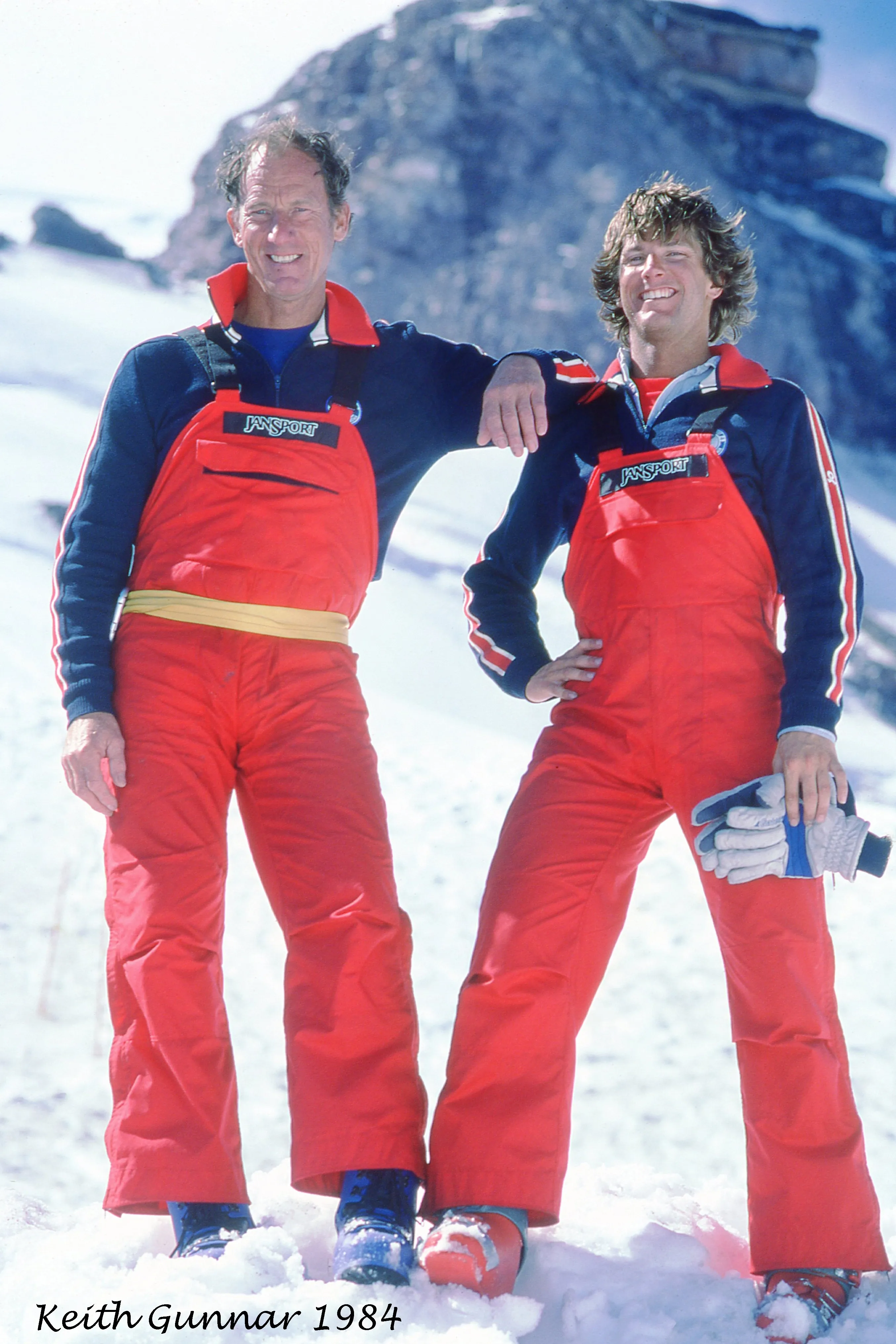
The Whittaker gear story starts on a K2 expedition in 1975. Somewhere on the trek out, Lou removed the Vibram soles from his climbing boots and affixed them to his tennis shoes — improvising a lightweight trekking shoe out of necessity. He brought the idea to New Balance, and the result was the Rainier Boot, released in 1982. It combined the cushioning of a running shoe with the traction of a climbing boot, and it was on Lou's feet on Everest's North Col route in 1984. Lou also served as a product designer and consultant for JanSport and K2.
Before taking over RMI, Peter had already been working with gear companies as a sponsored athlete and product collaborator — Marmot, Mountain Hardwear, Buck Knives, Timberland. These weren't endorsement deals. They were working relationships built on the same premise Lou established with New Balance: guides know what works, and manufacturers benefit from that knowledge. When Peter assumed leadership of RMI in 1999, that philosophy became part of how the company operated.
A climb of Rainier with Neil Fiske, then CEO of Eddie Bauer, became the spark for something larger. Peter and a team of RMI guides spent the next several years designing the First Ascent technical apparel line, testing every piece on Rainier under real expedition conditions. The line launched with the 2009 RMI Everest Expedition and grew to $42 million. When Eddie Bauer eventually stepped away from the technical direction, Peter took the design team and the process with him.
Peter founded Bight Gear in 2016 with one goal: simplify the mountain system. Where major brands were offering twenty-plus versions of the same jacket, Bight built one or two options per layer, designed by the same team from base layer to expedition parka. Every product had to log 100,000 vertical feet of human-powered testing on Rainier before it went to market. RMI guides were the test team. In 2023, Bight was acquired by Black Diamond.
The acquisition led to something bigger. In January 2025, Black Diamond announced a formal partnership with RMI, integrating 70+ RMI guides into product development and field testing. The partnership includes a guide scholarship fund for AMGA education and a co-developed 6,000-meter parka currently in testing. Neil Fiske, who sparked the First Ascent collaboration on a Rainier climb with Peter fifteen years earlier, is now Black Diamond's President. He called it full circle. It is.
RMI enters its sixth decade as the same company Lou built and something new at the same time. The guiding philosophy hasn't changed. The ambition for what comes next has.
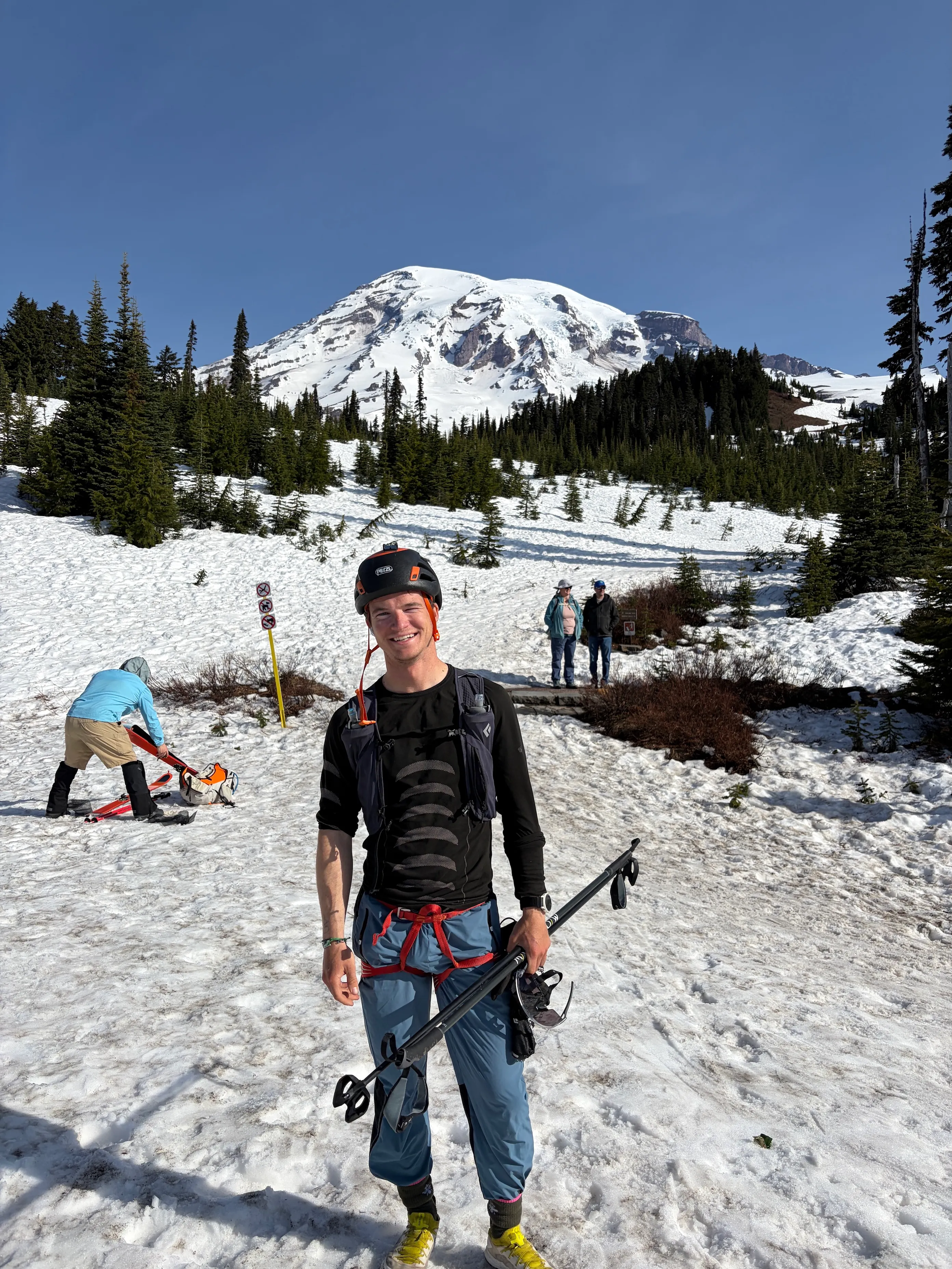
In June 2025, Brent Okita became the first person to summit Mount Rainier 600 times. He has been guiding with RMI since 1986, and he reached the record while leading a client team to the top - the only way he wanted to do it. Six hundred summits works out to approximately 5.4 million feet of elevation gained, not counting training, attempts, or the times he biked from Ashford to Paradise. He has also led 23 consecutive successful Mt. McKinley expeditions. When asked what comes next: "More climbing, more Mount Rainier. It's what I do." An exemplary RMI guide, Brent has been at this for four decades, and just keeps going.
Speed records on Mount Rainier have always belonged to the people who know her best. Since Lou and Jim Whittaker, along with John Day, set the first documented speed record in 1959 -- car to car in 7 hours and 20 minutes -- the record has almost always been set by guides, climbers, and athletes for whom Rainier isn't just a destination, but a home mountain. On May 9th, 2026, RMI guide Simon Kearns added his name to that lineage in a big way, running from the Paradise parking lot to the summit and back in 3 hours, 43 minutes, and 52 seconds -- the fastest unsupported on-foot round trip in the mountain's recorded history, shattering the previous mark by more than 30 minutes.
.webp)
Peter's current priority is to build year-round, full-time mountain guide positions, still rare anywhere in American guiding. For too long, professional guiding has been seasonal by default; structurally incompatible with a full career, a family, or long-term financial stability. Alongside that, RMI's partnership with Black Diamond has opened new ground in guide-driven gear development, and over $100,000 in AMGA education grants continues to back the technical development of every guide on the roster. The product has always been the guides. This is what investing in that product actually looks like.
The website you're reading is part of a larger effort to make RMI as clear and accessible as the mountain experience itself. New program pages, sharper qualification standards, better tools for climbers making decisions about which objective is right for them; all of it built around the same question Lou asked in 1969: what does it actually mean to take someone into the mountains responsibly? Kristian Whittaker, Peter's son and Lou's grandson, is now a partial owner, bringing a focus on operations, marketing, and business development into the third generation of family leadership. Together, the team is ensuring our standards, principles, and practices are ready for the next generation of aspiring climbers.
Lou Whittaker started this company with a conviction that guides should teach, not just lead. Nearly six decades later, that conviction runs through every hire, every program, and every decision made above the trailhead. The guides are better trained, better supported, and more diverse than at any point in RMI's history. The programs reach further. The partnerships run deeper. And somewhere on Rainier today, an RMI guide is leading a rope team up a route they know better than almost anyone alive, exactly the way Lou intended.
RMI is fortunate to partner with a range of excellent companies and organizations that help us run world-class mountain expeditions — from the gear manufacturers whose equipment gets us up the mountain, to the nonprofits, training organizations, and land managers whose work protects the places we climb.
We are proud to say that all of RMI's programs and operations within U.S. National Parks are carbon neutral.
We believe climate change presents significant challenges to the planet and the mountains we cherish. By implementing practices to reduce our emissions, coupled with purchasing carbon offsets, we achieve our goal of sustainability and further promote responsible environmental practices.
We have acquired offsets for greenhouse gas emissions through our partnership with Ostrom Climate, Canada's top carbon management solutions provider. Their carbon offset projects undergo rigorous verification by third parties to validate that emission reductions are genuine and permanent, ensuring that our contribution is making a tangible impact.
By supporting this project, we effectively prevent the same amount of greenhouse gas emissions generated from our operations from being emitted elsewhere. These offsets are instrumental in fulfilling our sustainability objectives and advancing responsible environmental practices.
In its simplest form, Leave No Trace is about making good decisions to protect the world around you - the world we all enjoy.
The Leave No Trace Center for Outdoor Ethics is an educational, nonprofit organization dedicated to the responsible enjoyment and active stewardship of the outdoors by all people, worldwide.
The Juniper Fund supports and empowers families and communities impacted by the loss of Himalayan high-altitude workers by providing cost-of-living grants, vocational training, and business grants.
The International Mountain Explorers Connection (IMEC) is a U.S. nonprofit organization based out of Boulder, Colorado. Through its Kilimanjaro Porters Assistance Project (KPAP) in Moshi, IMEC’s focus is improving the working conditions of the porters on Kilimanjaro. IMEC supports the mountain crew by lending donated clothing at no charge, providing free educational classes and by advocating for responsible mountain trekking practices.
RMI Expeditions is proud to have worked closely with the Climb for Clean Air, a fundraising program for the American Lung Association, since 1988. Climb for Clean Air offers programs on Mt. Rainier, Mt. Baker, and Mexico's Volcanoes to all who are ready to take on the Challenge. Climb A Mountain. Make A Difference.
Uphill Athlete is a platform for openly sharing proven training knowledge for alpinism, mountaineering, rock and ice climbing, ski mountaineering, skimo racing, and mountain running. We offer free educational resources, sell well-designed training plans, and coach amateurs and experienced athletes to maximize their fitness and succeed in the mountain sports they love.
The American Mountain Guides Association (AMGA) is a national 501(c)(3) nonprofit organization that has been supporting the mountain guiding and climbing instructor community since 1979.
Their mission is to be the leader in education, standards, and advocacy for professional guides and climbing instructors.
MSR is fueled by the belief that better, safer, more reliable equipment is the key to unlocking greater adventures.

Petzl's mission is to create innovative tools and services that allow men and women to progress, position, and protect themselves in vertical environments, as well as to light their way in the dark.
We Simplify Outfitting
As retailers, we're beholden to no one but our customers. As climbers, we'd never trust our lives to mediocre gear. Our name says it all: Whittaker Mountaineering. We test, select, and offer the best mountain trekking and climbing equipment available. We take on the hard work to simplify outfitting for you.
From its headquarters in the Jura mountains of France, Julbo has been at the forefront of action sports optics since the company was founded in 1888. Three generations have directed Julbo's evolution from a manufacturer of corrective lenses to a global producer of protective eyewear for all active outdoor pursuits.

Black Diamond is committed to designing and engineering the most innovative mountain equipment in the world.
Black Diamond is an official sponsor of RMI. Black Diamond will contribute to the growth and development of our guides by providing and improving opportunities for the pursuit of more certifications and official training. In return, our guides will continue to wear, test, and provide valuable feedback to Black Diamond for the improvement of their mountaineering gear.
RMI Expeditions operates in the Mount Baker - Snoqualmie National Forest for Mt. Baker and Glacier Peak programs. These programs include Mt. Baker - North Ridge, Mt. Baker - Easton Glacier, Mt. Baker Coleman-Deming, Expedition Skills Seminar - Baker: Coleman-Deming, Mt. Baker Summit & Ski Descent, Mt. Baker Backcountry Ski & Splitboard Course, Glacier Peak Climb, and custom programs.
RMI Expeditions operates in North Cascades National Park under a Commercial Use Authorization. Our programs within North Cascades National Park include Mt. Shuksan - Sulphide Glacier, Mt Shuksan - Fisher Chimneys, Expedition Skills Seminar - Shuksan, Forbidden Peak - West Ridge, and custom programs.
RMI Expeditions is an authorized concessioner of Mount Rainier National Park. We have operated within Mount Rainier National Park since 1969.
RMI Expeditions is an authorized concessioner of Denali National Park and Preserve. We have operated within Denali National Park and Preserve since 1975 and lead programs on Mt. McKinley and the Kahiltna, Pika, and Ruth Glaciers.
The reviews below come from climbers across every program RMI runs, from first-time Rainier ascents to multi-week international expeditions. What people tend to remember isn't just the summit. It's the guide who caught something before it became a problem, the rope team that held together on a hard day, and the feeling of arriving back at BaseCamp having done something they weren't sure they could do. Read them with that in mind.
July 20, 2026

Mt. Baker - Easton Glacier
I enjoyed being out in the mountains with our two guides. The camp setting was beautiful, and the mountain itself was amazing.
Dusty D

July 20, 2026
I enjoyed being out in the mountains with our two guides. The camp setting was beautiful, and the mountain itself was amazing.
Additional Comments
George is as solid as they come. He provided a laid back mountain experience while making safety his number one goal behind the scenes. I wouldn't hesitate to climb with him again.
Additional Comments
The lead up to the trip is well organized and communicated. I don't have any notes.
Additional Comments
The itinerary is great! There's no transportation, so I don't have any notes on that.
What did you enjoy most?
I enjoyed being out in the mountains with our two guides. The camp setting was beautiful, and the mountain itself was amazing.
What needs improvement?
In my case, I was at a severe handicap from the start. If I had a heads up that my three climbing partners were going to be 70,71, and 59, I would have changed the dates for my trip. In the end, we were never going to make it to the top with the physical fitness displayed by the other clients. I worked hard to get in the best shape of my life, and felt like "the third guide" when it came to the group of clients. It was really frustrating.
July 19, 2026
Mt. Rainier Four Day Climb
The guides were amazing. We definitely got the A team!!
Jocelyn J
July 19, 2026
The guides were amazing. We definitely got the A team!!
Additional Comments
I spent a lot of time with Jack on the mountain and quickly discovered that he is extremely calculated and wise. I was so impressed with his positive attitude and his calm disposition. One thing that really stood out was his ability to communicate with both his fellow guides and all of his clients. He is clear in all of messages and keeps everyone informed. He also does this with a smile on his face. There was not one time on this 4 day trip that he wasn’t kind and patient. He is an incredible teacher and approachable. I felt so lucky to have him running all the logistics and our team. We had THE BEST team dynamics. Everyone had fun and we received endless encouragement along the way. I am so happy with this experience and would go out and adventure again with Jack anytime! Jack you really made our family Rainier climb so memorable. Thanks for everything!
Additional Comments
Everything was PERFECT
What did you enjoy most?
The guides were amazing. We definitely got the A team!!
What needs improvement?
Nothing it was perfect
July 19, 2026
Expedition Skills Seminar - Emmons
Practicing skills in the alpine environment. Pushing myself and having a wonderful team to allow for my growth.
Christopher W
July 19, 2026
Practicing skills in the alpine environment. Pushing myself and having a wonderful team to allow for my growth.
Additional Comments
I have been on 5 RMI guided trips and Jackson is a standout! He communicates very effectively and managed the team with ease. I would love to have him guide me in the future.
What did you enjoy most?
Practicing skills in the alpine environment. Pushing myself and having a wonderful team to allow for my growth.
What needs improvement?
Increased summit windows to allow for weather variability.
July 18, 2026
Mt. Rainier Five Day Climb
What I enjoyed most was the incredible camaraderie within our group. Going into the trip, I did not expect us to bond as closely as we did. Facing the challenges of the mountain together turned a group of strangers into a tight-knit team, which made the entire experience much more meaningful and enjoyable.
Brett T
July 18, 2026
What I enjoyed most was the incredible camaraderie within our group. Going into the trip, I did not expect us to bond as closely as we did. Facing the challenges of the mountain together turned a group of strangers into a tight-knit team, which made the entire experience much more meaningful and enjoyable.
Additional Comments
As the lead guide, Dominic did a fantastic job laying out clear expectations right from orientation. It is easy to let external factors like weather forecasts distract you—especially with the high winds we faced—but he kept us thoroughly dialed in on the task at hand each day, whether we were practicing skills or trekking up to Camp Muir. His summit-day briefing the afternoon prior was excellent, leaving me knowing exactly what to expect with zero surprises. Dominic very clearly prioritizes safety above all else, and I felt the entire team was in exceptional hands with him at the helm.
What did you enjoy most?
What I enjoyed most was the incredible camaraderie within our group. Going into the trip, I did not expect us to bond as closely as we did. Facing the challenges of the mountain together turned a group of strangers into a tight-knit team, which made the entire experience much more meaningful and enjoyable.
July 17, 2026
Mt. Rainier Four Day Climb
Pushing myself to my absolute limit, and the gorgeous views.
Jared H
July 17, 2026
Pushing myself to my absolute limit, and the gorgeous views.
Additional Comments
He was awesome!
What did you enjoy most?
Pushing myself to my absolute limit, and the gorgeous views.
What needs improvement?
NA
July 16, 2026
Expedition Skills Seminar - Kautz
I would recommend RMI to any of my family and the only reason I would do so is the guides. They made us all feel safe and important. They are RMI's greatest resource, and RMI should never forget that.
Cody W
July 16, 2026
I would recommend RMI to any of my family and the only reason I would do so is the guides. They made us all feel safe and important. They are RMI's greatest resource, and RMI should never forget that.
Additional Comments
I have been on several tours and expeditions, and Mike Haugen was the best guide I've ever had. What set him apart from other guides was the confidence he had in our teams' skills and abilities. The confidence he had in us made us all feel like we could accomplish something hard. He made it clear that he expected us to be on task and perform, but did so in such a pleasant and respectable way. Not many people can set those high expectations without coming across as stern or mean. Also, I had complete confidence in his ability to plan our expedition, route. I also liked how he let the junior guides make decisions and he backed them up; it shows that he's committed to the next generation of mountain guides and he wants them to succeed. I think there is a huge amount of gate keeping in the outdoor recreation industry, and mountaineering is probably the biggest offender of the outdoor sports, but this is not a mentality that Mike has. I think he believes the mountains are for everyone and everyone can enjoy them. I would love to go on another trip with Mike. Thank you so much for such a great experience -- I will remember this for the rest of my life. He deserves a massive raise!
Additional Comments
Some of the equipment we did not use or need. The less we have to buy or rent the better. But its as mostly okay. The guides worked well with us to make sure we had what we needed. I think more specific food recommendations would have been helpful; most of us have *no idea* how much food to bring (in terms of calories and weight), so more guidance from RMI would have been helpful because I think most of us packed up way more food than we actually ate.
Additional Comments
I think the first day (going over equipment) could have been shorter. I think some of us are arriving into town from Seattle or PDX and if we had an extra hour to get there, that would have been appreciated. It's so expensive to stay in Ashford and if we can cut down on the #nights we need to spend there, that would be nice. The seats in the van were okay.
What did you enjoy most?
The guides. 100%. They are what made this trip. Anyone can haul someone up a mountain, not everyone can make it enjoyable. They all must get raises immediately!
What needs improvement?
All of the following suggestions are for RMI (and not the guides): 1). The first day could be a little bit shorter. Maybe a later start time. The most fun part was the ice climbing and crevasse rescue, I think it would be fun to spend more time doing that than going over the gear. 2). I think our harnesses are really the most important piece of personal safety gear and RMI might want to consider issuing one to the clients, because if someone was using a bad harness that could be bad. The guides looked over our harnesses, which was great, but I can't imagine this is 100% fool proof. 3). It would be fun to have a lunch provided by RMI, even if it were built into the cost of the trip, I think it would help with team cohesion. 4). An idea for a future seminar: if someone has done a seminar or DC trip, they should be able to skip the crampon, rope and self arrest tutorial. I think a better idea would be more crevasse rescue time or more extensive rope training or alternate self arrest techniques. 5). Personally, I think there should be more pre requisites for the Kautz seminar. This is a hard route on a hard mountain. If someone has NO mountain experience at all, I do not think they should be allowed on this trip. Allowing un prepared people could potentially make the trip bad for the other clients. It could also put the guides at risk, having to help or rescue someone from a situation they were not prepared for. It's also kind of a waste of their money. They would be better served on other trips and more intro skills seminars. It would also make the trip better for the other clients because then the guides can focus on more advanced skills.
July 16, 2026
Mt. Rainier Five Day Climb
The people! The guides clearly prioritize safety and are all business when the situation demands it. They are also fun people and it was very enjoyable to spend time talking with, and getting to know them. Our climbing group was also exceptional. We quickly went from a group of 7 to a group of 5 and I really enjoyed getting to know everyone and make new friends.
Jeffrey W
July 16, 2026
The people! The guides clearly prioritize safety and are all business when the situation demands it. They are also fun people and it was very enjoyable to spend time talking with, and getting to know them. Our climbing group was also exceptional. We quickly went from a group of 7 to a group of 5 and I really enjoyed getting to know everyone and make new friends.
Additional Comments
Dom is a great lead guide. He makes the safety of the group a priority. He is also considerate, personable, and kind. He is thorough and patient as a teacher. Climbing with Dom and his team was an excellent experience. I would really like to do another trip with this team.
Additional Comments
Email communication/website/list was great. The checklist was perfect. The information provided was just enough. Really an ideal preparation experience.
Additional Comments
Multiple times I saw RMI guides pick up trash off the mountain. Not only does this demonstrate the guides' commitment to the LNT experience, but it motivates others to do the same.
What did you enjoy most?
The people! The guides clearly prioritize safety and are all business when the situation demands it. They are also fun people and it was very enjoyable to spend time talking with, and getting to know them. Our climbing group was also exceptional. We quickly went from a group of 7 to a group of 5 and I really enjoyed getting to know everyone and make new friends.
What needs improvement?
Not a thing. I have already recommended RMI to a friend who wants to climb Rainier next year.
July 15, 2026
Mt. Rainier Five Day Climb
This trip was a big improvement to my 2024 trip. My first trip and the guides were awesome, but I felt the staff I met this year were more personable, down-to-earth, and inclusive to clients from all different backgrounds and experience levels! And the people are what really make the trip. So to have a group of guides that felt like people I'd love to grab drinks with outside of the climb made me leave with a bigger smile on my face than I'm sure I would have had if I'd summited in 2024!
Kimberly A
July 15, 2026
This trip was a big improvement to my 2024 trip. My first trip and the guides were awesome, but I felt the staff I met this year were more personable, down-to-earth, and inclusive to clients from all different backgrounds and experience levels! And the people are what really make the trip. So to have a group of guides that felt like people I'd love to grab drinks with outside of the climb made me leave with a bigger smile on my face than I'm sure I would have had if I'd summited in 2024!
Additional Comments
Dominic is everything you'd hope to find in an RMI guide! Energetic, enthusiastic, focused, and driven. He did a fantastic job leading this program and from what I could see, also provided helpful feedback to the other guides that were a part of the trip as they led different portions of our training and climb. Dominic is really knowledgable, easy to talk to, and surprisingly down-to-earth considering his climbing resume. He struck a perfect balance of representing RMI's values, communicating the intensity and risk of the sport, maintaining the focus of safety above all else, while also rallying us all in the midst of pre-climb jitters to throw ourselves headfirst into something scary and amazing. As someone who wants to make mountaineering a serious lifelong pursuit, I feel really privileged to have Dominic as one of our guides because it seems like he really loves, lives and breathes this lifestyle. He made it known to us all that he's happy to be a resource, along with RMI, for future climbs, packing insight, training advice, etc. All the guides I met on this trip are the type of people that you feel like you could be buds with, while also trusting with your life as you rope up with them. If I may make a small (general) recommendation for the trip overall: I strongly prefer written instructions whenever possible over verbal, especially in nerve-wracking moments! It would have really helped me if the pack list for the summit bid on the whiteboard in Muir were to be updated by the guides to reflect the actual suggestions for the upcoming night. I thought packed correctly before going to bed since the whiteboard mentioned heavy mitts but not the medium weight gloves -- forgetting that the alternative was suggested by the guides. I think Sam and I were among the last to leave Muir and hit the route because he went through my pack and told me I brought the wrong gloves, so I had to run back to the hut to swap them out. I take responsibility for that, but I felt really flustered and embarrassed. Luckily, Sam handled it with lots of grace and it was inconsequential in the grand scheme of things :-)
Additional Comments
Just like with my first experience, I feel like all preparatory materials and communications leading up to the trip were extremely helpful and insightful. I think RMI does a fantastic job at curating resources and training staff to assist people that are new to the mountaineering world!
Additional Comments
Awesome!! No notes. Everything is crystal clear and well-communicated.
What did you enjoy most?
This trip was a big improvement to my 2024 trip. My first trip and the guides were awesome, but I felt the staff I met this year were more personable, down-to-earth, and inclusive to clients from all different backgrounds and experience levels! And the people are what really make the trip. So to have a group of guides that felt like people I'd love to grab drinks with outside of the climb made me leave with a bigger smile on my face than I'm sure I would have had if I'd summited in 2024!
What needs improvement?
If I'm being my absolute most picky and critical, some of the packing list recommended items have broken links or outdated items that could use some refreshes. But that's the only improvement I can think of. This trip was some of the best five days of my life and I wish I could do it over and over and over again!
July 15, 2026
Mt. Baker - Easton Glacier
The positivity throughout the entire experience was exceptional. I already thought my Rainier team was a winner, but seriously, these folks blasted it out of the park.
Daniel J
July 15, 2026
The positivity throughout the entire experience was exceptional. I already thought my Rainier team was a winner, but seriously, these folks blasted it out of the park.
Additional Comments
Incredibly informative, insightful, and helpful. It’s not easy to keep a team on track, make changes to the plan, and keep everyone happy at the same time. (I know Becca thought his pacing was a little strict, but personally, I thought it was 100% reasonable and appropriate for what we needed to accomplish.)
Additional Comments
It’s a great equipment list as usual, I just wish clients could receive some kind of advance notice for unnecessary weather-contingent items (like goggles, which I purchased, but were ultimately unnecessary due to the sunshine).
Additional Comments
No transportation or meals provided for this trip, although the coordination for carpooling and the hot water at mealtimes were both great. Changing the itinerary for a sunset climb was an A+ decision.
What did you enjoy most?
The positivity throughout the entire experience was exceptional. I already thought my Rainier team was a winner, but seriously, these folks blasted it out of the park.
What needs improvement?
Maybe just that one note about advance communication for unnecessary equipment?
July 15, 2026
Mt. Baker - Easton Glacier
The leadership and training from Ray and Simon. They were also just great people to be around. They clearly enjoy being on the mountains and leading groups. It is always exciting to be around such skilled people.
Bryan L
July 15, 2026
The leadership and training from Ray and Simon. They were also just great people to be around. They clearly enjoy being on the mountains and leading groups. It is always exciting to be around such skilled people.
Additional Comments
I can't speak highly enough about Ray and his leadership during this trip. I was the least experienced climber on this trip but at no point felt unsafe with his guidance. Both Ray and Simon were incredibly patient with myself and others asking the same questions repeatedly and were just so professional how they explained concepts, and made sure you understood. Ray at multiple points engaged me in a way that showed high EQ and leadership experience--he knew the different ways to talk to the different members of the team. I would personally book future trips around knowing if Ray or Simon is the assigned guide (I would change my schedule to accommodate being with them).
Additional Comments
The office team was great with every interaction. I had to adjust the schedule due to an illness and they immediately helped resolve that. The website has all the necessary information. It just takes some time to learn the layout since there is so much content. My trip emails seemed to be off-cycle by a bit. I think it is because I had to rebook a trip and it confused the system. It was not a big deal, just seemed to be out of sync. There are a couple areas to improve with the equipment. First, add a small knife or utility tool to the list (for opening bear canister where food is stored in for this trip). As for the rental option, one other climber mentioned Whittaker Mountaineering may offer to send gear to you. I'm not sure if this is accurate but it would be much simpler to have other options when coming from out of town. It required adding a day to make it in time to pick up rental equipment before the hike. It would be great to have an option nearer to Seattle/airport to make the beginning of the trip smoother.
Additional Comments
We ended up adjusting the summit to a bit earlier and that schedule worked perfect for this team.
What did you enjoy most?
The leadership and training from Ray and Simon. They were also just great people to be around. They clearly enjoy being on the mountains and leading groups. It is always exciting to be around such skilled people.
What needs improvement?
There are so many options for future climbs. I'd love for advice about what are logical next steps to consider to keep improving. It would also be great to know if/when it is possible to do other trips with Ray or Simon.
July 14, 2026
Mt. Baker - North Ridge
Type 2 fun. Very technical and self reliant program compared to Rainier. Learnt a lot of technical stuff.
Praharsha S
July 14, 2026
Type 2 fun. Very technical and self reliant program compared to Rainier. Learnt a lot of technical stuff.
Additional Comments
Road washout. Bikes would have helped😭
What did you enjoy most?
Type 2 fun. Very technical and self reliant program compared to Rainier. Learnt a lot of technical stuff.
July 14, 2026
Mt. Rainier Four Day Climb
This trip was fantastic. The physical demands and beauty of the mountain was everything I could have hoped for. The guides had such a great spirit to keep our group engaged and energized.
Austin V
July 14, 2026
This trip was fantastic. The physical demands and beauty of the mountain was everything I could have hoped for. The guides had such a great spirit to keep our group engaged and energized.
Additional Comments
Fantastic leadership as the lead guide. Instilled much confidence from day 1.
What did you enjoy most?
This trip was fantastic. The physical demands and beauty of the mountain was everything I could have hoped for. The guides had such a great spirit to keep our group engaged and energized.
What needs improvement?
I do not have any negative comments.
July 13, 2026
Mt. Rainier Four Day Climb
Couldn't believe how well the guides achieved both professionalism and personableness. I found myself comparing the other guide companies we saw to our team and it felt like they just couldn't measure up in any way.
Erik C
July 13, 2026
Couldn't believe how well the guides achieved both professionalism and personableness. I found myself comparing the other guide companies we saw to our team and it felt like they just couldn't measure up in any way.
Additional Comments
Nikki was a phenomenal guide. The way she handled both the climbers and the guides was top notch.
Additional Comments
Some of the details could be hard to find. For example, I didn't know about the guide list or team roster. In one part of the site, where it was trip-specific, the equipment list was different than the public generic list (the trip-specific list said not to worry about a sleeping pad).
Additional Comments
Granted I have previous experience in everything but roped-travel from taking the Mountaineers' Alpine Scrambling course, but I wonder if the mountain school activities could be combined into a single day with the hike to Muir.
What did you enjoy most?
Couldn't believe how well the guides achieved both professionalism and personableness. I found myself comparing the other guide companies we saw to our team and it felt like they just couldn't measure up in any way.
What needs improvement?
The hut at Muir could be a little more comfortable. Or maybe providing an alternative for folks who can't sleep (perhaps a wind shelter with chairs or something to watch the sunset). I realize that may encourage the wrong behavior, but it was pretty brutal to be in the hut and unable to sleep.
July 13, 2026
Mt. Baker - North Ridge
Being on the mountain and making new friends.
Jeff P
July 13, 2026
Being on the mountain and making new friends.
Additional Comments
Jackson was great. In addition to his professional knowledge he took time to answer questions and engage on a personal level. Top notch.
What did you enjoy most?
Being on the mountain and making new friends.
What needs improvement?
Control the weather!! We were thwarted by weather high on the mountain!
July 13, 2026
Mt. Rainier Four Day Climb
The level of knowledge, organization, preparation and communication is highly correlated with our successful attempt to summit, with the ladder being the cherry on top and the overall experience a lifelong memory!
Lionel E
July 13, 2026
The level of knowledge, organization, preparation and communication is highly correlated with our successful attempt to summit, with the ladder being the cherry on top and the overall experience a lifelong memory!
Additional Comments
Professional, communicative, strong leader and educator, motivating and supportive. In one word, Jackson cares as did all of his teammates.
Additional Comments
It takes a village to get us up the mountain, thank you.
What did you enjoy most?
The level of knowledge, organization, preparation and communication is highly correlated with our successful attempt to summit, with the ladder being the cherry on top and the overall experience a lifelong memory!
What needs improvement?
Just doing another expedition!
July 13, 2026
Mt. Rainier Four Day Climb
The guides really make the experience. Somehow RMI has found a group of people who are not only insanely capable of superhuman feats, but they are gentle, supportive, and curious as well. They don't lead with ego or a pushy attitude. They are really remarkable people that I am grateful to have shared the experience with.
Andrea B
July 13, 2026
The guides really make the experience. Somehow RMI has found a group of people who are not only insanely capable of superhuman feats, but they are gentle, supportive, and curious as well. They don't lead with ego or a pushy attitude. They are really remarkable people that I am grateful to have shared the experience with.
Additional Comments
Mike is a fabulous teacher, breaking down big (and scary!) concepts into manageable pieces. His calm presence is very grounding to those of us who suffer anxiety on a climb like this one - he just exudes security and confidence in an environment that feels unpredictable and overwhelming.
What did you enjoy most?
The guides really make the experience. Somehow RMI has found a group of people who are not only insanely capable of superhuman feats, but they are gentle, supportive, and curious as well. They don't lead with ego or a pushy attitude. They are really remarkable people that I am grateful to have shared the experience with.
What needs improvement?
As someone with a lot of anxiety about climbing mountains (though I do it anyways), one resource that would have helped me feel mentally stronger going into this is some sort of video guide of the climb. I'm picturing like, if each section of the climb had a video made from a go pro on someone's helmet or something - I tend to fear what I don't know, and the fear was part of what turned me around at Ingraham Flats. For the sake of visualizing the climb, it would be nice to be able to see footage of what I'm getting into.
July 13, 2026
Expedition Skills Seminar - Emmons
FANTASTIC EXPERIENCE! WOULD RECOMMEND TO EVERYONE AND COME AGAIN!
Meredith B
July 13, 2026
FANTASTIC EXPERIENCE! WOULD RECOMMEND TO EVERYONE AND COME AGAIN!
Additional Comments
Truly amazing! Felt so safe with him. His pace was fantastic. He was a wonderful head guide.
Additional Comments
Everything was great! The equipment list could have been slightly more clear (why we needed/use of rope, carabiners, traction pulley device), but otherwise it was great!
Additional Comments
PERFECT!
What did you enjoy most?
THE PEOPLE!
What needs improvement?
Give guests access to each others' contact info earlier on?
July 12, 2026
Mt. Rainier Four Day Climb
The way everyone worked well together. Our team was solid and the guides were amazing. We made the summit!
Josh T
July 12, 2026
The way everyone worked well together. Our team was solid and the guides were amazing. We made the summit!
What did you enjoy most?
The way everyone worked well together. Our team was solid and the guides were amazing. We made the summit!
What needs improvement?
Cannot think of any improvements at this time
July 12, 2026
Mt. Rainier Four Day Climb
Getting to meet the other climbers and bonding with them during the climb. Facing adversity together as a team and being positive and encouraging towards each other. Having the guides that we had. Some of the best people who genuinely care, even if they just met you. Made the whole experience enjoyable and memorable.
Tito V
July 12, 2026
Getting to meet the other climbers and bonding with them during the climb. Facing adversity together as a team and being positive and encouraging towards each other. Having the guides that we had. Some of the best people who genuinely care, even if they just met you. Made the whole experience enjoyable and memorable.
Additional Comments
Mike exceeded all my expectations as a guide. From the start, I felt completely confident in his ability to get us up the mountain safely. His judgment and route-finding were spot on, especially through the trickier sections. Beyond the technical skill, he was personable, encouraging, and had a calm, steady presence that made a genuinely hard climb feel manageable. His years of experience clearly showed, not just in how he handled the mountain, but in how he read the group. He struck the right balance between safety and encouragement without ever making anything feel forced. I’d recommend Mike without hesitation to anyone looking for a guide who’s as skilled as he is genuinely great to be around. Thanks again Mike!
Additional Comments
Excellent job in preparing us for our climb with the resources from the website, teams call and email communications.
Additional Comments
It was all great and very professional.
What did you enjoy most?
Getting to meet the other climbers and bonding with them during the climb. Facing adversity together as a team and being positive and encouraging towards each other. Having the guides that we had. Some of the best people who genuinely care, even if they just met you. Made the whole experience enjoyable and memorable.
What needs improvement?
The ability to have pancakes at Camp Muir. 😂
July 12, 2026
Expedition Skills Seminar - Emmons
The guides made the trip. I truly enjoyed the group of climbers and guides we had, and it truly made the experience special.
Travis W
July 12, 2026
The guides made the trip. I truly enjoyed the group of climbers and guides we had, and it truly made the experience special.
Additional Comments
Joe is easily one of the best teachers I’ve ever had. He makes sure to always tie things back to their cause or intent. Everything is explained in simple terms and easy to understand. An excellent guide all around.
What did you enjoy most?
The guides made the trip. I truly enjoyed the group of climbers and guides we had, and it truly made the experience special.
July 12, 2026
Mt. Rainier Four Day Climb
I enjoyed the opportunity to climb on Mt Rainier with my son and the rest of the team knowing that we were being led by an experienced and caring group of guides who ensured our safety and genuinely wanted us to have the best experience possible.
Leo C
July 12, 2026
I enjoyed the opportunity to climb on Mt Rainier with my son and the rest of the team knowing that we were being led by an experienced and caring group of guides who ensured our safety and genuinely wanted us to have the best experience possible.
Additional Comments
Nikki is excellent leader both with her team of guides and her clients. She provides clear information and instruction. It is obvious she wants to give her clients the best experience they can have. I found her easy to talk with about my options when I was having difficulty and I decided to descend after completing the Cleaver
What did you enjoy most?
I enjoyed the opportunity to climb on Mt Rainier with my son and the rest of the team knowing that we were being led by an experienced and caring group of guides who ensured our safety and genuinely wanted us to have the best experience possible.
What needs improvement?
I participated in the online training webinar. I would liked to have had more/better free information on training without having to purchase a training plan.
July 12, 2026
Mt. Rainier Four Day Climb
When I first began considering a Mt. Rainier summit attempt, I reached out to a mountaineering friend in Virginia for guidance on both physical preparation and selecting a guide service. He was very clear that RMI was the only choice, having personally used RMI for both Rainier and Denali. He was 100% correct in his recommendation. Throughout the climb, it became clear that many of my teammates had received similar advice from experienced friends who also trusted RMI. The reputation RMI has built is absolutely well deserved, and after experiencing their professionalism, expertise, and commitment to climber success firsthand, I can confidently add my voice to those recommending them.
Stephanie H
July 12, 2026
When I first began considering a Mt. Rainier summit attempt, I reached out to a mountaineering friend in Virginia for guidance on both physical preparation and selecting a guide service. He was very clear that RMI was the only choice, having personally used RMI for both Rainier and Denali. He was 100% correct in his recommendation. Throughout the climb, it became clear that many of my teammates had received similar advice from experienced friends who also trusted RMI. The reputation RMI has built is absolutely well deserved, and after experiencing their professionalism, expertise, and commitment to climber success firsthand, I can confidently add my voice to those recommending them.
Additional Comments
Nikki was an exceptional lead guide on our 4-day Mt. Rainier summit climb. She struck the perfect balance between being firm when it mattered and kind when we needed encouragement. From the moment we met, she helped calm my pre-climb nerves with confidence and professionalism, while making it clear that safety, Leave No Trace principles, and the well-being of every climber would always come first. She led our team with incredible skill, patience, and genuine care. She reminded me of a "mother hen" watching over her flock—always aware of everyone's condition, offering encouragement when needed, and making thoughtful decisions that kept the team safe and moving together. Her leadership created an environment where we could challenge ourselves while trusting that we were in capable hands. Summiting Mt. Rainier was a bucket-list achievement for me, and Nikki played a huge role in making it an unforgettable experience. I couldn't have asked for a better guide, and I would gladly climb with her again.
Additional Comments
From the moment I booked my climb until I returned my well-used rental gear after the summit, RMI delivered an exceptional customer experience. Every interaction with the organization was professional, friendly, and helpful. Whether it was the office staff answering questions before the trip, the clear email communications, the informative website, the rental team ensuring I had the right equipment, the shuttle drivers, or the incredible guides, every member of the RMI team made me feel prepared, supported, and valued. I was especially impressed with the trip preparation resources. The packing list was outstanding—every single item on it proved to be necessary given the conditions we encountered on Mt. Rainier. It was evident that the recommendations were based on years of guiding experience, and having confidence in my gear allowed me to focus on the climb itself. RMI has built a culture of professionalism, safety, and genuine customer care that is evident in every touchpoint of the experience. Climbing Mt. Rainier was a bucket-list adventure, and RMI exceeded my expectations in every way. I would confidently recommend RMI to anyone considering a guided climb and look forward to climbing with them again in the future.
Additional Comments
RMI's attention to detail throughout the entire climbing experience was exceptional, and the transportation, environmental stewardship, and itinerary planning were no exception. The transportation logistics were seamless from start to finish. The buses were clean and comfortable, water was provided, and the loading and unloading process was efficient and well organized. Most importantly, we always felt safe and well cared for during transportation to and from the mountain. I also appreciated RMI's consistent commitment to Leave No Trace (LNT) principles. The reminders throughout the trip reinforced that we were not only there to climb Mt. Rainier, but also to respect and protect the environment we were privileged to experience. It was clear that stewardship of the mountain is deeply ingrained in RMI's culture. The itinerary was thoughtfully designed and created the right balance between preparation, acclimatization, challenge, and recovery. The time spent during Mountain School, at Camp Muir, and on the summit attempt felt intentional and purposeful. The pacing during both the ascent and descent was excellent, with sustainable breaks that allowed us to manage our energy while still progressing efficiently. RMI's ability to balance safety, education, environmental responsibility, and the overall climber experience is what makes them stand out. Every detail of the trip was carefully considered, allowing us to focus on the climb and fully appreciate the incredible experience of being on Mt. Rainier.
What did you enjoy most?
It is difficult to choose just one thing I enjoyed most about my trip, because so many moments made the experience unforgettable. However, there was something truly magical about watching eight strangers come together as a cohesive team, united by a shared goal and a common level of commitment. By summit day, I had complete confidence in every person on my team and no hesitation about being connected to any of my teammates on the mountain. We bonded through the shared challenge, exhaustion, and triumph of attempting a Mt. Rainier summit, but just as importantly, we connected through the conversations and moments in between. Without the distractions of technology, we had the opportunity to genuinely get to know one another—on the bus, during Mountain School, in the Camp Muir hut, and throughout the climb itself. You know you have experienced something special when the entire team continues to linger together long after the official post-trip gathering has ended, including the guides, simply because no one was ready for the experience to be over. The community that formed was truly remarkable. Summiting Mt. Rainier was an incredible accomplishment, but the people I shared it with—the teammates who became friends and the guides who supported us every step of the way—are what made the experience truly magical. Even the other climbing group we met, a group of seven friends on their annual trip, became part of our extended climbing community. Reflecting on the people I met during this journey still brings a huge smile to my face, and that may be the greatest gift of the entire experience.
What needs improvement?
One small suggestion for improvement would be to add toilet paper to the Personal Care section of the equipment list. The packing list was exceptional overall, and every recommended item proved valuable for the climbing conditions. Adding TP as a personal care item would make an already comprehensive preparation guide even more complete, especially for use at the Camp Muir toilet facilities.
July 11, 2026
Expedition Skills Seminar - Emmons
The whole team sitting around the kitchen just talking. It felt like we had been friends for a long time.
Eric N
July 11, 2026
The whole team sitting around the kitchen just talking. It felt like we had been friends for a long time.
Additional Comments
Joe Crawford was the perfect person to lead this trip. He has abundance knowledge and can help clients overcome fears.
Additional Comments
The equipment list was exactly correct.
Additional Comments
Continue the great work.
What did you enjoy most?
The whole team sitting around the kitchen just talking. It felt like we had been friends for a long time.
What needs improvement?
Nothing, I left that feeling satisfied on all fronts.
July 11, 2026
Mt. Rainier Four Day Climb
People. You have a great team.
James M
July 11, 2026
People. You have a great team.
Additional Comments
Ben has a great combination of being genuine, knowledgeable, and charismatic. Being both genuine and knowledgeable is difficult to successfully pair. A person with knowledge who isn’t genuine can come across as cocky and condescending. And charismatic people can sometimes be snake-oil salesmen, forcing others’ trajectories to bend to the gravity of their thin ego. But Ben is the rare combination of these three traits who has managed to thread the needle. His knowledge comes across as an olive branch to learn from - not a cudgel for submission. And this is really only possible because he is genuine. People can smell and sense inauthenticity, but Ben can only really be Ben. Ben’s flow state appears to be in thin air, helping plebes like me successfully climb a big pile of dirt, rock, ice and snow.
Additional Comments
There was some opacity on what to expect within each day, but maybe I missed it.
What did you enjoy most?
People. You have a great team.
What needs improvement?
Smaller mountain. ;)
July 11, 2026
Mt. Rainier Four Day Climb
The whole thing, but really the summit!!!
Nicholas M
July 11, 2026
The whole thing, but really the summit!!!
Additional Comments
Thank you so much for your leadership and creating a tremendous climbing program for all of us. You made us feel safe and able to complete the hike up to the summit.
Additional Comments
Everything was awesome with preparation and correspondence from RMI. I even moved my trip earlier with recommendations from Brent Okita and had no issues.
What did you enjoy most?
The whole thing, but really the summit!!!
July 11, 2026
Mt. Rainier Four Day Climb
The guides were the best part. They really cultivated a community between all the climbers and shared so much of themselves. It would not have been the same without Nikki, Stella, Matt and Lukas!
Courtenay K
July 11, 2026
The guides were the best part. They really cultivated a community between all the climbers and shared so much of themselves. It would not have been the same without Nikki, Stella, Matt and Lukas!
Additional Comments
Nikki absolutely rocks! She's a great leader with endless knowledge about the mountains and snow science, and was so much fun to have leading my rope team.
What did you enjoy most?
The guides were the best part. They really cultivated a community between all the climbers and shared so much of themselves. It would not have been the same without Nikki, Stella, Matt and Lukas!
July 11, 2026
Mt. Rainier Four Day Climb
My mountaineering experience.
Mike W
July 11, 2026
My mountaineering experience.
Additional Comments
Dom led the group well, including the other guides. I was confident in his abilities to get us up and down the mountain.
Additional Comments
Didn't like all of the equipment recommendations.
Additional Comments
Environment...?
What did you enjoy most?
My mountaineering experience.
What needs improvement?
The itinerary seemed very strick. I would've enjoyed the hike more if there was some more time soak in the hiking and mountaineering experience. I know the groups needs are more important than an individuals needs but we are visitors (even tourists) to your mountain. I wish there was a way to incorporate more time to enjoy the experience/sights of the trip.
July 10, 2026
Mt. Rainier Four Day Climb
I enjoyed the guides the most as they made the overall experience so much fun. I felt that we had a great group of climbers and guides which reduced a lot of stress. I feel like it is rare to walk away from an experience and have no real complaints but I truly cant think of any that were within the guides control. It was also a ton of fun to see all of the guides communicating with each other over radios all day and seeing them work as a team. They were having conversations of best practices and checking in on the other guides who were taking people back down the mountain after they called it.
Gavin B
July 10, 2026
I enjoyed the guides the most as they made the overall experience so much fun. I felt that we had a great group of climbers and guides which reduced a lot of stress. I feel like it is rare to walk away from an experience and have no real complaints but I truly cant think of any that were within the guides control. It was also a ton of fun to see all of the guides communicating with each other over radios all day and seeing them work as a team. They were having conversations of best practices and checking in on the other guides who were taking people back down the mountain after they called it.
Additional Comments
I had an outstanding experience with my guide and rope team leader. From the beginning of the trip, he was professional, knowledgeable, and always put safety first while creating an environment that was enjoyable and encouraging. He struck the perfect balance between maintaining a safe, disciplined approach and keeping the atmosphere light with jokes and conversation, which made the long days on the mountain much more enjoyable. Throughout the climb, he shared a wealth of knowledge about mountaineering, route conditions, and decision-making, making the experience educational as well as rewarding. When the weather on summit day turned out to be colder and windier than expected, he generously let me borrow his own parka so I could stay warm and continue climbing safely. That gesture went above and beyond and demonstrated how much he genuinely cared about his clients. I couldn't have asked for a better guide. His professionalism, leadership, experience, and positive attitude made a challenging climb both safe and memorable. I would gladly climb with him again and highly recommend him to anyone looking for an exceptional guide. Dan was a major reason why my experience was 5 stars. He also provided amazing advice of how to dress and layer for our next leg of the climb. I never got too cold or too hot because of this advice.
What did you enjoy most?
I enjoyed the guides the most as they made the overall experience so much fun. I felt that we had a great group of climbers and guides which reduced a lot of stress. I feel like it is rare to walk away from an experience and have no real complaints but I truly cant think of any that were within the guides control. It was also a ton of fun to see all of the guides communicating with each other over radios all day and seeing them work as a team. They were having conversations of best practices and checking in on the other guides who were taking people back down the mountain after they called it.
What needs improvement?
My only complaint was that the hot water was not quite boiling at camp muir so some of our mountain meals were not fully rehydrated but I also understand at was already a privilege to have hot water provided to us.
July 10, 2026
Mt. Rainier Four Day Climb
Perfect balance of relaxed atmosphere with serious focus on what needed to be done to achieve the goal. Can't really imagine having better guides/experience overall.
Louis L
July 10, 2026
Perfect balance of relaxed atmosphere with serious focus on what needed to be done to achieve the goal. Can't really imagine having better guides/experience overall.
Additional Comments
Awesome guide, very chill but took his leadership role very seriously and conveyed confidence to the entire group.
Additional Comments
Very professionally run operation.
What did you enjoy most?
Perfect balance of relaxed atmosphere with serious focus on what needed to be done to achieve the goal. Can't really imagine having better guides/experience overall.
What needs improvement?
Maybe include something like an organized group meal or happy hour at basecamp included either before to help the group to get to know each other or after to celebrate.
July 10, 2026
Mt. Baker - Easton Glacier
Everything went so well and both participants and guides were great people and leaders
Inge J
July 10, 2026
Everything went so well and both participants and guides were great people and leaders
Additional Comments
Ray is a fantastic mountain guide. He was incredibly helpful throughout the expedition: along the hike to base camp, in camp, mountaineering training, and of course the climb. He is very knowledgeable and shares so much of all his wealth of experience. He also was a great coach in helping some of my fellow climbers overcome feeling that they wouldn't be able to finish the climb. Looking forward to the next climb with Ray.
Additional Comments
Most of the website and email communication was great, but I don't seem to have received a post trip email from RMI. The equipment list was good, but would have been great to have RMI adapt it to this specific climb as some of the listed items ended up not being needed.
Additional Comments
Environmental regard and itinerary were handled very well. For this trip there was no RMI transportation or meals.
What did you enjoy most?
Everything went so well and both participants and guides were great people and leaders
What needs improvement?
All was well


