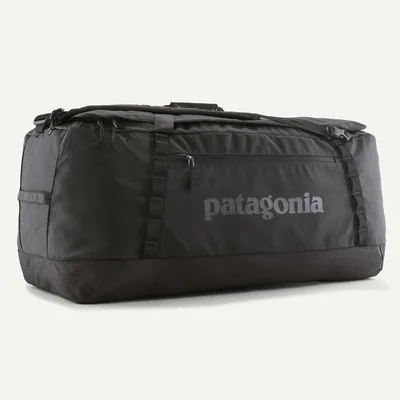
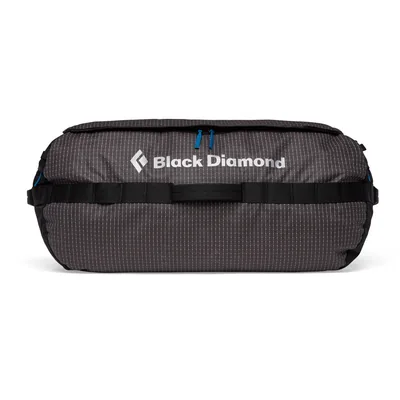
100+ Duffel Bag(s)
A durable duffel bag (100-120L) made of tough material with rugged zippers for gear transport and storage. Can be used as checked luggage and for organizing gear at base locations.


11 Days
|
Mountaineering
|
$4,500 - $4,800
|
$900
Deposit
|
Intermediate


A guided ascent of Cayambe and Cotopaxi, two of Ecuador's highest glaciated volcanoes, combining high-altitude mountaineering with cultural immersion in Quito and the Andean highlands.
Day-by-day program overview.
Fitness, experience, and preparation.
Gear requirements for this program.
Meals and nutrition on the mountain.
Getting there and local logistics.
Booking, cancellations, and requirements.
Common questions, direct answers.
What climbers are saying.

Two of Ecuador's highest glaciated volcanoes in eleven days, climbing to summits above 18,000 feet on peaks that rise from rainforest to permanent ice.

The expedition begins in Quito, one of the best-preserved colonial cities in South America, with time to explore its markets, neighborhoods, and surrounding hills before heading to the peaks.

At Level 3 difficulty with a built-in skills review on Cayambe, this is one of the most approachable high-altitude technical climbing expeditions available anywhere in the world.
I loved being able to try and tackle high peaks without the stress that comes with planning an international trip (or with making decisions with respect to weather and the like). Consequently, I could focus on getting up the mountain and that led to a more successful adventure.
Elle C.
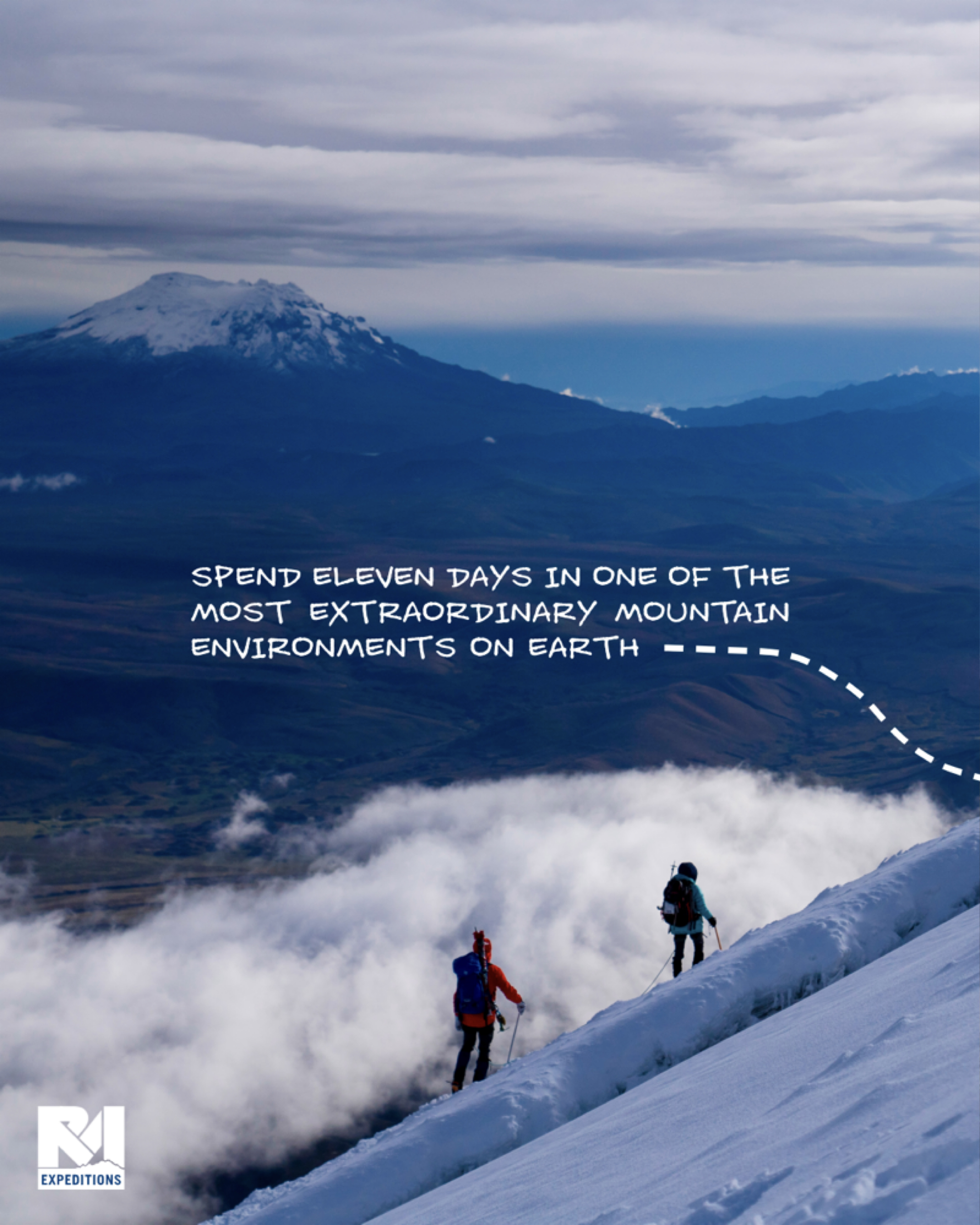
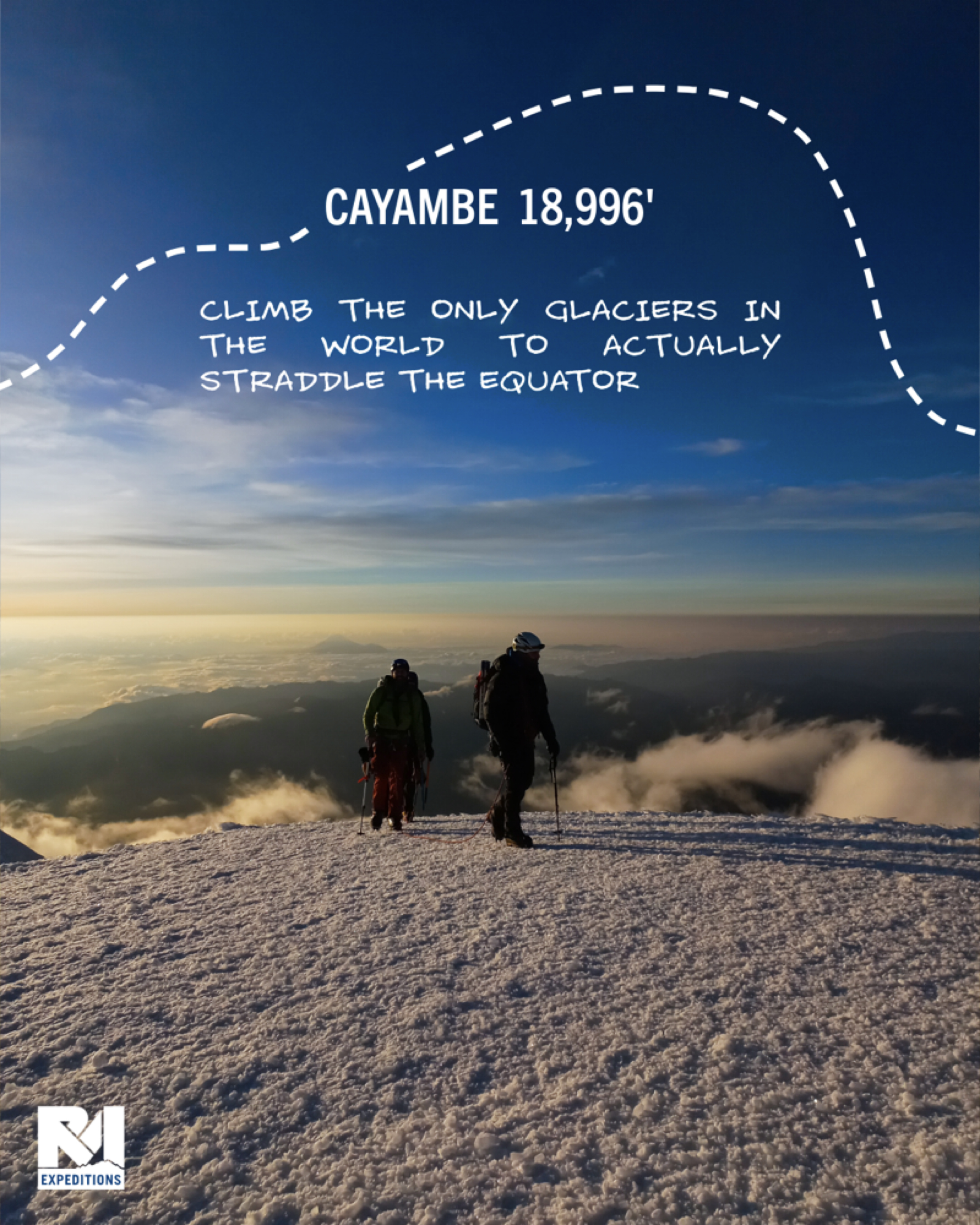
Ecuador sits at the intersection of the Andes, the Amazon, and the equator, and the result is one of the most extraordinary mountain environments on earth. The Avenue of the Volcanoes runs through the heart of the country, a chain of glaciated peaks rising above highland valleys and tropical forest that has drawn climbers and explorers for centuries. This eleven-day expedition climbs two of the finest: Cayambe at 18,997 feet, the only snow-capped point on earth that sits directly on the equator, and Cotopaxi at 19,348 feet, one of the world's highest active volcanoes and one of its most iconic.
The program is designed for intermediate climbers ready to step into serious high-altitude mountaineering without committing to a full expedition-scale objective. Cayambe comes first, providing the acclimatization and technical review that sets the team up for Cotopaxi. A skilled Ecuadorian guide joins the program alongside RMI's lead guide, bringing local knowledge of the peaks, the conditions, and the culture that shapes every aspect of how the expedition unfolds.
The expedition begins in Quito, one of the best-preserved colonial cities in South America and a UNESCO World Heritage site. At 9,350 feet, Quito itself begins the acclimatization process while the city's markets, architecture, and neighborhoods offer a genuine introduction to Ecuadorian culture before the climbing begins. This is a program where the mountains are the objective and the country is the experience.
RMI has been leading climbers on Ecuador's volcanoes for decades, and the guides on this program bring that accumulated high-altitude experience to every aspect of how the expedition is run. RMI guides hold wilderness medicine certifications, carry comprehensive medical and rescue kits, and maintain radio communication throughout the climb. Every ascent involves thorough pre-trip planning, daily weather assessment, and meticulous attention to pacing and acclimatization. RMI uses its own climbing equipment brought from the US, ensuring the standards of quality and reliability that define every RMI expedition are met on Cayambe and Cotopaxi.
“RMI is top notch. The guides and RMI's commitment to real mountaineering in amazing places is what I love most. I always leave the trips challenged, with new skills and education, and with new friends!” — Whynde K.
What distinguishes this program on the mountain is the partnership with Ecuador's most accomplished local guides. Jaime Avila, Freddy Tipan, and Esteban Mena have climbed extensively around the world from Ecuador to the Himalaya, and their knowledge of these specific peaks, their conditions, and their terrain is built into every decision made on the mountain. RMI brings the guiding expertise and expedition leadership; the local team brings the on-the-ground familiarity with Cayambe and Cotopaxi that no visiting guide service can replicate independently. To learn more about RMI's international partnerships, visit our Partners page.
The logistical foundation of this expedition reflects the same attention to detail. Private vehicles move the team efficiently between peaks, carefully selected lodges keep climbers comfortable and healthy throughout the program, and every detail from hotel arrangements in Quito to transfers between objectives is handled before departure. On a program that covers two peaks in eleven days, that organizational precision directly shapes the quality of the climbing experience.
To learn more about RMI's history and values as a guide service, visit our About page.
The expedition begins in Quito with two days of cultural exploration and acclimatization hiking before heading north to Cayambe for a skills review and summit attempt on the only snow-capped point on the equator. After a rest day, the team moves to Cotopaxi for the expedition's final and highest summit, returning to Quito on the same day before departing home the following morning.
Quito, Ecuador
19,348' / 5,897 m
11 Days
2
2
10–12 Hours
Depart U.S.A. Most flights arrive in Quito (UIO) in the late evening. Upon your arrival in Quito, a taxi ride takes you to our hotel. Overnight at Mercure Grand Hotel Alameda in Quito.
We meet in the hotel lobby for an orientation meeting and our first team breakfast. The day is spent exploring Colonial Quito with our friendly and knowledgeable guide. We start by heading northwest out of Quito to arrive at Mitad del Mundo (The Middle of the World). Here we visit the Intinan Museum and experience the Coriolis Effect firsthand. After attempting to balance an egg on a nail, we explore the Museum's exhibits on the first peoples of Ecuador.
We return to Quito for a walking tour of Old Town. We visit at El Panecillo, a sculpture of Quito's Madonna, and take in the breathtaking 360 degree views of the city of Quito, a UNESCO World Heritage Site. We continue our tour of the colonial architecture and streets such as the Calle La Ronda, Carondelet Palace, Independence Square, church of La Compania (1605), and the church and monastery of San Francisco (1535). There is time in the afternoon to relax and explore. (B)
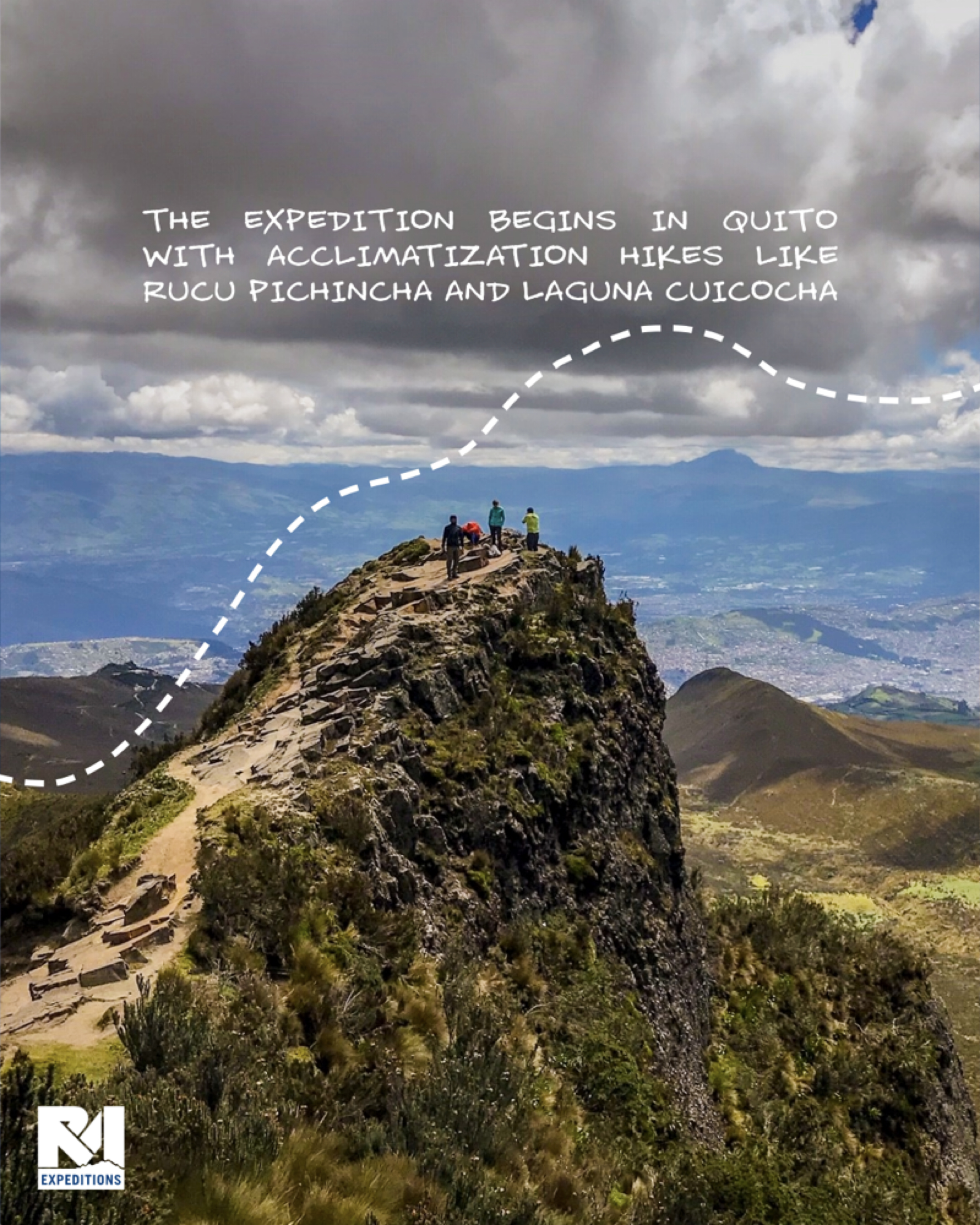
After breakfast we take a short drive from Quito to the teleferico (gondola) which will carry us to approximately 13,500'. From there we stretch our legs and lungs with an acclimatization hike on Rucu Pichincha. The hike is beautiful, with views of Quito and most of the snow covered volcanoes in Ecuador, including Cotopaxi and Cayambe. We return to the hotel and the afternoon is free to explore the city and organize our gear for our departure from Quito the following morning. (B)
Leaving Quito we travel north to the town of Otavalo and continue to the outskirts where we enter the Cotacachi-Cayapas Ecological Reserve. We follow a well-maintained trail that circumnavigates Laguna Cuicocha and takes us through a variety of microclimates as we change elevation and pass through a number of heavily-vegetated ravines. Views of the volcanoes in northern Ecuador abound especially of the nearby Cotacachi and Imbabura. We return to the bus and transfer to Otavalo where we spend a relaxing evening at the Intiyaya Residences. (B)
We visit the legendary Otavalo Market. Woven wool textiles, jewelry, art, spices and local food overwhelm our senses as we experience the local culture and practice our bargaining skills. After lunch, we drive to the hut at the base of Cayambe. Hiking time is approximately 1 - 2 hours. Overnight at the hut. (B, D)
In the morning we hike out to the toe of the glacier to focus on reviewing basic mountaineering techniques that will prepare us for our summit attempt. We settle in early in anticipation of our alpine start. Overnight at the hut. (B, D)
With an early alpine start for the summit, our route begins by climbing through some low rock outcroppings before stepping onto a spectacularly crevassed glacier. Once on the glacier, the route climbs directly to the upper reaches of the mountain, where a challenging final push to the summit awaits us. We return to the hut and transfer to Casa Ilayaku, a deluxe villa located in the hills outside of Quito. (B, D)
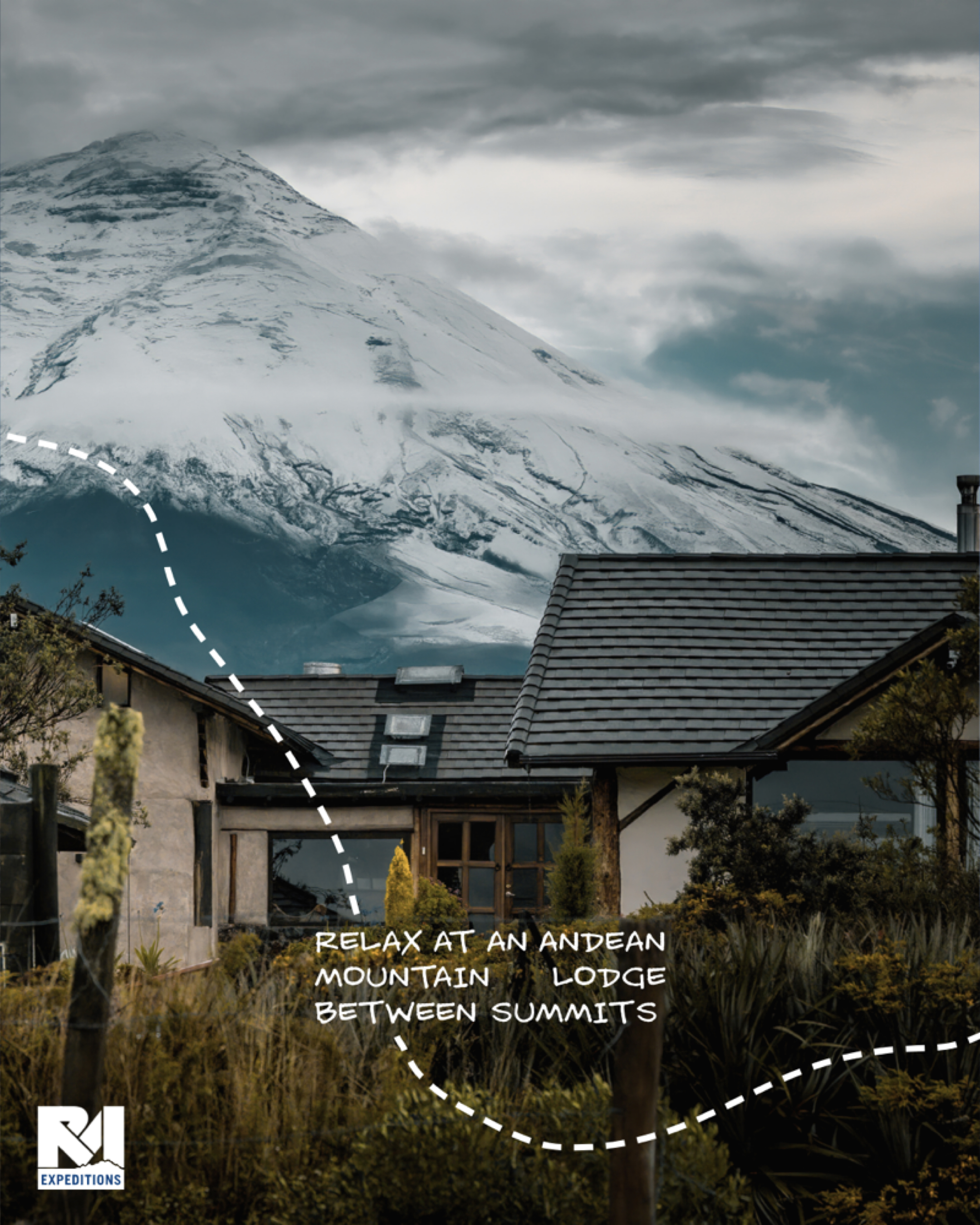
After several days of travel, acclimatization, and climbing we are rewarded with a bit of rest in preparation for our next objective. Chilcabamba Eco Lodge is the perfect place for our rest day. Climbers can choose to explore the local area on foot, spend time enjoying a book in front of a fire, or take a nap. (B, D)
After breakfast, a short drive takes us to the end of the road at the base of Cotopaxi. A 45-minute hike leads to the Jose Ribas Refugio at 16,000'. We settle in early in anticipation of tomorrow's summit day. Overnight at the hut. (B, D)
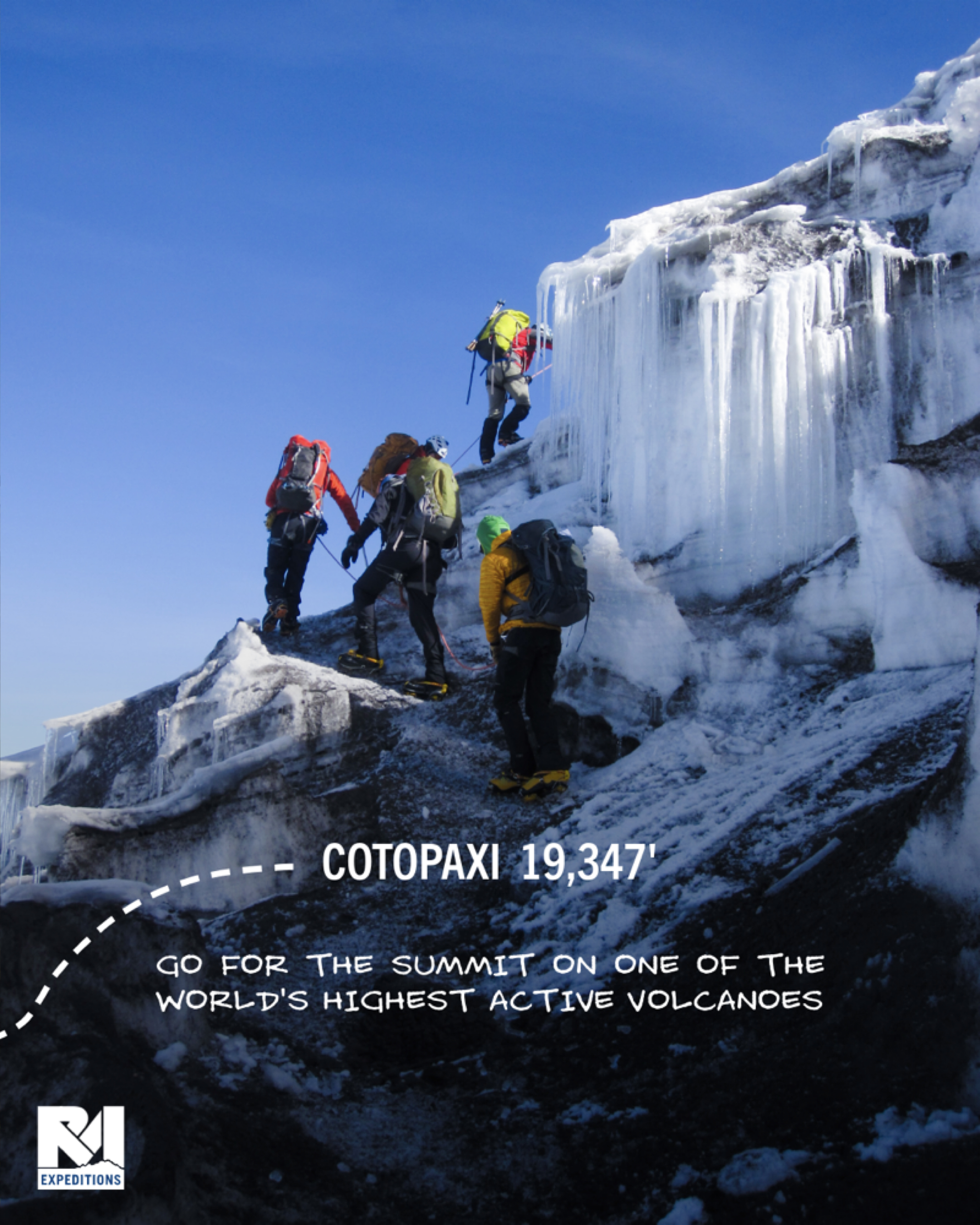
With an early alpine start, we use the first hour to approach the glacier. A long, initial pitch gains access to an interesting maze of crevasses on the lower slopes of this beautiful volcano. The ascent then weaves through impressive crevasse fields before ascending the final steep slopes to the summit. The deep, sheer-walled volcanic crater is an incredibly impressive sight. After celebrating on the summit, we descend back to the hut. Upon reaching the vehicles, we leave the mountains and travel back to Quito. Climbing time is approximately 10 - 12 hours. (B)
We transfer to the airport for our outbound flights.
Key: B, L, D = Breakfast, Lunch, Dinner included.

You should arrive in excellent physical condition and prepared for steep glacier climbing with a pack and summit days that can exceed ten to twelve hours on the mountain.

Prior experience with roped travel, crampon technique, and ice axe arrest is required before arriving in Ecuador, though a skills review is built into the itinerary on Cayambe before the summit attempt.

Both peaks exceed 18,000 feet, and climbers should be prepared to perform physically and mentally at high altitude over consecutive summit days.
Cayambe and Cotopaxi are serious high-altitude objectives that reward climbers who arrive with a solid foundation of basic mountaineering skills and genuine aerobic fitness. This is not an instructional program, but a skills review is built into the Cayambe portion of the itinerary to ensure the team is prepared and confident before the summit attempt. Climbers should arrive with working experience in roped travel, crampon technique, and ice axe arrest, and the fitness to apply those skills over a long summit day carrying a 20 to 25 pound pack.
Training should emphasize sustained aerobic output, uphill travel with a pack, and the ability to perform at high effort in cold and steep terrain. The acclimatization schedule built into the itinerary, beginning in Quito at 9,350 feet and building progressively through hikes and the Cayambe ascent before Cotopaxi, is designed to give climbers the best possible chance on both peaks. Arriving well-rested and healthy in the days before departure directly shapes how your body responds to altitude on the mountain.
Climbers completing the Cayambe and Cotopaxi expedition gain experience with high-altitude glacier climbing, crevasse navigation, and technical mountaineering on two of the Andes' most celebrated volcanoes.
Recommended climbing experiences include:
Skills Covered:
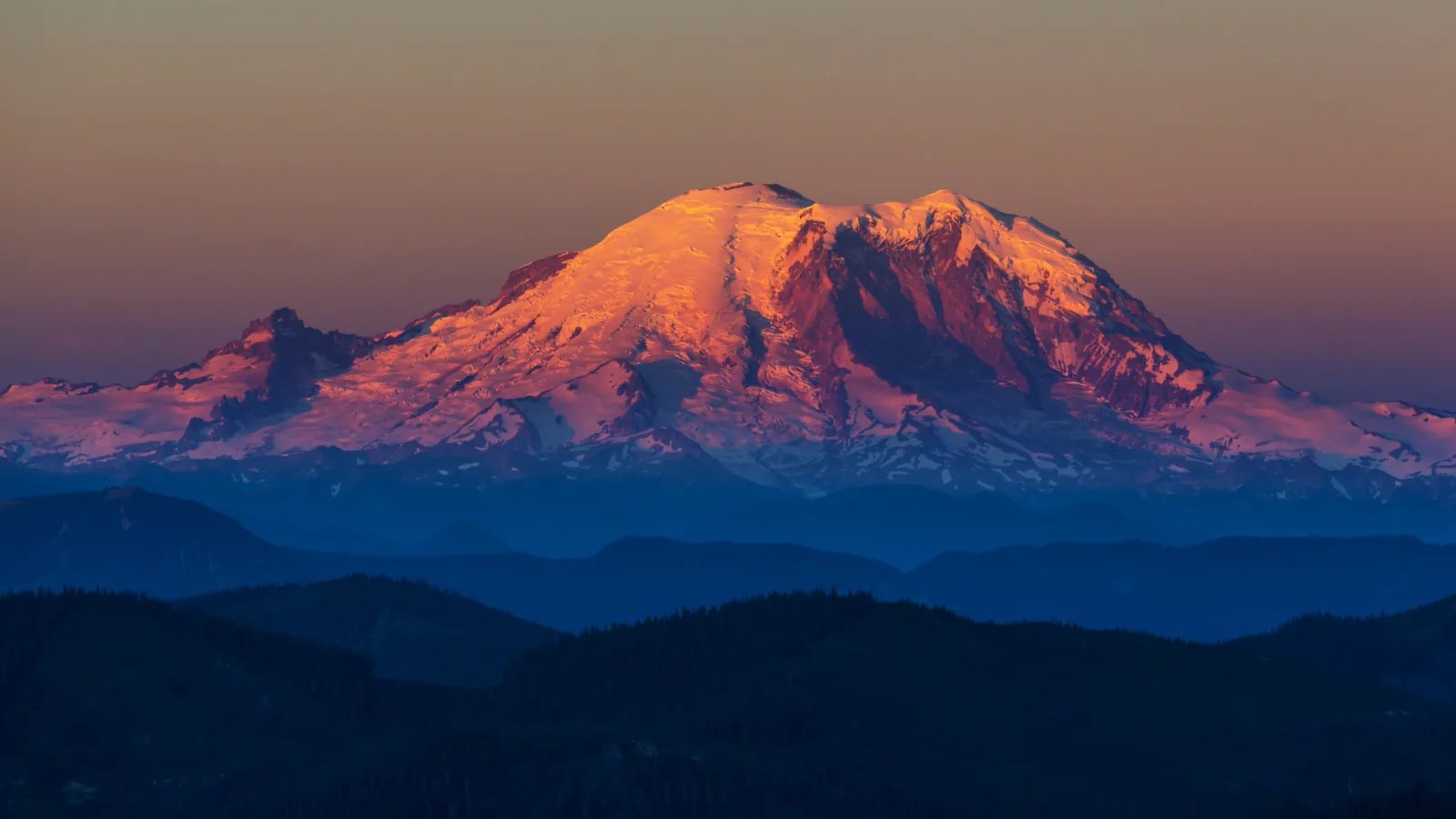
Develops a comprehensive foundation in expedition-style mountaineering skills applicable to major glaciated peaks.
Skills Covered:
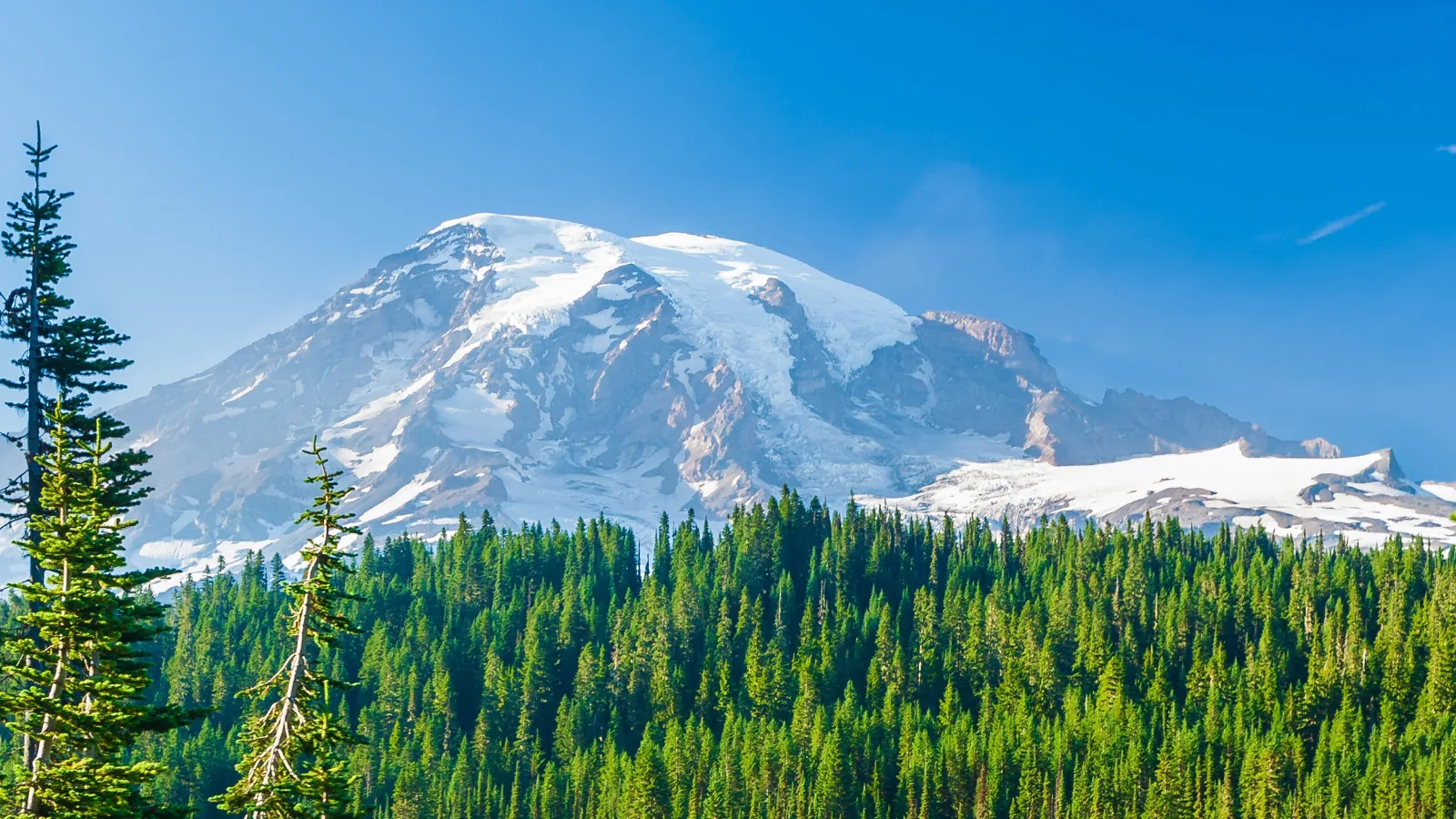
Builds technical mountaineering skills on steeper snow and ice while reinforcing expedition-style systems and movement.
Skills Covered:
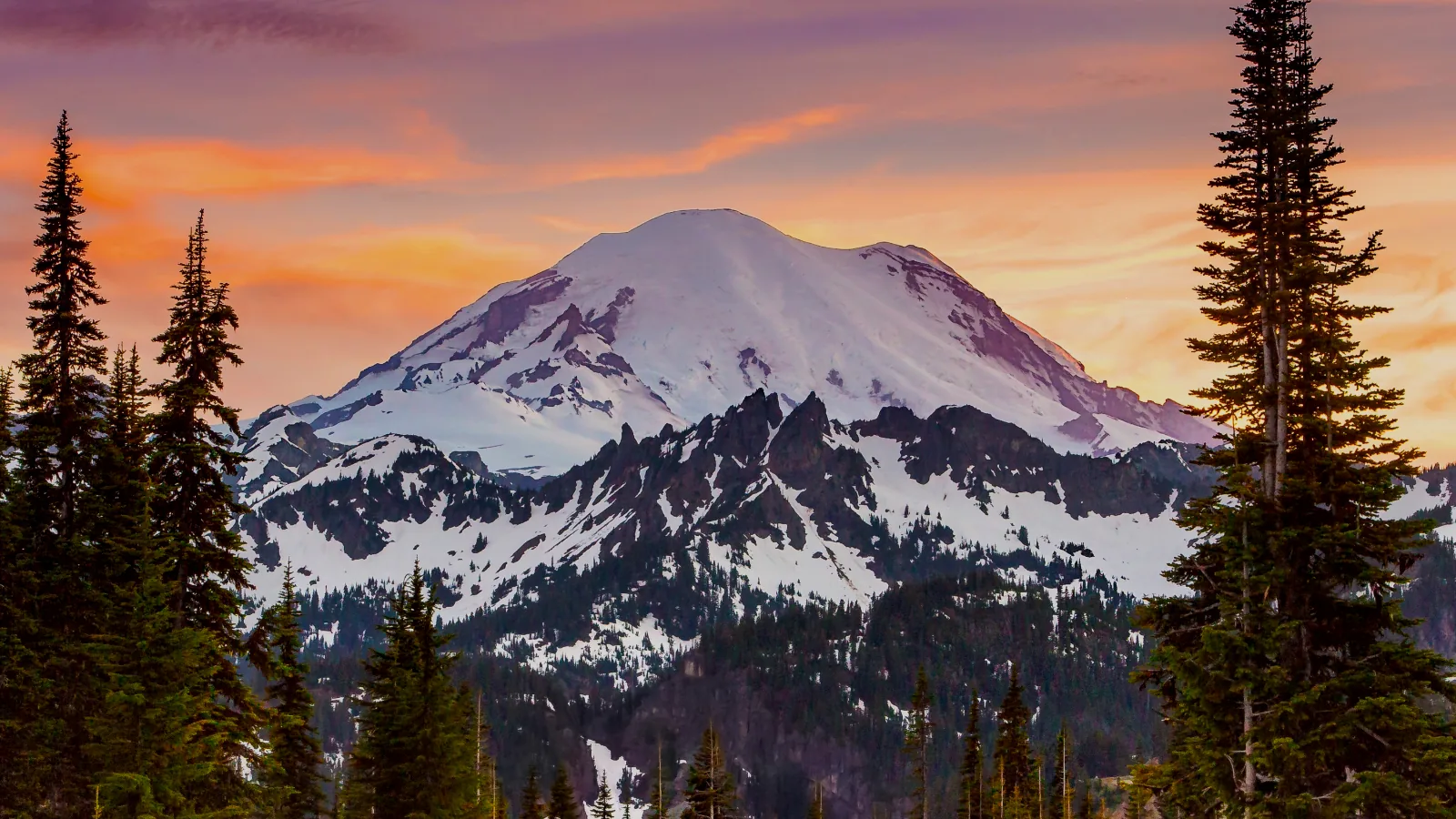
Build foundational mountaineering skills through extended training at Camp Muir and a summit attempt on Mount Rainier’s classic route.
Skills Covered:
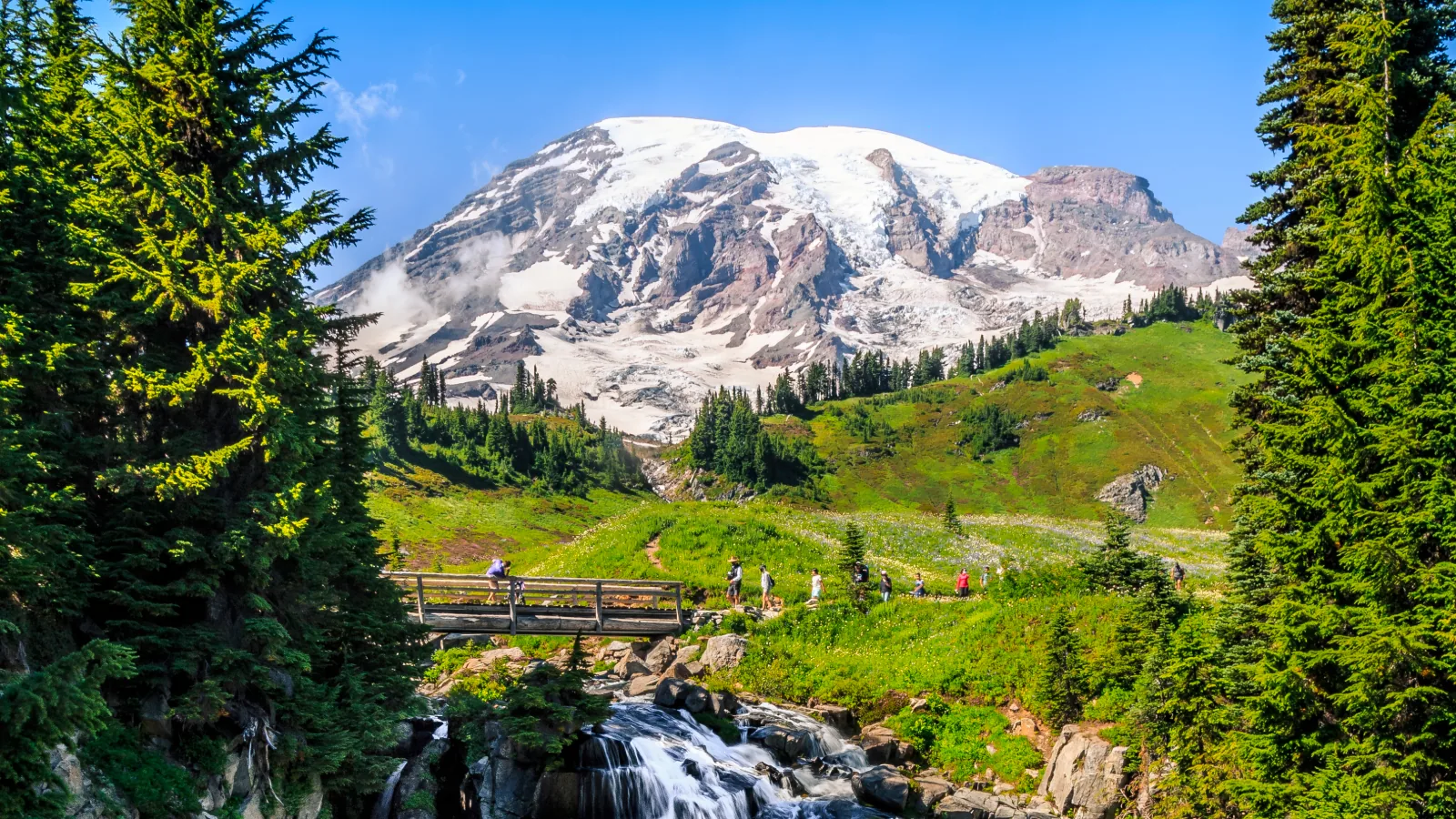
A working foundation in glacier travel, rope team management, anchor systems, and expedition-style climbing on a major glaciated peak.
Skills Covered:
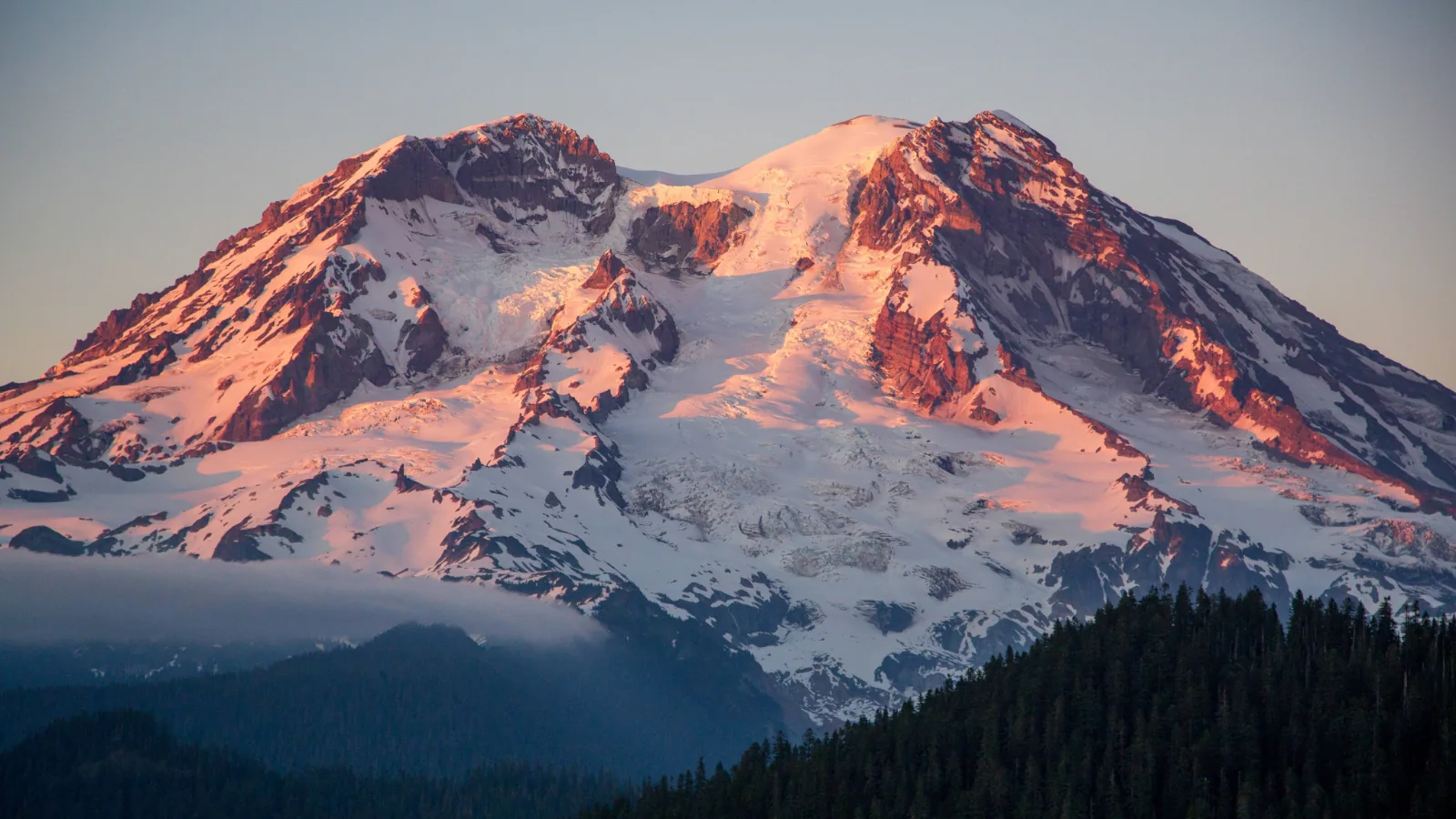
Glacier travel, rope teams, and a true high-altitude summit attempt.
Skills Covered:
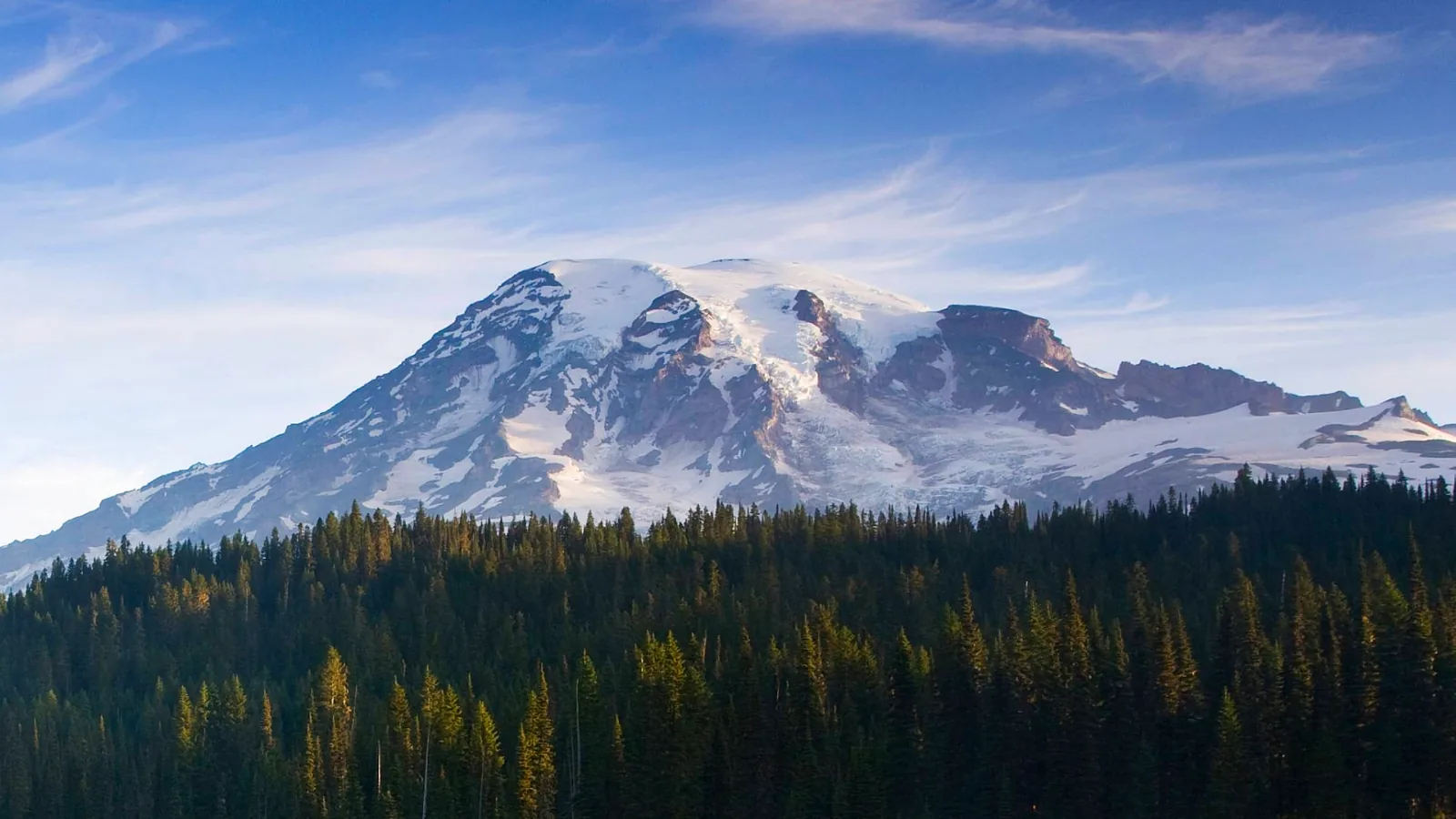
A solid foundation in snow and glacier travel, plus a first real summit experience at altitude.
Skills Covered:
Experience with glacier travel, cramponing, ice axe arrest, and roped climbing on multiple glaciated peaks above 17,000 feet.
Your climbing resumé should include:

Previous experience with roped glacier travel*
Comfortable with crampon technique on steep terrain*
Proficient with ice axe arrest*
Previous experience at altitudes above 10,000 feet
Strong aerobic fitness with an active training regimen in place
Items marked with an Asterix (*) are considered mandatory prerequisites for this program.
Mountaineering places sustained demands on your body and your ability to stay composed under effort. Even very fit people find that moving uphill with weight, for long hours, in variable weather is a different kind of challenge than most everyday training.
Preparation matters. Fitness directly affects how well you move, how much you learn, how the team functions, and how enjoyable the experience is overall.
Start early. Begin training well in advance of your program with the goal of arriving rested, resilient, and confident in your capacity for sustained effort.
Train intentionally. Emphasize aerobic endurance, uphill movement, and strength that supports long days on your feet. Core stability, balance, and mobility all play an important role in efficiency and injury prevention.
Train specifically. The closer you get to your program date, the more your training should resemble the demands of mountaineering: hiking uphill with weight, moving steadily for hours, and recovering well enough to do it again the next day.
Across RMI programs, strong preparation typically means being comfortable with long days of continuous movement, carrying a pack appropriate to the objective, and maintaining focus and decision-making when tired. Technical skills are taught or reviewed as appropriate to each program, but fitness is something you bring with you.
Nothing contributes more to a successful and rewarding experience than arriving well prepared. Plan to be in excellent physical condition and ready for a demanding day in the mountains.
Total Hiking Time
Elevation Gain / Loss
Total Distance
Pack Weight
DAY 1 | TRAVEL TO QUITO
n/a
n/a
n/a
n/a
DAY 2 | EXPLORE QUITO
n/a
n/a
n/a
n/a
DAY 3 | ACCLIMATIZE RUCU PICHINCHA
5 - 6 hours
Gain = 2,196' | Loss = 2,196'
6 miles round trip
15 - 20 lb
DAY 4 | ACCLIMATIZE LAGUNA CUICOCHA
4 - 6 hours
Gain = 2,224' | Loss = 2,224'
7.9 miles round trip
15 - 20 lb
DAY 5 | CAYAMBE CLIMBER'S HUT
1 - 2 hours
—
—
30 - 40 lb
DAY 6 | CLIMBER'S REVIEW
2 - 4 hours
—
—
20 - 25 lb
DAY 7 | SUMMIT DAY - CAYAMBE
10 - 12 hours
Gain = 3,697' | Loss = 7,597'
5 miles round trip
20 - 25 lb
DAY 8 | REST DAY
n/a
n/a
n/a
n/a
DAY 9 | JOSE RIBAS REFUGIO
45 minutes
Gain = 900'
0.6 miles one way
30 - 40 lb
DAY 10 | SUMMIT DAY - COTOPAXI
10 - 12 hours
Gain = 3,348' | Loss = 9,998'
4.7 miles round trip
20 - 25 lb
DAY 11 | TRAVEL DAY
n/a
n/a
n/a
n/a
Our guides have decades of experience training for alpine objectives, and we've done our best to put together relevant resources to help you with your expedition preparation.
Develop your aerobic base for endurance, strength, and performance in alpine environments with RMI’s expert guidance. Level up your training today.
Fitness & Training
Fueling Long-Duration Climbs with Enhanced Fat Metabolism
Fitness & Training
Strengthen your mountaineering training with a community of like-minded climbers who motivate and share the journey. Join us and explore.
Rainier
A Comprehensive Guide to Crafting Your Own Progressive, Goal-Oriented Program
Fitness & Training
Acclimatization is the process by which your body adjusts to lower oxygen levels at altitude. How well this happens has a direct impact on how you feel, how you perform, and how much margin you have as the climb progresses.
Program length and structure matter. Longer expeditions are designed with ascent profiles that allow your body more time to adapt. Shorter programs often move through altitude faster than the body can fully adjust. In these cases, climbers typically experience mild but normal symptoms associated with early acclimatization rather than full adaptation. This is expected and accounted for in program design.
Physical conditioning plays a major role. Well-conditioned climbers generally have more energy available to support the acclimatization process over consecutive days. Fitness does not prevent altitude exposure, but it improves resilience, recovery, and the ability to function well while your body is adapting.
How you take care of yourself matters just as much as the itinerary. Arriving healthy and rested, staying well hydrated, eating consistently, and managing heat loss all support acclimatization and performance. These factors become increasingly important as altitude, duration, and cumulative fatigue increase.
RMI programs are structured to balance objective goals with appropriate acclimatization strategies for the terrain and timeframe involved. Individual responses to altitude vary, but strong preparation and good self-care remain the most reliable ways to support a positive experience at elevation.
Mountaineering is both an individual challenge and a team endeavor. Before any program begins, RMI works directly with prospective climbers to confirm that everyone joining a team is genuinely prepared for the demands ahead. Depending on the program, this may involve conversations with our office staff, a review of your climbing history, or feedback from guides and other climbers who know your abilities. The goal is straightforward: to ensure that every person on the rope belongs there. We ask that each climber hold themselves to the same standard:
The standards we set exist to protect everyone on the team. RMI holds all climbers accountable to them, and we take seriously our responsibility to build teams of people who are ready to be in the mountains together. RMI reserves the right to remove a participant from a program or send them to a lower altitude if our guide staff determines, in their sole discretion, that the participant is not physically, technically, or psychologically prepared or capable of participating, or for any other reason that may compromise the safety, health, or well-being of the participant or the group. In such cases, no refunds or credits will be issued, and the participant will be financially responsible for any additional costs associated with an early departure, including evacuation, transportation, lodging, and meals.
The Cayambe and Cotopaxi expedition operates on two glaciated Andean volcanoes over eleven days, and the gear list reflects decades of RMI guiding experience on high-altitude technical objectives in Ecuador and across the Andes. Every item has been selected to support glacier climbing, crevasse navigation, and summit days that can exceed ten to twelve hours at altitudes above 18,000 feet. Every experienced mountaineer refines their kit over time, but this list represents what RMI expects climbers to bring to Ecuador.
Not every item may be used on both peaks, but all required equipment must be available throughout the expedition. RMI uses its own climbing equipment brought from the US, ensuring the standards of quality and reliability that define every RMI expedition are maintained from Cayambe to Cotopaxi.
Each RMI program includes a required personal equipment list built around the specific terrain, conditions, and objectives of the climb. Every item serves a purpose and supports safety, efficiency, and comfort in the mountains.
Guide Picks™ are examples that meet our performance standards and illustrate the type of gear we recommend. Each year, our partners at Whittaker Mountaineering survey our staff of 70+ guides to get a consensus on the best gear for the job. You do not need to purchase the exact item shown, but any alternative must offer comparable function and durability.
All listed items are required for the gear check. Final adjustments may be recommended by your guide based on conditions and team needs once the expedition begins.
Most of the required equipment is available for rent or purchase from our affiliate Whittaker Mountaineering. RMI climbers receive a 10% discount on new clothing and equipment items ordered from Whittaker Mountaineering.
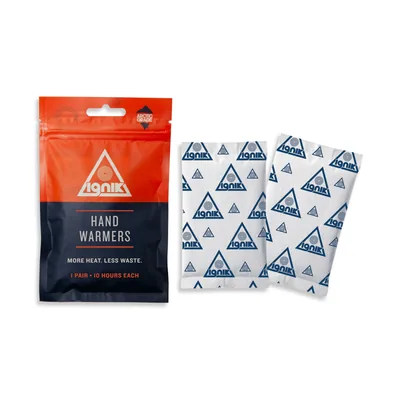
Bring as needed. Make sure these are TSA-compliant.
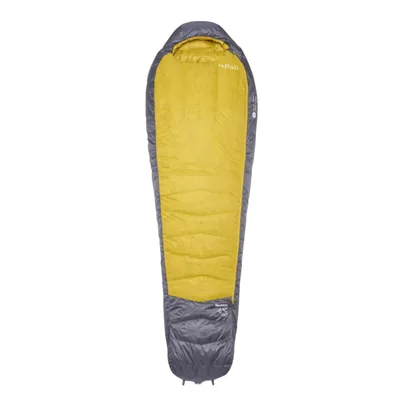
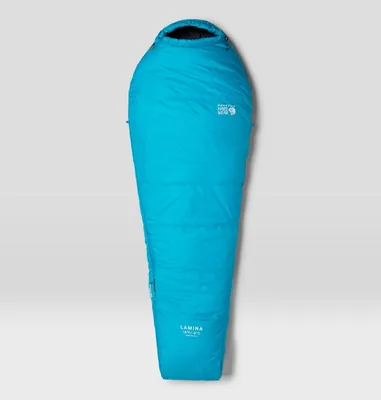
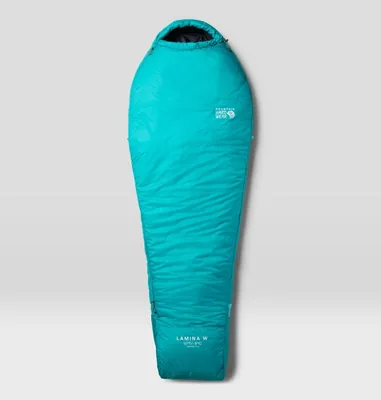
We recommend a bag rated between 20° and 0° F. Allow ample room for movement. We recommend down over synthetic for its light weight, warmth, and packability. If you know you sleep cold, consider a 0° F bag.
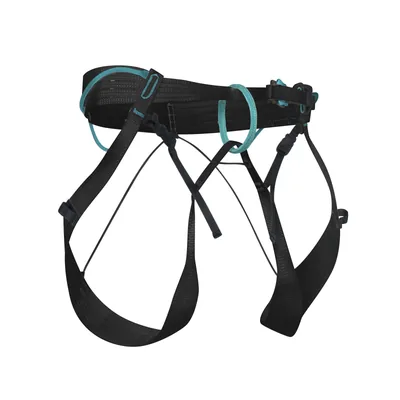
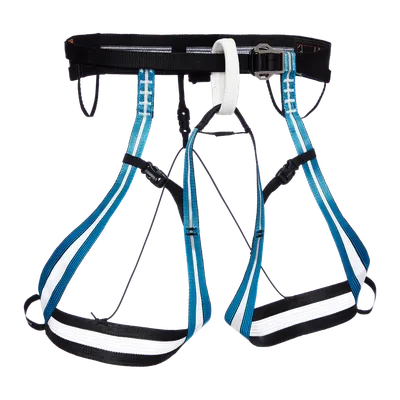
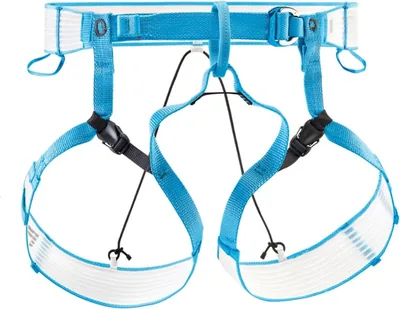
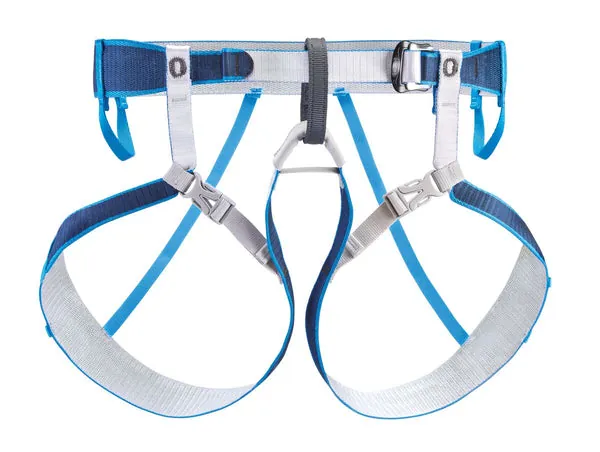
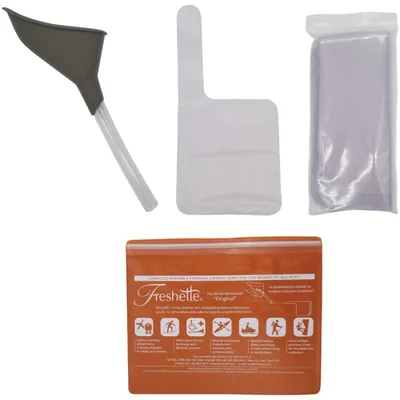
A comfortable, adjustable alpine climbing harness. Removable, drop-seat, or adjustable leg loops are recommended for managing layers and bathroom breaks in the mountains.
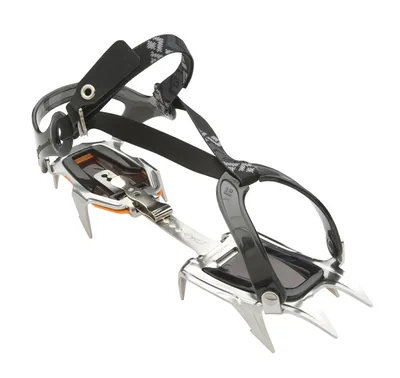
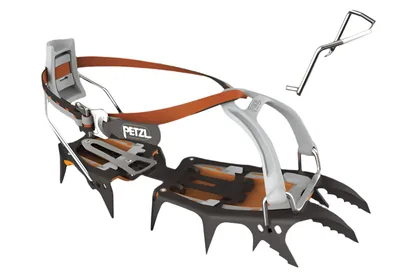
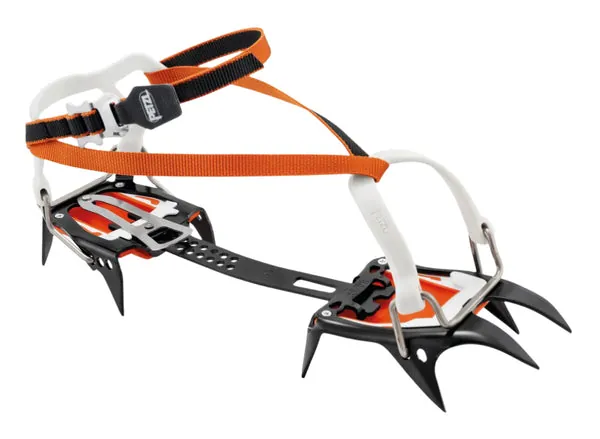
10- or 12-point adjustable steel crampons with anti-balling plates for general mountaineering and glacier travel. Automatic, semi-automatic, or strap-on attachment depending on boot compatibility. Ensure crampons are compatible with your specific boots before your program.
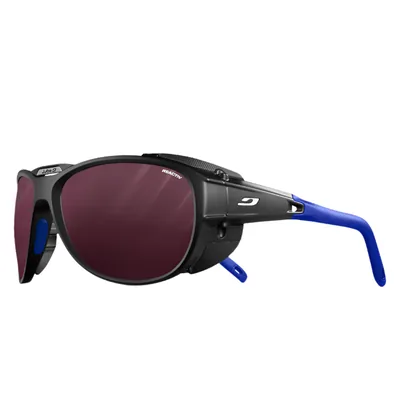
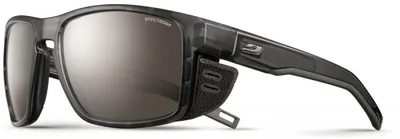
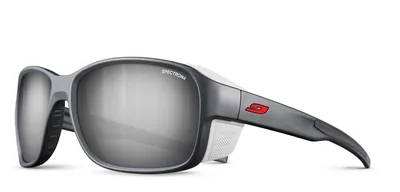
Glacier glasses are protective sunglasses that provide close to 100% frame coverage (wrap-around frames and side shields ensure no light can enter from the top, bottom, and sides of the glasses) and transmit less than 10% of visual light.
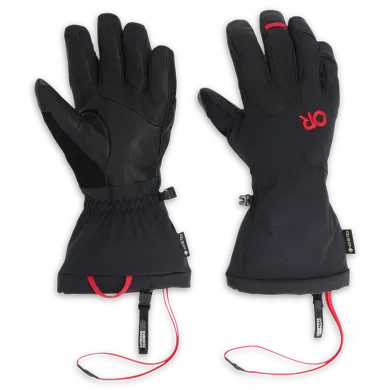
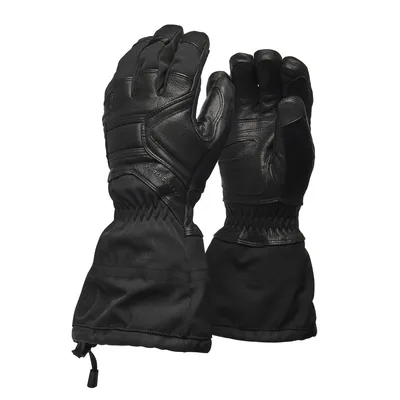
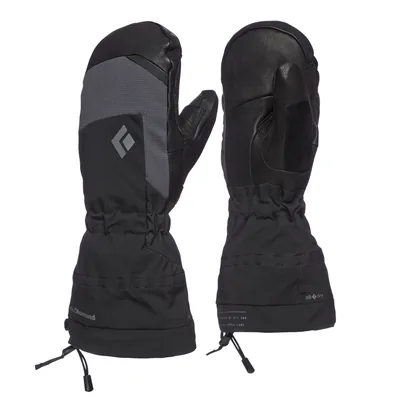
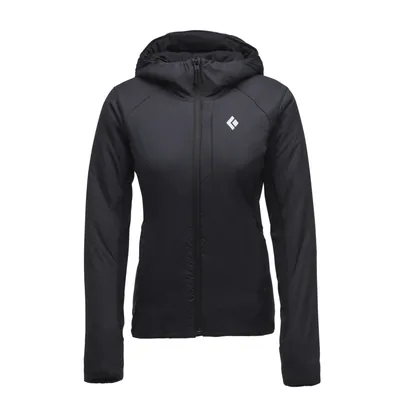
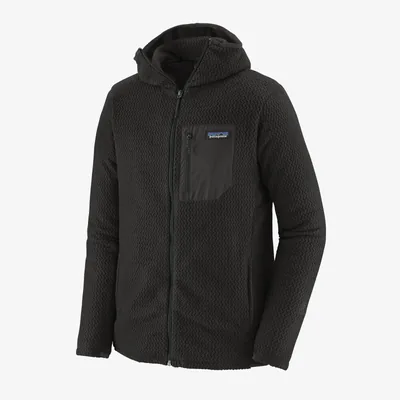
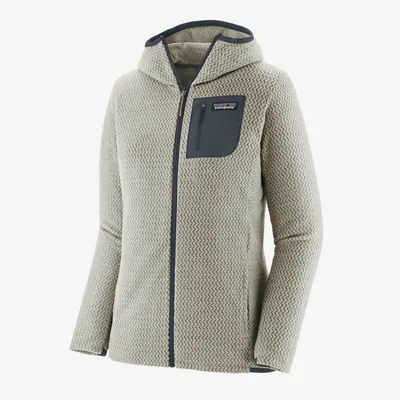
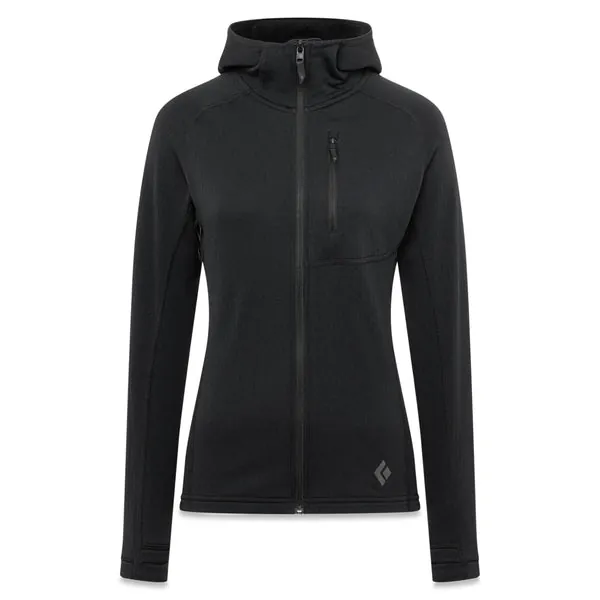
We recommend a minimum of five upper body layers, all of which can be used in conjunction with each other. Two of these should be insulating layers, one light, and one medium, that fit well together. Today there are many different layering systems to choose from, including fleece, softshell, down, and synthetic options.
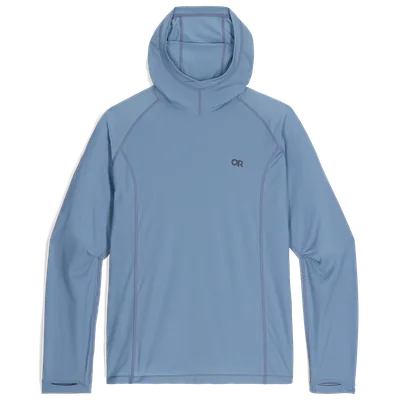
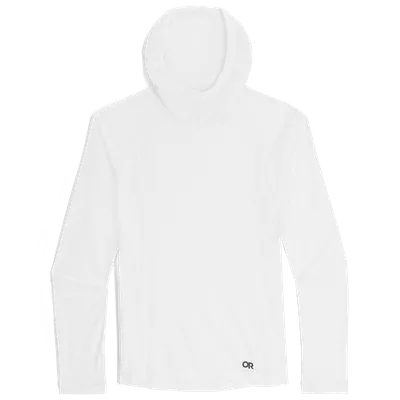
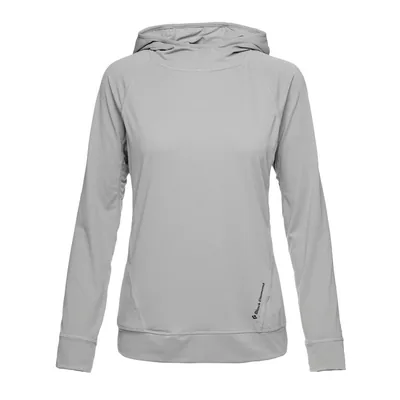
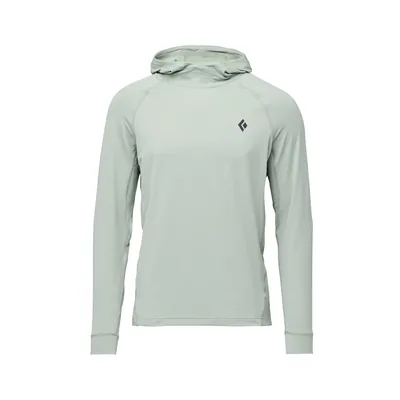
A lightweight, breathable long-sleeve shirt in synthetic or merino wool for sun protection and moisture management during active climbing.
One step up in warmth and bulk from a baselayer. A technical fleece makes an ideal light weight insulating layer.
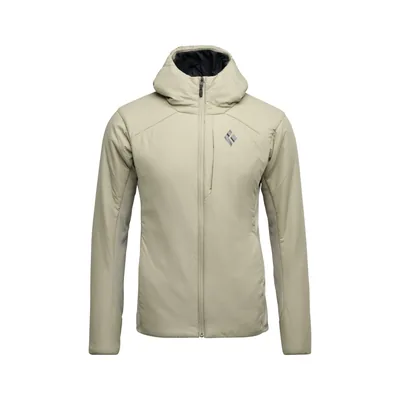
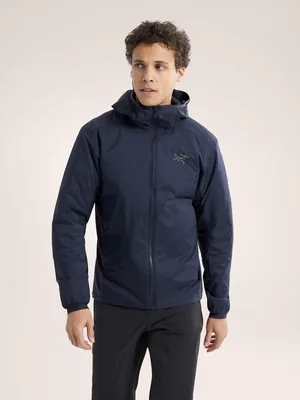
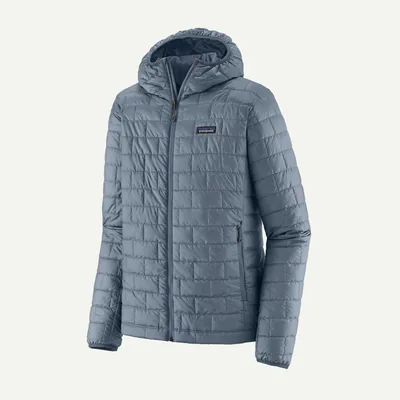
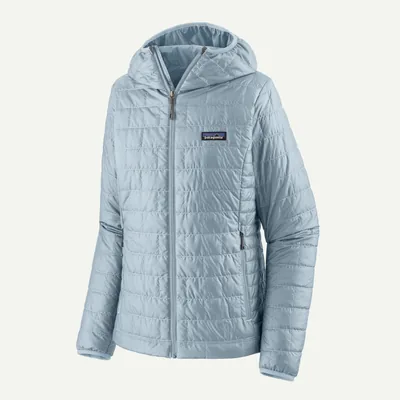
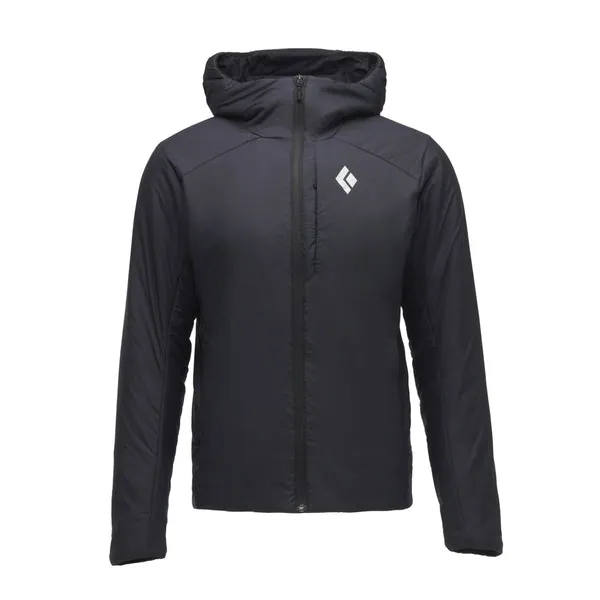
An insulated jacket or softshell for warmth during low-output activity and extended rest breaks. Should fit over baselayers and midlayers, and under a shell.
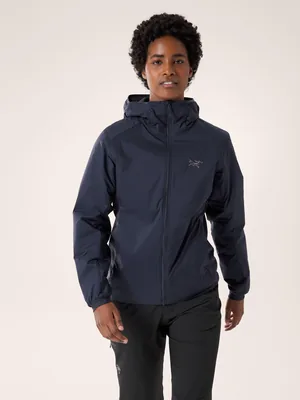
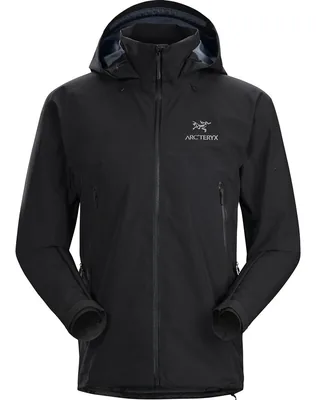
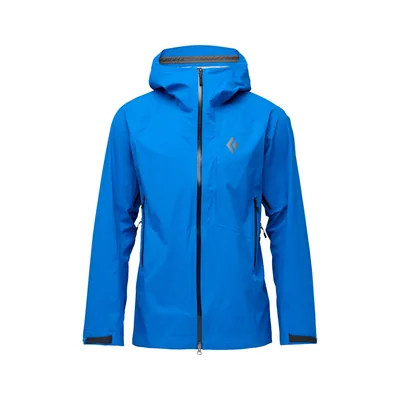
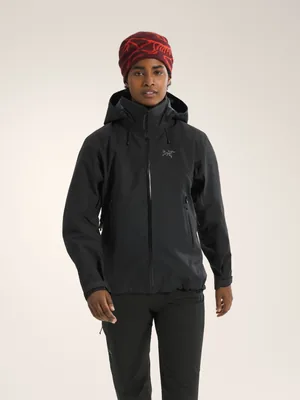
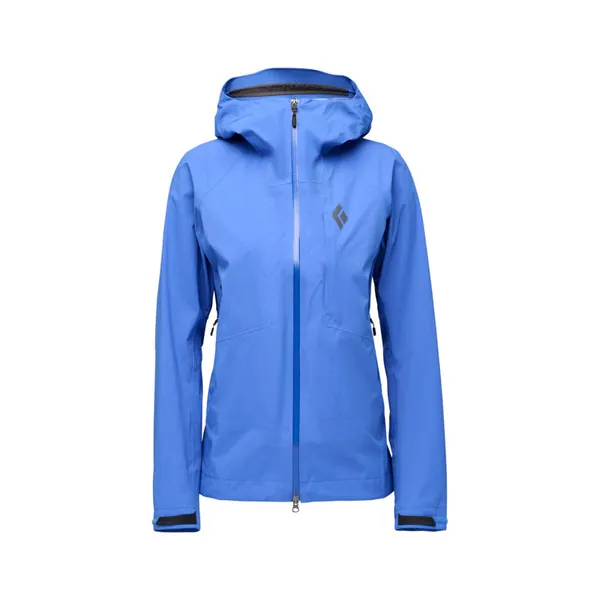
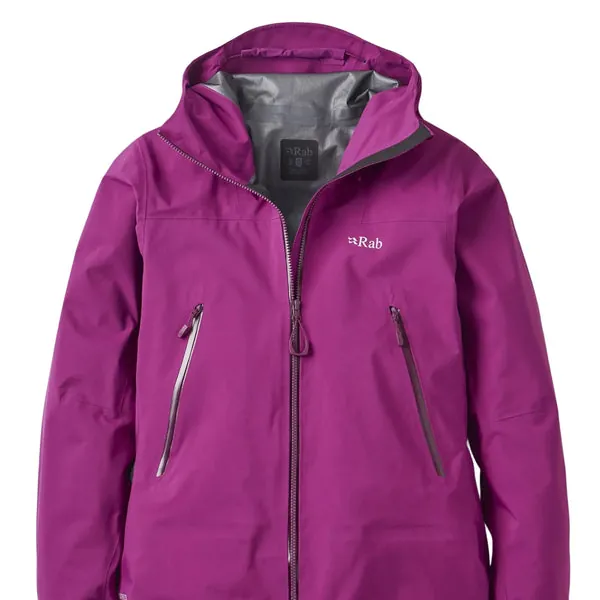
A waterproof jacket with a hood for protection against wind, rain, and snow. Should fit comfortably over all insulating layers.
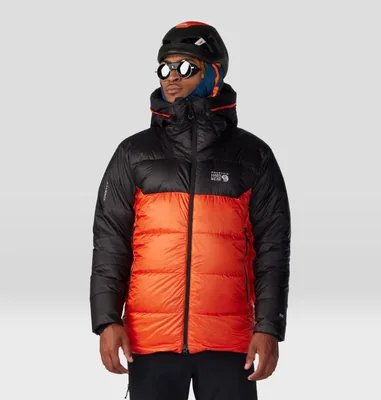
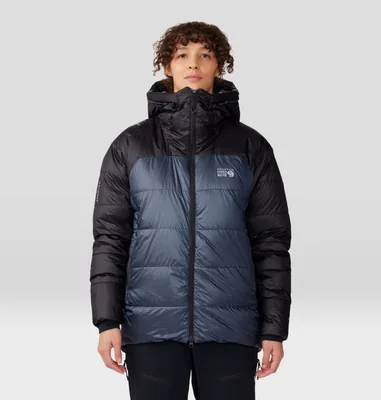
An expedition-style down parka that extends below the waist with an insulated hood, designed to fit over all other layers. Worn primarily in camp, during rest breaks, and on summit day. Down fill recommended over synthetic.
We recommend a system of four layers, all of which can be used in conjunction with each other. Products which combine several layers into one garment, such as traditional ski pants, don’t work well as they don’t offer the versatility of a layering system.
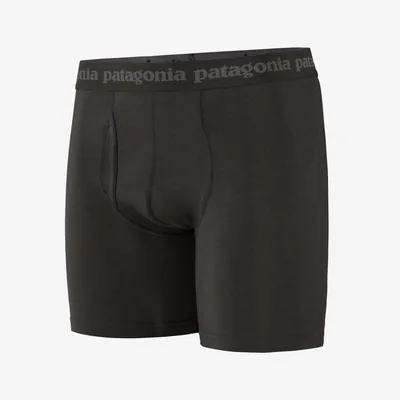
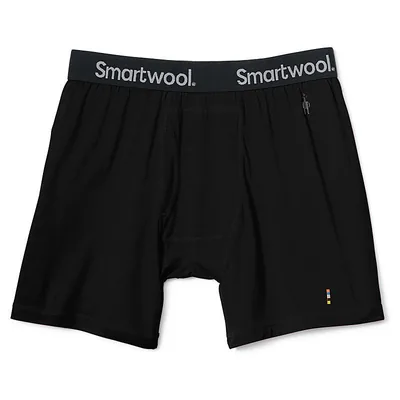
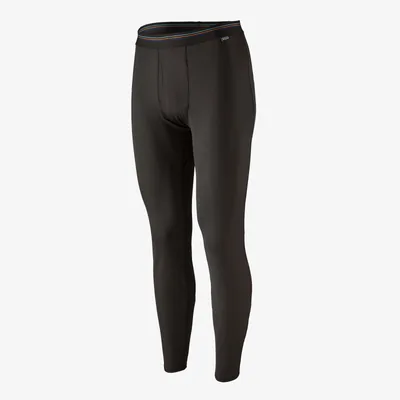
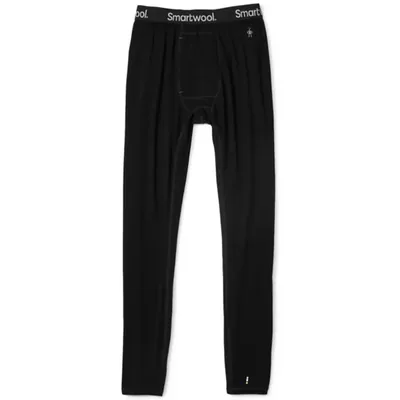
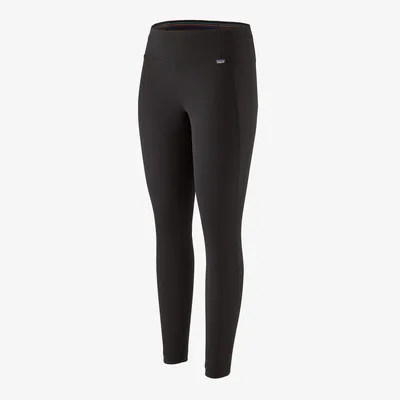
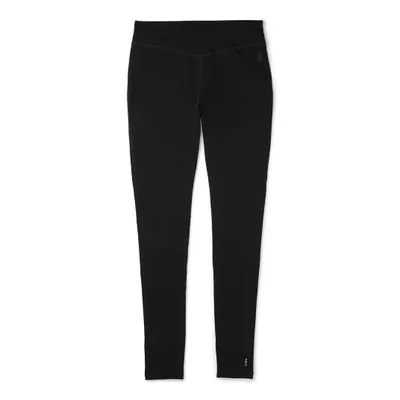
Lightweight synthetic or merino wool baselayer bottoms for moisture management and temperature regulation during active climbing.
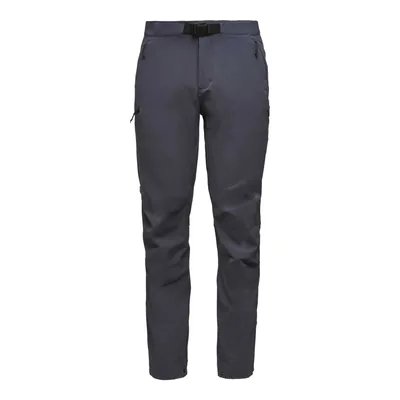
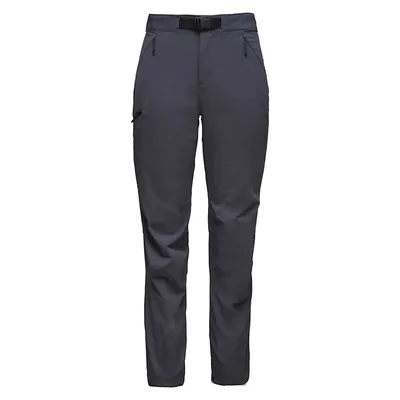
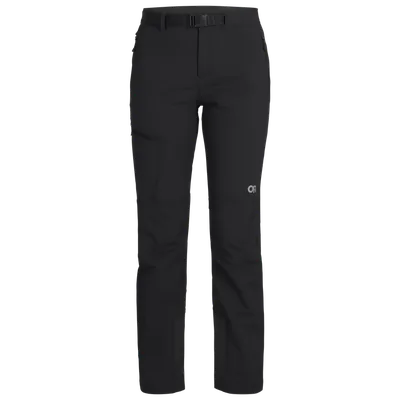
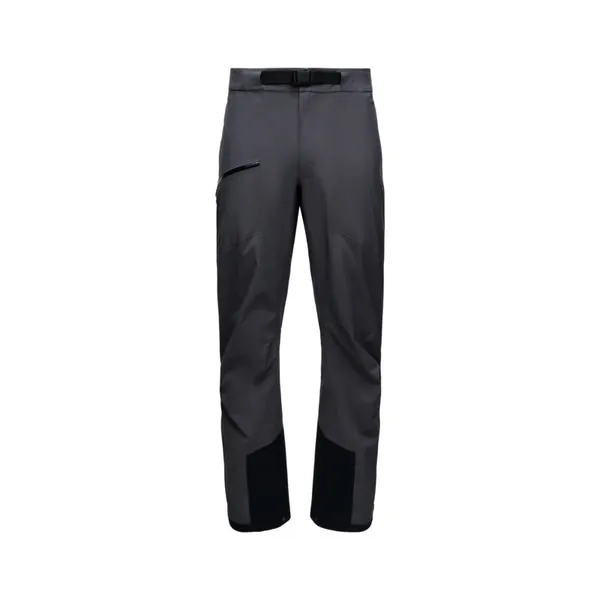
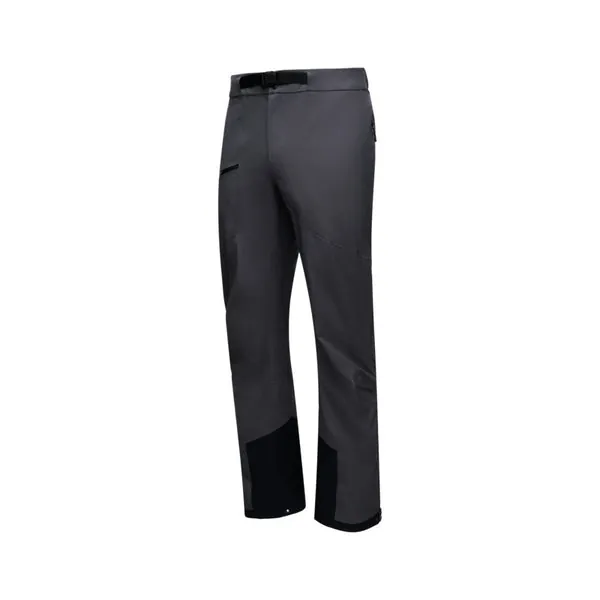
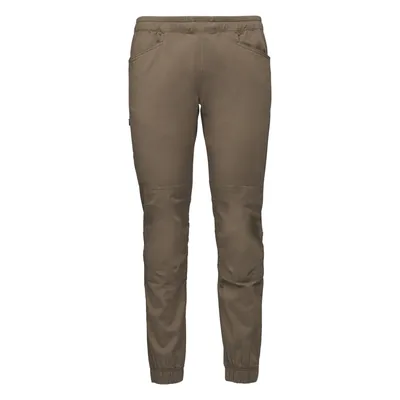
Softshell climbing pants can be worn in combination with a base layer on colder days, or alone on warmer days.
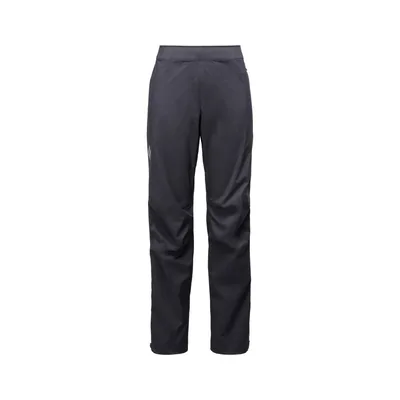
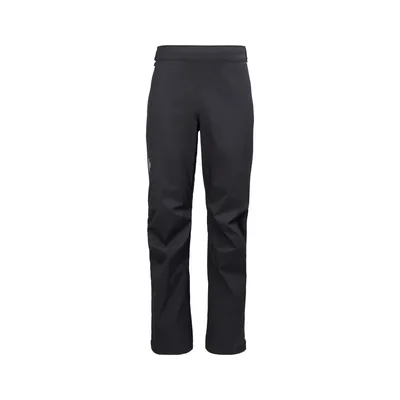
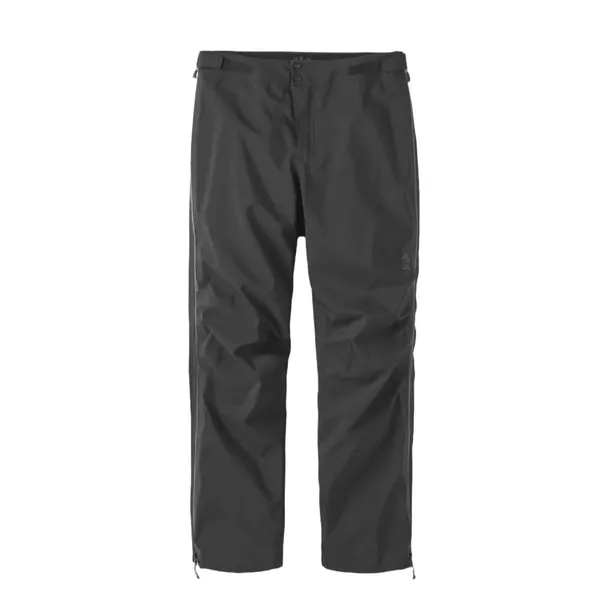
Non-insulated, waterproof shell pants must be able to fit comfortable over your baselayer bottoms and softshell climbing pants. Full side zippers or 7/8 side zippers are required so that shell pants can be put on while wearing boots and crampons.
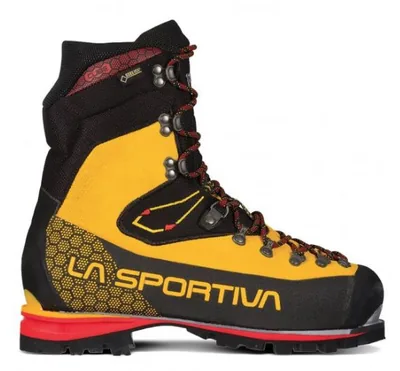
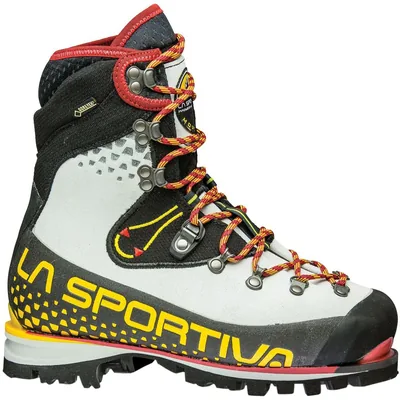
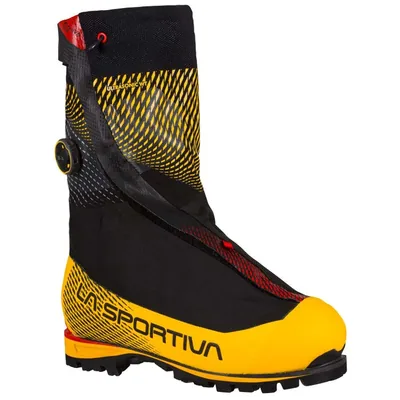
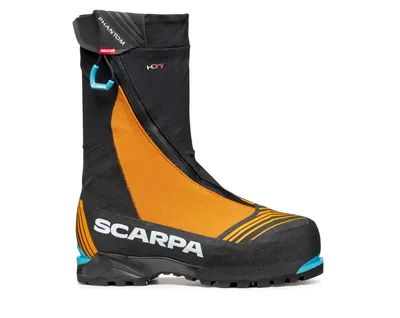
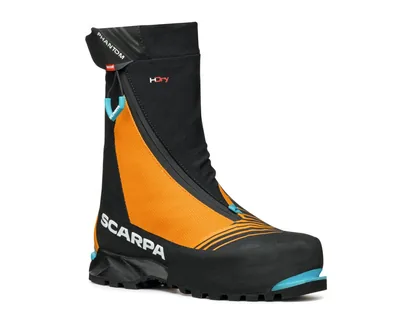
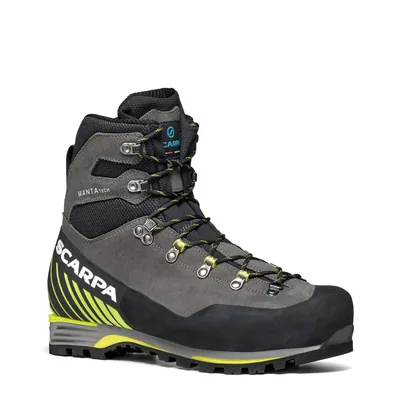
Insulated, crampon-compatible single or double mountaineering boots. Double boots are warmer and the better choice in colder conditions. Boots should be roomy enough for good circulation with your sock combination (single sock, liner and sock, or two heavy socks). Wear them as often as possible before your program to confirm fit, comfort, and performance.
Insulated, full-shank, crampon-compatible leather or synthetic boots designed for general mountaineering. Lighter and more comfortable than double boots but with less insulation for extreme cold.
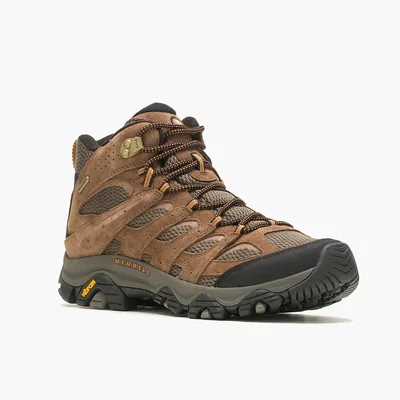
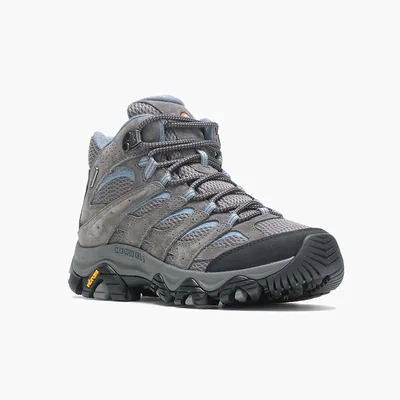
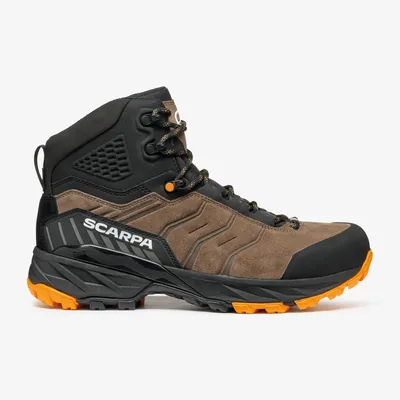
Great for traveling and wearing around town or camp. A pair of tennis shoes or light hikers works well.
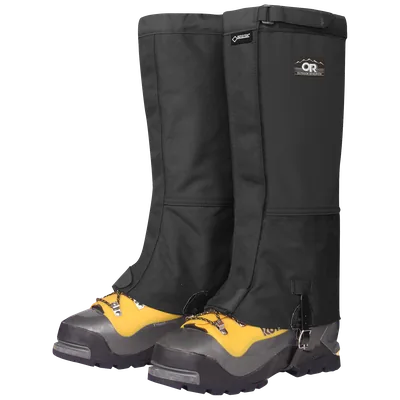
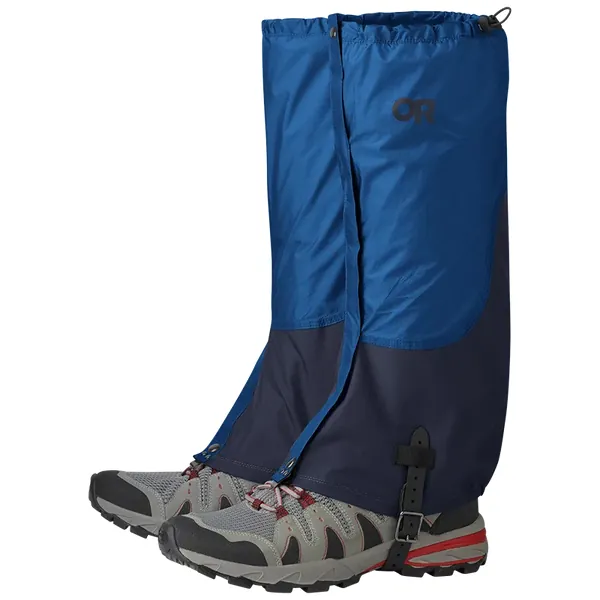
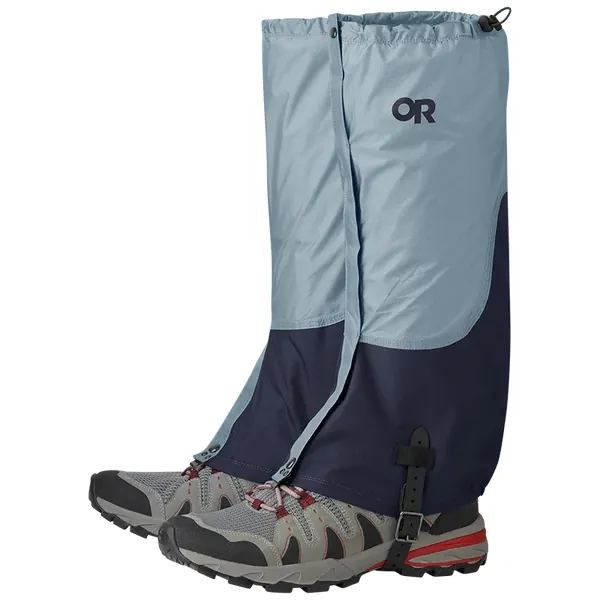
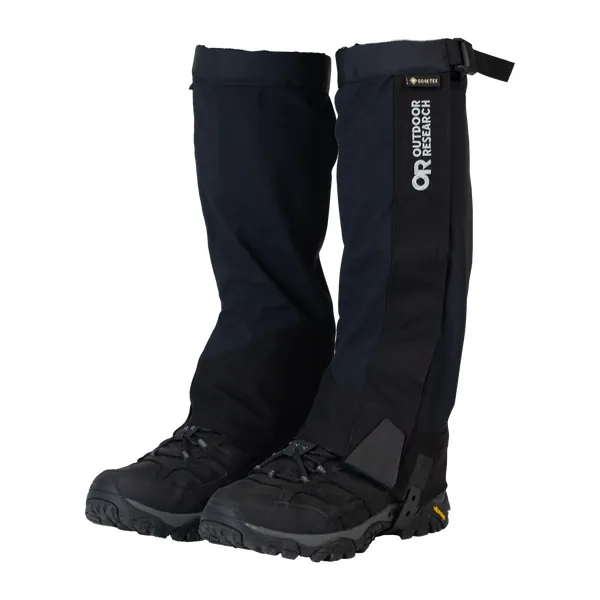
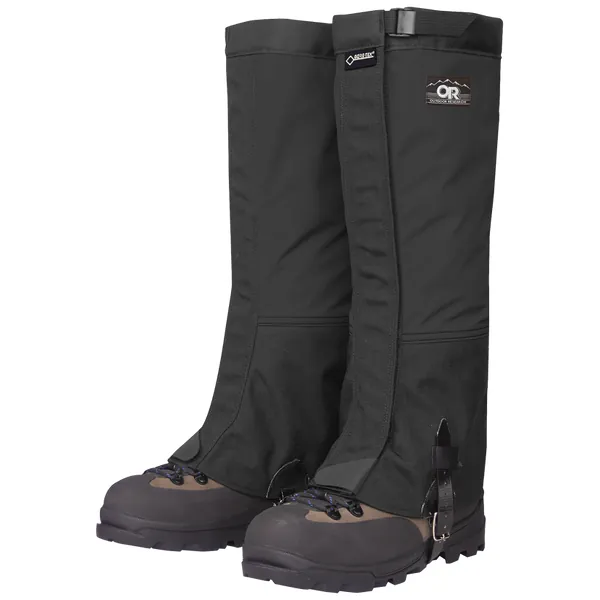
A knee-length pair of gaiters, large enough to fit over your mountaineering boots. This will protect you from catching your crampon spikes on loose clothing. Not needed if using a boot with an integrated gaiter.
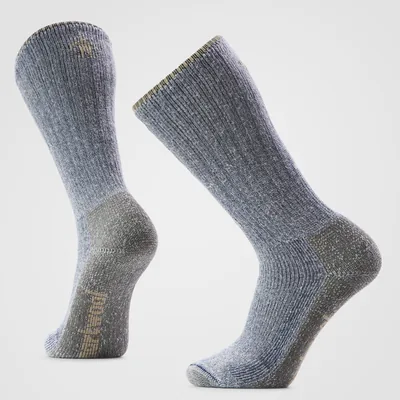
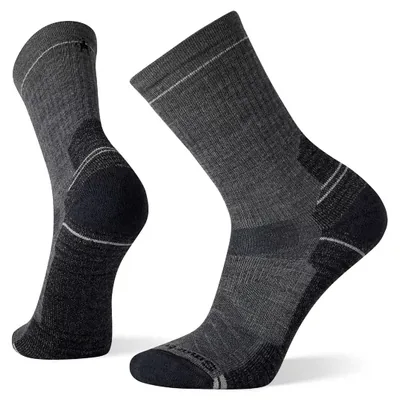
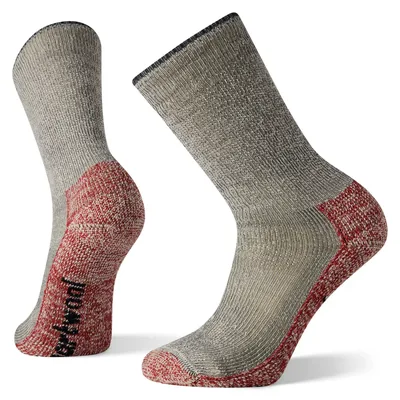
Either wool or synthetic. Whatever sock combination you are accustomed to wearing during your training or previous adventures (whether single medium weight socks, a medium weight with a liner sock, two medium weight socks together, etc.), should work just fine for this program.
We require each team member to bring the medications listed below for this program. Speak with your physician about each one before your trip. Altitude medications are carried for emergency use only: we do not take them prophylactically, and if someone shows symptoms of HAPE or HACE, our standard protocol is immediate descent. Please talk with your guide before taking any medication during your program.
Broad spectrum antibiotics for respiratory and gastrointestinal problems like Azithromycin (250mg tablets).
125mg tablets for the prevention or treatment of Acute Mountain Sickness. A normal prescription is 125mg tablets, twice a day. Recommend 15 - 20 tablets.
4mg tablets for the treatment of altitude illness. Recommend 12 tablets.
30mg slow-release tablets for the prevention or treatment of high-altitude pulmonary edema (HAPE). Recommend 8 - 10 tablets.
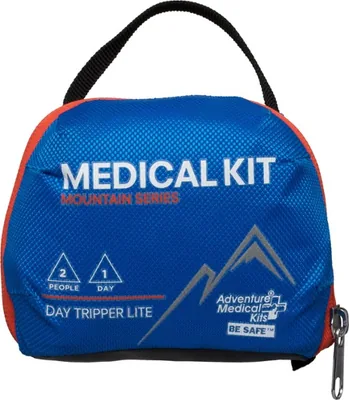
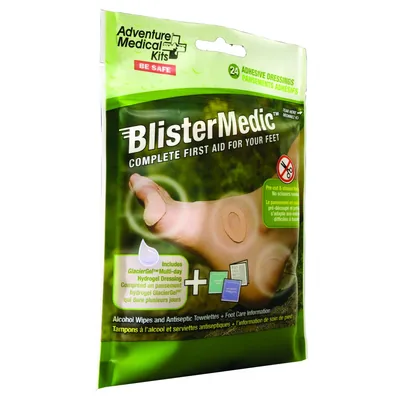
Our guides carry comprehensive medical kits, so keep yours small and light. We recommend a selection of adhesive bandages, antibiotic ointment, Moleskin and blister care, medical tape and/or duct tape, basic pain reliever, and personal medications.
Meals provided vary by program. See the Food tab for what’s included and suggestions for anything you’ll need to bring.
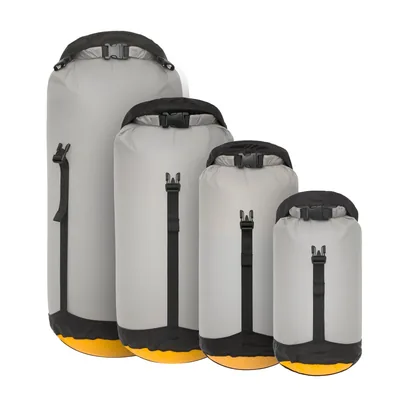
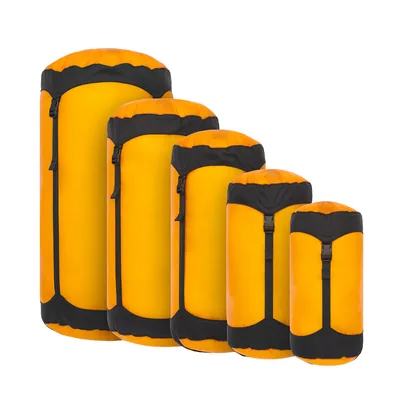
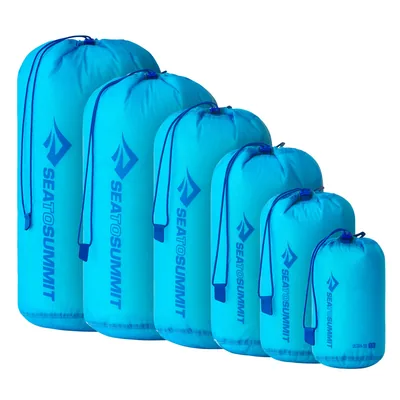
Heavy-duty trash compacter bags for use as waterproof pack/stuff sack liners. You can also use a waterproof pack liner.
Books, magazines, or a journal for downtime at camp; a Kindle or similar e-reader is a practical alternative for longer expeditions where weight and bulk matter. Choose based on program length and personal preference.
Disposable or reusable ear plugs for sleeping in shared tent or hut accommodations.
Spare prescription glasses if you wear contact lenses/eyeglasses.
Many smartphones have excellent cameras. Action cameras, small point-and-shoots, and compact dSLRs are lightweight and work well at altitude.
A small power bank, enough to charge a phone or e-reader several times.
For charging personal electronics while traveling internationally.
We recommend bringing a selection of clothing to wear while traveling, sightseeing and dining.
If Glacier Glasses are not required, regular sunglasses will suffice on this program.
Valid for six months beyond your return date.
The first two pages of your passport.
A printed or digital copy of your complete flight itinerary, including confirmation numbers and times, for reference during travel and check-in. Keep this easily accessible throughout your journey.
Purchase travel insurance.
Purchase airplane tickets.
Reserve rental equipment.
Be in the best shape of your life!
RMI provides the following equipment for your program: huts, stoves, group cooking equipment, fuel, climbing ropes, climbing anchors, avalanche probes, shovels, and blue bags (for solid waste disposal).
Every guide on your climb will carry rescue equipment and a first aid kit. Each climb has two-way radios and a satellite phone for emergency contact.
For, you know, swimming.
On Cayambe & Cotopaxi you will need 7 mountain lunches. All of your mountain lunch items should weigh 3 - 4 lb.
Breakfast and dinner meals on the mountain are included as indicated in our Trip Itinerary. With the exception of hotel breakfasts, most restaurant meals are on your own. You are responsible for your own bottled water and drinks.
Mountain lunches are eaten during short breaks throughout the day. We continually snack to keep our energy levels up while we climb - lunch begins just after breakfast and ends just before dinner! Avoid packing any items that require preparation or hot water.
The importance of having foods that are genuinely enjoyed cannot be overstated. Eating properly is the key to maintaining strength while in the mountains. In order to combat the loss of appetite at altitude we aim to have a variety of foods that stimulate the whole palate, from sweet to sour to salty.
Recommended mountain lunch items: dry salami, smoked salmon, jerky (turkey, beef, fish), small cans of tuna fish, individually wrapped cheeses such as Laughing Cow or Baby Bell, crackers, bagels, candy bars, hard candies (Jolly Ranchers, Toffees, Life Savers), Gummy Bears, sour candies (Sweet Tarts), cookies, dried fruit, nuts, energy bars, GORP mixes, and drink mixes (Gatorade/Kool-Aid).
We may have a chance to purchase additional food in Ecuador, but we recommend you take what you need and only supplement with local food if necessary.
The breakfast menu includes items such as instant oatmeal, cold cereals (granola), breakfast bars (Kashi, Kudos), hot drinks (coffee, tea, cocoa, cider) and local fresh fruit.
Dinner usually begins with soup and ends with dessert, followed by a round of hot drinks. Healthy one-pot meals, incorporating fresh local food whenever practical, are served as the main course. One typical main course dinner might be spaghetti with sausage and fresh vegetables. Another meal might be chicken fajitas with cheese, tortillas, onions, and peppers. There are limitations, but the menu is planned to offer good variety and ample portions.
This page covers the practical details you’ll want to review before your trip, including travel logistics, entry requirements, local considerations, and required policies. Taking time to understand these details ahead of departure helps ensure a smoother experience once you’re on the ground and focused on the climb.
Please confirm any current travel advisories/warnings as well as entry requirements with the U.S. Department of State.
Several U.S. airlines offer daily flights to Quito, Ecuador (UIO). Flights generally arrive late in the evening on Day 1 of the itinerary.
Flights departing Quito may be booked for any time on the final day of the program.
A valid passport is required when traveling to Ecuador. Your passport must be valid for 6 months beyond the expected return date. U.S. passport holders may stay up to 90 days without a visa.
We suggest making a copy of the first two pages of your passport and keeping them in a separate bag as a backup. A copy should also be left with your emergency contact.
Upon arrival at the Quito airport, follow the signs to the Arrivals Building. Proceed to the Immigrations desk for foreign travelers. They will provide you with an entrance permit adequate for your stay. Please check the date to ensure it covers your complete stay in Ecuador.
Once you receive your bags from Baggage Claim, you will proceed to Customs. There will be a random selection of bags for inspection. Be sure to keep all your bags together.
After you have gathered your baggage and passed through Customs you will find a desk in front of the exit gate where you can ask for a taxi. Take a taxi to our hotel. A fixed price of approximately $25 to $30 is in place.
The provided transportation in Ecuador as stated in the itinerary is via authorized taxi or private vehicle.
For the most current information on inoculation requirements and recommendations, please refer to the Centers for Diseases Control and Prevention.
Travelers may suffer from upset stomachs when in foreign countries. There are some basic rules, however, that can help keep you healthy.
Excellent care for minor illnesses and injuries is readily available. In the event of more serious illnesses or injuries, we recommend transport to any of the Level 1 care centers in Quito.
Your travel insurance policy should include trip cancellation, trip interruption, travel delay, baggage loss or delay, medical expenses, and evacuation.
Navigating through the different options for travel insurance can be challenging. When purchasing Travel Insurance, here are a few items to consider:

In today’s changing travel environment, it’s important to protect your travel investment. Unforeseen events such as flight delays, baggage loss or even a sudden sickness or injury could impact your travel plans. For your convenience, we offer Travelex Insurance protection plans to help protect you and your travel investment against the unexpected.
For more information on the available plans visit Travelex Insurance Services or contact Travelex Insurance (800) 228-9792 and reference location number 47-0370.
The product descriptions provided here are only brief summaries and may be changed without notice. The full coverage terms and details, including limitations and exclusions, are contained in the insurance policy. Travelex Insurance Services, Inc. CA Agency License #0D10209. Insurance coverages underwritten by individual member companies of Zurich in North America, including Zurich American Insurance Company (NAIC #16535, state of domicile: New York). RETWEB
Ripcord Rescue Travel Insurance is travel insurance designed for adventurers, including the best evacuation and rescue services available.
Benefits are tailored for adventurers and include:
Ripcord Rescue Travel Insurance is powered by Redpoint Resolutions, a medical and travel security risk company. Their team is comprised of special operations veterans, paramedics, Stanford Medicine affiliated physicians, former intelligence officers, insurance actuaries and global security experts with dozens of years of experience in theaters around the world. The Redpoint network covers the globe, making them uniquely equipped to provide elite rescue travel insurance – in every sense of the word. Whether it’s reimbursing you for a cancelled trip, paying your travel medical bills or evacuating you home in an emergency, Ripcord takes the worry out of your travel.
RMI has partnered with Erin Rountree to provide travel planning support. Erin is an independent agent with extensive experience booking travel for adventure programs worldwide and understands the specific needs of RMI expeditions.
Phone: (208) 788-2870
Email: [email protected]
It is your responsibility to ensure that your travel insurance policy provides appropriate coverage for your specific program and activities. Review policy details carefully before purchasing, and confirm coverage well in advance of your departure.
Ecuador is named for the Equator, which crosses through the northern reaches of the country. While it is the smallest Andean country, it has four remarkably distinct and diverse regions: the coastal plains, the Andean highlands, the jungles of the upper Amazon basin, and the Galapagos Islands.
Ecuador is the world's largest exporter of bananas. The Andean highlands contain beautiful and productive farmland, often seen in a classic patchwork pattern. Oil from the rich eastern jungles enriches the economy. The volcanic Galapagos Islands bring tourism revenue with its unique reptiles, birds, and plants.
The country is divided ethnically as well as regionally. About 10 percent of the population is of European descent, about a quarter belong to indigenous cultures, and many others are of mixed ethnicity.
The capital, Quito, is the second highest capital in South America. Quito is set beautifully in a highland valley at 9,300'.
By the beginning of the 16th century Quito was ruled by the Incas and was the northern capital of their empire. When the Spanish arrived, the area was razed by a general of Atahualpa to make certain it did not fall into Spanish hands. Thus the colonial city was built on the Inca ruins in 1534 by a lieutenant of Pizarro. The current layout of the old city dates back to the 18th century, complete with cobble-stone streets, parks, plazas and colonial architecture.
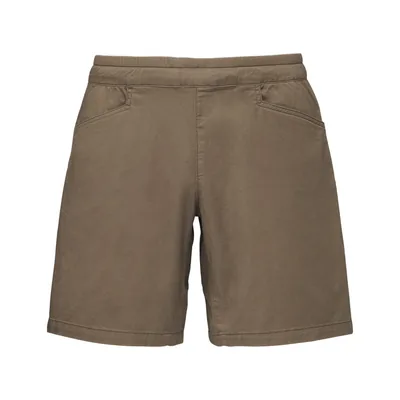
The weather in Quito and while traveling to and from the mountains can be very warm. We recommend bringing a pair of shorts and a T-shirt. For current weather conditions, check Weather Underground.
The western mountains, which include Cotopaxi and the Illinizas, experience two dry seasons. The first is from July through August, and the second is in December and January.
The eastern mountains, which include Cayambe and Antisana, are best climbed from June through January. The wettest months of the year for these peaks are February through May.
These mountains are climbed throughout the entire year, with the best mountain snowpack on Cotopaxi, Cayambe and Antisana found between October and June.
While there can be no guarantees of perfect weather in the mountains, our expeditions take full advantage of the weather and snowpack conditions for both these peaks, and utilize those months for optimal climbing experiences.
The people of Ecuador are generally very warm and friendly to tourists. Although it is not expected that we dress formally, we should dress modestly. Casual and comfortable clothing is suggested along with comfortable shoes. Showing expensive cameras, watches, jewelry, etc. is considered unseemly and may attract unwanted attention.
When entering a shop or home, politely use a greeting such as buenos dias (good day), buenas tardes (good afternoon), buenas noches (good night). Similarly, upon leaving, even if you've had only minimal contact, say adios (goodbye) or hasta luego (see you later). Ecuadorians usually shake hands upon parting as well.
On city streets, children selling small items and shining shoes can be quite persistent. Some ask directly for money. To keep from being hassled, a polite but firm "No, gracias" is generally sufficient.
It is expected that you engage in some degree of bargaining for market or street purchases. This is fun, and should be taken lightly.
Electricity in Ecuador is the same as in the United States: the ungrounded two-prong plug is used for 110 volt, 60 hertz appliances. Appliances with three prongs or an enlarged prong will require an adaptor.
The current currency of Ecuador is the U.S. Dollar. Check a financial newspaper or www.xe.com for the current exchange rate prior to departure.
We suggest bringing $500-$700 total for personal spending money including restaurant meals, drinks, pocket money, and the Support Staff Tip Pool.
Cash machines are readily available in Quito, but become increasingly difficult to find outside of urban areas.
Credit cards are accepted in most, but not all, areas.
Everyone has a preferred way to carry money. Some use money belts, others have hidden pockets. Whatever you do, be aware of pickpockets and thieves in any area which caters to tourists.
Everyone approaches tipping a little differently. Whether or not a person tips, and how much, is completely dependent upon the individual; here are some suggested tipping guidelines for your trip.
Local waiters, drivers, and other service personnel expect to be tipped. Ten to fifteen percent is standard. Some restaurants and hotels add a 10% service fee to bills in which case, no further tip is required.
Support Staff Tip Pool: We recommend that each climber contribute $150 to the Tip Pool. This is collected at the beginning of the trip and will cover group tips for all our support and mountain staff throughout the program.
Our guides work hard to ensure your well-being and success on the mountain. If you have a positive experience, gratuities are an excellent way to show your appreciation. Amounts are at your discretion and should be based on your level of enjoyment. Tips for excellent service normally average 10 – 15% of the cost of the program. If you would rather not bring the guide gratuity with you on the trip, you can send a check or call the RMI office to pay with a credit card upon your return.
Rob Rachowiecki and Mark Thurber, Ecuador: Climbing and Hiking Guide. VIVA Publishing, 2013.
The authors have combined many years of Ecuador experience into a useful, readable and comprehensive guide.
Ecuador Explorer and The Best of Ecuador are thorough websites describing Ecuador travel and facts.
The following policies are applicable for this expedition.
* Accommodations are based on double occupancy. A Single Supplement Fee will be charged to those occupying single accommodations by choice or circumstance. The single supplement is not available in huts, tents, or in all hotels.
Rainier Mountaineering, Inc. reserves the right to modify the land cost of a trip at any time before departure.
Deposit Payments: A non-refundable deposit payment of $900 per person secures your reservation.
Balance Payments: The balance payment is due 120 days before the start of your program.
*There is a 3% surcharge on all credit/debit card transactions.
The deposit is non-refundable and non-transferable.
We do not offer refunds. Please remember this before registering for this program. Due to the time-sensitive nature of this program, no exceptions will be made to the cancellation policy.
Please clearly understand that mountaineering is inherently hazardous. Managing risk is RMI’s number one priority. Our guides manage significant hazards inherent in mountaineering, but they cannot eliminate them. Objective hazards include rockfall, icefall, avalanches, slides or falls by individuals and rope teams on steeper slopes, weather-related problems including cold, heat, high winds, and other unnamed dangers that can occur while climbing.
You are choosing to engage in an activity in which guided and non-guided climbers have been injured or killed. While those accidents are indeed infrequent, they may occur at any time and be out of our control. We ask that participants acknowledge the risks and hazards of mountaineering and make their own choices about whether or not to engage in this activity.
Mountaineering is both an individual challenge and a team endeavor. Each Participant is required to share in the responsibility of the safety and success of the team. For this reason, we ask that each Participant:
RMI reserves the right to dismiss the Participant from a program or to send the Participant to a lower altitude at any time if the RMI Guide Staff determines, in its sole discretion, that the Participant is not physically, technically, or psychologically prepared for or capable of participating in the program or for any other reason that may compromise the safety, health or well-being of the Participant or the entire group. If this decision is made, the Participant will not receive any refunds or credits and will be financially responsible for any additional costs associated with an early departure, including but not limited to, evacuation, transportation, hotels, meals, etc.
Rainier Mountaineering, Inc. (RMI) does not tolerate harassment or mistreatment of our participants or employees. Inappropriate conduct under this policy may include conduct that creates a disrespectful, intimidating, hostile, degrading, humiliating, or offensive environment for a participant or employee. Engaging in such conduct is a violation of this policy.
RMI may consider conduct to violate the policy even if it falls short of unlawful harassment under applicable law. When determining whether conduct violates this policy, we will consider whether a reasonable person could conclude that the conduct created an intimidating, hostile, degrading, or demeaning environment.
Violation of this policy may result in removal from a program, as well as refusal to provide services indefinitely. We place the utmost value on the safety of our participants and employees. Please report any incidents to RMI management.
All participants must be 18 years old at the time of registration.
RMI’s Photo Release outlines the terms and conditions for using your likeness in photographs, videos, or other digital media.
I hereby grant Rainier Mountaineering, Inc. (RMI) or its affiliates permission to use my likeness in a photograph, video, or other digital media (“photo”) in any and all of its publications, including web-based publications. By granting permission, you allow RMI to utilize these media for lawful purposes.
Here are the key points:
RMI cannot guarantee that you will reach the summit. Weather, route conditions, your own abilities, or the abilities of other climbers may create circumstances that make an ascent unsafe, and you or your entire group may have to turnaround without reaching the summit.
Failure to reach the summit due to a person’s own lack of fitness or to any of the events associated with mountaineering (such as weather, route conditions, avalanche hazard, team dynamics, etc.), are not Rainier Mountaineering, Inc.’s responsibility and will not result in a refund, credit, or reschedule.
RMI’s program schedule and itineraries are subject to change or adjustment based on a number of factors. These include, but are not limited to, route conditions, weather, group strength, terrain, or other environmental factors, and many other factors. RMI has complete discretion to change plans to accommodate any of these or other factors, including but not limited to, increases in program fees, changes to program schedule or itinerary, and changes to guides or staff, as necessary for the proper and safe conduct of the program. Once the program has started, the Lead Guide will decide on any changes to the itinerary, including ending the program early if the continuation of the program may compromise the safety, health, or well-being of the group.
We reserve the right to cancel any program due to inadequate signups, weather, route conditions, or for any other reason. In such a case, we will make every effort to reschedule the Participant on a different program date. If rescheduling is not possible, we will issue the Participant a refund for all program fees paid to RMI, less any non-refundable payments made on behalf of the Participant to secure any of the included land costs provided for this program, including but not limited to, hotel accommodations, transportation, transfers, tours, group equipment and food, permits, and local outfitter services, prior to the cancellation of the program. Additionally, RMI cannot be responsible for any non-refundable expenses the Participant incurred in preparation for the program (i.e., airline tickets, hotel reservations, rental cars, equipment purchases or rentals, etc.).
Once a program begins, there are no refunds or credits for weather-related cancellations or for a program that may end early due to weather, route conditions, or any other circumstances that may compromise the health, safety, or well-being of the group. Furthermore, if the Participant decides for any reason not to begin a program or discontinue a program at any time, no refunds or credits will be issued. The Participant will be responsible for all additional costs associated with an early departure, including but not limited to evacuation, transportation, hotel reservations, meals, etc.
Land Costs are provided as a package, and refunds or credits will not be issued for any unused meals, accommodations, group transportation, or other unused costs. Accommodations are based on double occupancy. A Single Supplement Fee will be charged to those Participants occupying single accommodations either by choice or circumstance. If you are willing to share a room, we will make every effort to pair you with another same-gender team member. We will match willing same-gender team members based on the order of registration date. If we are unable to match you with another same- gender team member, a single supplement fee will be charged. The availability of single accommodations is limited in most of the hotels where we stay, and single accommodations are not available while in the mountains.
The Participant understands and agrees that RMI assumes no responsibility or liability in connection with any travel and hospitality services provided to the Participant by other companies in connection with the program, including but not limited to, the services provided by airlines, hotels, rental cars, and transportation companies. In addition, RMI is not responsible for any act, error, omission, or any injury, loss, accident, delay, irregularity, or danger by a supplier of travel or hospitality services to the Participant in connection with the RMI program. The Participant will be responsible for all costs associated with any travel delays, missed connections, or missing baggage that requires additional arrangements (separate transportation, hotel accommodations, meals, etc.) to be made on your behalf for you or your baggage to rejoin the program.
Ecuador's combination of high-altitude glacier climbing, vibrant culture, and two distinct summit objectives generates questions that span the full range of the expedition experience. The answers below address how the climbs operate, what to expect on Cayambe and Cotopaxi specifically, and how to prepare for eleven days in one of South America's most compelling mountain destinations.
We approach the climbs in three notably different ways:
Our tried and true "ascent profile" (i.e., our incremental increase in sleeping altitudes over time to allow for proper acclimatization) is a good match for the length of our trip. This allows the group to be in the best possible condition to go for the summit.
We plan an appropriate amount of climbing and culture for the length of a trip.
Our world-class guides: their leadership and experience make a huge difference and are the primary reason we have so many repeat customers. Check out the RMI Difference on the Description page.
There are few distinctions. The dates we offer attempt to take advantage of both the best weather and the best snowpack for climbing in Ecuador. You will find that, regardless of the time of year, Cayambe is a substantially more challenging objective than Cotopaxi. Cayambe has historically proven a bit more elusive as its weather is influenced by both the upper Amazon jungle and the Pacific Ocean, whereas Cotopaxi sits in the central highlands zone and receives the greatest number of clear and climbable days per year.
With an early alpine start, we use the first hour to approach the glacier. A long, initial pitch gains access to an interesting maze of crevasses on the lower slopes of the volcano. The ascent then weaves through impressive crevasse fields before ascending the final steep slopes to the summit crater rim. Climbing time is approximately ten to twelve hours round trip.
The route begins by climbing through some low rock outcroppings before stepping onto a spectacularly crevassed glacier. Once on the glacier, the route climbs directly to the upper reaches of the mountain, where a challenging final push to the summit awaits. Cayambe is generally considered the more demanding of the two objectives due to its unpredictable weather patterns.
Our mountain meals are hearty and include fresh local fare where possible. Please see our Food details for an example of meals while on the mountain.
We strongly advise against drinking tap water in Ecuador. Both bottled and boiled water are readily available and should be used for drinking water. Personal water filters or water treatment tablets are not needed.
Most days, backpacks should weigh approximately 20 to 25 lb. as we only carry the day's snacks, water, clothing, etc. as needed on our acclimating hikes or summit climbs. The approach to high hut is the only exception. Then we may carry 30 to 40 lb. depending on the amount of group gear needed for the summit attempt.
We use an easy to moderate pace throughout the trip, depending on whether we are on an acclimating hike or on a summit climb. While the distances we cover on a daily basis are relatively short, the altitudes to which we travel are very high and the days of hiking and climbing are still challenging. Overall, our guides set a reasonable pace - at the appropriate speed to cover the distance we need that day without going too quickly or too slowly.
The Refugio Ruales Oleas Berge at 15,300' on Cayambe and the Refugio Jose Ribas at 16,000' on Cotopaxi are both set in spectacular locations, directly at the start of the climbing routes. They are relatively spacious, have nice cooking areas/kitchens, as well as latrines away from the main sleeping quarters. The Cotopaxi hut is comprised of larger dormitory style rooms, with multiple bunks per room, while the Cayambe hut is comprised of smaller, separated rooms, also with bunk arrangements.
Basic pit-toilets are available near the huts on Cayambe and Cotopaxi. On our acclimating hikes and summit climbs, where no toilets exist, we use bio-bags to collect our solid waste so that it may be transported off of the mountain. We recommend that you bring hand sanitizer to use after visiting the toilets.
We hold the perspective that travel to Ecuador (and any developing nation) includes risk, but not high risk. In order to safeguard our trips:
We have hired a professional tour operator to coordinate our in-country logistics. We hire local guides familiar with the language, roads, customs, etc. We follow popular tourist thoroughfares, using private vehicles (not public transportation). We travel in groups and have tourist safety protocols in place (not flashing cash, not wearing expensive jewelry, etc.). Our guides are well-versed with our program and are accustomed to travel in a foreign country. Take some time to visit the consular and travel warning pages at the U.S. Department of State. These pages offer good information and should be revisited occasionally as trip departure dates approach.
No. US citizens do not require a visa to enter Ecuador. A valid passport is required and must be valid for at least six months beyond your expected return date. US passport holders may stay up to 90 days without a visa.
Yes. RMI strongly recommends comprehensive travel insurance that includes emergency medical evacuation coverage. Confirm that your policy covers high-altitude mountaineering and glacier climbing activities before purchasing.
We recommend consulting your doctor or a travel medicine clinic well in advance of departure for current recommendations. For the most current information on inoculation requirements and recommendations, please refer to the Centers for Disease Control and Prevention.
We suggest bringing a smart phone or a WIFI-enabled device and using it where WIFI and internet services are available, as in Quito. On the climbs, however, WIFI access is not available. Cell service is widely available across most of Ecuador.
Sure, cell phone coverage is generally available in and around towns. Check with your cell phone carrier to see if they offer international coverage in Ecuador and make sure you have the appropriate international plans and understand the associated rates. RMI carries a satellite phone with the group through the entire trip for emergency use.
Yes. However, the cold can impact the battery life making it necessary for it to be charged a few times on the trip.
Yes, but if you wish to take it up on the mountain you will likely need to recharge it once in a while. We recommend downloading all of your desired books before arriving in Ecuador.
Ecuador uses the US dollar, which simplifies budgeting for American travelers. We recommend budgeting $500 to $700 total for personal spending including meals, drinks, pocket money, and the Support Staff Tip Pool.
Local waiters, drivers, and service personnel typically expect ten to fifteen percent. Some restaurants and hotels add a 10% service fee to bills in which case no further tip is required. We recommend each participant contribute $150 to the Support Staff Tip Pool at the beginning of the trip to cover group tips for local support staff throughout the program. Guide gratuities are at your discretion and typically average ten to fifteen percent of the program cost for excellent service.
Electricity in Ecuador is the same as in the United States: the ungrounded two-prong plug is used for 110 volt, 60 hertz appliances. Appliances with three prongs or an enlarged prong will require an adaptor.

Climbers rated RMI with an average of 5 stars across 0 ratings
Climber reviews of the Cayambe and Cotopaxi expedition consistently reflect what makes this program stand out: the quality of the guiding on both peaks, the depth of the cultural experience woven into the itinerary, and the satisfaction of standing on two summits above 18,000 feet in eleven days. Participants frequently highlight the expertise of the local Ecuadorian guides alongside the RMI team, the progressive acclimatization that sets them up for success on Cotopaxi, and the unexpected richness of exploring Quito and the Otavalo Market between objectives. For many climbers, Ecuador is the international expedition that exceeds every expectation.
July 17, 2015
Ecuador - Cayambe & Cotopaxi
I enjoyed the well balanced mix of challenging climbs with comfortable accommodations during the rest between climbs/hikes. The Otavalo market was great.
Hans S

July 17, 2015
I enjoyed the well balanced mix of challenging climbs with comfortable accommodations during the rest between climbs/hikes. The Otavalo market was great.
July 15, 2015
Ecuador - Cayambe & Cotopaxi
Acclimatization hikes were amazing and sported some of the best views and sights of the trip. Food was great. Guides were fantastic and we were lucky we had a great group. The non Quito sleeping locations were amazing with great food and local culture.
John J
July 15, 2015
Acclimatization hikes were amazing and sported some of the best views and sights of the trip. Food was great. Guides were fantastic and we were lucky we had a great group. The non Quito sleeping locations were amazing with great food and local culture.
Additional Comments
As this was my second trip little communication was needed. If this was my first trip with RMI I might have desired more pre-trip communications.
Additional Comments
This trip was a great length allowing for some acclimatization. Acclimatization hikes were amazing and sported some of the best views and sights of the trip. Food was amazing and was much more civilized than other trips. The food at the huts was beyond expectations and will make tent expeditions a little harder in the future!
What did you enjoy most?
Acclimatization hikes were amazing and sported some of the best views and sights of the trip. Food was great. Guides were fantastic and we were lucky we had a great group. The non Quito sleeping locations were amazing with great food and local culture.
What needs improvement?
Nothing I think you nailed this trip. Cheaper and better weather are always nice! :)
July 15, 2015
Ecuador - Cayambe & Cotopaxi
Mike Walter was a fantastic guide! Getting to know the other climbers was great as well, and the Hacienda's we stayed in were incredible too.
Mark F
July 15, 2015
Mike Walter was a fantastic guide! Getting to know the other climbers was great as well, and the Hacienda's we stayed in were incredible too.
What did you enjoy most?
Mike Walter was a fantastic guide! Getting to know the other climbers was great as well, and the Hacienda's we stayed in were incredible too.
July 13, 2015
Ecuador - Cayambe & Cotopaxi
always a balance for me between the climbing and the overall experience with the other climbers and guides. This trip was a big undertaking for me and it proved to be worth all the effort.
Chuck H
July 13, 2015
always a balance for me between the climbing and the overall experience with the other climbers and guides. This trip was a big undertaking for me and it proved to be worth all the effort.
What did you enjoy most?
always a balance for me between the climbing and the overall experience with the other climbers and guides. This trip was a big undertaking for me and it proved to be worth all the effort.
What needs improvement?
I really thing RMI does an excellent job controlling what can be controlled. In addition, many of the aspects of the trip are managed to also mitigate risk, sickness, injury etc. I couldnt offer any solutions on how to improve.
March 3, 2015
Ecuador - Cayambe & Cotopaxi
I enjoyed the group dynamics and the way as a group we overcame challenges and were looking out for one another. It was a true team effort in many ways.
Neil Y
March 3, 2015
I enjoyed the group dynamics and the way as a group we overcame challenges and were looking out for one another. It was a true team effort in many ways.
Additional Comments
Casey demonstrated great leadership and good decision making both on and off the mountain. We experienced logistic mishaps, and then medical situations while climbing, that required decisive action and Casey handled these well in my opinion.
Additional Comments
Additional Comments
What did you enjoy most?
I enjoyed the group dynamics and the way as a group we overcame challenges and were looking out for one another. It was a true team effort in many ways.
What needs improvement?
Lodging issues on Cayambe created an undesirable situation, where in we were driving to and from the mountain instead of acclimatizing and preparing. Then,when returning from an eventful climb, which included a team member experiencing HACE, we were greeted to our stuff being removed from the facility and only moments to gather up our things. This was on top of our need to evacuate the climber for medical attention. The guides and group adapted well to these changing conditions, but it did not add to a positive experience
February 21, 2015
Ecuador - Cayambe & Cotopaxi
I really liked the combination of culture and climbing on this trip. I also liked that we had several days of acclimatization before tackling Cayembe.
Jason F
February 21, 2015
I really liked the combination of culture and climbing on this trip. I also liked that we had several days of acclimatization before tackling Cayembe.
Additional Comments
Our expedition experienced a few 'hiccups' including a significant medical event for a climber and some issues regarding reservations at a climbing hut on Cayambe. Casey not only navigated us through theses issues, but kept us informed and maintained his composure throughout. It is easy to look good in calm waters; when those waters got rough, Casey demonstrated his leadership. I always felt like he had our group's interests--safety, comfort, and overall experience--front and center. Casey was also free with his knowledge of climbing and Ecuador itself, and was more than willing to take us on side trips to make sure we enjoyed our experience to the fullest.
Additional Comments
Nick's dinner was outstanding, as was the local cuisine. Quantity and quality was great. My only 'negative' is that meal costs were divided equally among the group, and there was clearly some 'free-ridership' as some ordered more expensive meals but paid less while others--like vegetarian me--generally had less-expensive meals but paid more. Not outrageously more--maybe $50 during the entire trip. I understand how this tended to simplify life for the servers and etc. I would also recommend that you tell people to bring more money than is currently suggested on the website. Our driver, Victor, was outstanding.
What did you enjoy most?
I really liked the combination of culture and climbing on this trip. I also liked that we had several days of acclimatization before tackling Cayembe.
What needs improvement?
I think the only area where I feel that there is a dip or inconsistency with the excellence of the program is the fitness/prep portions. I would like to see scientifically based, expertly designed programs provided (at least to those who have signed up for a climb and put their deposit down). The current offerings on the website are inadequate. I am deeply considering Aconcagua; but before I commit I need to have some reassurance that the six months I devote to training will not be in vain. I believe that my fitness level is very high, but that I need to be a stronger climber, and I would want/need to see a program that more successfully blends the two.
February 4, 2015
Ecuador - Cayambe & Cotopaxi
I have now done a Rainier trip and this past Ecuador trip and all guides that I have encountered have been nothing short of excellent in every way - from knowledge and advice, to traveling the countryside, to the actual guiding on the mountain during summit days. It is more than obvious that RMI holds their guides to a very high standard and it is much appreciated!
Thomas M
February 4, 2015
I have now done a Rainier trip and this past Ecuador trip and all guides that I have encountered have been nothing short of excellent in every way - from knowledge and advice, to traveling the countryside, to the actual guiding on the mountain during summit days. It is more than obvious that RMI holds their guides to a very high standard and it is much appreciated!
Additional Comments
Casey was great - very professional, knowledgeable, and helpful throughout the entire trip. Despite a few minor disruptions to our itinerary the trip was one of the best experiences of my life due to his hard work in making sure everyone on the team was accommodated.
Additional Comments
The only reason I did not give the office team an excellent was because when I called to ask some questions regarding specific equipment I was given very short,curt answers without explanation that in the end turned out to be inaccurate advice and information. However, the guides on this trip were awesome in responding to my emails and their advice served as my main source of education prior to departure.
Additional Comments
The entire trip was great. As mentioned above it needs to be noted that there were some disruptions to our original itinerary (through no fault of anyone at RMI) but that Casey and Nick went way above and beyond to make sure our team experience did not suffer - and they succeeded greatly in those efforts. I especially appreciated the attention to detail when selecting the places that we would stay each night.
What did you enjoy most?
I have now done a Rainier trip and this past Ecuador trip and all guides that I have encountered have been nothing short of excellent in every way - from knowledge and advice, to traveling the countryside, to the actual guiding on the mountain during summit days. It is more than obvious that RMI holds their guides to a very high standard and it is much appreciated!
December 29, 2014
Ecuador - Cayambe & Cotopaxi
It was a vacation, not just a climb. We did so much more that I hadn't expected.
Courtney D
December 29, 2014
It was a vacation, not just a climb. We did so much more that I hadn't expected.
Additional Comments
10 is good, right? If 10 is best, then my ratings are accurate.
Additional Comments
The sleeping bag recommendation is way too conservative. Sleeping in a heated hacienda, i don't need a 0-20 degree. some context may be appropriate in the equipment list (e.g., "you may be sleeping in an unheated climber's hut")
Additional Comments
Way more than a climbing experience. Wow. I was not prepared for how much of Ecuador I was going to see during my trip!
What did you enjoy most?
It was a vacation, not just a climb. We did so much more that I hadn't expected.
What needs improvement?
We got a lousy tour guide the first day in Quito. This was no RMI's fault, but maybe RMI complains to the local operator.
December 28, 2014
Ecuador - Cayambe & Cotopaxi
Excellent leadership and confidence in Casey. Beautiful Ecuador and good local knowledge.
Dale C
December 28, 2014
Excellent leadership and confidence in Casey. Beautiful Ecuador and good local knowledge.
Additional Comments
Outstanding individual and trip leader. Second to none. Will return to RMI due to the quality of Casey's work.
What did you enjoy most?
Excellent leadership and confidence in Casey. Beautiful Ecuador and good local knowledge.
December 28, 2014
Ecuador - Cayambe & Cotopaxi
The itinerary was well-planned to allow for acclimatization and to allow us to see the country and the people not just climb the mountains.
Tim R
December 28, 2014
The itinerary was well-planned to allow for acclimatization and to allow us to see the country and the people not just climb the mountains.
Additional Comments
This was my second trip with Casey and I was even more pleased with this trip than the last. Casey is friendly and helpful without ever crossing the line into chummy so that he can remain an effective leader. I fully intend to climb with Casey again in the future.
Additional Comments
It seems the gear list is designed with a bias to ensure no one is ever cold. As a result, it seems all boot, parka and sleeping bag info is provided based on the temps being 20-30 degrees F colder than what is actually expected. Many of us would have preferred to have brought 30 degree sleeping bags (like Casey and Leon did) vs. carrying 0 degree bags that were heavy and bulky when not really needed. It would be nice to see items reviewed based on guide feedback for the trip in question.Additionally, most of my trip e-mail correspondence was related to training e-mails. The training material being provided is next to worthless. I honestly don't know anyone that trains for the mountains using the daily dozen. I found useful nuggets in the articles by Alex Barber on training for the 8,000M realm that was very helpful but that e-mail was the more the exception than the rule. The John Colver e-mails better promote John's new business than it does prepare climbers for larger and larger summits. I think insight into how the guides train would be far more interesting to climbers and better prepare clients for their upcoming climb.
Additional Comments
Ecuador Volcanoes was a great trip that was both well organized and efficient. This was my second climb with RMI and will not be my last.
What did you enjoy most?
The itinerary was well-planned to allow for acclimatization and to allow us to see the country and the people not just climb the mountains.
What needs improvement?
I have made a few comments about areas for improvement already. Overall, I think the program is well-designed and well-executed and only minor tweaks are needed.
July 4, 2014
Ecuador - Cayambe & Cotopaxi
I enjoyed the whole mix of the trip: climbing, hiking, site seeing, shopping at the market, great dining. It gave us a chance to experience the wonderful culture of the Ecuadorian Andes.
Chris L
July 4, 2014
I enjoyed the whole mix of the trip: climbing, hiking, site seeing, shopping at the market, great dining. It gave us a chance to experience the wonderful culture of the Ecuadorian Andes.
What did you enjoy most?
I enjoyed the whole mix of the trip: climbing, hiking, site seeing, shopping at the market, great dining. It gave us a chance to experience the wonderful culture of the Ecuadorian Andes.
Sorry! there are no available dates that meet your current criteria
You might consdier one of these trips instead:
Mt. Rainier - Four Day Climb
May 5, 2026
Guides: Jack Delaney, Jess Wedel, Calvin Jiricko
Mt McKinley - West Buttress Expedition
May 5, 2026
Mt. Rainier - Four Day Climb
May 5, 2026






What did you enjoy most?
I enjoyed the well balanced mix of challenging climbs with comfortable accommodations during the rest between climbs/hikes. The Otavalo market was great.