Medium Duffel(s)
A durable duffel bag made of tough material with rugged zippers for gear transport and storage during travel.


21
|
Mountaineering
|
$13,500
|
$2,500
Deposit
|
Advanced


A guided expedition to the summit of Mt. McKinley via the West Buttress, the standard route on North America's highest peak.
Day-by-day program overview.
Fitness, experience, and preparation.
Gear requirements for this program.
Meals and nutrition on the mountain.
Getting there and local logistics.
Booking, cancellations, and requirements.
Common questions, direct answers.
What climbers are saying.

We run our expeditions without a fixed fly-off date, built to move with conditions, acclimatization, and team readiness rather than a predetermined schedule.

One of the most demanding mountaineering objectives in the world, shaped by extreme altitude, remote terrain, and Alaska Range weather.

With over 50 years and 300 expeditions on McKinley's West Buttress route, RMI Expeditions has the experience to give you your best shot at the summit.
RMI is the most professional expedition firm on Denali. Period. RMI cared deeply about making sure that we climbed safely, with the deepest understanding of the terrain and the challenges that Denali provides.
Allan O.
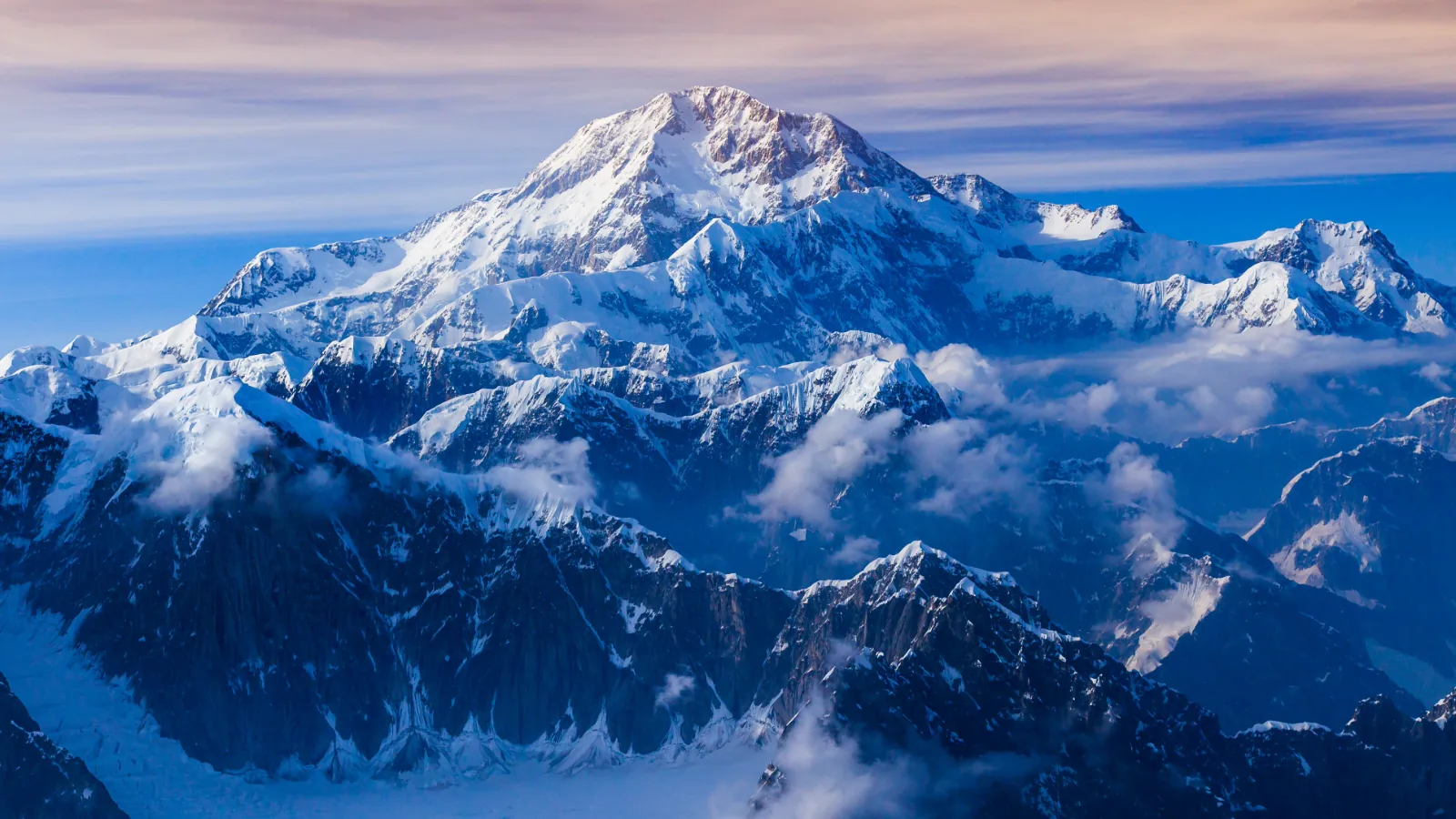
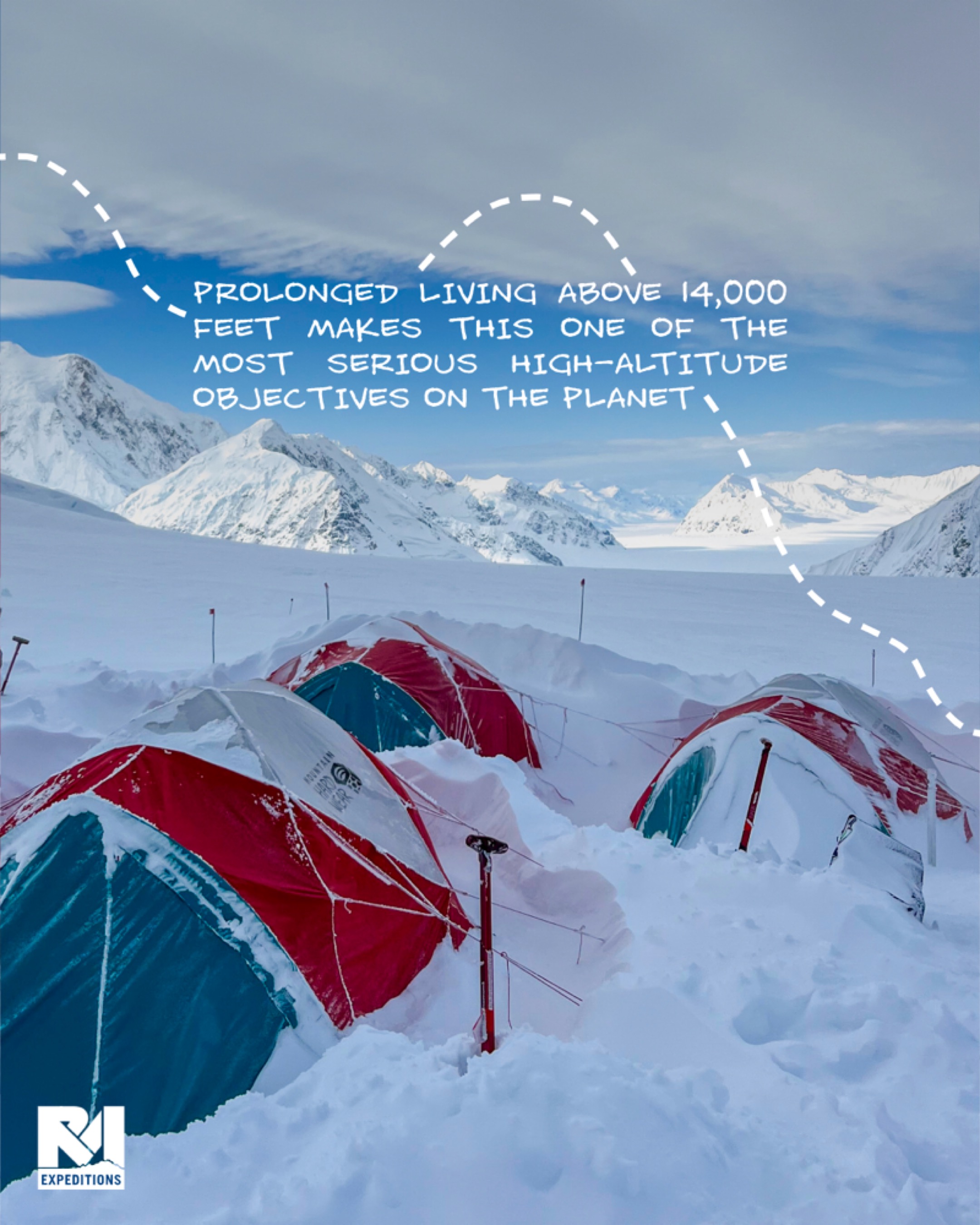
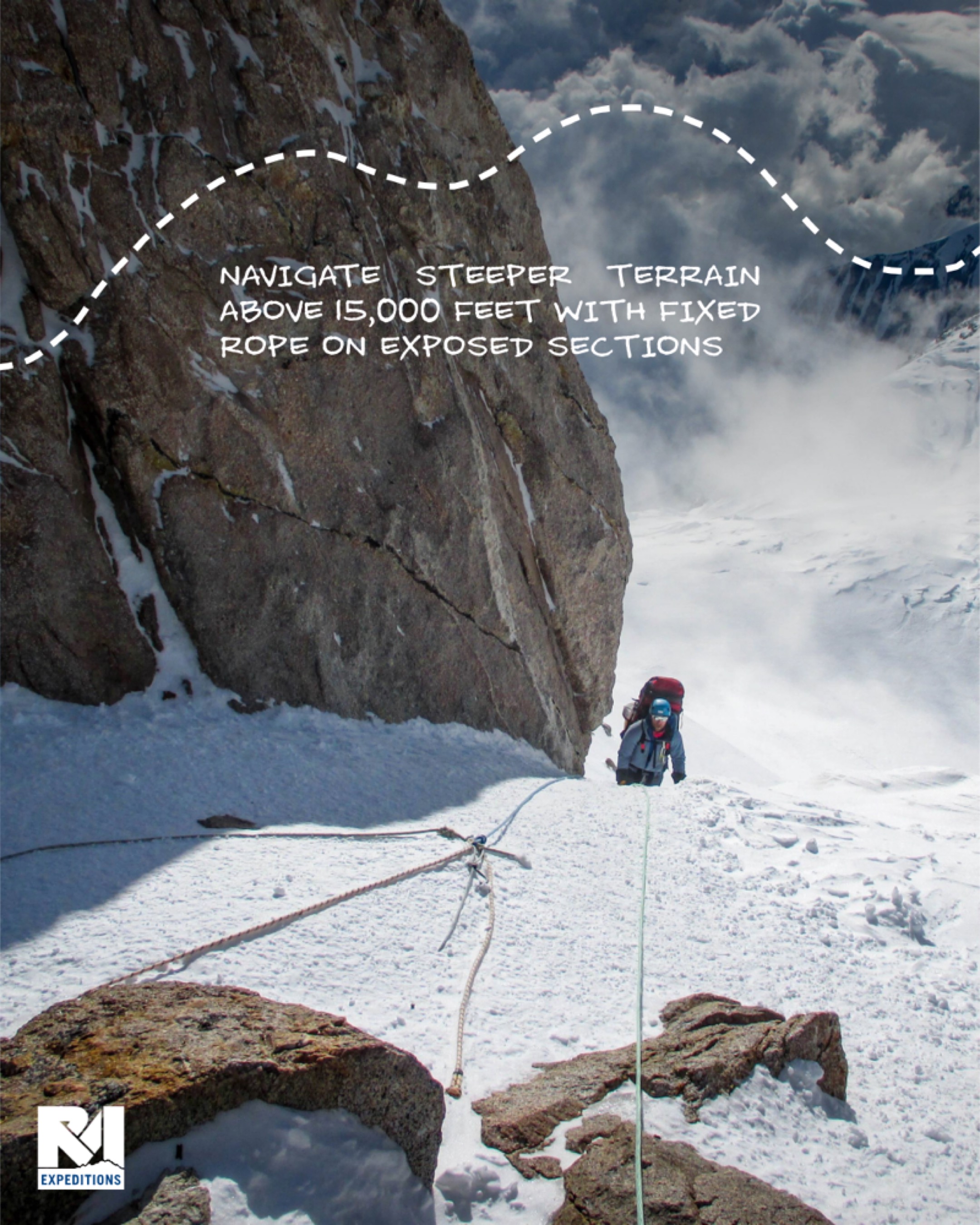
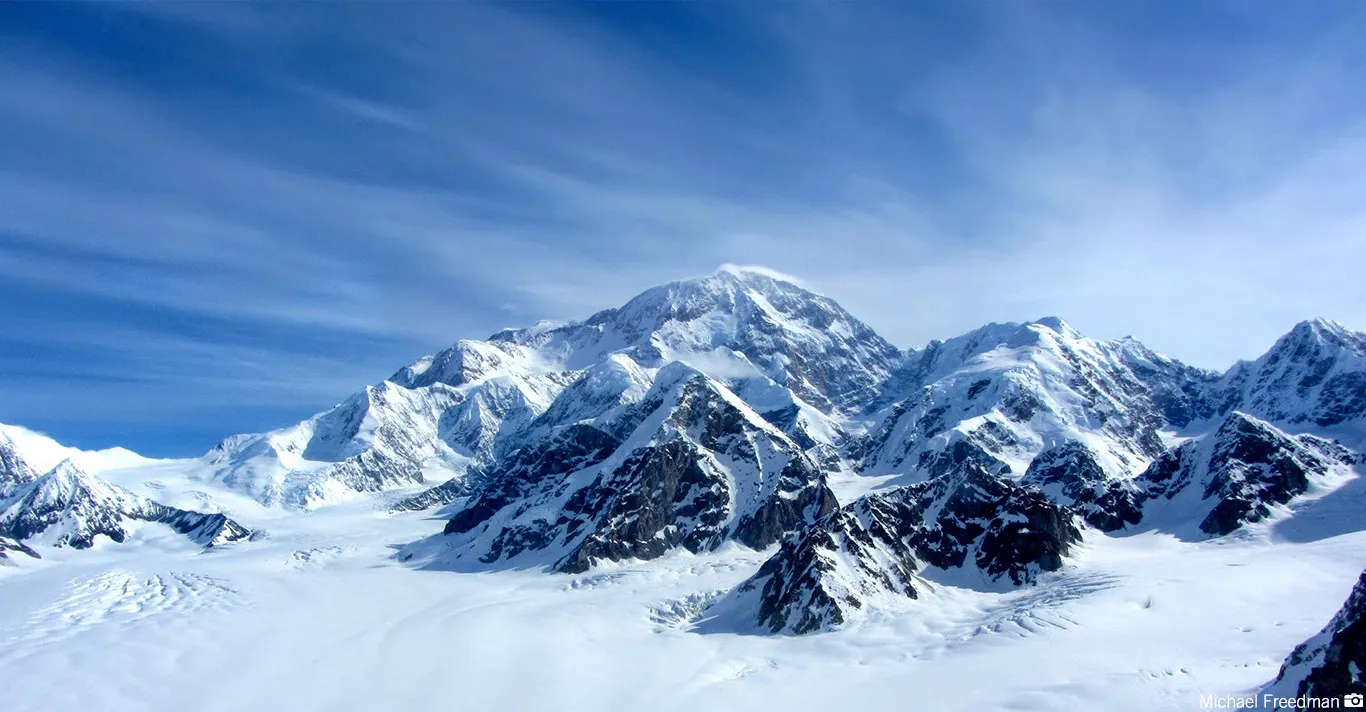
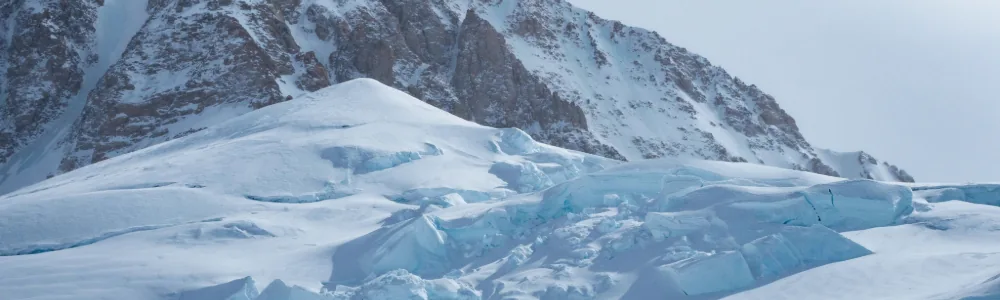
At 20,310 feet, Mt. McKinley is the highest peak in North America and one of the most serious high-altitude objectives on the planet. The West Buttress is the standard route to the summit, and while it involves no technical rock or vertical ice climbing, that framing undersells the challenge. Miles of glaciated terrain, extreme cold, sustained altitude above 14,000 feet, and weather that can pin a team for days at a stretch are what define this climb. Above 15,000 feet the route steepens considerably, with fixed ropes on the most exposed sections. This is an expedition in every meaningful sense of the word.
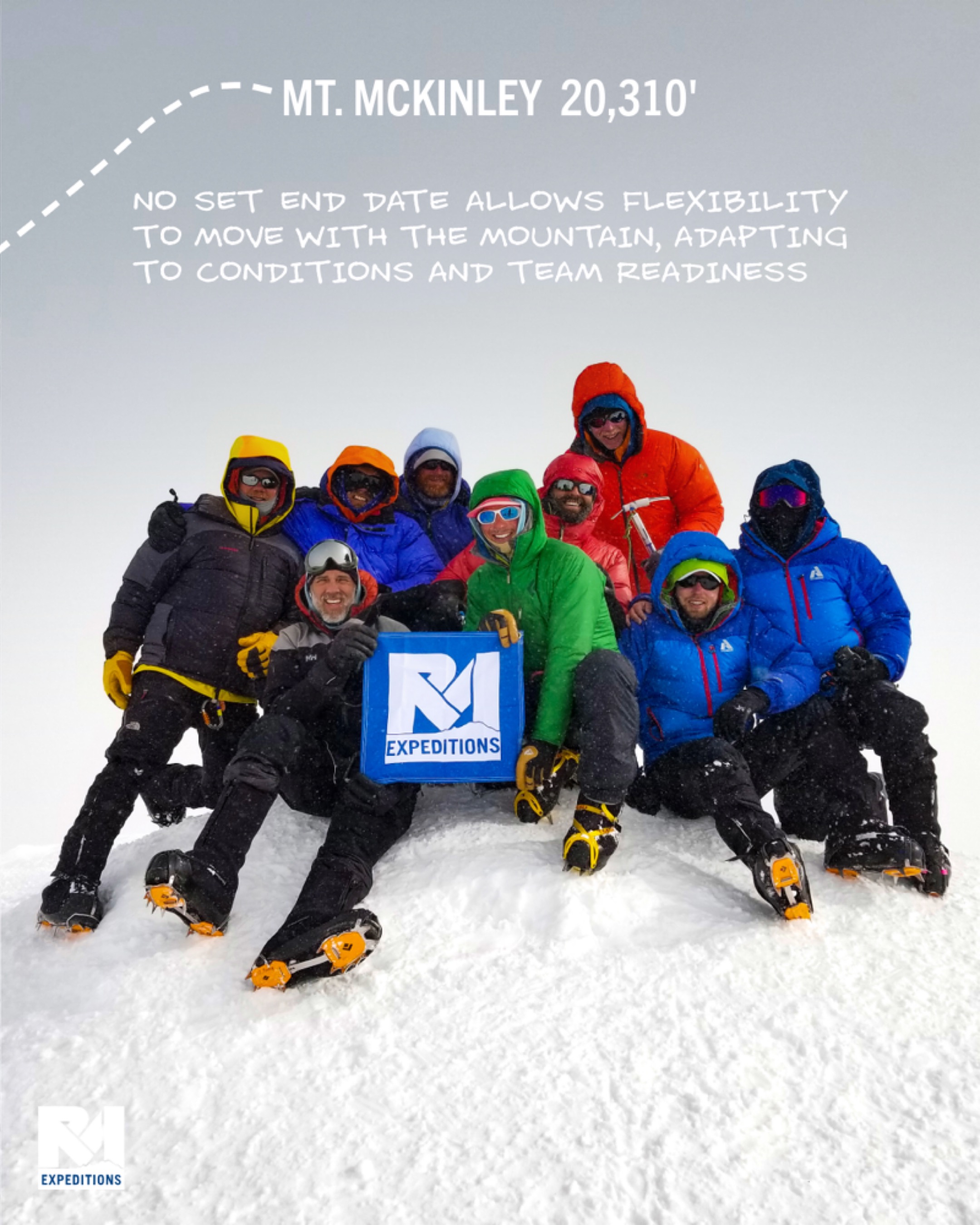
Unlike most guide services operating on Mt. McKinley, RMI does not set a fixed end date for this program. The schedule moves with the mountain: conditions, acclimatization progress, and team readiness determine when the team pushes higher and when it waits. That flexibility is not a convenience; it is the approach that gives climbers the best realistic chance at the summit. Guides monitor performance and altitude response throughout, adjusting pace and plans as the situation demands rather than against an arbitrary calendar.
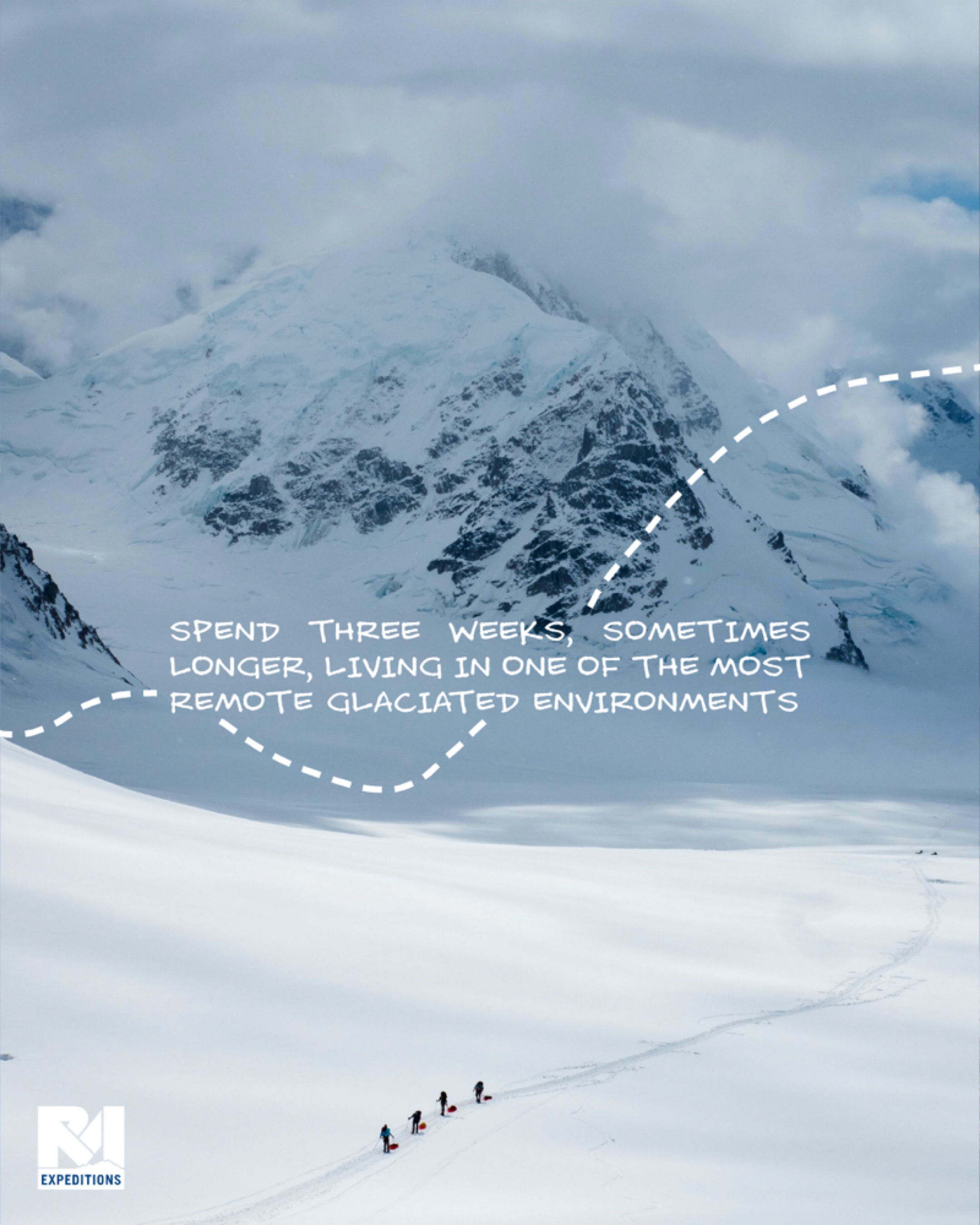
The West Buttress Expedition is a major commitment of time, fitness, and preparation. Climbers should expect to be on the mountain for three weeks or more and should arrive ready for the full weight of that. The mountain sets the terms here, and the program is built around accepting that.
RMI has been guiding on Mt. McKinley since 1975, and no guide service has accumulated more operational history on this route. More than 300 expeditions on the West Buttress means the planning, pacing, and decision-making that shape this program are built on direct, repeated experience with this specific mountain. That depth shows in how the expedition is structured, how guides read conditions, and how the team responds when the mountain demands patience.
“The guides were amazing, the food preparation was awesome (all things considered) and the overall experience/skill applied seemed to exceed all of the independent teams around us as well as the other guided teams. I just felt like we were with the best operator.” — Jordan F.
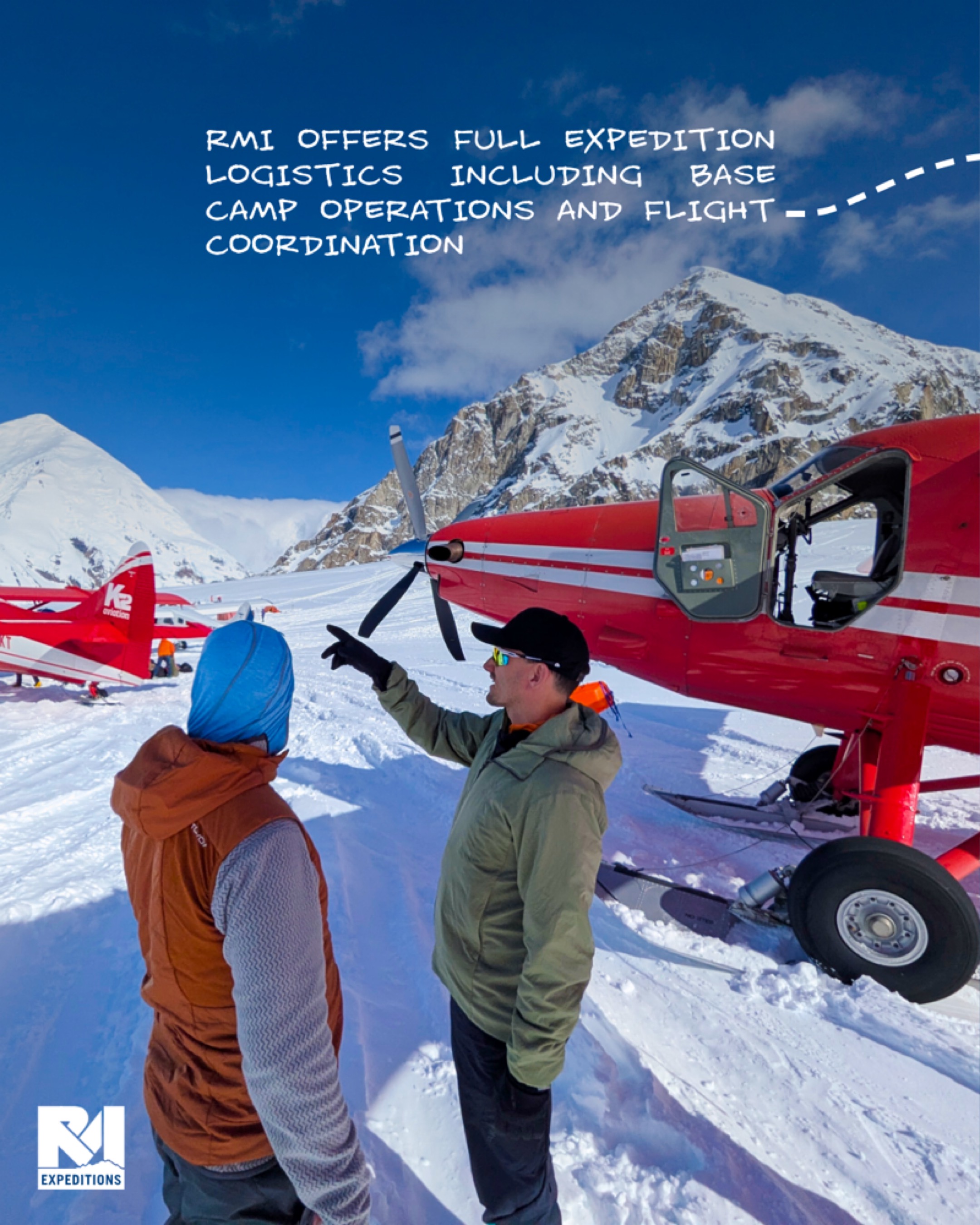
Unlike most guide services operating on Mt. McKinley, RMI runs its expeditions without a fixed end date. That decision reflects a deliberate philosophy: summit attempts should be driven by conditions, acclimatization, and team readiness, not a departure flight. RMI manages all expedition logistics, including flight coordination with K2 Aviation, so climbers arrive focused on the climb rather than the details surrounding it. That logistical support extends through the entire program, from pre-trip planning to on-mountain adjustments.
Risk management on this program is active, not procedural. Guides hold wilderness medicine certifications, technical rescue training, and advanced avalanche credentials, and carry comprehensive medical and communication equipment throughout the climb. They monitor acclimatization and performance daily, making real adjustments to pace and timing based on what they observe. On a mountain where conditions change quickly and altitude demands compound over weeks, that standard of attentiveness is what the West Buttress requires.
To learn more about RMI's history and guiding philosophy, visit our About page.

All our climbs in Mt. Rainier & Denali National Parks are 100% carbon neutral. We have acquired offsets for greenhouse gas emissions through our partnership with Ostrom Climate, Canada's top carbon management solutions provider. Their carbon offset projects undergo rigorous verification by third parties to validate that emission reductions are genuine and permanent, ensuring that our contribution is making a tangible impact.
The expedition moves from Talkeetna through a bush plane flight to Kahiltna Base Camp and progresses through a series of established camps on the West Buttress, with acclimatization days built into the ascent at each major elevation gain. The program averages around three weeks on the mountain, though the actual timeline shifts with weather, conditions, and how the team is moving. The program is scheduled over 21 days: the itinerary below covers 20, with the final day held as a weather and contingency buffer.
Anchorage, AK
20,310' / 6,190 m
20 Days
11
4
12–14 Hours
1:30 p.m.: Meet the guides at Anchorage International Airport (Domestic Terminal), carousel 1 in Alaska Airlines baggage claim.
Shuttle transportation to Talkeetna is included in the program. The shuttle leaves at 2:00 p.m. and takes three hours to arrive in Talkeetna. The group will stop at a grocery store in Wasilla for the opportunity to purchase any fresh food you'd like to bring on the mountain. The team will arrive in Talkeetna at approximately 9:00 p.m. Overnight in Talkeetna.
.jpg)
7:00 a.m.: Team Breakfast Meeting
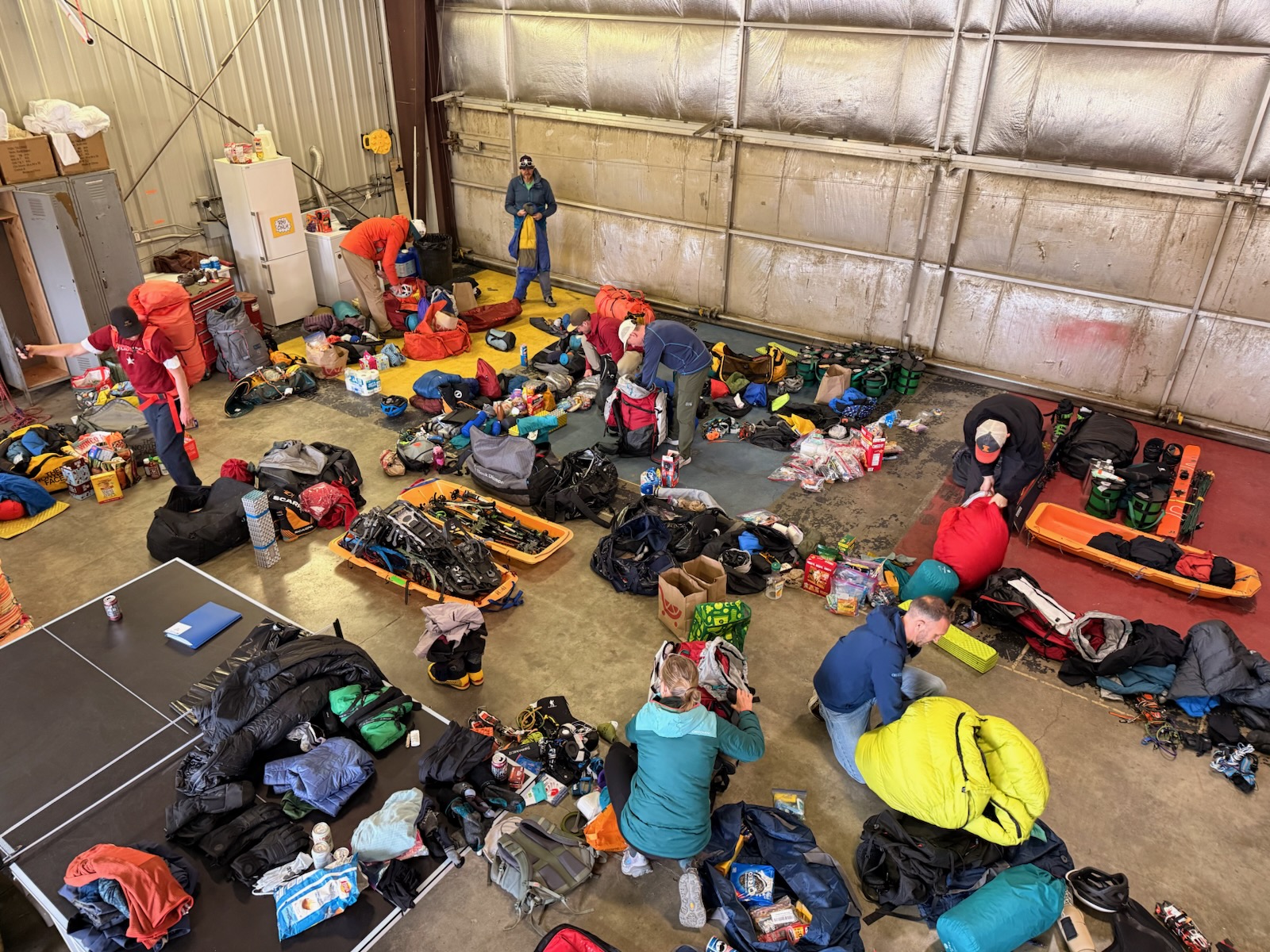
Our main goal today is to get the team ready to fly onto the mountain. After our breakfast meeting, the team attends a National Park Service presentation on expedition climbing and special considerations about Denali National Park & Preserve. Next, we focus on equipment, including an extensive personal gear check and recommendations for what to bring onto the mountain and how to pack for the flight to Base Camp. Finally, we organize the group food and equipment, putting the final touches on our packing for the flight. We enjoy a final meal in town before our expedition begins. Overnight in Talkeetna.
%202.jpg)
.jpg)
After breakfast we meet at K2 Aviation for the bush plane flight to Kahiltna Base Camp, weather permitting. The spectacular scenic flight takes approximately 45 minutes. Kahiltna Base Camp lies at 7,200' on the S.E. fork of the Kahiltna Glacier, approximately 20 miles distant and 13,000' below the South Peak of Mt. McKinley, at 20,310'. At Base Camp we rig our sleds and review mountaineering skills needed for our climb.
%202.jpg)
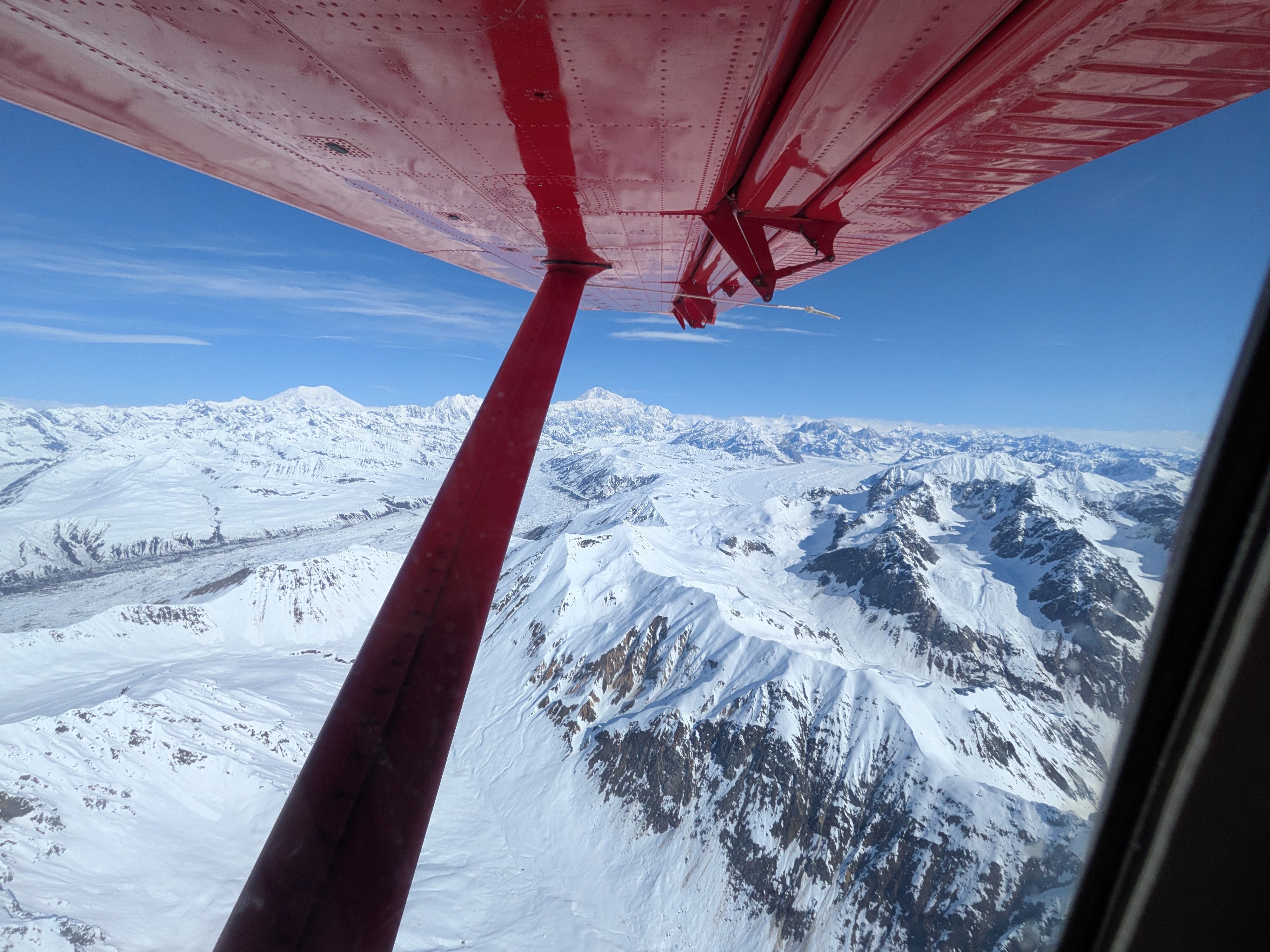
There are many variables on a Mt. McKinley expedition. While most expeditions average 18 days from Base Camp to Base Camp, we never place an ending date on our programs. We purposely build flexibility into our itinerary to take into account weather, route conditions, acclimatization, and the strength of the climbing team. This flexibility allows us to move higher when the weather permits and climbers are ready. Our experienced guides closely monitor climbers' performance and acclimatization throughout the team’s ascent and may make day-to-day variations in order to better our chances of reaching the summit.
We pack each expedition with twenty-two days of food per climber. In the event of bad weather, this amount can be stretched several additional days. Furthermore, there are emergency food rations at Kahiltna Base Camp, in case weather prevents the group from flying off the glacier.
The following itinerary is meant to highlight the camps, route details, and a day-to-day outline while on the mountain. It does not take into account any sort of delays.
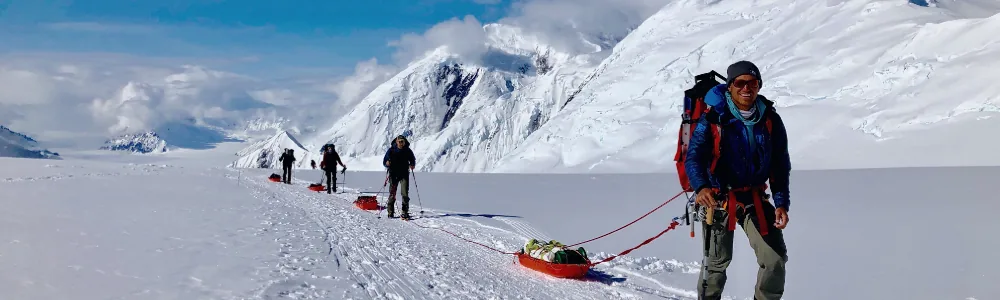
Leaving Kahiltna Base, we descend 400' down Heartbreak Hill to the main Kahiltna glacier, where we turn towards Mt. McKinley, and travel 5.5 miles up the gently rising glacial rolls. Our camp sits at the base of Ski Hill at 7,800'.
.jpeg)
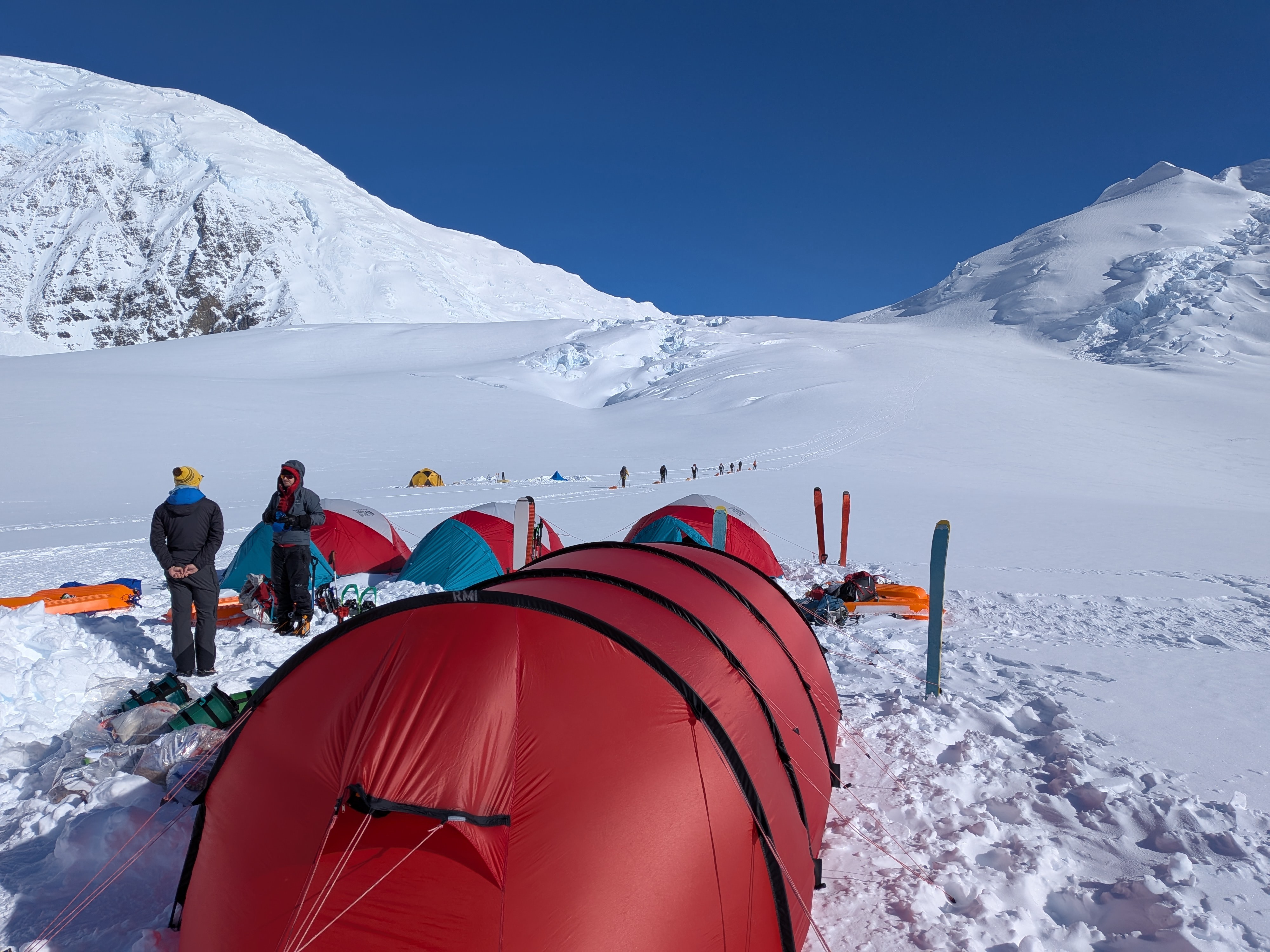
Ski Hill is the first major elevation gain of the trip. In a series of rolls, the Kahiltna glacier rises from our camp at the base of Ski Hill towards Kahiltna Pass at 10,000'. We leave camp, and climb up the glacier to our second camp at 9,600', just below Kahiltna Pass.
.jpg)
At Kahiltna Pass, the Kahiltna glacier makes a prominent turn to the east, continuing up a glacial valley into our camp in a basin at the base of Motorcycle Hill.
.jpg)
.jpeg)
We spend the day resting, reviewing crampon and self arrest techniques, and sorting loads in anticipation of our carry day.
.jpg)
.jpeg)
Leaving camp, we climb Motorcycle Hill to a bench with stunning views of the Father and Sons Wall, and the Peters Glacier. The subsequent climb up Squirrel Hill leads us to the Polo Field, a wide glacial bench at the foot of the West Buttress. We traverse around Windy Corner at 13,300' to our cache site at 13,500'. After leaving our load of group food, fuel, and personal items, we descend back to our tents at 11K Camp.
%202.jpg)
%202.jpg)
%202.jpg)
This is an important acclimatization day before our move to 14K Camp. We spend the day resting, hydrating, eating, and organizing our loads for our move day.
.jpg)
.jpg)
After breaking camp we make our move to 14K Camp. We once again climb around Windy Corner, and passing our cache site, continue to climb to our camp at 14,200' in Genet Basin, our home for the next several days.
.jpeg)
.jpg)
We retrace our steps and descend to our cache site at 13,500'. After retrieving our gear, we return to 14K Camp to spend the afternoon improving our camp and relaxing.
.jpeg)
The focus of the day is to rest, hydrate, and let our bodies start to adjust to this new altitude. We practice fixed line travel and running belays, as well as sort another load of gear, all in preparation for our carry onto the West Buttress.
.jpeg)
.jpeg)
We ascend out of the North side of Genet Basin, gaining the fixed lines at approximately 15,200' that top out at the ridge line of the West Buttress at 16,200'. Depending on time, weather, route conditions, and energy level, we may opt to make our cache at the top of the fixed lines, or travel higher along the West Buttress towards 17K Camp before caching. After leaving our loads, we return to 14K Camp for the evening.
.jpeg)
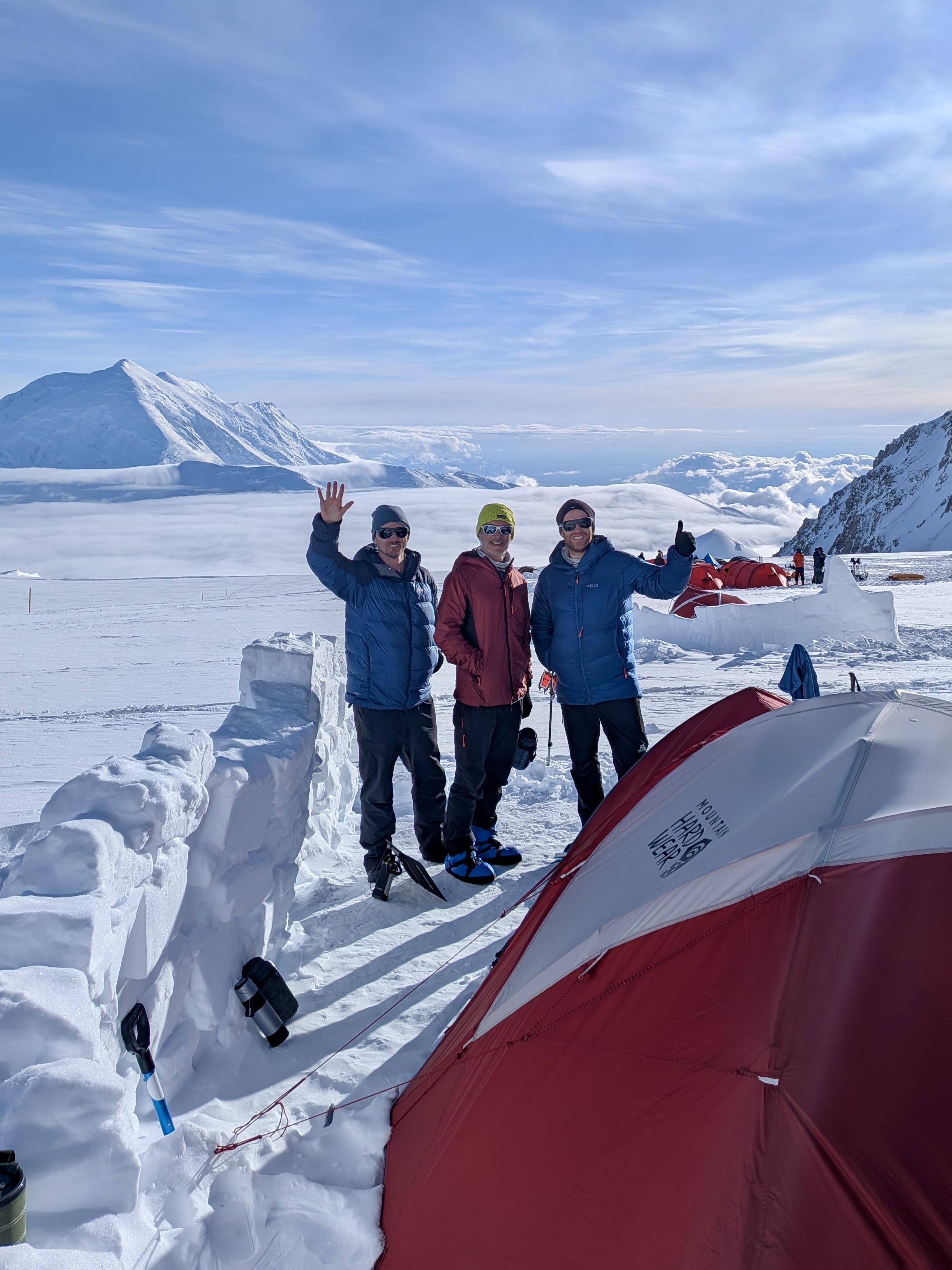
After a leisurely breakfast we make it our priority to hydrate and fuel throughout the day so that we’re prepared for our move to High Camp and the summit push. Depending on weather, we may stretch our legs and take a short walk across Genet Basin to the Edge of the World. From here we can look down almost 7,000' to the Northeast Fork of the Kahiltna, see our first camp at the Base of Ski Hill, and look across the valley to stunning views of 17,402' Mt. Foraker.
.jpg)
.jpg)
We ascend the North side of Genet Basin once again, gaining the fixed lines to the ridge crest of the West Buttress at 16,200'. We travel along the ridge crest, stopping to pick up any essentials from our cache before continuing to our High Camp at 17,200'.
.jpeg)
Our climb begins with a long rising traverse along the Autobahn to Denali Pass at 18,200'. Beyond Denali Pass, we follow the ridge line, passing the Zebra Rocks and the Archdeacon’s Tower before gaining the Football Field at 19,500'. Six hundred vertical feet of climbing leads us to the top of Pig Hill and the summit ridge. We traverse the airy summit ridge to the top of the South Peak. After celebrating on the summit, we descend our route back to High Camp. Summit day can be long; you should train for a 12 to 14 hour round trip.
“The summit day on Denali was the highlight of this trip. What a dream come true especially when we thought there wasn't a chance due to weather.” — Tim W.
.jpeg)
.jpg)
After a well-deserved rest we pack camp and begin our descent back down the West Buttress. We stop briefly at 14K Camp to retrieve any cached items before continuing our descent to 11K Camp, where we stop for the night.
.jpg)
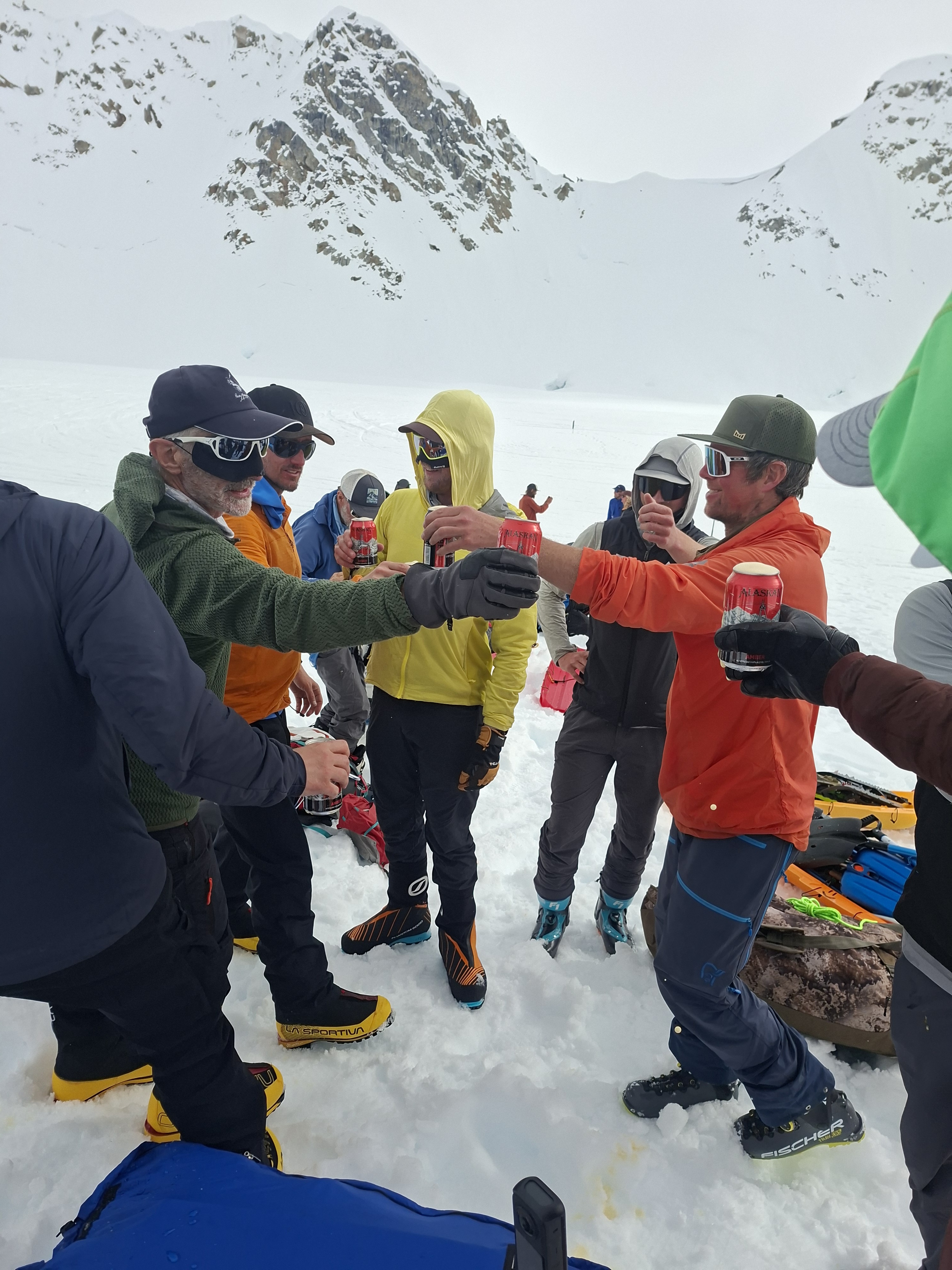
We re-rig our sleds, don our snowshoes, and begin our descent of the main Kahiltna Glacier back to the base of Heartbreak Hill. We then turn our sights back uphill to Kahiltna Base on the Southeast Fork of the Kahiltna.
%202.jpg)
We load up the planes and return to Talkeetna to enjoy a hot shower and celebratory team meal. Overnight in Talkeetna.
.jpg)
Transfer to Anchorage International Airport (ANC) for our outbound flights.

You should arrive in peak physical condition and prepared to carry loads of 50 to 80 pounds, pull a sled, and sustain hard effort for multiple consecutive days at altitude, including a summit day of 12 to 14 hours or more.

This program requires demonstrated experience with glacier travel, crevasse rescue, fixed line technique, and multi-day expedition camping in winter conditions.

The route reaches 20,310 feet, and climbers should have prior experience above 14,000 feet and a clear understanding of how their body responds to sustained high altitude.
The West Buttress Expedition is not an introductory program. Climbers are expected to arrive with a solid technical foundation and the physical conditioning to apply it over three or more weeks in a remote, high-altitude environment. This is one of the most demanding mountaineering objectives in the world, and preparation needs to reflect that honestly.
“Even though there was a lot of preparation (physically and mentally), one is never fully prepared for their first time on that mountain. There was no time that I felt uncomfortable with the situation and I credit that to the amazing RMI team!” — Craig G.
Fitness is the variable climbers have the most control over, and it directly affects acclimatization, team efficiency, and summit success. Training should emphasize sustained aerobic output with heavy loads, uphill endurance, and the ability to move efficiently for long periods without recovery. The closer you get to your program date, the more your training should resemble the actual demands of the climb. Plan to arrive in the best shape of your life.
Technically, climbers need more than passing familiarity with the skills on this resume. Crevasse rescue, fixed line travel, and rope team movement should be practiced and reliable, not theoretical. The expedition format means there is no structured instruction time built in. Guides will provide guidance as needed, but this program assumes you arrive ready to perform, not ready to learn from scratch. RMI reviews all climbing resumes and may ask questions or request clarification before confirming enrollment.
Acclimatization is built into the ascent profile, but it cannot substitute for arriving fit and healthy. Climbers in strong physical condition acclimatize more effectively, recover faster between effort days, and make better decisions under fatigue. Arriving well-rested, properly hydrated, and healthy from the start gives your body the best chance to adjust as the team moves higher.
Essential Qualifications: You must have successfully completed a multi-day mountaineering course covering glacial travel, crevasse rescue, and altitude experience. While this course does not have to be completed with RMI Expeditions, we vet all applicants to ensure they have the right experience and skillset, and doing one of our courses ensures you meet our prerequisites.
Recommended climbing experiences include:
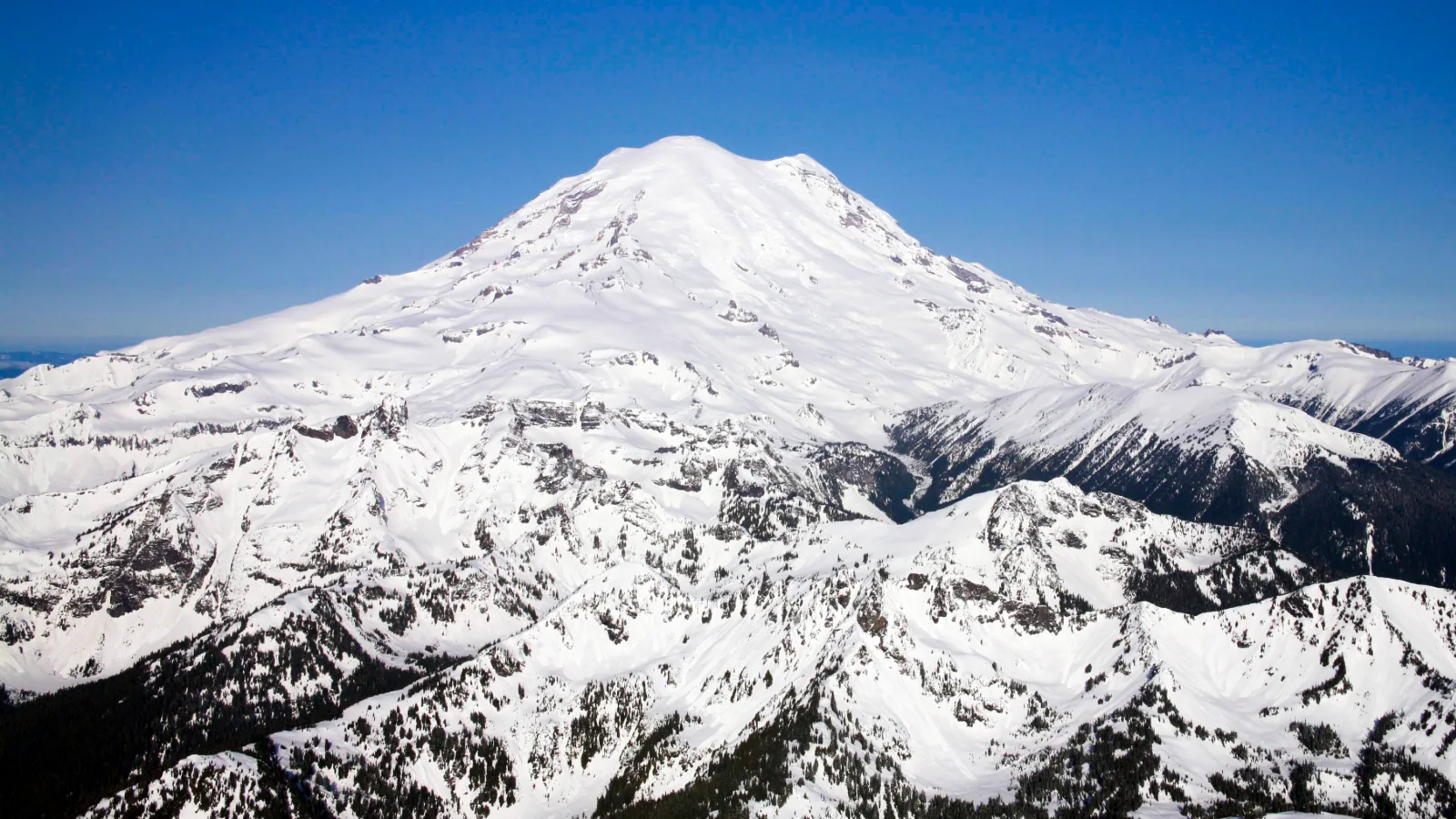
Skills Covered:
Cold-weather expedition systems including sled hauling, glacier travel, camp management, and crevasse rescue.
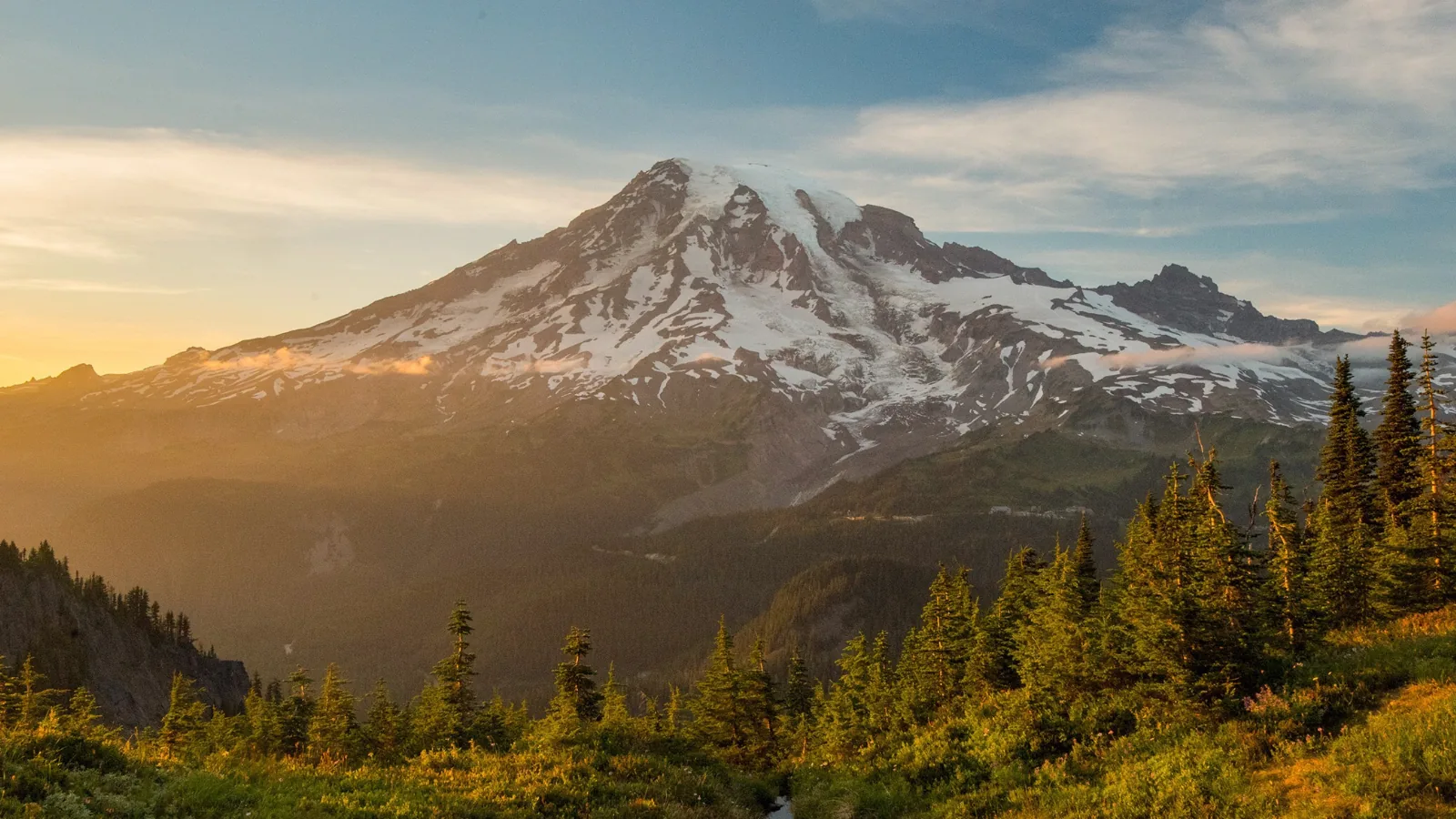
Skills Covered:
Application of steep snow and ice travel, glacier movement, and expedition pacing on a technical Rainier route.
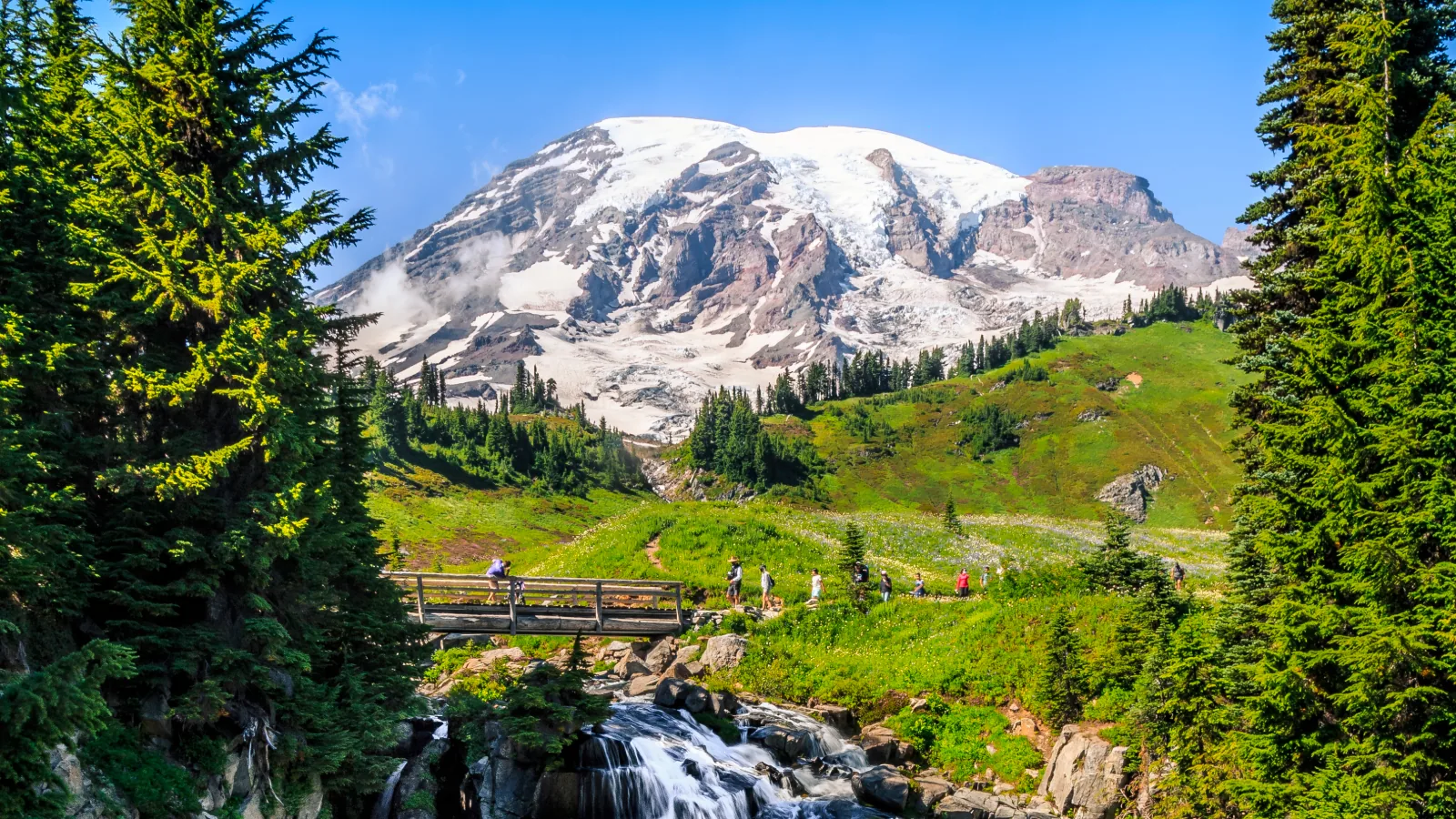
Skills Covered:
A working foundation in glacier travel, rope team management, anchor systems, and expedition-style climbing on a major glaciated peak.
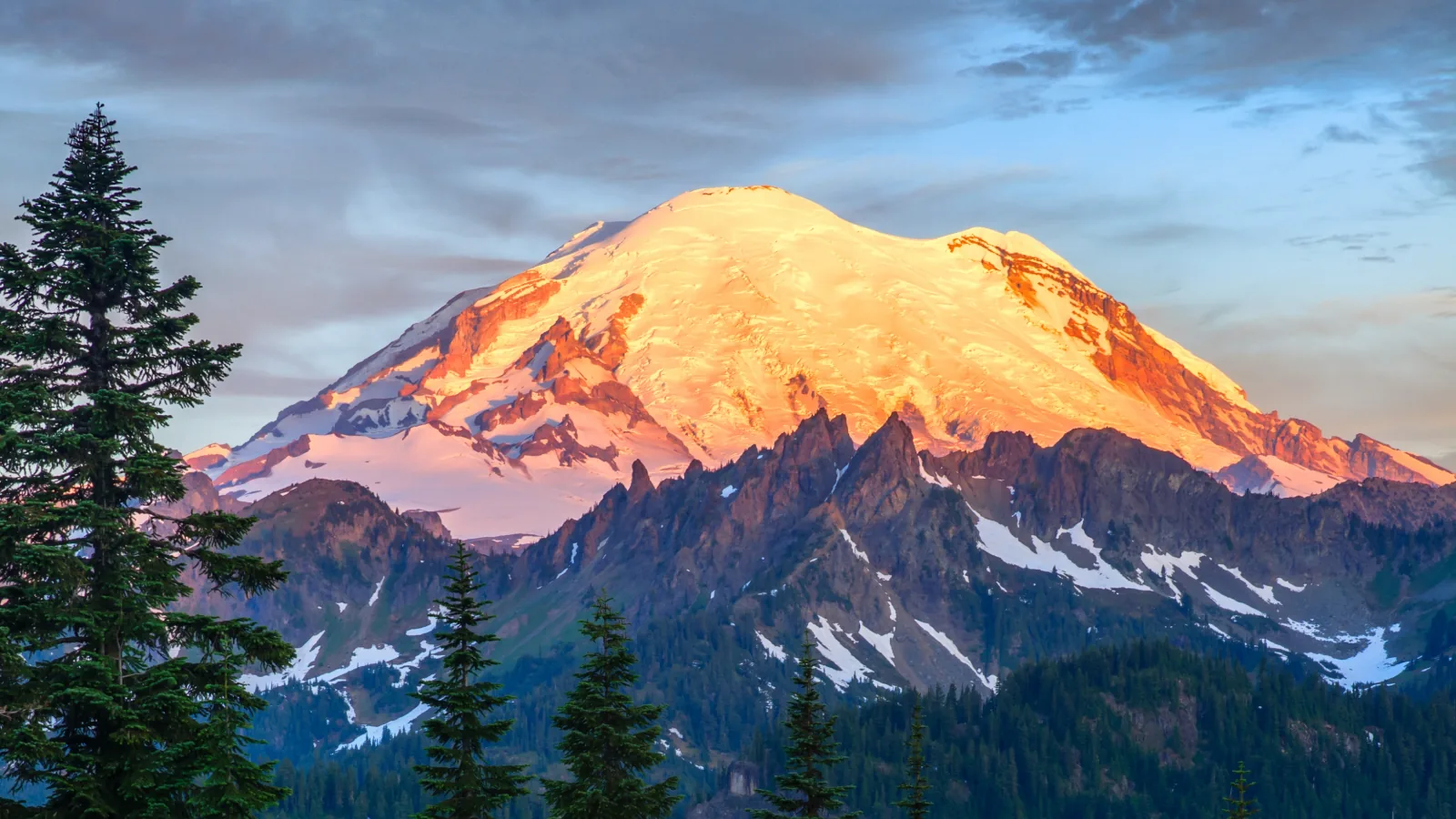
Skills Covered:
A true expedition-style glacier climb with multi-day camp systems, rope team travel, and a summit push above 14,000 feet.
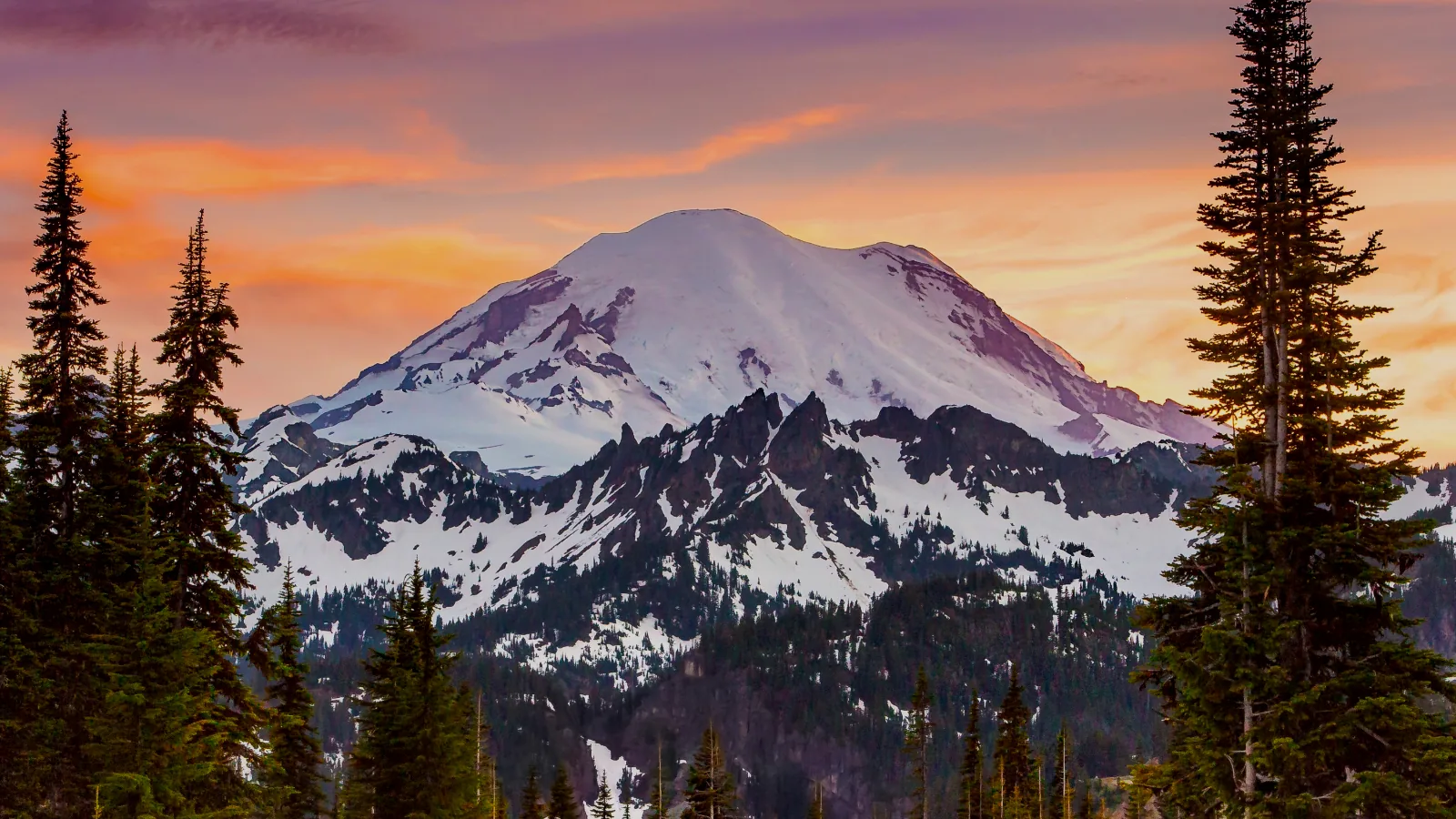
Skills Covered:
Build foundational mountaineering skills through extended training at Camp Muir and a summit attempt on Mount Rainier’s classic route.
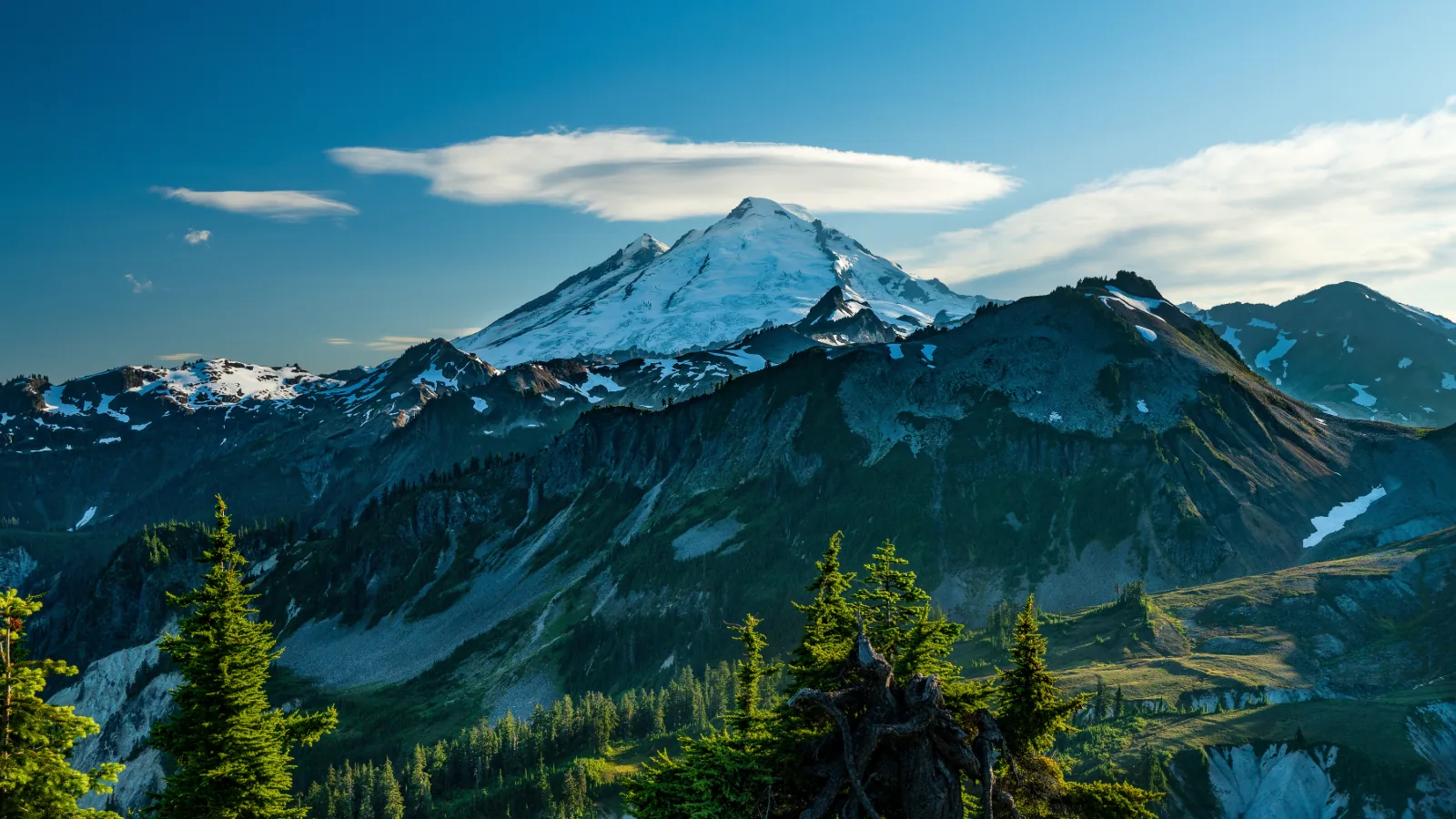
Skills Covered:
Climbers learn rock anchors and rappelling, glacier travel and navigation, snow and ice anchors, crevasse rescue, ice climbing, and fixed-line travel, applied on a summit of Mt. Baker.
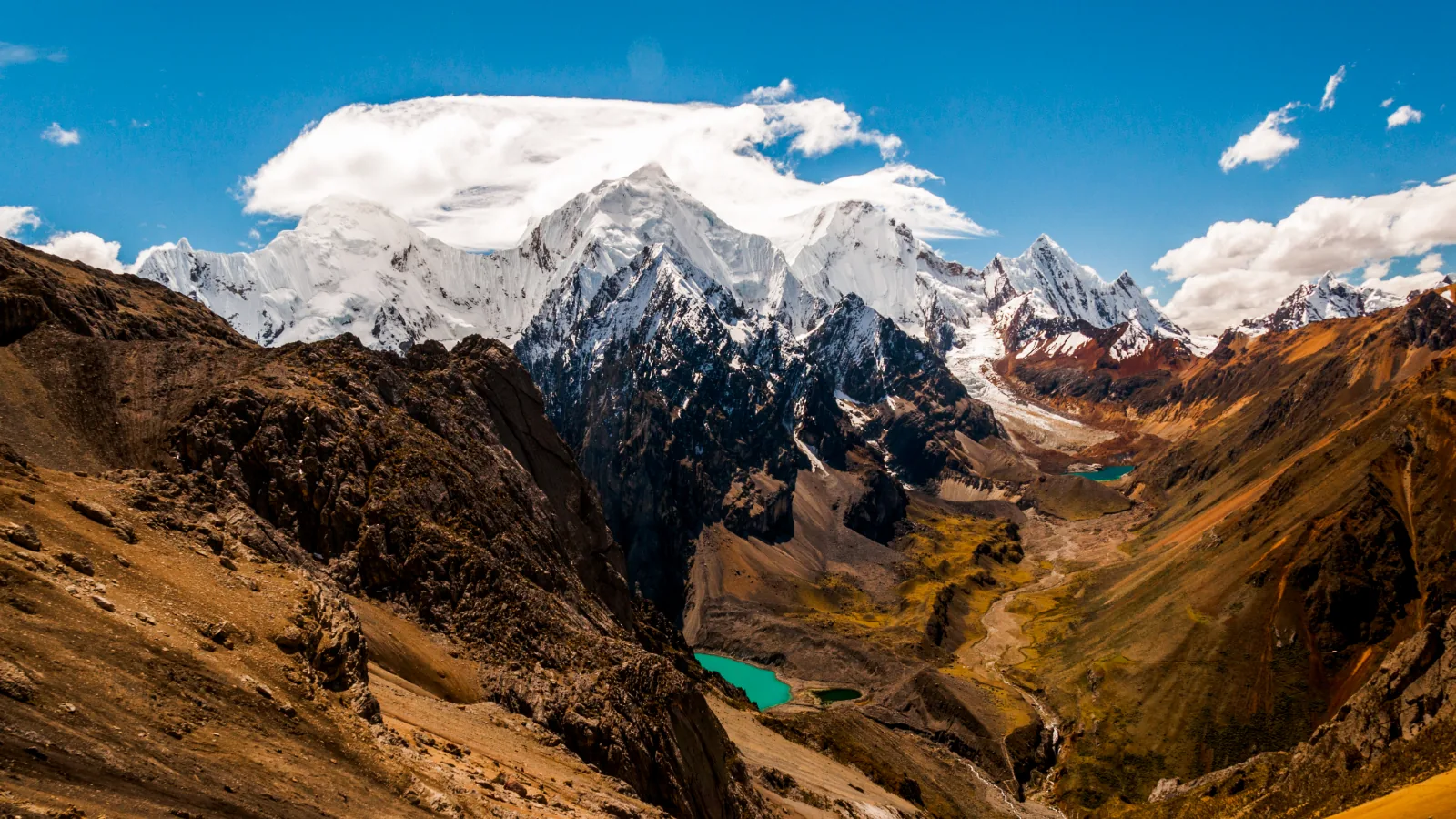
Skills Covered:
Experience with glacier travel, cramponing, ice axe arrest, and roped climbing on multiple glaciated peaks above 17,000 feet.
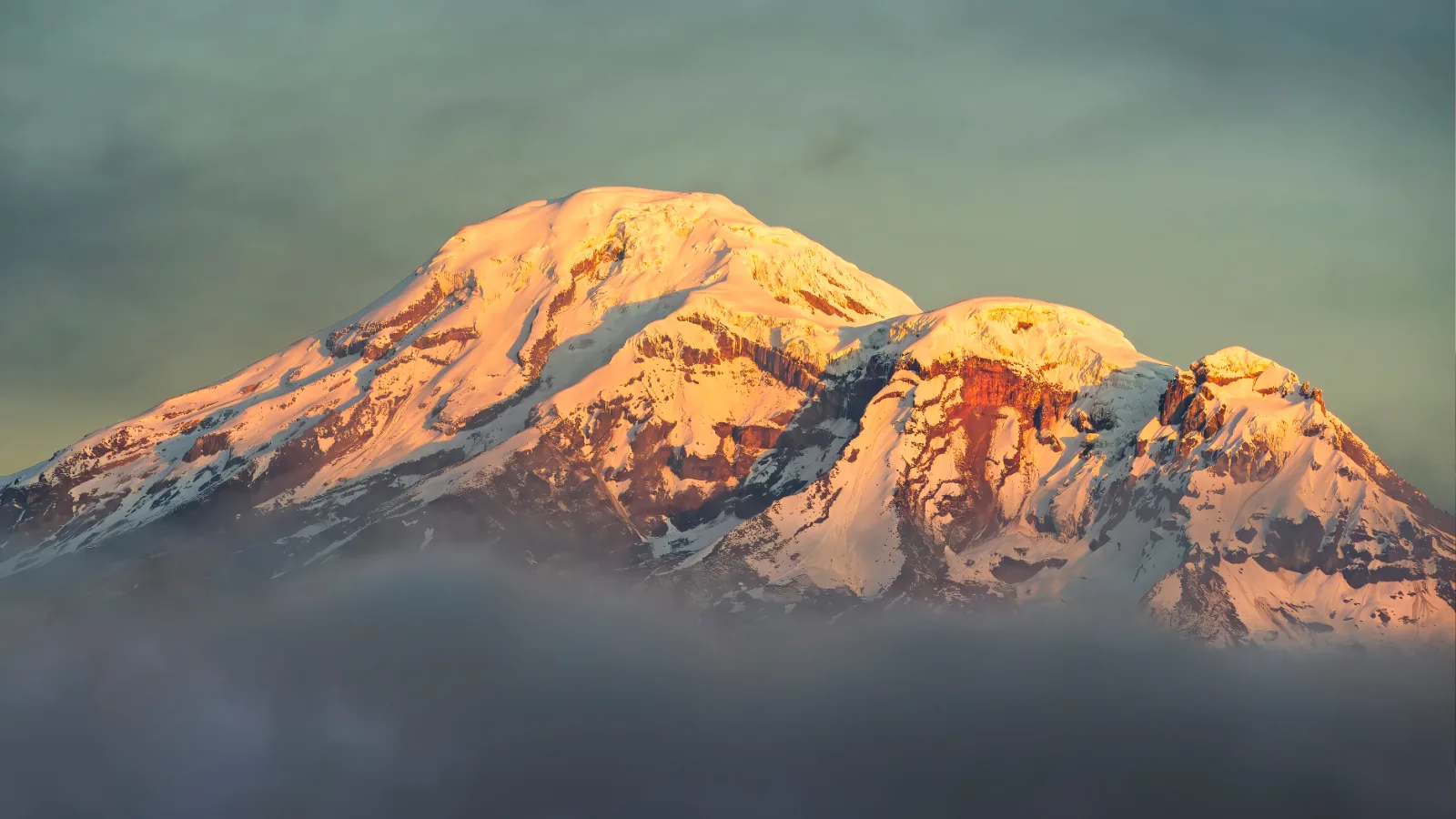
Skills Covered:
Experience with high-altitude glacier climbing, crevasse rescue, fixed line travel, ice climbing, and technical mountaineering on multiple Andean volcanic objectives in preparation for larger international expeditions.
Your climbing resumé should include:

Glacier travel experience on crevassed terrain*
Crevasse rescue from both victim and rescuer perspectives, with heavy packs and sleds*
Fixed line travel with mechanical ascenders*
Crampon technique on 30 to 50-degree slopes*
Team rope travel on glaciated terrain*
Snow and ice anchor construction and equalization*
Belaying and running belay experience*
Ice axe self-arrest and team arrest with a backpack*
Snow camp construction and cold weather living systems
Summit day exceeding 10 to 12 hours
Experience at altitudes above 14,000 feet
Multi-day expedition camping with full load carries
Items marked with an Asterix (*) are considered mandatory prerequisites for this program.
Mountaineering places sustained demands on your body and your ability to stay composed under effort. Even very fit people find that moving uphill with weight, for long hours, in variable weather is a different kind of challenge than most everyday training.
Preparation matters. Fitness directly affects how well you move, how much you learn, how the team functions, and how enjoyable the experience is overall.
Start early. Begin training well in advance of your program with the goal of arriving rested, resilient, and confident in your capacity for sustained effort.
Train intentionally. Emphasize aerobic endurance, uphill movement, and strength that supports long days on your feet. Core stability, balance, and mobility all play an important role in efficiency and injury prevention.
Train specifically. The closer you get to your program date, the more your training should resemble the demands of mountaineering: hiking uphill with weight, moving steadily for hours, and recovering well enough to do it again the next day.
Across RMI programs, strong preparation typically means being comfortable with long days of continuous movement, carrying a pack appropriate to the objective, and maintaining focus and decision-making when tired. Technical skills are taught or reviewed as appropriate to each program, but fitness is something you bring with you.
Nothing contributes more to a successful and rewarding experience than arriving well prepared. Plan to be in excellent physical condition and ready for a demanding day in the mountains.
Total Hiking Time
Elevation Gain / Loss
Total Distance
Pack Weight
DAY 1 — Travel to Talkeetna
n/a
n/a
n/a
n/a
DAY 2 — Pre-Trip Preparation and Training in Talkeetna
n/a
n/a
n/a
n/a
DAY 3 — Fly to Kahiltna Base Camp (7,200')
n/a
n/a
n/a
n/a
DAY 4 — Kahiltna Base Camp to Base of Ski Hill (7,800')
4 - 6 hours
Gain = 500'
5.5 Miles
40 - 50 lbs + sled
DAY 5 — Ski Hill Camp to 9,600' Camp
5 - 7 hours
Gain = 1,800'
5 miles
40 - 50 lbs + sled
DAY 6 — 9,600' Camp to 11K Camp (11,200')
6 - 8 hours
Gain = 1,600'
4 miles
40 - 50 lbs + sled
DAY 7 — Acclimatization Day at 11K Camp
n/a
n/a
n/a
n/a
DAY 8 — 11K Camp to Cache at 13,500' and Return
6 - 8 hours
Gain = 2,300' | Loss = 2,300'
3.5 miles round trip
40 - 50 lbs + sled
DAY 9 — Acclimatization Day at 11K Camp
n/a
n/a
n/a
n/a
DAY 10 — 11K Camp to 14K Camp (14,200')
7 - 9 hours
Gain = 3,000'
2.75 miles
40 - 50 lbs + sled
DAY 11 — 14K Camp to Cache at 13,500' and Return
2 - 4 hours
Gain = 500' | Loss = 500'
2 miles round trip
30 - 40 lbs
DAY 12 — Acclimatization Day at 14K Camp
n/a
n/a
n/a
n/a
DAY 13 — 14K Camp to Cache at 16,200' - 17,200' and Return
6 - 8 hours
Gain = 2,000' - 3,000' | Loss = 2,000' - 3,000'
3 miles round trip
40 - 50 lbs
DAY 14 — Acclimatization Day at 14K Camp
n/a
n/a
n/a
n/a
DAY 15 — 14K Camp to 17K Camp (17,200')
7 - 9 hours
Gain = 3,000'
2 miles
40 - 50 lbs
DAY 16 — Summit Day (20,310') and Return to 17K Camp
12 - 14 Hours
Gain = 3,110' | Loss = 3,110'
5 miles round trip
25 - 30 lbs
DAY 17 — 17K Camp to 11K Camp (11,200')
5 - 7 hours
Loss = 6,000'
5 miles
40 - 50 lbs + sled
DAY 18 — 11K Camp to Kahiltna Base Camp (7,200')
6 - 8 hours
Loss = 3,900'
9.5 miles
40 - 50 lbs + sled
DAY 19 — Fly to Talkeetna (weather permitting)
n/a
n/a
n/a
n/a
DAY 20 — Shuttle to Anchorage
n/a
n/a
n/a
n/a
Our guides have decades of experience training for alpine objectives, and we've done our best to put together relevant resources to help you with your expedition preparation.
Prepare your body and mind for McKinley with RMI’s expert training recommendations and mindset-building strategies. Start improving now.
McKinley
Find out what expedition experience is required to safely and successfully attempt a climb of McKinley with RMI. Prepare for your summit success.
McKinley
Develop your aerobic base for endurance, strength, and performance in alpine environments with RMI’s expert guidance. Level up your training today.
Fitness & Training
Fueling Long-Duration Climbs with Enhanced Fat Metabolism
Fitness & Training
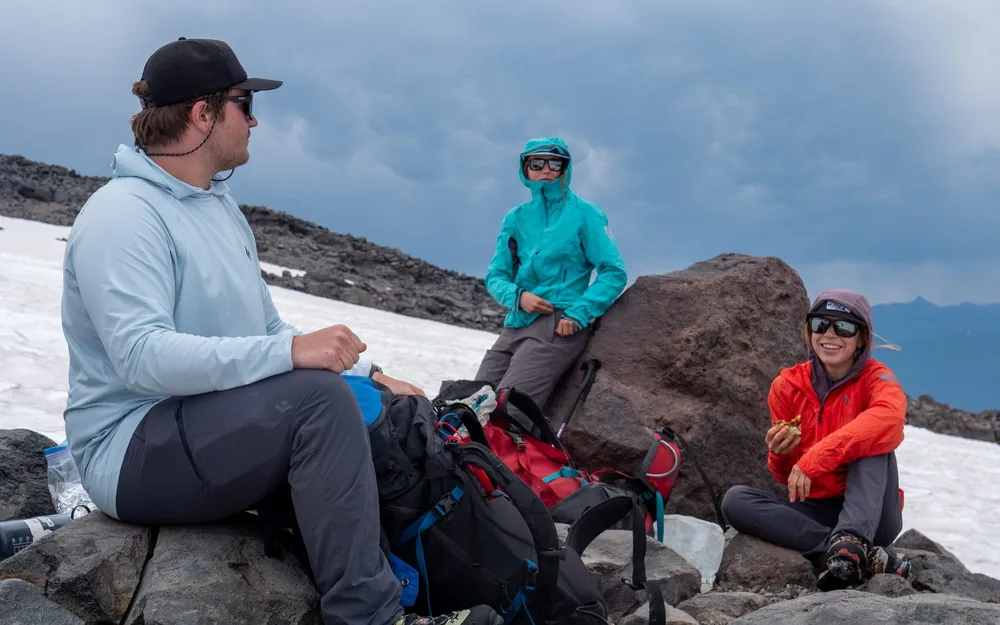
Strengthen your mountaineering training with a community of like-minded climbers who motivate and share the journey. Join us and explore.
Rainier
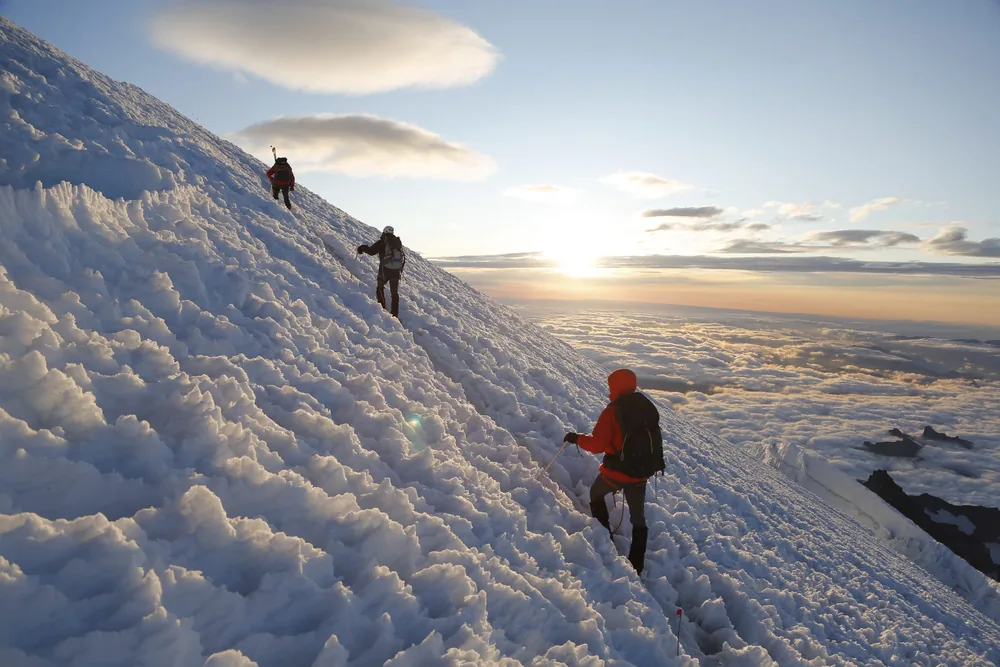
A Comprehensive Guide to Crafting Your Own Progressive, Goal-Oriented Program
Fitness & Training
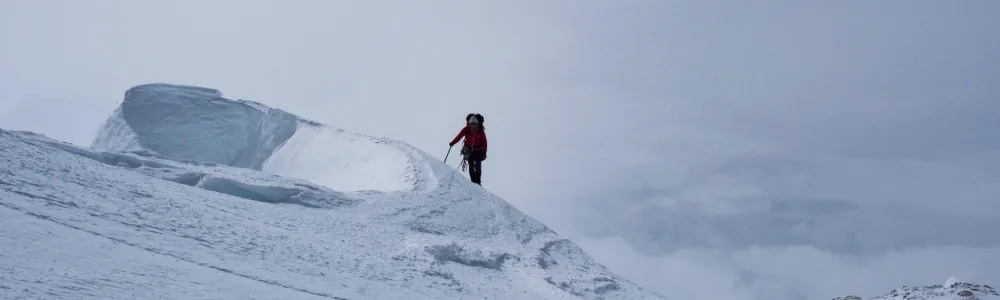
The summit of McKinley stands at 20,310 feet, and the effects of altitude can pose significant challenges to climbers. Proper acclimatization and altitude training are crucial for a successful and safe climb.
McKinley
Acclimatization is the process by which your body adjusts to lower oxygen levels at altitude. How well this happens has a direct impact on how you feel, how you perform, and how much margin you have as the climb progresses.
Program length and structure matter. Longer expeditions are designed with ascent profiles that allow your body more time to adapt. Shorter programs often move through altitude faster than the body can fully adjust. In these cases, climbers typically experience mild but normal symptoms associated with early acclimatization rather than full adaptation. This is expected and accounted for in program design.
Physical conditioning plays a major role. Well-conditioned climbers generally have more energy available to support the acclimatization process over consecutive days. Fitness does not prevent altitude exposure, but it improves resilience, recovery, and the ability to function well while your body is adapting.
How you take care of yourself matters just as much as the itinerary. Arriving healthy and rested, staying well hydrated, eating consistently, and managing heat loss all support acclimatization and performance. These factors become increasingly important as altitude, duration, and cumulative fatigue increase.
RMI programs are structured to balance objective goals with appropriate acclimatization strategies for the terrain and timeframe involved. Individual responses to altitude vary, but strong preparation and good self-care remain the most reliable ways to support a positive experience at elevation.
Mountaineering is both an individual challenge and a team endeavor. Before any program begins, RMI works directly with prospective climbers to confirm that everyone joining a team is genuinely prepared for the demands ahead. Depending on the program, this may involve conversations with our office staff, a review of your climbing history, or feedback from guides and other climbers who know your abilities. The goal is straightforward: to ensure that every person on the rope belongs there. We ask that each climber hold themselves to the same standard:
The standards we set exist to protect everyone on the team. RMI holds all climbers accountable to them, and we take seriously our responsibility to build teams of people who are ready to be in the mountains together. RMI reserves the right to remove a participant from a program or send them to a lower altitude if our guide staff determines, in their sole discretion, that the participant is not physically, technically, or psychologically prepared or capable of participating, or for any other reason that may compromise the safety, health, or well-being of the participant or the group. In such cases, no refunds or credits will be issued, and the participant will be financially responsible for any additional costs associated with an early departure, including evacuation, transportation, lodging, and meals.
We do our best to provide the guidelines, plans, and resources you need to prepare you for your climb, but if you feel you want extra coaching, feel free to reach out to our verified training partner, Alpine Training Systems.
The Mt. McKinley West Buttress Expedition requires a complete, expedition-ready kit built for extreme cold, sustained altitude, and three or more weeks on a remote glaciated peak. This gear list reflects decades of guiding experience on this specific route and represents what RMI expects every climber to bring to the mountain. The demands of the West Buttress, from the heavily crevassed lower glacier to the exposed upper ridgeline above 17,000 feet, require systems that perform across a wide range of conditions and temperatures.
Not every item will be used on every expedition. Conditions, weather, and route variations influence what the team deploys at any given point. That said, all required equipment must be present and functional from day one. There is no resupply on this mountain, and gear failures at altitude in extreme cold are serious. Guides will conduct a thorough equipment check in Talkeetna before the team flies to Base Camp. If you have questions about specific items before your program date, contact the RMI office directly.
Each RMI program includes a required personal equipment list built around the specific terrain, conditions, and objectives of the climb. Every item serves a purpose and supports safety, efficiency, and comfort in the mountains.
Guide Picks™ are examples that meet our performance standards and illustrate the type of gear we recommend. Each year, our partners at Whittaker Mountaineering survey our staff of 70+ guides to get a consensus on the best gear for the job. You do not need to purchase the exact item shown, but any alternative must offer comparable function and durability.
All listed items are required for the gear check. Final adjustments may be recommended by your guide based on conditions and team needs once the expedition begins.
Most of the required equipment is available for rent or purchase from our affiliate Whittaker Mountaineering. RMI climbers receive a 10% discount on new clothing and equipment items ordered from Whittaker Mountaineering.

A lightweight 100+ liter duffel to transport gear in your sled. This bag does not need to be waterproof. It can also double as a checked bag on your flight.
A technical climbing pack large enough to carry personal gear, layers, food, water, and a share of group equipment including tent portions. You will not need a separate summit pack.
We recommend a bag rated between -20° and -40° F. Allow ample room for movement. We highly recommend down over synthetic for its light weight, warmth, and packability. If you know you sleep cold, consider a -40° F bag.
A comfortable, adjustable alpine climbing harness. Removable, drop-seat, or adjustable leg loops are recommended for managing layers and bathroom breaks in the mountains.
10- or 12-point adjustable steel crampons with anti-balling plates for general mountaineering and glacier travel. Automatic, semi-automatic, or strap-on attachment depending on boot compatibility. Ensure crampons are compatible with your specific boots before your program.
Approximately 12-20 inches each for securing gear and equipment.
Select a short to medium length model of snowshoe- 22" is an ideal size. Team members are more often 'drafting' as opposed to actually breaking trail, so it is not necessary to have a longer pair. You will log miles of roped glacier travel while wearing snowshoes, so spend some time walking in them prior to the trip. We highly recommend models with a heel lift, which makes uphill travel significantly easier.
A neoprene or insulated facemask for additional face protection in severe cold and wind.
Glacier glasses are protective sunglasses that provide close to 100% frame coverage (wrap-around frames and side shields ensure no light can enter from the top, bottom, and sides of the glasses) and transmit less than 10% of visual light.
We recommend a minimum of five upper body layers, all of which can be used in conjunction with each other. Two of these should be insulating layers, one light, and one medium, that fit well together. Today there are many different layering systems to choose from, including fleece, softshell, down, and synthetic options.
A lightweight, breathable long-sleeve shirt in synthetic or merino wool for sun protection and moisture management during active climbing.
One step up in warmth and bulk from a baselayer. A technical fleece makes an ideal light weight insulating layer.
An insulated jacket or softshell for warmth during low-output activity and extended rest breaks. Should fit over baselayers and midlayers, and under a shell.
A waterproof jacket with a hood for protection against wind, rain, and snow. Should fit comfortably over all insulating layers.
An expedition-style down parka that extends below the waist with an insulated hood, designed to fit over all other layers. Worn primarily in camp, during rest breaks, and on summit day. Down fill recommended over synthetic.
We recommend a system of four layers, all of which can be used in conjunction with each other. Products which combine several layers into one garment, such as traditional ski pants, don’t work well as they don’t offer the versatility of a layering system.
Lightweight synthetic or merino wool baselayer bottoms for moisture management and temperature regulation during active climbing.
Softshell climbing pants can be worn in combination with a base layer on colder days, or alone on warmer days.
Non-insulated, waterproof shell pants must be able to fit comfortable over your baselayer bottoms and softshell climbing pants. Full side zippers or 7/8 side zippers are required so that shell pants can be put on while wearing boots and crampons.
A pair of lightweight, insulated pants are ideal for extra warmth on summit day and cold days at camps. Full-length side zippers are required for facilitating quick clothing adjustments over boots.
Great for traveling and wearing around town or camp. A pair of tennis shoes or light hikers works well.
A knee-length pair of gaiters, large enough to fit over your mountaineering boots. This will protect you from catching your crampon spikes on loose clothing. Not needed if using a boot with an integrated gaiter.
Either wool or synthetic. Whatever sock combination you are accustomed to wearing during your training or previous adventures (whether single medium weight socks, a medium weight with a liner sock, two medium weight socks together, etc.), should work just fine for this program.
We require each team member to bring the medications listed below for this program. Speak with your physician about each one before your trip. Altitude medications are carried for emergency use only: we do not take them prophylactically, and if someone shows symptoms of HAPE or HACE, our standard protocol is immediate descent. Please talk with your guide before taking any medication during your program.
125mg tablets for the prevention or treatment of Acute Mountain Sickness. A normal prescription is 125mg tablets, twice a day. Recommend 15 - 20 tablets.
4mg tablets for the treatment of altitude illness. Recommend 12 tablets.
30mg slow-release tablets for the prevention or treatment of high-altitude pulmonary edema (HAPE). Recommend 8 - 10 tablets.
Our guides carry comprehensive medical kits, so keep yours small and light. We recommend a selection of adhesive bandages, antibiotic ointment, Moleskin and blister care, medical tape and/or duct tape, basic pain reliever, and personal medications.
Meals provided vary by program. See the Food tab for what’s included and suggestions for anything you’ll need to bring.
High quality, durable vacuum bottle with a volume of 1/2 liter or 1 liter.
Heavy-duty trash compacter bags for use as waterproof pack/stuff sack liners. You can also use a waterproof pack liner.
Books, magazines, or a journal for downtime at camp; a Kindle or similar e-reader is a practical alternative for longer expeditions where weight and bulk matter. Choose based on program length and personal preference.
A small container of moisturizer to prevent skin dryness at altitude and in cold, low-humidity environments. Bring a travel-size bottle that fits easily in your pack.
Disposable or reusable ear plugs for sleeping in shared tent or hut accommodations.
Spare prescription glasses if you wear contact lenses/eyeglasses.
Many smartphones have excellent cameras. Action cameras, small point-and-shoots, and compact dSLRs are lightweight and work well at altitude.
A small power bank, enough to charge a phone or e-reader several times.
A small solar panel to charge personal electronics.
We recommend bringing a selection of clothing to wear while traveling, sightseeing and dining.
If Glacier Glasses are not required, regular sunglasses will suffice on this program.
Purchase travel insurance.
Purchase airplane tickets.
Reserve rental equipment.
Be in the best shape of your life!
RMI provides the following equipment for your program: tents, stoves, group cooking equipment, fuel, shovels, climbing ropes, climbing anchors, sleds, and avalanche probes.
Every guide on your climb will carry rescue equipment and a first aid kit. Each climb has two-way radios and a satellite phone for emergency contact.
Each member will have a sled for use during the program. Sleds aid in transporting loads between camps on the lower mountain.
A lightweight sleeping mask for blocking light in shared tent or hut accommodations and during extended daylight hours at high latitudes.
On the Mt. McKinley - West Buttress expedition, you will need 22 mountain lunches. All of your mountain lunch items should weigh about 20 lb.
Breakfast and dinner meals on the mountain are included in your program cost. You are responsible for all meals while we are off the mountain.
Vegetarian and gluten-free menu options are available.
Mountain lunches are eaten during short breaks throughout the day. We continually snack to keep our energy levels up while we climb - lunch begins just after breakfast and ends just before dinner! Avoid packing any items that require preparation or hot water.
The importance of having foods that are genuinely enjoyed cannot be overstated. Eating properly is the key to maintaining strength while in the mountains. To combat the loss of appetite at altitude, we aim to have a variety of foods that stimulate the whole palate, from sweet to sour to salty.
Take care while shopping for your personal mountain lunch items. Don't wait until the last minute. Make a list in advance and add to it as you generate and remember more ideas. Try to shop at stores that offer a large variety of gourmet and specialty foods, as well as your old, stand-by favorites. Keep in mind that, for the most part, Mt. McKinley stays cold enough to preserve perishable food for weeks.
Recommended mountain lunch items: bagels, tortillas, crackers (Wheat Thins, Triscuits), hummus, Pringles, corn nuts, smoked almonds, roasted cashews, GORP mix (peanuts, M&M's, sunflowers seeds, raisins, etc.), smoked salmon, fresh veggies (carrots), salami, pepperoni, cheese (pepper jack, Swiss, cheddar), jerky, candy (sweet and sour varieties), chocolate bars, hard candies, energy bars (Cliff, Luna), dried fruits (apricots, pineapple, pear), and personal drink mixes for the trip (Gatorade, Kool-Aid, Crystal Light, instant coffee, hot cider). RMI will provide hot cocoa mix and teas.
Perishable food items may be purchased at a grocery store en-route to Talkeetna; you should have the bulk of lunch items already purchased and packed.
Breakfasts consist of fresh food (bagels, cream cheese), bacon and eggs, instant oatmeal, instant grits, cold cereal (granola), breakfast bars, and hot drinks.
Twenty-two days of group food are carried on the mountain, which can be stretched out in the event of bad weather. Additionally, a cache of emergency food is left at Kahiltna Base Camp.
The dinner menu is a combination of fresh food (vegetables, tortillas, cheese), retort entrees (fully cooked meals packaged in sealed containers and heated in hot water), freeze-dried entrees (Mountain House or Alpine Air), and packaged main course items (ramen, Lipton Rice or Noodles, macaroni and cheese). Various hot drinks (tea and cocoa) and dessert are also provided.
Every attempt is made to assure a variety and adequate quantity.
This page covers the practical details you’ll want to review before your trip, including travel logistics, entry requirements, local considerations, and required policies. Taking time to understand these details ahead of departure helps ensure a smoother experience once you’re on the ground and focused on the climb.
Climbers need to arrive at Anchorage International Airport (ANC) by 1:00 p.m. on Day 1 of the program. The group will meet at 1:30 p.m., Alaska Airlines domestic baggage claim, carousel #1.
If your flight cannot arrive in Anchorage before 1:00 p.m., it will be necessary to arrive a day earlier and go to the airport to meet the team.
We recommend allowing 30 days to complete this expedition, door-to-door. Since we do not have a hard ending date for the climb, we recommend that you purchase a one-way flight to Anchorage, AK, for the beginning of your trip, then purchasing your return flight once the team returns to Talkeetna. Alternatively, you can purchase a ticket with a flexible return date and change your flight when you return to Talkeetna. This works better than an open-ended ticket or missing an early return date.
Note: Every air traveler 18 years of age and older needs a REAL ID compliant driver’s license, state-issued enhanced driver’s license, or another acceptable form of ID to fly within the United States.
We will arrange a transfer from Anchorage to Talkeetna at 2:00 p.m. the day your program begins. Please arrive in Anchorage no later than 1:00 p.m. Talkeetna is a three-hour drive from Anchorage. If you are traveling to Talkeetna on your own, please let RMI know in advance that you will not require transportation.
If you are arriving in Anchorage the day before your program begins, below are some hotel options close to the Anchorage Airport:
Your travel insurance policy should include trip cancellation, trip interruption, travel delay, baggage loss or delay, medical expenses, and evacuation.
Navigating through the different options for travel insurance can be challenging. When purchasing Travel Insurance, here are a few items to consider:

In today’s changing travel environment, it’s important to protect your travel investment. Unforeseen events such as flight delays, baggage loss or even a sudden sickness or injury could impact your travel plans. For your convenience, we offer Travelex Insurance protection plans to help protect you and your travel investment against the unexpected.
For more information on the available plans visit Travelex Insurance Services or contact Travelex Insurance (800) 228-9792 and reference location number 47-0370.
The product descriptions provided here are only brief summaries and may be changed without notice. The full coverage terms and details, including limitations and exclusions, are contained in the insurance policy. Travelex Insurance Services, Inc. CA Agency License #0D10209. Insurance coverages underwritten by individual member companies of Zurich in North America, including Zurich American Insurance Company (NAIC #16535, state of domicile: New York). RETWEB
Ripcord Rescue Travel Insurance is travel insurance designed for adventurers, including the best evacuation and rescue services available.
Benefits are tailored for adventurers and include:
Ripcord Rescue Travel Insurance is powered by Redpoint Resolutions, a medical and travel security risk company. Their team is comprised of special operations veterans, paramedics, Stanford Medicine affiliated physicians, former intelligence officers, insurance actuaries and global security experts with dozens of years of experience in theaters around the world. The Redpoint network covers the globe, making them uniquely equipped to provide elite rescue travel insurance – in every sense of the word. Whether it’s reimbursing you for a cancelled trip, paying your travel medical bills or evacuating you home in an emergency, Ripcord takes the worry out of your travel.
RMI has partnered with Erin Rountree to provide travel planning support. Erin is an independent agent with extensive experience booking travel for adventure programs worldwide and understands the specific needs of RMI expeditions.
Phone: (208) 788-2870
Email: [email protected]
It is your responsibility to ensure that your travel insurance policy provides appropriate coverage for your specific program and activities. Review policy details carefully before purchasing, and confirm coverage well in advance of your departure.
Mt. McKinley's weather forecast is updated through the National Weather Service
Our guides put considerable effort into ensuring your safety and success on the mountain. If you had a positive experience, leaving a gratuity is a wonderful gesture to show your appreciation. The amount is up to you and should reflect how much you enjoyed the service. Typically, tips for excellent service range from 10% to 15% of the program cost. Guides can accept gratuities in cash, Venmo, or by check. If you prefer, you can also pay tips using a credit card through the RMI Office.
Mountaineering is replete with literary accounts of high adventure in Alaska. For aspiring Mt. McKinley climbers, certain historical narratives, as well as how-to guidebooks, can prove both entertaining and educational, significantly adding to one's enjoyment of the expedition.
The list below represents some personal favorites from over three decades of guiding in Alaska. I particularly enjoy the story of the first winter ascent: Minus 148 degrees!
Whether you are challenging the West Buttress or learning crevasse rescue on the lower Kahiltna Glacier, these titles will greatly enhance your experience and appreciation of Alaska!
- Joe Horiskey
The following policies are applicable for this expedition.
Rainier Mountaineering, Inc. reserves the right to modify the land cost of a trip at any time before departure.
Deposit Payments: A non-refundable deposit payment of $2,500 per person secures your reservation.
Balance Payments: The balance payment is due 120 days before the start of your program.
*There is a 3% surcharge on all credit/debit card transactions.
**Wire transfers must include all fees charged by your bank. The amount received by our bank must match the deposit amount.
The deposit is non-refundable and non-transferable.
We do not offer refunds. Please remember this before registering for this program. Due to the time-sensitive nature of this program, no exceptions will be made to the cancellation policy.
Date changes are subject to availability and can only be applied to the current climbing season. Changes must be requested at least 90 days before the departure date and will incur a $500 fee per person. No date changes are allowed within 90 days of departure.
Please clearly understand that mountaineering is inherently hazardous. Managing risk is RMI’s number one priority. Our guides manage significant hazards inherent in mountaineering, but they cannot eliminate them. Objective hazards include rockfall, icefall, avalanches, slides or falls by individuals and rope teams on steeper slopes, weather-related problems including cold, heat, high winds, and other unnamed dangers that can occur while climbing.
You are choosing to engage in an activity in which guided and non-guided climbers have been injured or killed. While those accidents are indeed infrequent, they may occur at any time and be out of our control. We ask that participants acknowledge the risks and hazards of mountaineering and make their own choices about whether or not to engage in this activity.
Mountaineering is both an individual challenge and a team endeavor. Each Participant is required to share in the responsibility of the safety and success of the team. For this reason, we ask that each Participant:
RMI reserves the right to dismiss the Participant from a program or to send the Participant to a lower altitude at any time if the RMI Guide Staff determines, in its sole discretion, that the Participant is not physically, technically, or psychologically prepared for or capable of participating in the program or for any other reason that may compromise the safety, health or well-being of the Participant or the entire group. If this decision is made, the Participant will not receive any refunds or credits and will be financially responsible for any additional costs associated with an early departure, including but not limited to, evacuation, transportation, hotels, meals, etc.
Rainier Mountaineering, Inc. (RMI) does not tolerate harassment or mistreatment of our participants or employees. Inappropriate conduct under this policy may include conduct that creates a disrespectful, intimidating, hostile, degrading, humiliating, or offensive environment for a participant or employee. Engaging in such conduct is a violation of this policy.
RMI may consider conduct to violate the policy even if it falls short of unlawful harassment under applicable law. When determining whether conduct violates this policy, we will consider whether a reasonable person could conclude that the conduct created an intimidating, hostile, degrading, or demeaning environment.
Violation of this policy may result in removal from a program, as well as refusal to provide services indefinitely. We place the utmost value on the safety of our participants and employees. Please report any incidents to RMI management.
All participants must be 18 years old at the time of registration.
RMI’s Photo Release outlines the terms and conditions for using your likeness in photographs, videos, or other digital media.
I hereby grant Rainier Mountaineering, Inc. (RMI) or its affiliates permission to use my likeness in a photograph, video, or other digital media (“photo”) in any and all of its publications, including web-based publications. By granting permission, you allow RMI to utilize these media for lawful purposes.
Here are the key points:
RMI cannot guarantee that you will reach the summit. Weather, route conditions, your own abilities, or the abilities of other climbers may create circumstances that make an ascent unsafe, and you or your entire group may have to turnaround without reaching the summit.
Failure to reach the summit due to a person’s own lack of fitness or to any of the events associated with mountaineering (such as weather, route conditions, avalanche hazard, team dynamics, etc.), are not Rainier Mountaineering, Inc.’s responsibility and will not result in a refund, credit, or reschedule.
RMI’s program schedule and itineraries are subject to change or adjustment based on a number of factors. These include, but are not limited to, route conditions, weather, group strength, terrain, or other environmental factors, and many other factors. RMI has complete discretion to change plans to accommodate any of these or other factors, including but not limited to, increases in program fees, changes to program schedule or itinerary, and changes to guides or staff, as necessary for the proper and safe conduct of the program. Once the program has started, the Lead Guide will decide on any changes to the itinerary, including ending the program early if the continuation of the program may compromise the safety, health, or well-being of the group.
We reserve the right to cancel any program due to inadequate signups, weather, route conditions, or for any other reason. In such a case, we will make every effort to reschedule the Participant on a different program date. If rescheduling is not possible, we will issue the Participant a refund for all program fees paid to RMI, less any non-refundable payments made on behalf of the Participant to secure any of the included land costs provided for this program, including but not limited to, hotel accommodations, transportation, transfers, tours, group equipment and food, permits, and local outfitter services, prior to the cancellation of the program. Additionally, RMI cannot be responsible for any non-refundable expenses the Participant incurred in preparation for the program (i.e., airline tickets, hotel reservations, rental cars, equipment purchases or rentals, etc.).
Once a program begins, there are no refunds or credits for weather-related cancellations or for a program that may end early due to weather, route conditions, or any other circumstances that may compromise the health, safety, or well-being of the group. Furthermore, if the Participant decides for any reason not to begin a program or discontinue a program at any time, no refunds or credits will be issued. The Participant will be responsible for all additional costs associated with an early departure, including but not limited to evacuation, transportation, hotel reservations, meals, etc.
Land Costs are provided as a package, and refunds or credits will not be issued for any unused meals, accommodations, group transportation, or other unused costs. Accommodations are based on double occupancy. A Single Supplement Fee will be charged to those Participants occupying single accommodations either by choice or circumstance. If you are willing to share a room, we will make every effort to pair you with another same-gender team member. We will match willing same-gender team members based on the order of registration date. If we are unable to match you with another same- gender team member, a single supplement fee will be charged. The availability of single accommodations is limited in most of the hotels where we stay, and single accommodations are not available while in the mountains.
The Participant understands and agrees that RMI assumes no responsibility or liability in connection with any travel and hospitality services provided to the Participant by other companies in connection with the program, including but not limited to, the services provided by airlines, hotels, rental cars, and transportation companies. In addition, RMI is not responsible for any act, error, omission, or any injury, loss, accident, delay, irregularity, or danger by a supplier of travel or hospitality services to the Participant in connection with the RMI program. The Participant will be responsible for all costs associated with any travel delays, missed connections, or missing baggage that requires additional arrangements (separate transportation, hotel accommodations, meals, etc.) to be made on your behalf for you or your baggage to rejoin the program.
Climbing Mt. McKinley raises questions that go well beyond a standard mountaineering program. The commitment is longer, the logistics are more complex, and the consequences of arriving underprepared are more significant. The answers below address how this expedition operates, what the mountain demands, and what climbers should realistically expect across three or more weeks on the West Buttress.
“Great logistics including the food provided on the trip. Also appreciate the tone set by the guides that helped foster a respectful and enjoyable atmosphere within our team.” — Mattias G.
At RMI, the security and wellbing of our clients and guides are our highest priorities. Each expedition includes careful planning, conservative acclimatization schedules, adaptable itineraries, and diligent attention to detail, especially at high altitudes. We monitor the weather closely on the mountain while receiving constant updates from our forecasters off the mountain. Our guides are equipped with comprehensive medical kits and rescue gear, and they use two-way radios, Garmin InReach communication devices, and satellite phones for emergency communication. Additionaly, our guides undergo formal avalanche and technical rescue training, and receive certifications in remote medecine training (WFR or comparable).
RMI has a general success rate of 61.5% since 2013. If you factor our unsuccessful summits due to factors outside of our control (weather, route conditions, emergencies, etc.) we have an incredible 74.9% success rate. According to statistics from Denali National Park and Preserve, the average success rate on the West Buttress (including both guided climbs and independent climbers) is 55.6% since 2013. Unlike other guide services, RMI does not have a hard “fly-off date” that forces an early end to the expedition. This flexibility ensures climbers have sufficient time to wait for weather windows for both the ascent and descent, contributing to our high success rate.
Every guide at RMI is required to have formal avalanche and technical rescue training and certification in remote medicine and Leave No Trace Practices. RMI Guides participate in additional certifications and continuing education in order to guide a Mt. McKinley Expedition.
These certifications reflect the high level of training and expertise that RMI guides bring to the expedition, helping to mitigate risks and enhance your overall climbing experience.
RMI is one of North America's oldest and most trusted guide services, with 50 years of experience guiding on Mt. McKinley. The head of our Mt. McKinley office team, Joe Horiskey, led his first Mt. McKinley expedition for RMI in 1975 and still plays a major role in logistics and planning each year. Experience matters when you’re gunning for any peak, but especially when that peak is one of the Seven Summits, and the highest in North America. When you climb with RMI, you climb with one of the most experienced guide services on Mt. McKinley.
The RMI Office offers support from when you are first considering a Mt. McKinley expedition to after you return from Alaska following your expedition. You’ll have access to over 50 years of Mt. McKinley expertise, informing you on everything from gear recommendations to suggested training regimens to travel planning assistance.
Here are some additional details about the logistical support you will receive from the RMI office:
RMI supports environmental sustainability on Mt. McKinley through several key practices:
RMI Expeditions has earned several notable awards and recognitions in the mountaineering community. In 2014, Outside Magazine named us "Best Outfitter" in their Travel Awards, highlighting our excellence in guided mountain expeditions and client service.
Our significant partnership with the Leave No Trace Center for Outdoor Ethics also contributed to developing the first-ever Leave No Trace Alpine Mountaineering guidelines, officially adopted in 2011. This commitment to environmental stewardship and ethical climbing practices further underscores our respected position within the mountaineering community.
Our history of guiding successful climbs has also contributed to our recognition. We have led more than 300 expeditions to Mt. McKinley, establishing ourselves as the most experienced guide service on the mountain. Our guides have often served as VIPs (Volunteers in Park) to assist Mt. McKinley climbing rangers in rescues, and several have even been Mt. McKinley climbing rangers themselves. Additionally, multiple guides have been awarded “Pro Pins” for helping out with rescues on Mt. McKinley, and in 2001, an RMI team was awarded the Mislow-Swanson Denali Pro Award for a rescue.
Furthermore, our involvement in significant charity work, such as the Climb for Clean Air fundraiser supporting the American Lung Association, has raised millions of dollars over the years.
These accolades and initiatives reflect our dedication to safety, expertise, and environmental responsibility, cementing our reputation as a leading guide service in the mountaineering world.
RMI handles emergencies or evacuations on Mt. McKinley with a comprehensive approach that includes:
Mt. McKinley is unique in expedition mountaineering in that your entire climb is self-supported, meaning there are no porters or mules — climbers carry and cache every load themselves. You’ll start the expedition by hauling a 40-50 lbs sled and your backpack (50-80 lb.) from Kahiltna Base Camp to higher camps. On the mountain, you’ll climb between camps multiple times to acclimate and cache gear in the weeks before your summit push. RMI recommends a comprehensive training program that includes:
For detailed training guidelines, visit our Route to Mt. McKinley training resource.
To determine if you're physically ready for the Mt. McKinley climb, RMI recommends the following steps:
Climbing Mt. McKinley via the West Buttress route is a significant challenge requiring a solid mountaineering foundation. Many RMI Guides consider it the most challenging of the Seven Summits, and as a climber, you should be confident in your skill level before attempting Mt. McKinley. Guides will review necessary topics during the trip, but it should not be your first hearing about these skills. For an in-depth look at Mt. McKinley's recommended path, check out our resource here.
RMI requires a certain level of skill and experience, including familiarity with:
In addition to these requirements, most climbers who successfully summit Mt. McKinley have the following skills and experience:
Previous Climbing Experience: Prospective climbers should have experience with multi-day expeditions and winter camping. You should be comfortable spending several weeks in a tent, cooking outdoors, and dealing with the rigors of cold-weather camping. This experience helps prepare climbers for the extended duration and challenging conditions of a Mt. McKinley expedition.
Technical Skills: Proficiency in climbing skills is crucial. This includes glacier travel, crevasse rescue, fixed line ascension, and proficiency with ice axe and crampon techniques. These skills are essential for navigating Mt. McKinley's crevassed terrain. RMI offers several programs to help climbers develop these skills, such as our Expedition Skills Seminars, which introduce critical techniques like self-arrest, rope travel, and managing cold weather conditions.
High-Altitude Experience: Mt. McKinley’s summit stands at 20,310 feet, and climbers must be prepared for the challenges of high-altitude climbing. We suggest participating in high-altitude programs such as the Peru or Ecuador Seminars, where climbers can gain experience on peaks above 18,000 feet. This helps you understand how your body reacts to altitude and improves your ability to acclimatize.
Physical Fitness: Excellent physical condition is mandatory. Climbers must have the stamina and strength to carry heavy packs (50-80 lb.) over steep, snowy/icy terrain for extended periods. Cardiovascular fitness, leg strength, balance, and endurance are particularly important. RMI provides training plans to help climbers physically prepare for Mt. McKinley's demands.
Psychological Readiness: Climbing Mt. McKinley is not just a physical challenge but also a mental one. Climbers must be prepared to deal with the psychological stresses of prolonged exposure to harsh conditions, physical exhaustion, and the mental fortitude required to push through tough situations. Downtime poses its own risks, with long days spent in tents, especially during inclement weather. Be sure to bring plenty of reading, listening, or watching material to keep you occupied, and practice mindful techniques in the months leading up to your expedition to prepare for potential boredom.
Proficiency in crevasse rescue is essential due to the extensive glaciated terrain on Mt. McKinley. Participants must be comfortable with rope travel and have the skills to perform self-rescue and assist others in crevasse rescue situations. This training ensures climbers can safely navigate the challenging glacier environment and respond effectively in emergencies.
The best time to climb Mt. McKinley is during the peak climbing season, which runs from early May to early July. This period offers the most stable weather conditions and longer daylight hours. During these months, temperatures are slightly warmer, and the weather is generally more predictable than earlier or later in the season. Additionally, the extended daylight provides more flexibility in day to day climbing plans. For more detailed information and to choose the best dates for your expedition, check out our Resources Page.
Over the last 10 years of data, the average age of participants was 42. ⅓ of climbers were between 35 and 44, with nearly everyone else bookending between 25 and 54. 24% were 25-34, and 24% were 45-54. You must be at least 18 years old to climb Mt. McKinley with RMI Expeditions.
Climbers must arrive at Anchorage International Airport (ANC) by 1:00 p.m. on Day 1 of the program. The group will meet at 1:30 p.m. at the Alaska Airlines domestic baggage claim, carousel #1. If your flight cannot arrive in Anchorage before 1:00 p.m., arriving a day earlier and meeting the team at the airport the following day will be necessary.
Given the flexibility of the expedition's itinerary, you must allow 30 days to complete the expedition door-to-door. We do not have a set end date to fly off the mountain, which is extremely beneficial for your summit chances, but also means you may not be off the mountain in 21 days. If you don’t schedule enough time for your Mt. McKinley expedition, you risk missing whatever it is you have going on back at home.
You should purchase a one-way flight to Anchorage, AK to start your trip. For your return, you can either buy a ticket with a flexible return date or purchase your return flight once the team returns to Talkeetna. This approach helps avoid the risk of missing an early return flight or dealing with an open-ended ticket.
For more detailed information, visit the Travel Section of our program page.
To reach Kahiltna Base Camp, participants follow a coordinated travel plan organized by RMI Expeditions:
This organized approach ensures that climbers are well-prepared and supported from their arrival in Anchorage to their arrival at Kahiltna Base Camp.
For the Mt. McKinley - West Buttress Expedition, you should bring the following documents:
Having these documents organized and easily accessible will help ensure a smooth and stress-free start to your expedition. Additionally, K2 Aviation has a system where you can leave important documents and wallets in sealed bags kept in their safe before flying to base camp.
Before embarking on the Mt. McKinley - West Buttress Expedition, it is essential to ensure you are in good health and take the necessary medical precautions. For the most current information on inoculation requirements and recommendations, please refer to the Centers for Diseases Control and Prevention
What are the visa requirements for international participants?
International participants joining the Mt. McKinley - West Butrress Expedition must meet U.S. visa requirements. Here are the key points to consider:
Application Process
For more detailed information on U.S. visa requirements and to verify if your country is part of the VWP, visit the official U.S. Department of State website or consult with the U.S. Embassy or Consulate in your country.
Besides the comprehensive pre-trip support by our experienced office staff, the expedition fee for the Mt. McKinley - West Butress Expedition includes:
In addition to the expedition fee, participants should budget for several additional expenses:
Our guides put considerable effort into ensuring your safety and success on the mountain. If you had a positive experience, leaving a gratuity is a wonderful gesture to show your appreciation. The amount is up to you and should reflect how much you enjoyed the service. Typically, tips for excellent service range from 10% to 15% of the program cost. Guides can accept gratuities in cash, Venmo, or by check. If you prefer, you can also pay tips using a credit card through the RMI Office.
Travel insurance is required for this trip.
Your travel insurance policy should include trip cancellation, trip interruption, travel delay, baggage loss or delay, medical expenses, and evacuation.
Navigating through the different options for travel insurance can be challenging. When purchasing Travel Insurance, here are a few items to consider:
Contact your travel protection company directly for any questions you have regarding benefits or coverage.
Please see our Travel Details page for recommended Travel Insurance companies.
RMI Expeditions has a clear refund and cancellation policy for the Mt. McKinley - West Butress Expedition. Please see our Policies section for more information.
Alaska's weather conditions can be unpredictable, and flights into and out of Kahiltna Base Camp are often subject to delays. RMI Expeditions has protocols in place to handle such situations:
RMI regularly communicates with K2 Aviation regarding weather conditions and delays in flying to and from Kahiltna Base Camp. All flight decisions are made by K2 Aviation, our longtime partner, who has decades of experience flying into and out of Kahiltna Base Camp. RMI relies on K2 to make decisions about flying, the same way that you rely on RMI’s guides to make decisions in the mountains.
Climbing Mt. McKinley via the West Buttress route involves encountering a wide range of weather conditions and temperatures, which can be extreme and unpredictable. Here's what you can expect:
Temperatures
Weather Conditions
Mt. McKinley's weather is heavily influenced by its proximity to the Arctic Circle and Gulf of Alaska (known for generating massive storms) and its immense elevation. This results in highly variable conditions that can change rapidly. Climbers must be prepared for weather scenarios, from relatively mild and sunny to severe. For more info on the weather, check out our Mt. McKinley Resources section.
Cell phone coverage on Mt. McKinley, particularly along the West Buttress route, is extremely limited and unreliable. Here are the key points regarding cell phone usage:
While your cell phone will not be a reliable means of communication on Mt. McKinley, the expedition’s security and wellbeing protocols and RMI guides' use of satellite phones ensure that necessary communication can always be maintained.
The final ascent to Mt. McKinley's summit via the West Buttress route is carefully planned. At high camp, before summit day, guides conduct a formal exercise in risk management known as a GAR Model (Green Amber Red). Several factors are considered to determine potential risk on summit day. These variables include weather, snow, team fitness, and route conditions.
The push typically begins from High Camp at 17,200 feet, with climbers acclimatizing and waiting for a suitable weather window. On the summit day, the team starts early, often 8:00 or 9:00 AM, to take advantage of stable morning weather. The route includes key sections like the Autobahn, Denali Pass, the Football Field, Pig Hill, and the Summit Ridge. Climbers are roped together, with guides ensuring a steady pace and frequent breaks for hydration and nutrition. Maintaining layering systems and cold protection is also a big part of the summit day.
Throughout the ascent, guides continuously assess weather conditions and climbers' health. If conditions worsen or any team member is distressed, the guides may decide to turn back. Guides also rely on honest and open communication with the whole team to make the best decisions for individual climbers and the team. Upon reaching the summit, climbers celebrate briefly before beginning the descent to High Camp. The descent is managed with the same care as the ascent. This meticulous planning and execution will give you your best shot at a summit attempt and safe return. For a look at the full climb itinerary, click here.
The Mt. McKinley - West Butress Expedition itinerary includes several weather days to account for the unpredictable conditions on the mountain. These buffer days are built into the schedule to allow flexibility and maximize the chances of a successful summit attempt. The exact number of weather days can vary, but typically, RMI Expeditions plans for around 5-7 weather days within the overall 21 - to 30-day expedition. This ensures climbers have sufficient time to wait for weather windows for both the ascent and descent and are often welcome rest days that help with acclimatization.
Unlike other guide services, RMI does not have a hard “fly-off date” that forces an early end to the expedition. This flexibility ensures climbers have sufficient time to wait for weather windows for both the ascent and descent. It is also why you are strongly encouraged to plan for a full month away from your responsibilities despite the trip possibly being as short as 21 days.
RMI Guides are a key component to ensuring your experience on the Mt. McKinley - West Butress Expedition is meaningful and successful. Their responsibilities include leading the team through Mt. McKinley's challenging terrain, providing expert navigation, and making crucial route selection and pacing decisions. They are also responsible for conducting thorough gear checks, managing group equipment, and choosing campsites at various altitudes. Guides continuously monitor weather conditions and the health and well-being of the climbers, making adjustments to the itinerary.
BRMI Guides also offer valuable instruction and support to climbers. They teach essential mountaineering skills such as glacier travel, crevasse rescue, and proper use of technical gear. Guides also provide motivation and encouragement, helping climbers maintain a positive mindset throughout the expedition. Their extensive experience and knowledge of Mt. McKinley’s conditions are key factors in a successful expedition.
Finally, RMI Guides are your personal chefs! They will do almost all the cooking, boiling water, and meal prep. You might not expect it, but previous RMI clients have had incredible feedback about our guides' chef skills!
As a climber on the Mt. McKinley - West Buttress Expedition, you are expected to be physically fit and well-prepared for the demanding conditions of high-altitude mountaineering. This includes having prior experience in multi-day backpacking, winter camping, and mountaineering skills such as glacier travel and crevasse rescue. You should be able to carry heavy loads (up to 80 lbs) over steep and challenging terrain and be prepared for long days of sustained physical effort. Mental toughness and a positive attitude are also crucial for handling the physical and psychological demands of the climb and ensuring you are a team player.
Besides physical preparation, you are expected to actively participate in all aspects of the expedition. This includes attending all training sessions, gear checks, and briefings. You should follow the guidance and instructions of the RMI Guides, adhere to risk management protocols, and work collaboratively with your team members. Personal responsibility for your equipment, maintaining good hygiene, and being prepared for sudden weather changes are also essential. Your commitment and readiness to adapt to the expedition’s demands will contribute significantly to the overall success of the climb.
If you do not reach the summit of Mt. McKinley, you will still have many valuable experiences and accomplishments to take away from the expedition. The expedition's primary goal is to ensure the security and wellbeing of all participants. Various factors, such as weather conditions, altitude sickness, or personal physical limitations, can prevent a summit. RMI Guides may turn individuals or the entire team back if conditions are unfavorable or if any team member's health is at risk. This decision is always made with the best interest of the entire group in mind.
Even without summiting, climbers gain significant experience and skills from the expedition. You can develop and refine your mountaineering techniques, build resilience, and experience Mt. McKinley's unique environment. The camaraderie and support within the team, along with the guidance of experienced RMI Guides, contribute to a rewarding adventure regardless of whether the summit is reached. Each expedition provides valuable lessons and memories that can be applied to future climbing endeavors.
Climbing Mt. McKinley via the West Buttress route presents significant physical and mental challenges. Physically, you will face extreme cold, high winds, and heavy snowfall. Temperatures can drop to -40°F (-40°C) or lower, and wind chill can make it feel even colder. You must carry a heavy pack (up to 80 lb.) and drag a sled loaded with gear and supplies, often on steep and icy terrain. The altitude, reaching up to 20,310 feet, can cause altitude sickness, fatigue, and decreased blood oxygen levels, making every step more strenuous.
Mentally, the expedition demands resilience and perseverance. Long days of physical exertion, combined with potentially prolonged periods of waiting in camp due to bad weather, can be mentally taxing. The isolation and remoteness of the environment can also contribute to feelings of stress and anxiety. Maintaining a positive attitude, staying motivated, and supporting your team members is crucial for overcoming these mental challenges.
RMI Expeditions is well-prepared to handle altitude sickness and other medical issues on Mt. McKinley. Our guides are highly trained in wilderness medicine and equipped with comprehensive medical kits. If a climber shows symptoms of altitude sickness, such as headaches, nausea, or dizziness, guides will monitor the condition closely. Mild symptoms may be managed with rest, hydration, and medications like acetazolamide (Diamox) taken under guide supervision. Mild altitude sickness is common and not necessarily something that will put an end to your expedition. If symptoms worsen or do not improve, the affected climber will descend to a lower altitude, which is the most effective treatment for altitude sickness.
For more serious medical issues, RMI guides are trained to provide initial care and stabilize the patient. They carry satellite phones and VHF radios for emergency communication and can coordinate with the National Park Service for necessary evacuations. Evacuations may be conducted by helicopter or fixed-wing aircraft, depending on weather conditions and the climber's location on the mountain. The guides' extensive training and experience ensure that medical issues are handled promptly and effectively, prioritizing the security and wellbeing of all participants.
The daily routine on the Mt. McKinley - West Buttress Expedition is structured to balance climbing activities, acclimatization, and rest. A typical day starts early with breakfast and hot drinks to fuel up for the day's activities. After breakfast, the team packs up camp and prepares their gear for the day’s objective. Depending on the itinerary, the day may involve moving to a higher camp or carrying loads to cache gear. Climbers are roped together during glacier travel and ascend steadily, taking short breaks to rest, hydrate, and eat snacks.
Once the team reaches the day's destination, they set up camp, build protective walls out of snow if necessary, and prepare the tents. Afternoons and evenings are spent melting snow for water, cooking meals, and discussing the next day's plans. Dinner is followed by a team meeting to review the day’s progress and weather forecasts. Evenings provide time for rest and personal care, such as managing gear and preparing for the next day. This structured routine helps climbers acclimate and maintain their strength for the ascent.
Maintaining hygiene and sanitation on Mt. McKinley is crucial for health and comfort during the expedition. Personal hygiene is managed using biodegradable wipes and hand sanitizer, as running water is unavailable at high altitudes. Climbers are encouraged to maintain good personal hygiene by regularly cleaning their hands, face, and body using these supplies.
Sanitation is handled with careful waste management practices. Human waste is packed out using Clean Mountain Cans (CMCs) provided to each expedition team. These cans securely contain waste, preventing contamination of the environment. All trash, including food waste and packaging, is also packed out and disposed of properly after the expedition. Additionally, climbers use designated areas for toileting and guides instruct them on properly using CMCs to ensure everyone follows Leave No Trace principles. These measures help maintain a clean and healthy camp environment.
RMI Expeditions provides a well-planned menu to meet the nutritional needs of climbers in a high-altitude, cold-weather environment. The food is designed to be high in calories, carbohydrates, and protein to sustain energy levels and support physical exertion. Meals are prepared using lightweight, non-perishable ingredients that are easy to transport and cook.
Breakfast typically includes hot cereals like oatmeal, powdered milk, dried fruits, nuts, and energy bars. Mountain lunches are not provided by RMI but should consist of easy-to-eat, simple foods. Dinner is a more substantial meal, often featuring soups, instant rice or pasta (or freeze-dried entrees that can be easily rehydrated with hot water if time is short), and desserts like hot cocoa or pudding. RMI provides tea, hot chocolate, and hot cider, but not coffee. Climbers should bring enough instant coffee for themselves.
Meal preparation is done primarily by RMI Guides to avoid complications with finicky stoves. Melting snow for water is crucial to meal preparation and ensuring everyone stays hydrated. Guides also provide instruction on food handling and hygiene practices to help prevent illness. This well-structured meal plan ensures climbers receive the nutrition to perform at their best and enjoy their time on the mountain.
While RMI provides on-mountain breakfast and dinner, you are expected to provide your own lunches, snacks, and coffee. On the Mt. McKinley - West Buttress Expedition, you will need 22 mountain lunches, all of which should weigh about 20 lb.
Mountain lunches are eaten during short breaks throughout the day. We snack to keep our energy levels up while we climb — lunch begins just after breakfast and ends just before dinner! Avoid packing any items that require preparation or hot water.
The importance of having foods that are genuinely enjoyed cannot be overstated. Eating properly is the key to maintaining strength while in the mountains. To combat the loss of appetite at altitude, we aim to have a variety of foods that stimulate the whole palate, from sweet to sour to salty.
Take care while shopping for your personal mountain lunch items. Don't wait until the last minute. Make a list in advance and add to it as you generate and remember more ideas. Try to shop at stores that offer many gourmet and specialty foods and your old, stand-by favorites. Keep in mind that, for the most part, Mt. McKinley stays cold enough to preserve perishable food for weeks.
Recommended mountain lunch items: bagels, tortillas, crackers (Wheat Thins, Triscuits), hummus, Pringles, corn nuts, smoked almonds, roasted cashews, GORP mix (peanuts, M&M's, sunflower seeds, raisins, etc.), smoked salmon, fresh veggies (carrots), salami, pepperoni, cheese (pepper jack, Swiss, cheddar), jerky, candy (sweet and sour varieties), chocolate bars, hard candies, energy bars (Cliff, Luna), dried fruits (apricots, pineapple, pear), and personal drink mixes for the trip (Gatorade, Kool-Aid, Crystal Light, instant coffee, hot cider). RMI will provide hot cocoa mix and teas.
Perishable food items may be purchased at a grocery store en-route to Talkeetna; you should have the bulk of lunch items already purchased and packed.
Packing for the Mt. McKinley - West Buttress Expedition requires careful planning to ensure you have all the necessary gear. RMI Expeditions provides a detailed packing list with essential items for climbing and camping in extreme conditions. Following the packing list closely is crucial to ensure you have the right gear for safety and comfort. There is no reliable place to buy gear in Talkeetna, so it’s important to be certain of your kit before flying to Alaska.
Weight management is critical because you must carry all your gear up the mountain. Each climber's pack typically weighs between 50-80 lb., and you'll also be pulling a sled with additional equipment and supplies. To manage weight, prioritize lightweight and compact gear, and consider sharing group items, like books or charging devices, with teammates. RMI provides guidelines on weight limits and packing techniques to help you distribute the load efficiently and ensure everything is well-organized and accessible during the climb.
Yes, climbers must carry group gear and personal equipment. This includes essential items such as tents, ropes, stoves, sleds, fuel, and group food supplies. The weight of group gear is distributed among all team members to ensure an even load. Each climber's pack, therefore, will contain a mix of personal gear, group gear, and food, typically weighing between 50-80 lbs. Additionally, climbers will pull sleds carrying extra supplies and equipment, adding another 40-50 lbs. Most climbers will carry personal items in their packs, and use the sled for group gear, as these items tend to be lighter but bulkier.
Each climber's pack typically weighs between 50 and 80 lb. This weight includes personal gear such as clothing, sleeping bags, mountaineering equipment, and food for several days. In addition to the backpack, climbers will also be responsible for pulling a sled carrying additional supplies, group gear, and equipment, which can add another 40 to 50 lb. of weight.
Therefore, the combined weight of the backpack and sled can range from 90 to 130 lb. Efficient packing and proper weight distribution are essential to managing this load effectively, with the goal being 60-75% of the weight in your pack and the rest in your sled. Guides will provide instructions and assistance to ensure each climber can appropriately carry their share. Proper physical preparation and training are also crucial to handling the demands of carrying such weights over challenging terrain.
While your guides will have a comprehensive group medical kit for serious injuries, you should bring a small personal first aid kit to deal with small things (blister prevention, ibuprofen, cold/cough medicine) and any unique medical issues you have, including personal medication.
While you must bring a range of personal equipment, RMI provides group equipment and specialized items. Below is a breakdown of the group gear RMI will provide. Please see our equipment list for details.
Group Gear
Emergency and Communication Equipment
RMI's comprehensive packing list ensures that you are well-prepared for the expedition. It is crucial to follow the list closely to ensure you have the right gear.
You can purchase gear from our partner retail shop, Whittaker Mountaineering. This shop specializes in high-quality mountaineering equipment and apparel that meets the specific requirements of expeditions like the Mt. McKinley - West Buttress Expedition. Climbers can find a wide range of gear, including clothing, boots, technical equipment, and camping supplies, all recommended and approved for the expedition.
Whittaker Mountaineering provides an online store where you can browse and purchase items. Additionally, you can rent almost all of the required items for Mt. McKinley that you may not want to purchase, such as double boots, -20 to -40 sleeping bags, and expedition parkas. The staff at Whittaker Mountaineering are knowledgeable about Mt. McKinley's gear requirements and can provide expert advice to help you make the best choices.
For more detailed information and to explore available gear, visit the Whittaker Mountaineering website.
Layering your clothing effectively is crucial for staying warm, dry, and comfortable. The key is to follow a core layering system and adapt based on conditions, while also adhering to your guides' recommendations, as they have extensive experience with the mountain's conditions. Guides will often provide input through emails, forums, and Zoom meetings before the expedition.
The guides' recommendations are invaluable, as they know the nuances of Mt. McKinley’s weather and conditions. They might suggest bringing a couple of extra items, like a wind shirt and a puffy vest, to adapt to varying conditions. For more detailed information, check out the Mt. McKinley Apparel resources page.
The recommended options are double boots with a neoprene overboot or dedicated 8000m boots. See our Equipment List for our Guide Picks.
Importance of Fit:
Ensuring that your boots fit well is crucial. Spend time wearing your boots before the trip to break them in and confirm that they are sized correctly to your feet. Consider using a more supportive insole for added comfort and stability. Proper fit helps prevent blisters, cold spots, and discomfort during long days on the mountain. Try your boots with the socks you plan to wear during the expedition to ensure a snug yet comfortable fit.
Choosing the right footwear and ensuring a proper fit will enhance your comfort and performance on Mt. McKinley’s challenging terrain.
It is important to regularly check your equipment for any wear or damage, especially critical items like, harnesses, and crampons. Clean off snow, ice, and moisture from your gear at the end of each day to prevent freezing and deterioration. This includes drying out your boots, gloves, and other clothing to maintain their insulating properties. In case of gear failure, guides carry comprehensive repair kits and can assist in patching sleeping bags, sewing up gloves, resetting zippers, etc.
Organize your gear in your tent to keep it dry and accessible. Use dry bags and stuff sacks to protect items from moisture. Store your boot liners and any items that can freeze inside your sleeping bag to keep them warm at night. Keep your electronics, like headlamps and communication devices, insulated from the cold to preserve battery life. Regular maintenance and proper gear storage will help you stay prepared and efficient throughout the expedition.
When you've been in business since 1969, you pick up a thing or two about mountains you guide. Below are the resources relevant to this program, but you can check out our full Resources section for all of our hard earned knowledge.
Discover the history, environment, and culture of the land within Denali National Park.
McKinley
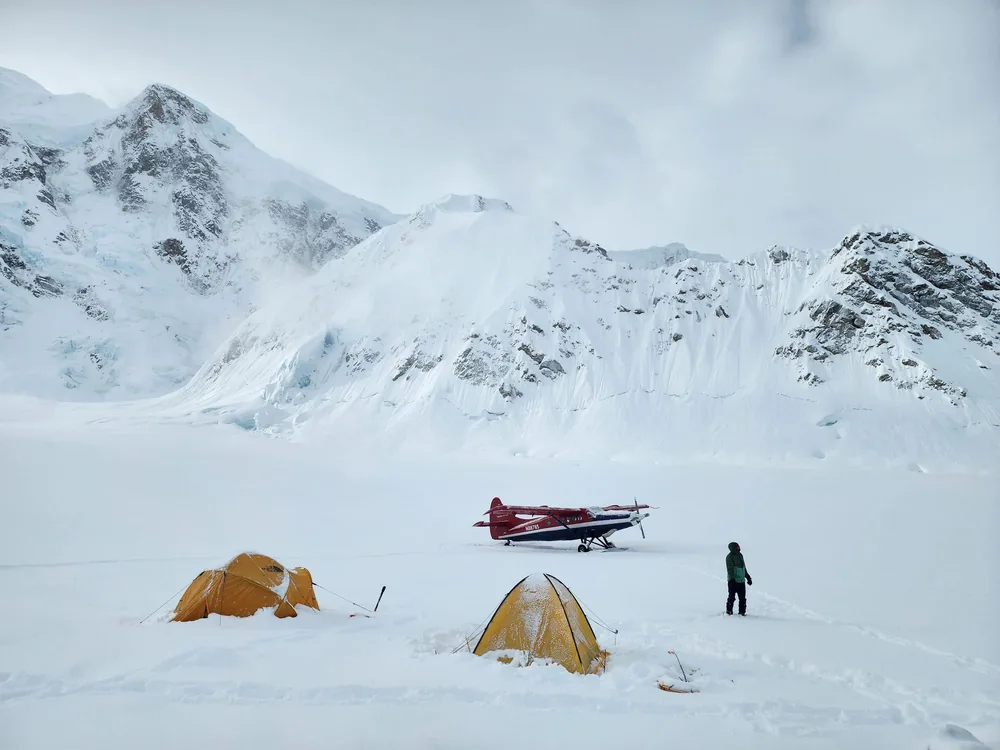
RMI Expeditions now uses “Mount McKinley” in compliance with federal guidelines. Learn why the name changed again in 2025, and where we stand.
McKinley
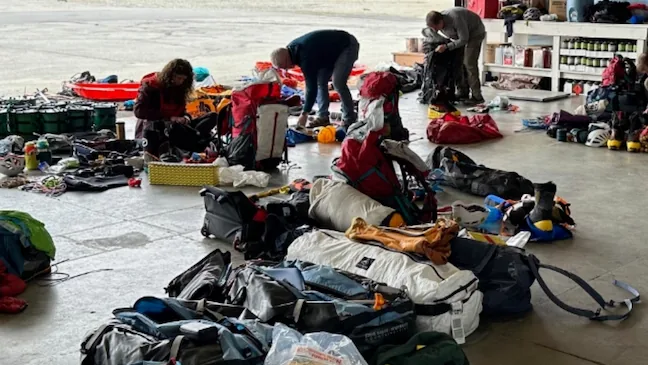
Get expedition-ready with this expert gear guide for climbing McKinley via the West Buttress. From layering systems to sled setups, here’s how to pack smart for North America’s tallest peak.
McKinley
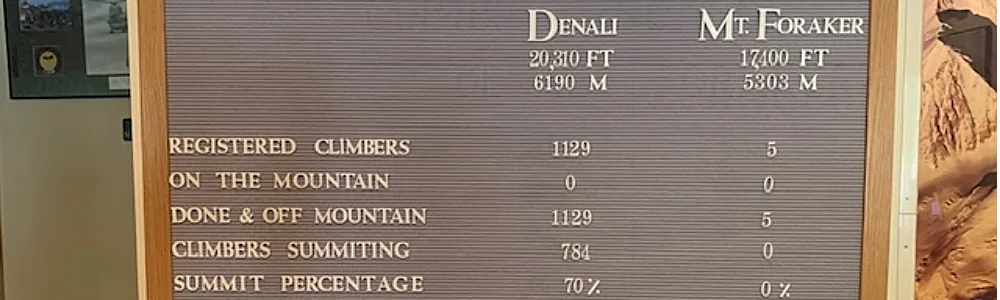
Understand the permit requirements and climbing regulations for McKinley to plan your expedition smoothly and legally. Start planning your adventure.
McKinley
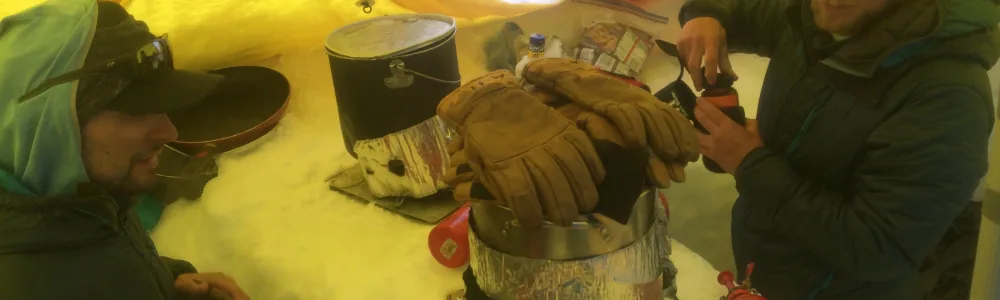
Fuel your McKinley climb with nutrition strategies that support endurance, recovery, and high-altitude performance. Build your foundation now.
McKinley
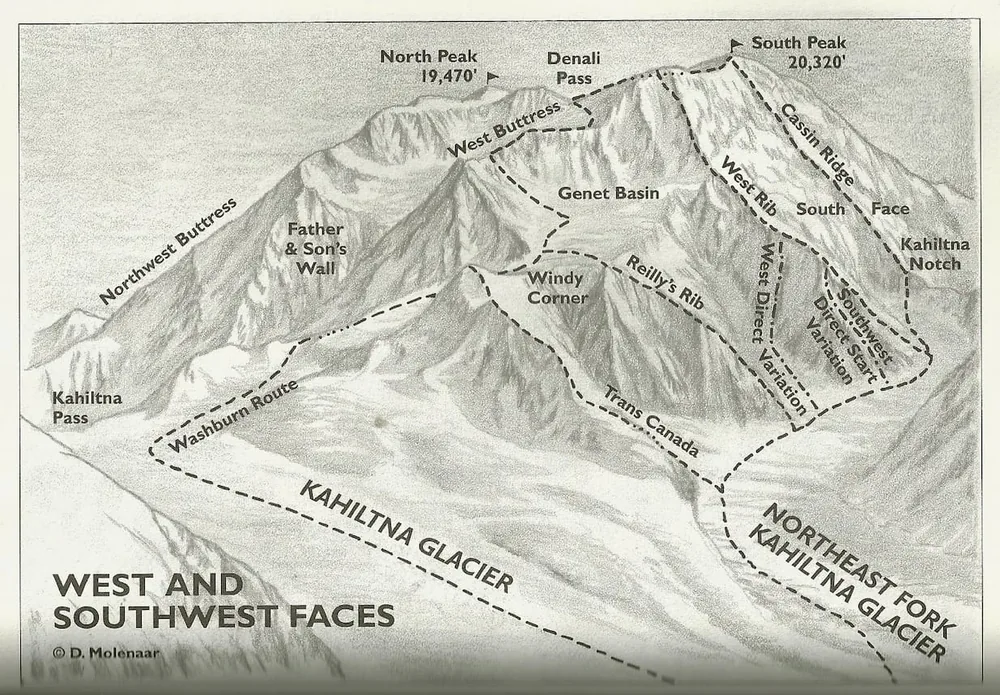
Compare the main climbing routes on McKinley, including the West Buttress and more, to plan your expedition path. Adventure awaits, learn more.
McKinley
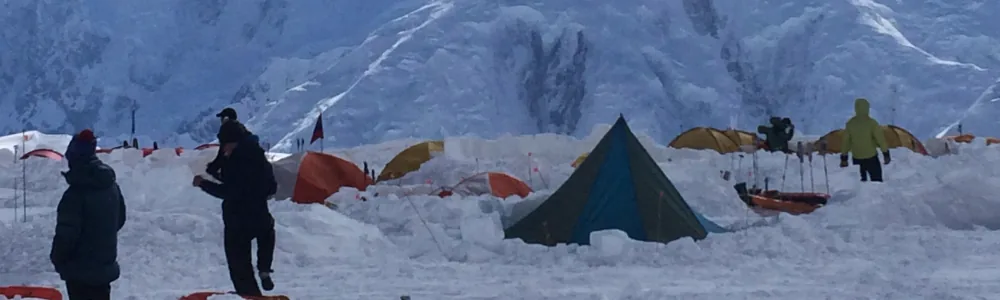
Discover the day-to-day experience of climbing McKinley — from tents to team dynamics to weather challenges. Find out what to expect.
McKinley

Climbers rated RMI with an average of 5 stars across 0 ratings
Climber reviews of the Mt. McKinley West Buttress Expedition reflect the weight of what this program demands and delivers. Participants consistently speak to the professionalism of the guide team, the physical and mental challenge of sustained high-altitude expedition life, and the significance of reaching the summit of North America's highest peak. For many, the experience is defined as much by the weeks on the mountain as by the outcome on summit day.
June 28, 2015
Mt. McKinley - West Buttress Expedition
Having guides help me breakthrough my physical and mental barriers to achieve the summit.
Devin S

June 28, 2015
Having guides help me breakthrough my physical and mental barriers to achieve the summit.
What did you enjoy most?
Having guides help me breakthrough my physical and mental barriers to achieve the summit.
June 28, 2015
Mt. McKinley - West Buttress Expedition
Guides, food was considerably good, itinerary.
Kevin L
June 28, 2015
Guides, food was considerably good, itinerary.
Additional Comments
Only thing I would have wanted is a small tub of Vaseline for my nose and lips when I went back to bed. They were so chapped. Otherwise, your list was spot on.
Additional Comments
Transportation to and from talketna was a bit of a ripoff. 180 to and another 30 back. While I know this is not in your control, just wasn't expecting the added 30.
What did you enjoy most?
Guides, food was considerably good, itinerary.
What needs improvement?
I would have like a conference call with the guides/rmi to go over the trip details, clothing, food.
June 27, 2015
Mt. McKinley - West Buttress Expedition
Incredible fun, safe, great sense of camaraderie and teamwork, leave no trace principles and good mountain values, etc.
Eric H
June 27, 2015
Incredible fun, safe, great sense of camaraderie and teamwork, leave no trace principles and good mountain values, etc.
Additional Comments
Like RMI's focus on environment. Additional leave no trace / minimal impact camping focus is welcome even though it can be inconveniencing at time.
What did you enjoy most?
Incredible fun, safe, great sense of camaraderie and teamwork, leave no trace principles and good mountain values, etc.
What needs improvement?
Not much. Very well run trip. Perhaps the way that lunches are packed could be improved so that the group can work together more on lunches.
June 25, 2015
Mt. McKinley - West Buttress Expedition
The West Buttress and the views. Two of the guides were complete animals when they were working!
Lee S
June 25, 2015
The West Buttress and the views. Two of the guides were complete animals when they were working!
Additional Comments
Office team recommended not bringing overboots along with 6000m boots, even though all three guides were adamant about them. Received first email from lead guide with recommendations <48 hours before trip start.
Additional Comments
No doubt good food (albeit no shortage of BACON!), but I would be willing to bet that RMI can get a little bit more creative given the superstar crews they employ
What did you enjoy most?
The West Buttress and the views. Two of the guides were complete animals when they were working!
What needs improvement?
On some rest days, motivation to work rested largely with a few clients. No doubt caused some friction to get some clients (and a guide) to get out of bed and get after it.Not allowing a weak/injured climber to be towed by two other clients on the summit day.
June 24, 2015
Mt. McKinley - West Buttress Expedition
Denali is the most beautiful place I have ever been. The climb is certainly a lot of work, but it is an amazing place and RMI does a wonderful job of guiding on this amazing mountain. I would recommend to anyone considering climbing Denali that they go with RMI.
Brian P
June 24, 2015
Denali is the most beautiful place I have ever been. The climb is certainly a lot of work, but it is an amazing place and RMI does a wonderful job of guiding on this amazing mountain. I would recommend to anyone considering climbing Denali that they go with RMI.
Additional Comments
The equipment list is good, but I think it could be beefed up a little, especially for a trip like Denali to really make sure people understand what they need to bring. We had several people who needed to do more local shopping once we got to Talkeetna.
Additional Comments
RMI does a wonderful trip. The meals were great. I give Pete credit for feeding us Quinoa and Lentils one day. That was a nice change of pace.The trip was wonderful and I think you guys do a fantastic job on Denali.
What did you enjoy most?
Denali is the most beautiful place I have ever been. The climb is certainly a lot of work, but it is an amazing place and RMI does a wonderful job of guiding on this amazing mountain. I would recommend to anyone considering climbing Denali that they go with RMI.
What needs improvement?
Nothing really...this was an amazing trip.
June 22, 2015
Mt. McKinley - West Buttress Expedition
The guides were excellent. They were mature, very knowledgeable and above all safe.
Joe C
June 22, 2015
The guides were excellent. They were mature, very knowledgeable and above all safe.
Additional Comments
Should discuss crampon fit with overboots (i.e., the crampons that have over-the-toe big plastic bails) vs. a standard step-in crampon. Also, bring snowshoe "tails" if you have them.Joe Horiskey is Awesome! He helped me SO much via email and phone calls. He made the RMI experience great. He is a super valueable part of the whole team. Thank you JOE!
Additional Comments
All logistics and transportation were good.The meals were excellent and the guides were chefs! Thank you!
What did you enjoy most?
The guides were excellent. They were mature, very knowledgeable and above all safe.
What needs improvement?
Keep up the pre-trip email. Not only the "canned emails" to the whole group, but having the Joe Horiskey and the guides available for the occasional email was really necessary.
June 15, 2015
Mt. McKinley - West Buttress Expedition
Working and suffering with a great group of guys that marched to the summit and back as a team.
Shannon L
June 15, 2015
Working and suffering with a great group of guys that marched to the summit and back as a team.
What did you enjoy most?
Working and suffering with a great group of guys that marched to the summit and back as a team.
What needs improvement?
Climber option to bring a jet boil stove to have early am coffee or "hots" before the scheduled guide cook time.
June 5, 2015
Mt. McKinley - West Buttress Expedition
I enjoyed the teaching aspect of this trip. As we climbed, we never stopped learning. The guides did an awesome job of preparing us for each phase of the climb.
Chris Q
June 5, 2015
I enjoyed the teaching aspect of this trip. As we climbed, we never stopped learning. The guides did an awesome job of preparing us for each phase of the climb.
What did you enjoy most?
I enjoyed the teaching aspect of this trip. As we climbed, we never stopped learning. The guides did an awesome job of preparing us for each phase of the climb.
What needs improvement?
I had no issues with this trip. An awesome experience!
July 21, 2014
Mt. McKinley - West Buttress Expedition
Just being in the Alaska range and on Denali with an awesome team of guides and climbers
Paul K
July 21, 2014
Just being in the Alaska range and on Denali with an awesome team of guides and climbers
What did you enjoy most?
Just being in the Alaska range and on Denali with an awesome team of guides and climbers
What needs improvement?
A little more variety in the food.Work on improving the gear list. "Guide Pick" I have yet to find a guide who picked any of those items.Try to keep rates in check. I view RMI as a premium guide service and as such I am willing to pay more but it is starting to creep out of line in my opinion
July 17, 2014
Mt. McKinley - West Buttress Expedition
Getting to know the guides and pushing myself were both great opportunities this trip provided. Climbing Denali pushed my limits and the guides helped me to do that in a safe way.
Jake W
July 17, 2014
Getting to know the guides and pushing myself were both great opportunities this trip provided. Climbing Denali pushed my limits and the guides helped me to do that in a safe way.
Additional Comments
The equipment list is frustrating, as each guide approaches the mountain in a different way. This means the gear list is different for everyone. It would be far better to work with the individual guide to create an expedition specific list. I ended up buying things I didnt need. Luckily Tyler sent out a few more necessary items in a private email to the group.
Additional Comments
First and foremost, the food was wonderful. I may have eaten better on this trip than I do at home.K2 aviation was great.
What did you enjoy most?
Getting to know the guides and pushing myself were both great opportunities this trip provided. Climbing Denali pushed my limits and the guides helped me to do that in a safe way.
What needs improvement?
Be more stringent about the requirements to join a trip like this. People came in having little to experience with crampons, basic climbing knots, never touched ascenders etc. It was really frustrating to know I would be hooked up to some of these people. I am not some sort of world class climber but I expected more from a person going to climb this mountain.
July 17, 2014
Mt. McKinley - West Buttress Expedition
I most enjoyed the experience of being in the Alaska Range, flying into and out of the glacier, the views from the various camps, and the general vibe of the place.
Will I
July 17, 2014
I most enjoyed the experience of being in the Alaska Range, flying into and out of the glacier, the views from the various camps, and the general vibe of the place.
Additional Comments
Everything was handled smoothly. I really appreciated the thorough equipment list. I suggest updating the food suggestions, however. The guidance there was not very good - not enough general theory provided, and we need more examples of previous food packages brought on the trip.
Additional Comments
Denali Overland was sufficient, I suppose there aren't many other options. It didn't exactly feel "professional" - the driver was a bit erratic at times.The meals on the trip started out incredible - but after the second time eating each of the meals it became difficult to stomach them. I understand that this is an inevitable problem, and I am not sure what the solution is - but near the end I could hardly swallow the meals due to the overexposure to certain tastes (particularly: bacon, pasta, creamy cheeses). This only applies to the dinners - the breakfasts were consistently excellent.
What did you enjoy most?
I most enjoyed the experience of being in the Alaska Range, flying into and out of the glacier, the views from the various camps, and the general vibe of the place.
What needs improvement?
The only thing I can think of is to somehow improve the variety in the dinners.
July 16, 2014
Mt. McKinley - West Buttress Expedition
The entire process was great. I enjoyed the people I climbed with most.
David S
July 16, 2014
The entire process was great. I enjoyed the people I climbed with most.
Additional Comments
A very minor suggestion ... I am not sure how to implement this but I wish there was a better way to coordinate the purchase of extra group gear for the team. For example, the equipment list recommends that each team member bring an extra pair of sunglasses, an extra spoon and a solar charger.For example in my case with my two sons and I we probably could have bought and shared one extra pair of sun glasses, one extra spoon, etc.
What did you enjoy most?
The entire process was great. I enjoyed the people I climbed with most.
What needs improvement?
RMI runs an excellent program.
July 3, 2014
Mt. McKinley - West Buttress Expedition
With the support of Jake, Leon and Katie I was able to work through the challenges associated with an expedition climb - specifically how to breath properly and the rest step. It was incredibly satisfying to go from feeling like I would not succeed to making it to the summit of McKinley. I would not have been able to do that without the awesome RMI guides.
George R
July 3, 2014
With the support of Jake, Leon and Katie I was able to work through the challenges associated with an expedition climb - specifically how to breath properly and the rest step. It was incredibly satisfying to go from feeling like I would not succeed to making it to the summit of McKinley. I would not have been able to do that without the awesome RMI guides.
What did you enjoy most?
With the support of Jake, Leon and Katie I was able to work through the challenges associated with an expedition climb - specifically how to breath properly and the rest step. It was incredibly satisfying to go from feeling like I would not succeed to making it to the summit of McKinley. I would not have been able to do that without the awesome RMI guides.
What needs improvement?
Better information and more detailed explanations around preferred choices on the equipment list.
July 3, 2014
Mt. McKinley - West Buttress Expedition
As always, I enjoyed unplugging from the world for a bit and spending time playing in the snow with some fairly diverse people who share the same interest.
Dwight R
July 3, 2014
As always, I enjoyed unplugging from the world for a bit and spending time playing in the snow with some fairly diverse people who share the same interest.
Additional Comments
I chose to climb with Tyler again because I previously climbed with a team that benefitted from his good decision making and attention to detail. I have climbed all over the world with many guides and guide services and I haven't encountered anyone who knows his environment better than Tyler knows the Denali area. He truly has a sixth sense about the area. He made sure that the climb was safe and fun which equals a successful outing by my measure.
What did you enjoy most?
As always, I enjoyed unplugging from the world for a bit and spending time playing in the snow with some fairly diverse people who share the same interest.
July 3, 2014
Mt. McKinley - West Buttress Expedition
The beauty and awesomeness of Mt Mckinley and I'm hoping I will be able to return someday.
David J
July 3, 2014
The beauty and awesomeness of Mt Mckinley and I'm hoping I will be able to return someday.
Additional Comments
I cannot thank or repay the debt I owe Tyler Jones and everyone else who help me get off the mountain. I was amazed and humbled by all their effort they put forth in helping me get safely off. Tyler showed great leadership and I hope if I get my heart condition taking care of that I will be able to climb with him again. Thank you for a life time adventure Tyler although it was not how I planned it ending I had a great time up to the point of the basket ride off the mountain. Which by the way I'm still having nightmares about and never want to do that again, longest ride of my life.
What did you enjoy most?
The beauty and awesomeness of Mt Mckinley and I'm hoping I will be able to return someday.
What needs improvement?
Never put me in a basket hanging from a helicopter again, just kidding but that is something I never want to ever experience again.
Sorry! there are no available dates that meet your current criteria
You might consdier one of these trips instead:
Mt. Rainier - Four Day Climb
May 5, 2026
Guides: Jack Delaney, Jess Wedel, Calvin Jiricko
Mt McKinley - West Buttress Expedition
May 5, 2026
Mt. Rainier - Four Day Climb
May 5, 2026


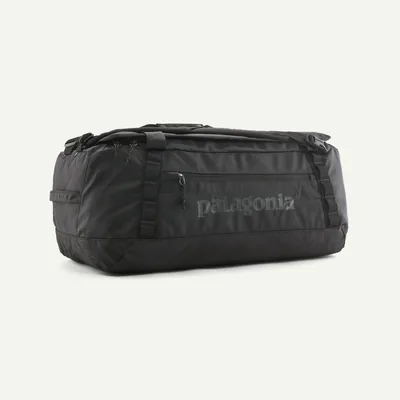
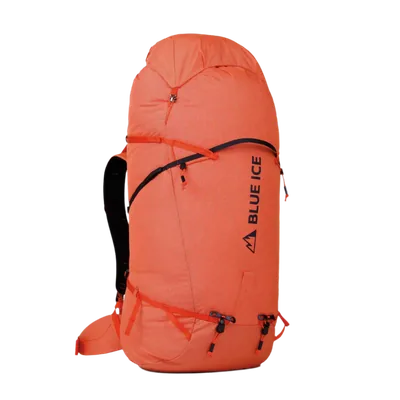
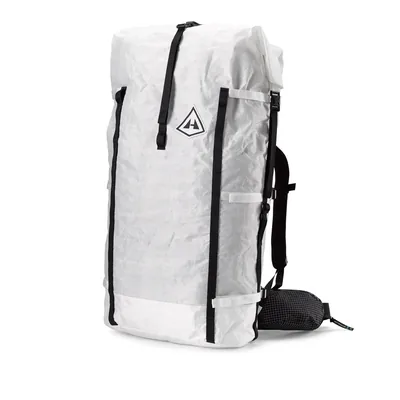
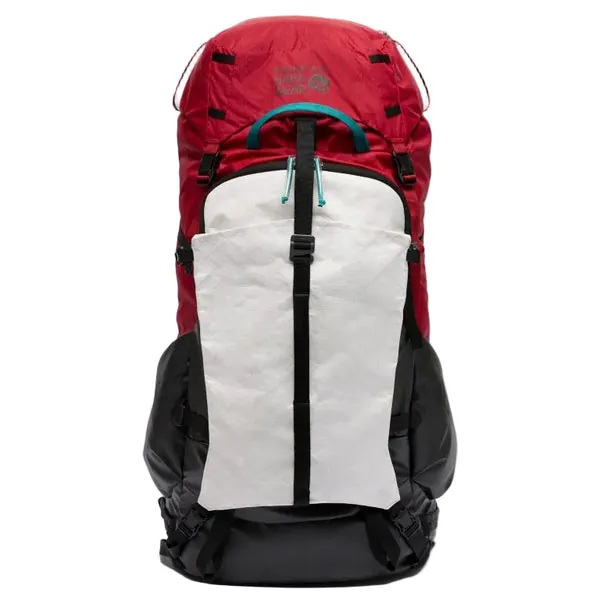
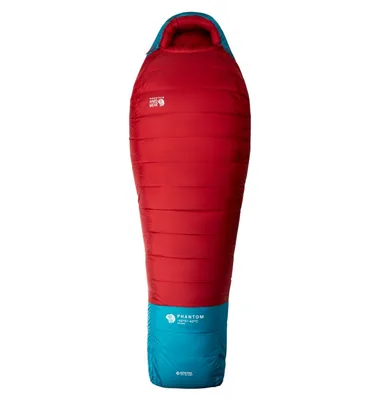
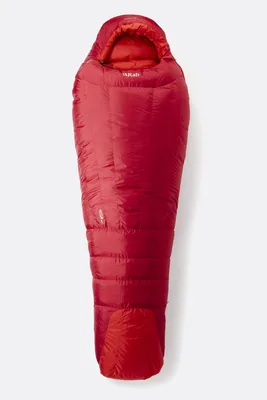
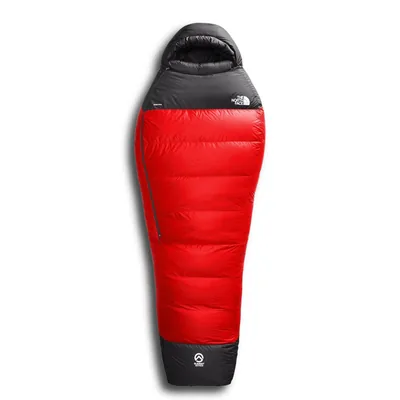
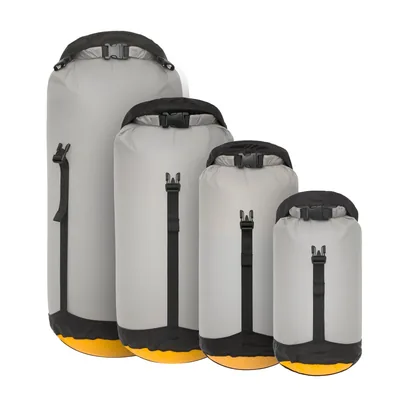
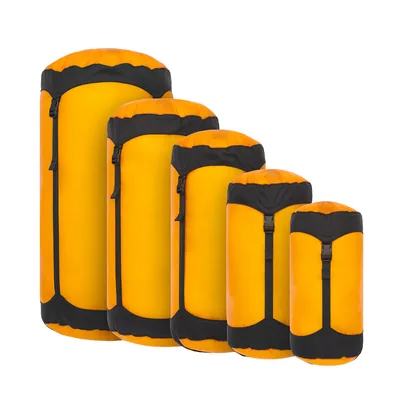
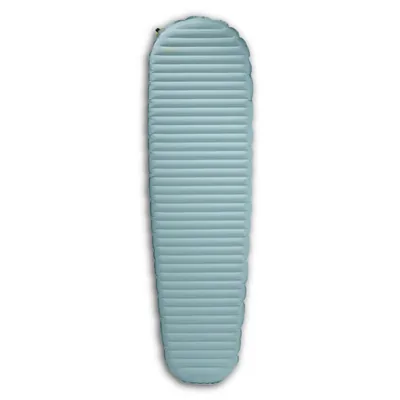
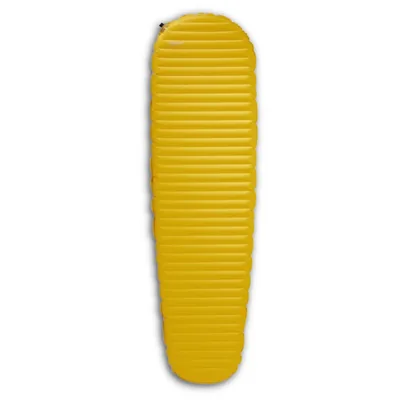
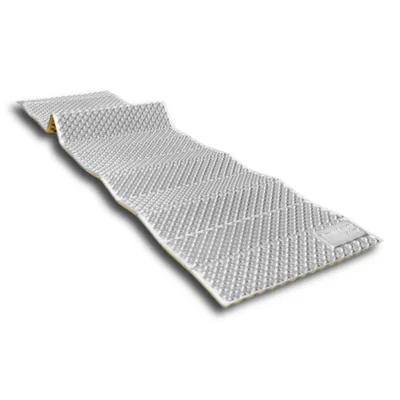
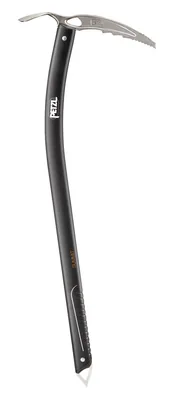
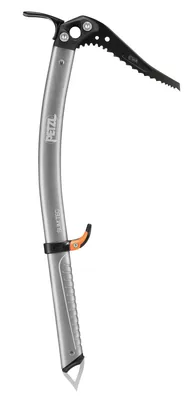
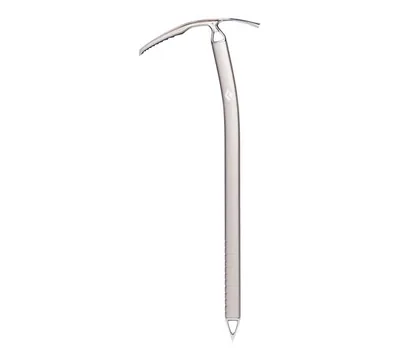
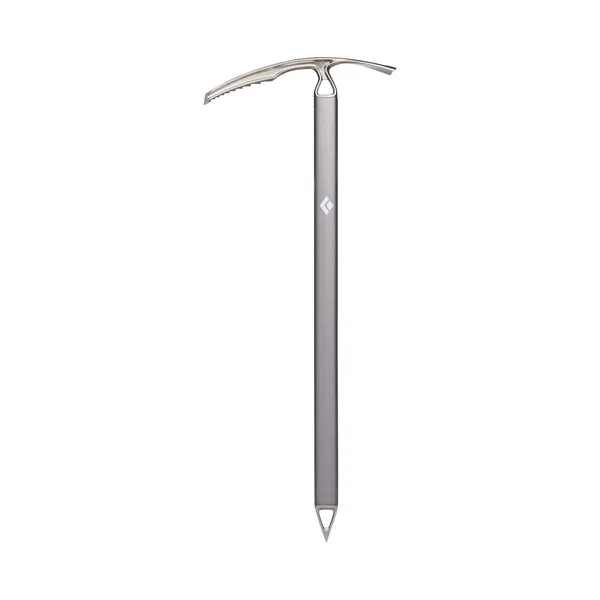
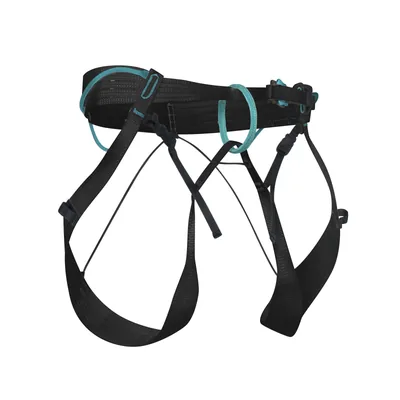
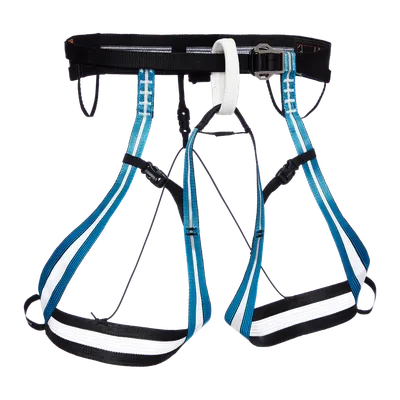
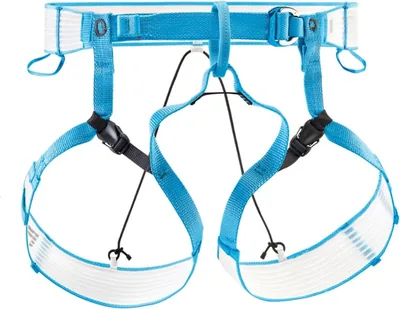
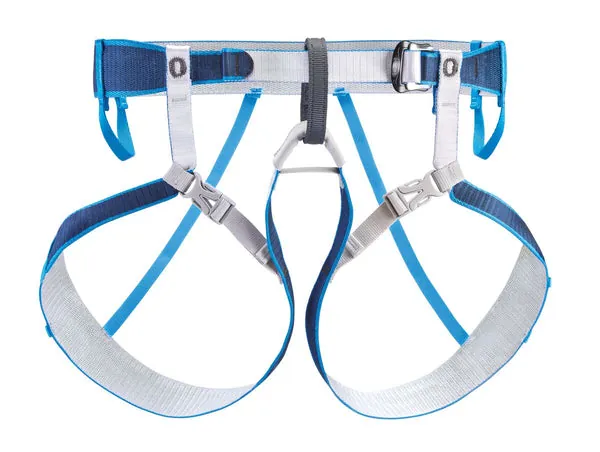
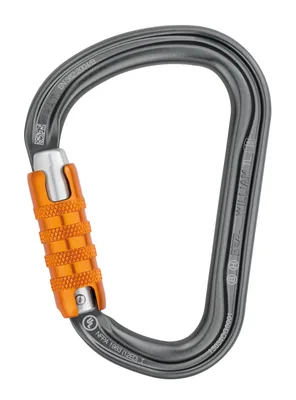
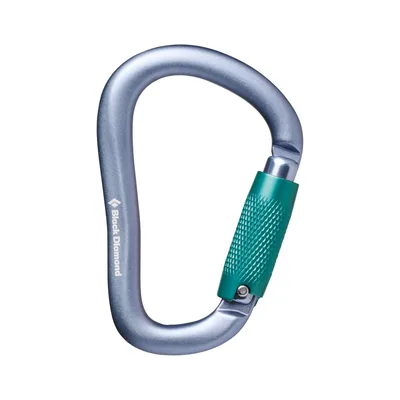
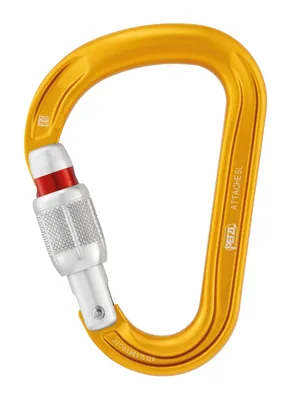
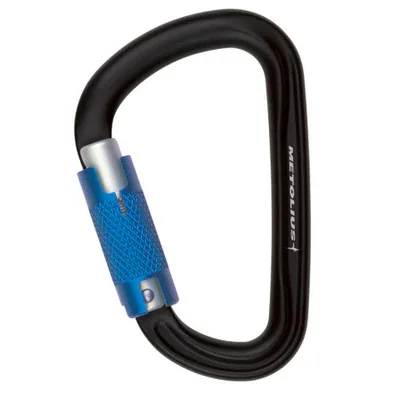
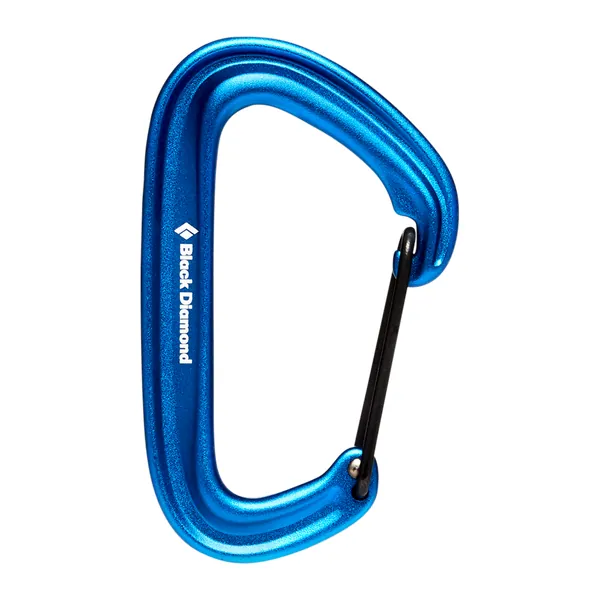
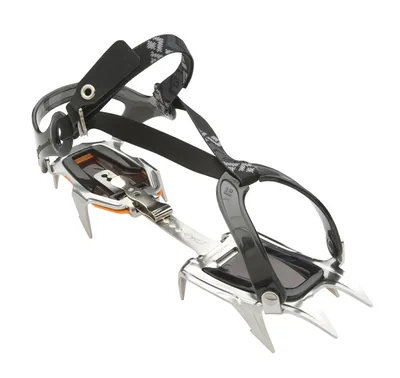
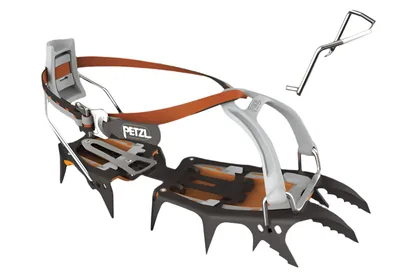
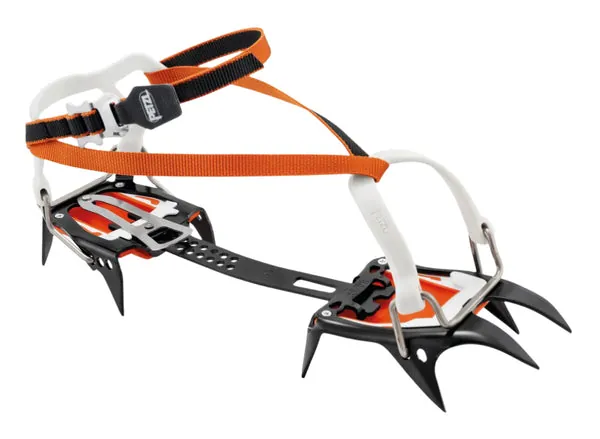
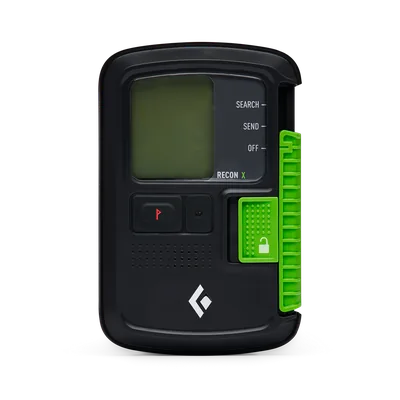
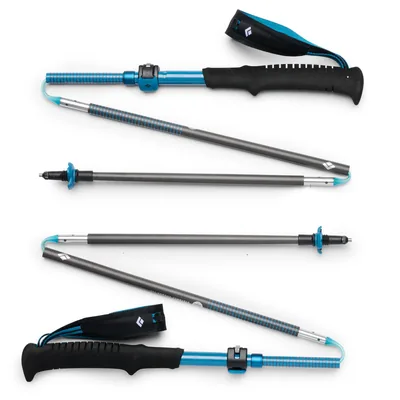
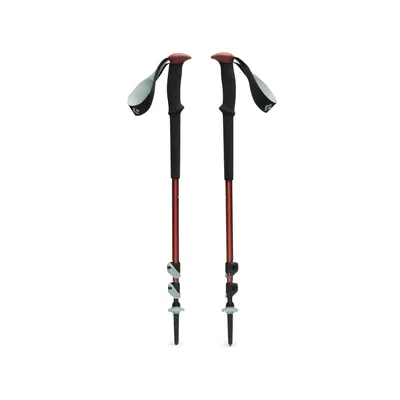
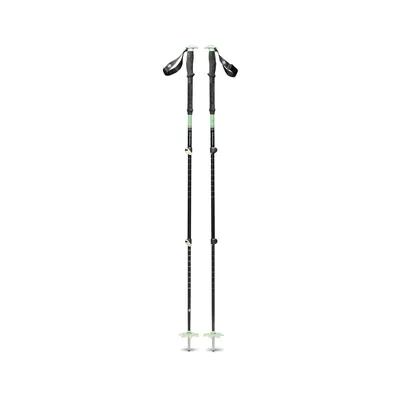
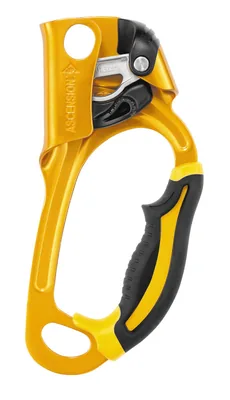
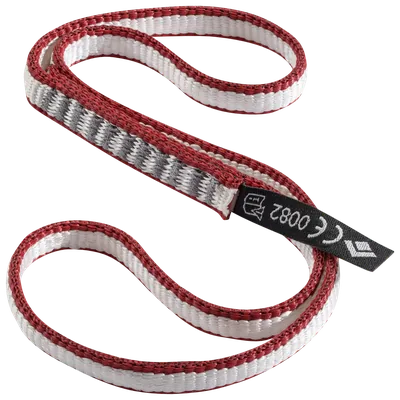

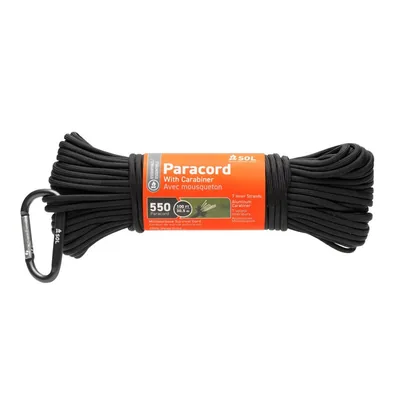
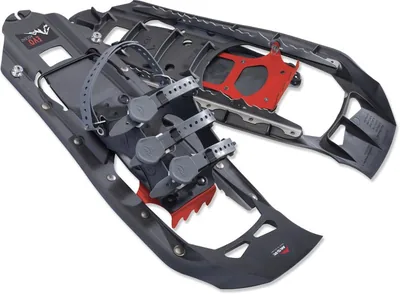
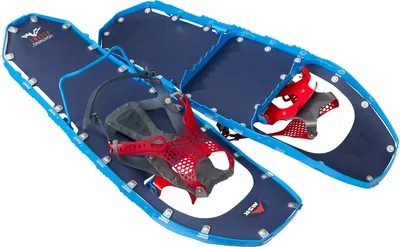
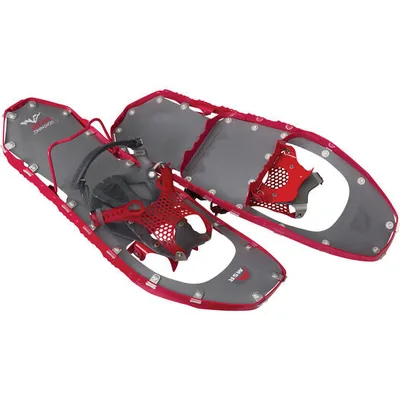
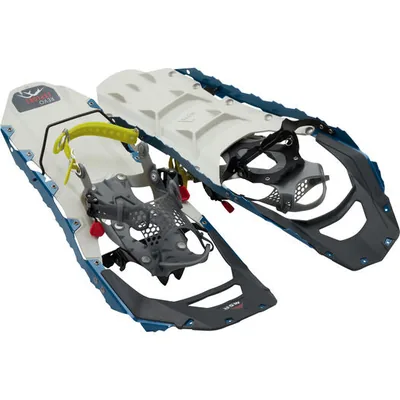
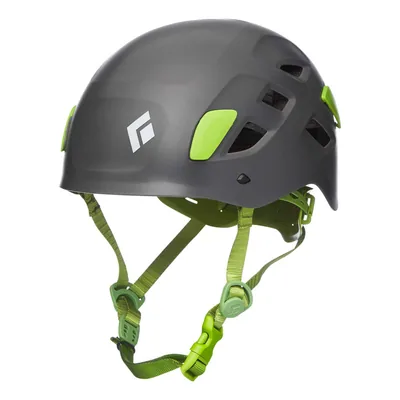
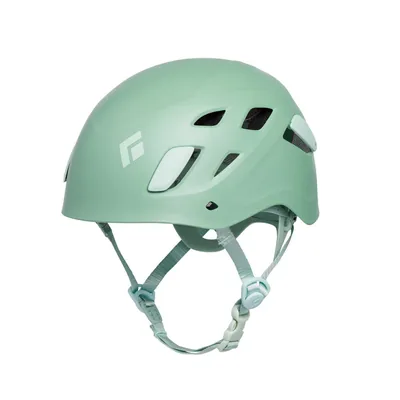
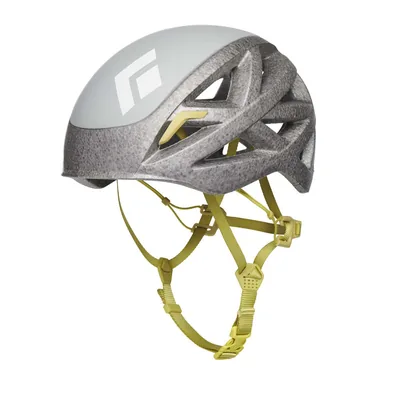
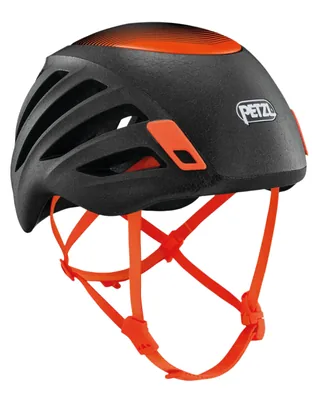
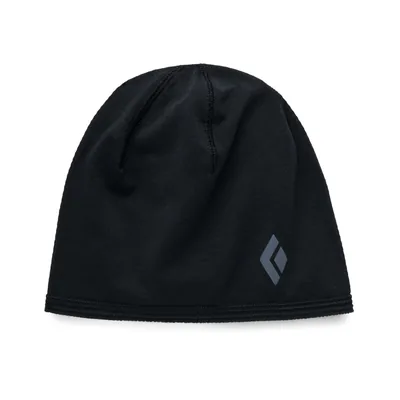
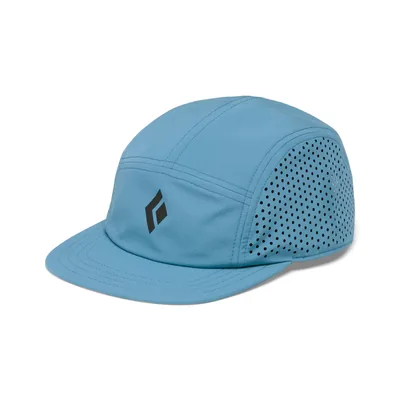
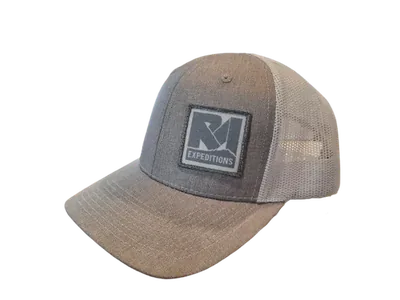
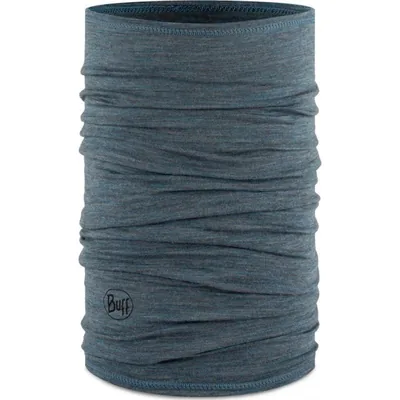
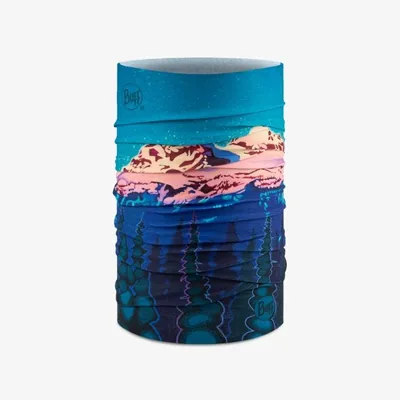
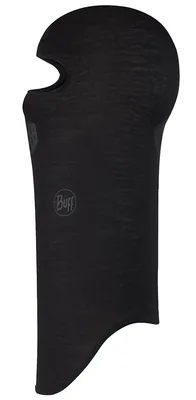
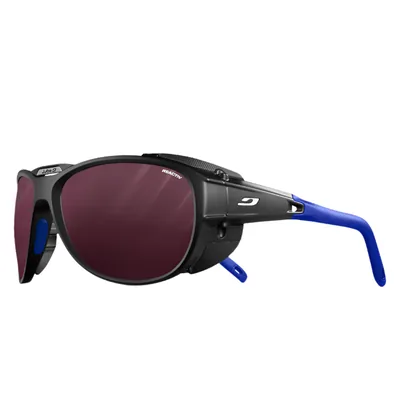
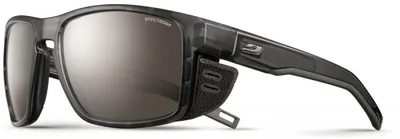
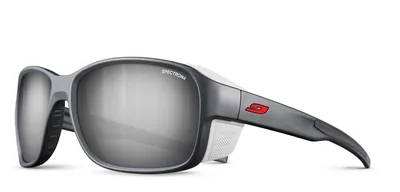
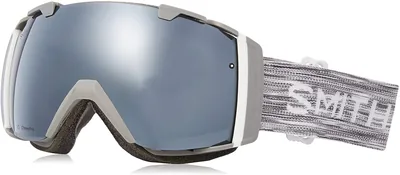
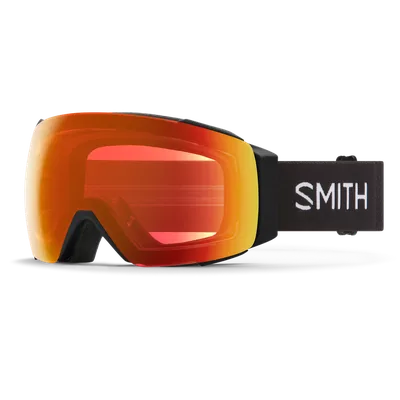
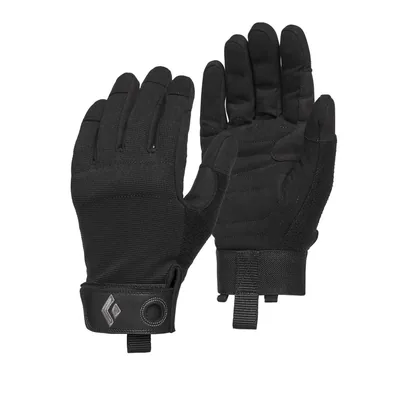

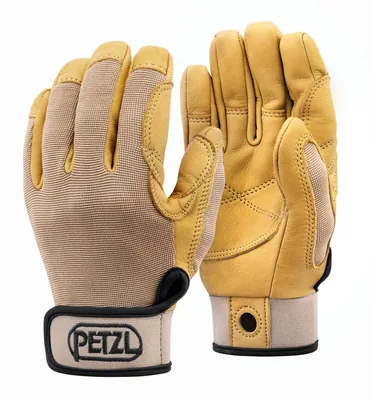
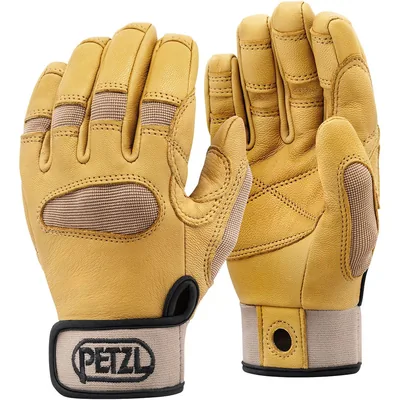
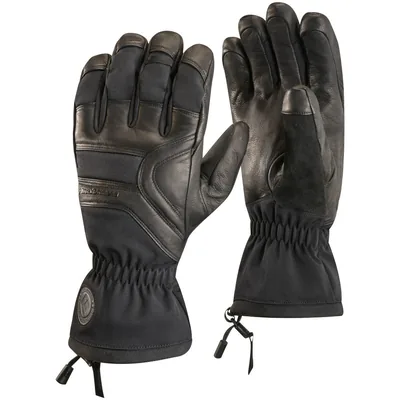
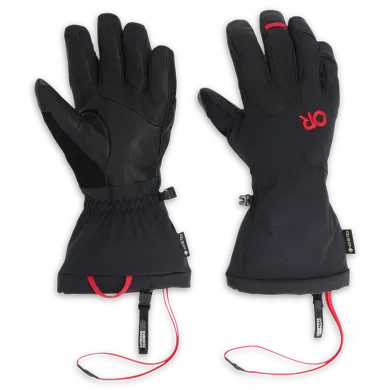
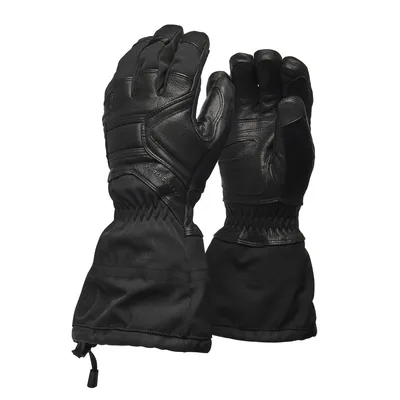
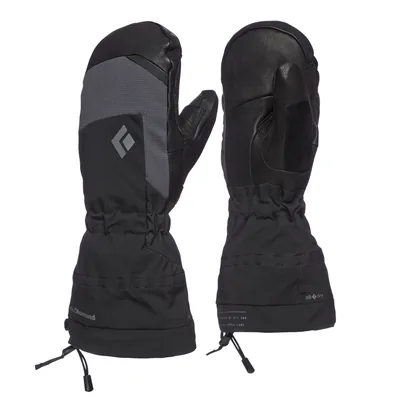
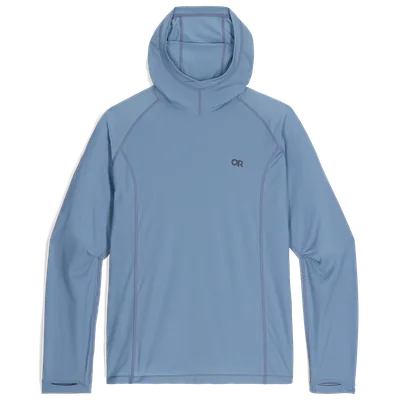
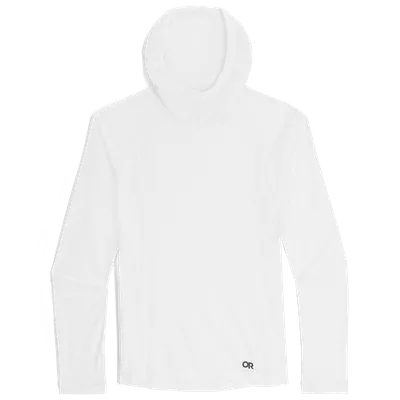
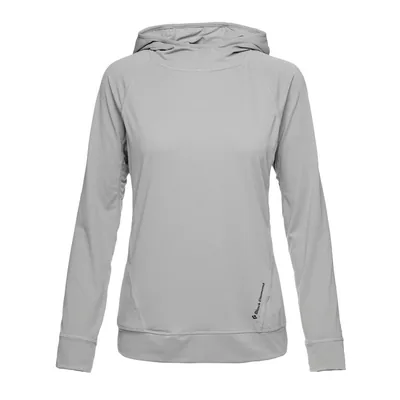
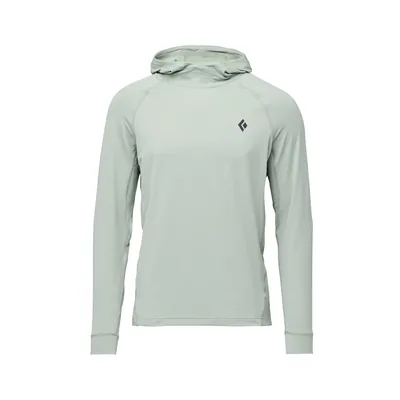
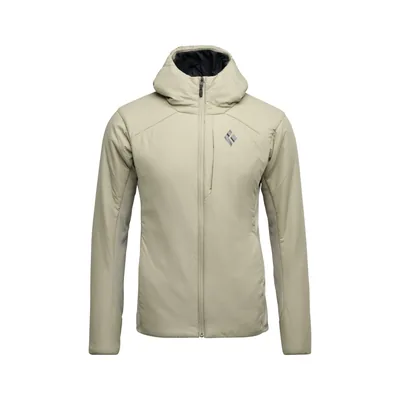
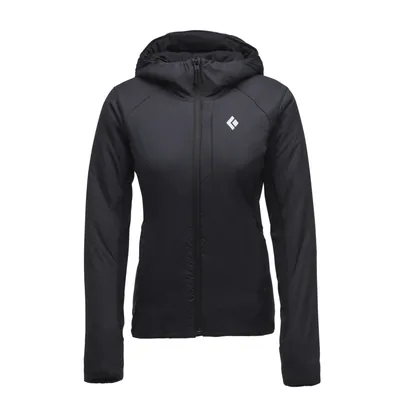
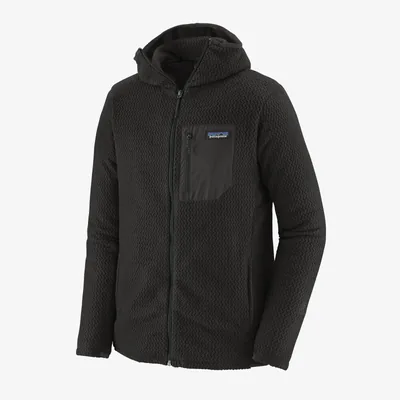
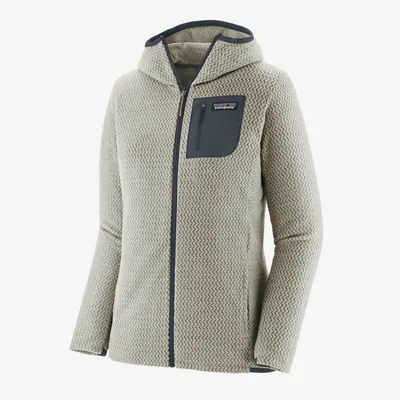
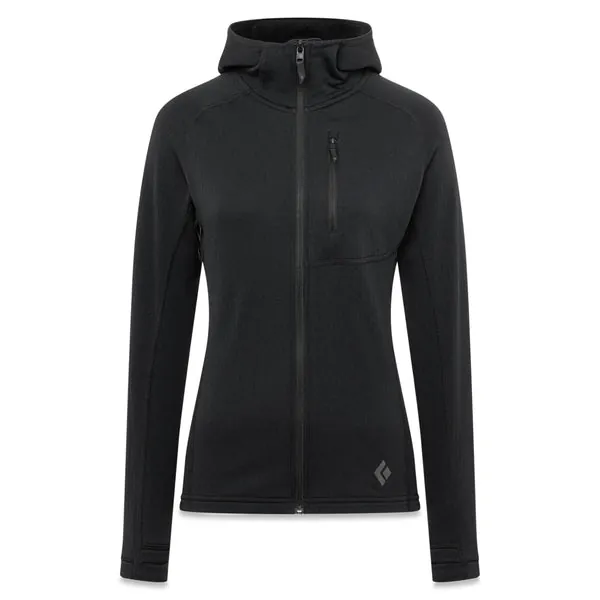
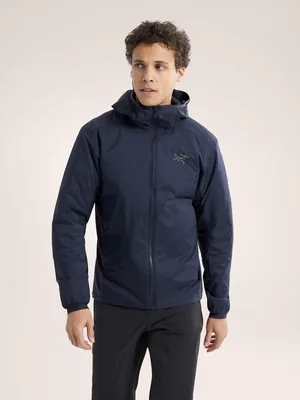
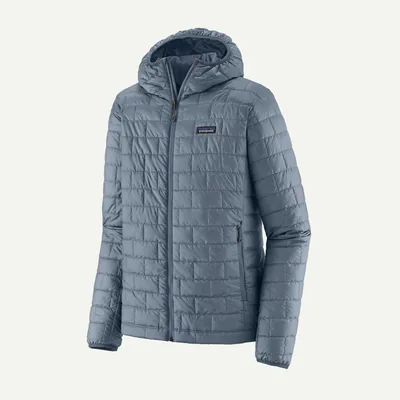
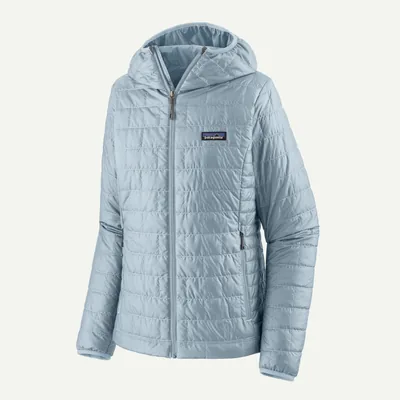
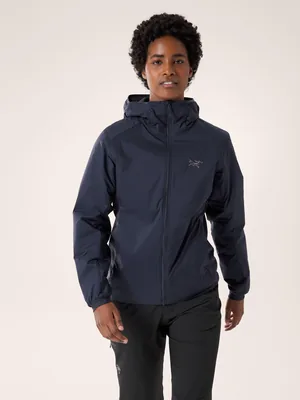
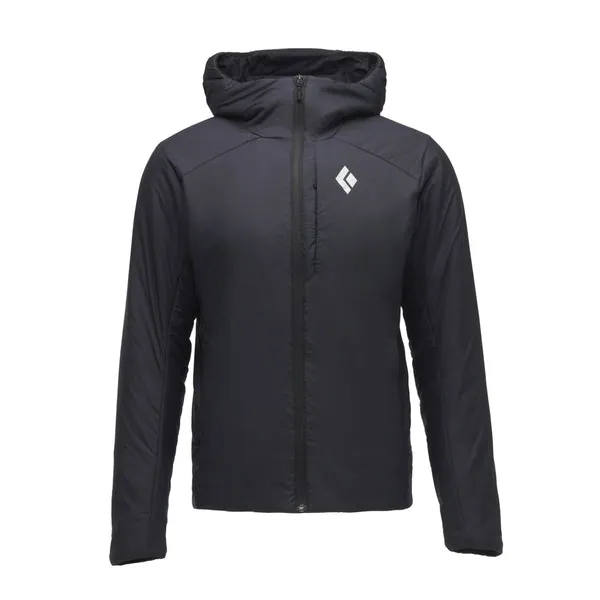
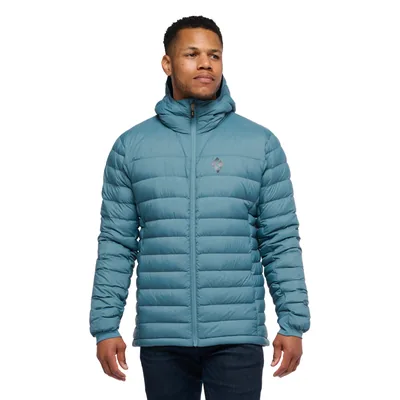
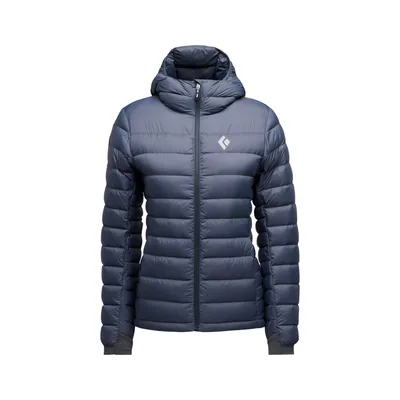
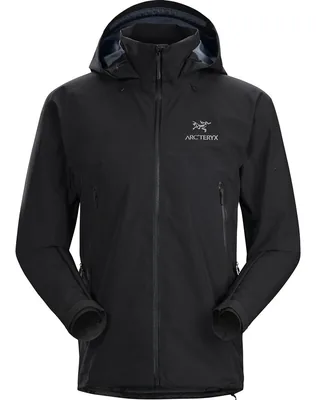
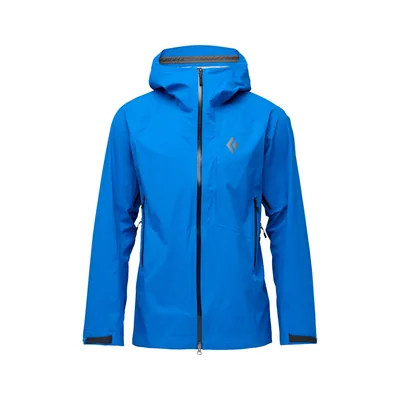
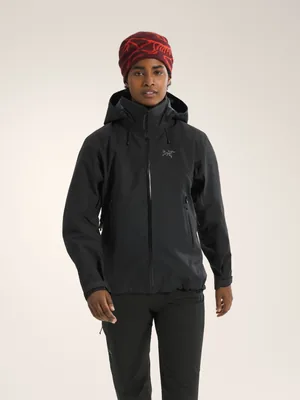
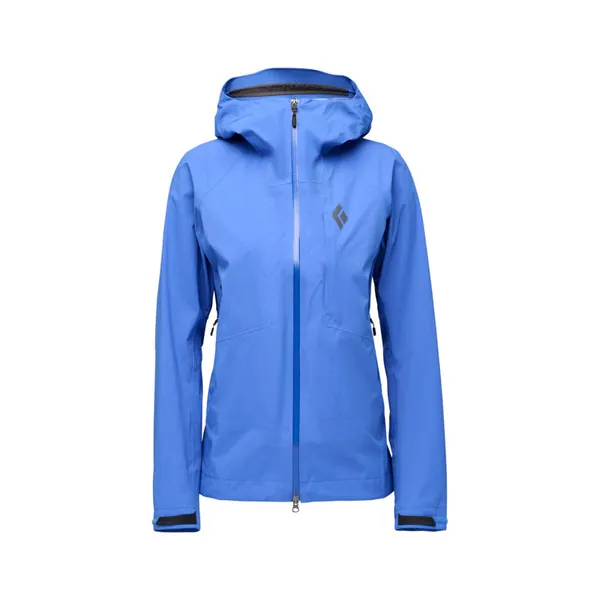
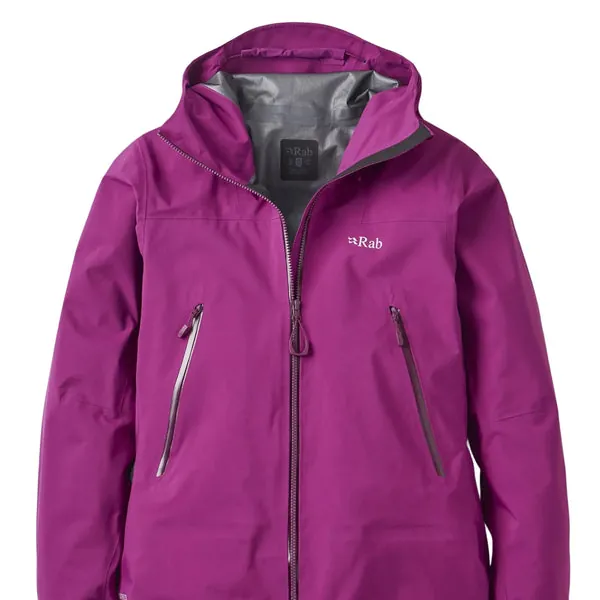
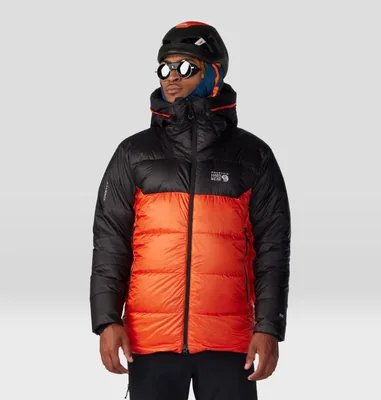
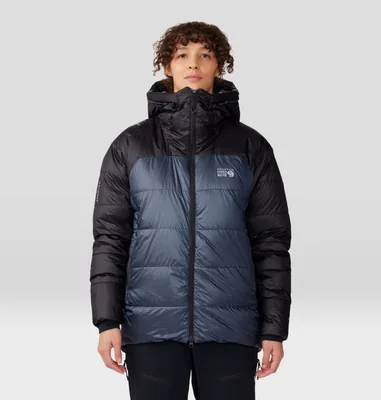

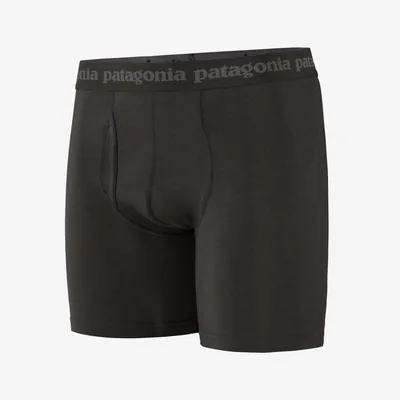
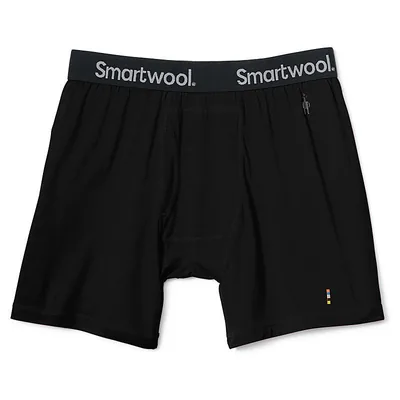
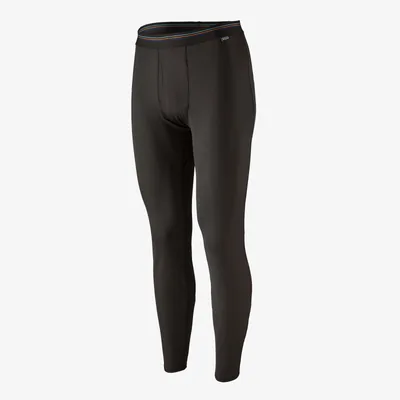
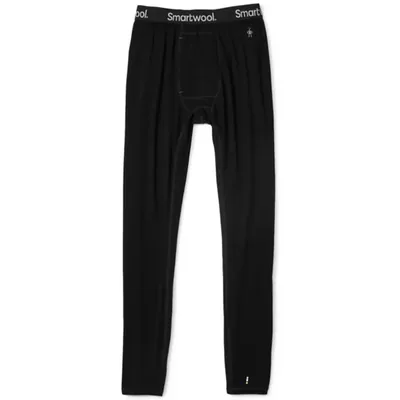
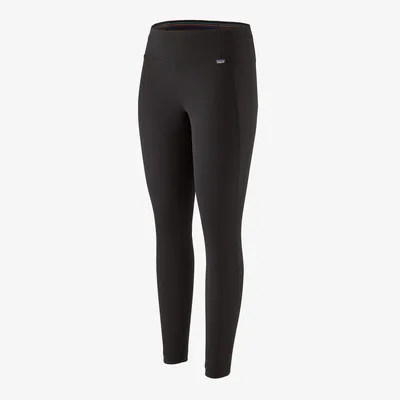
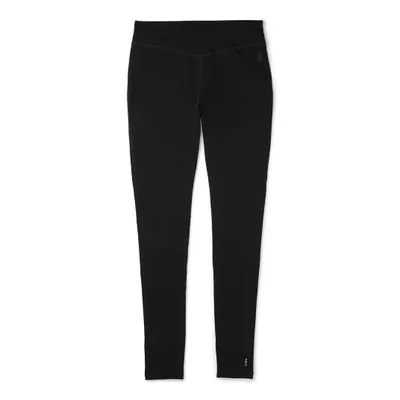
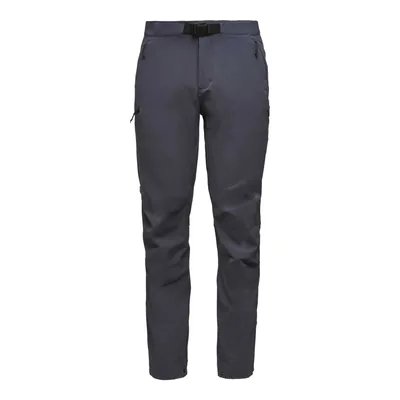
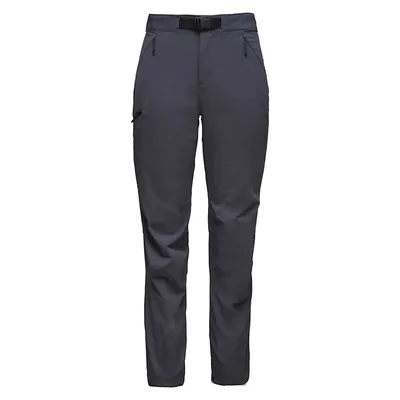
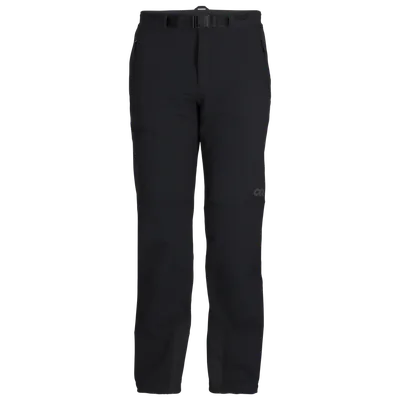
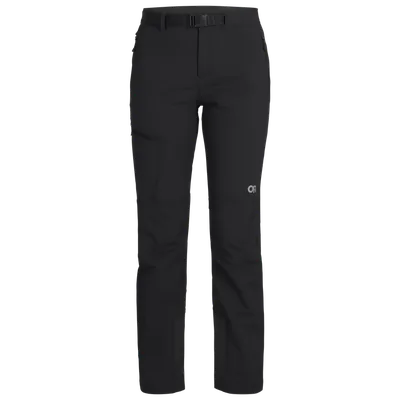
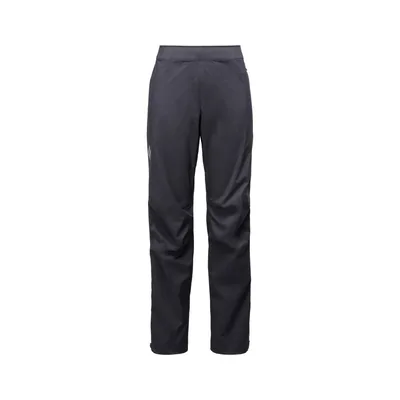
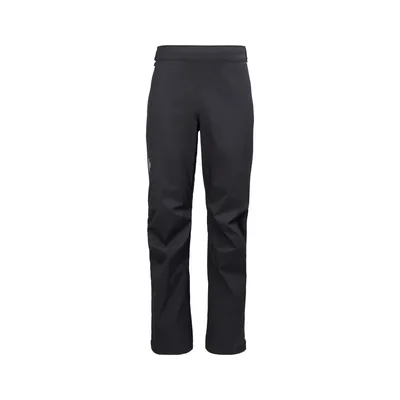
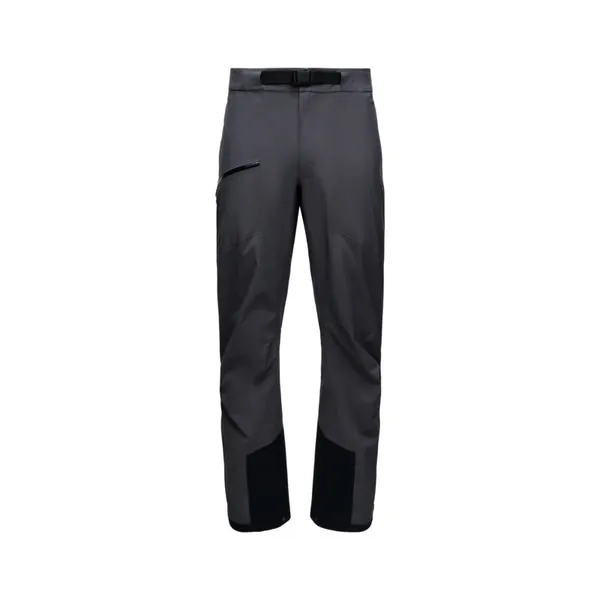
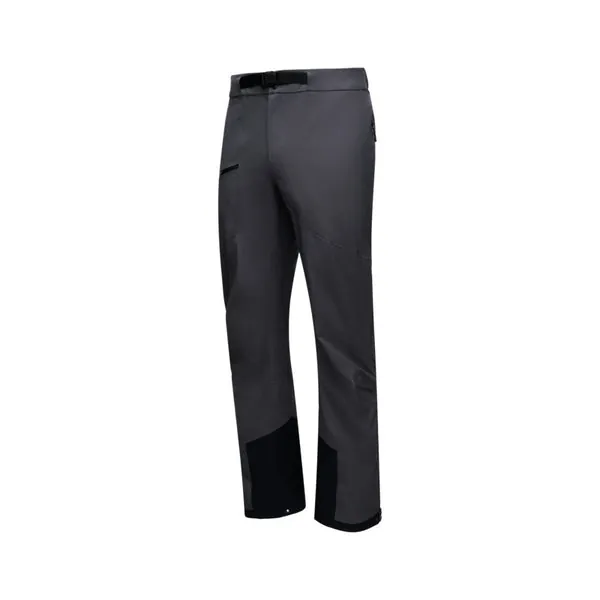
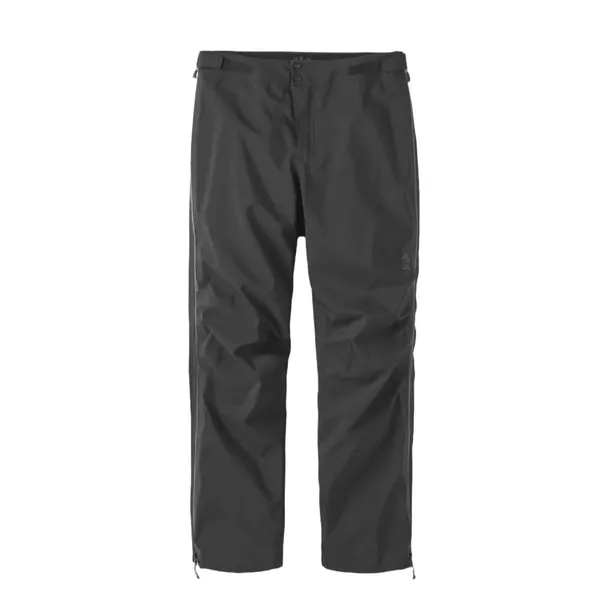
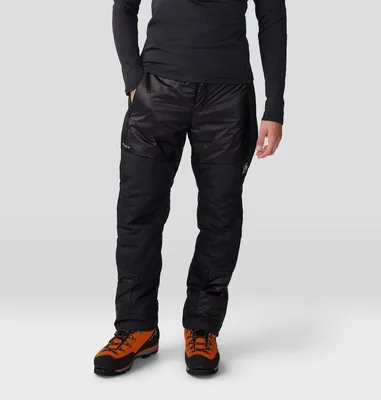
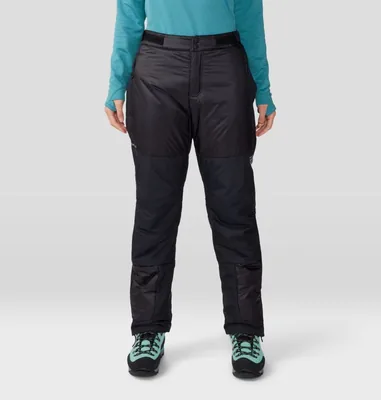
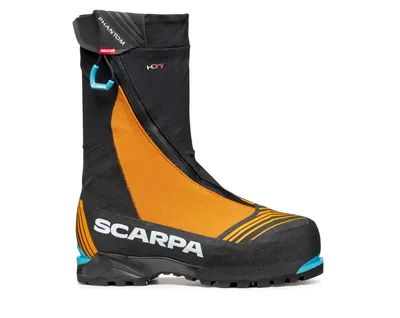
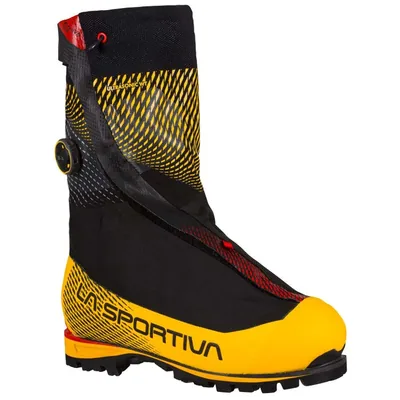
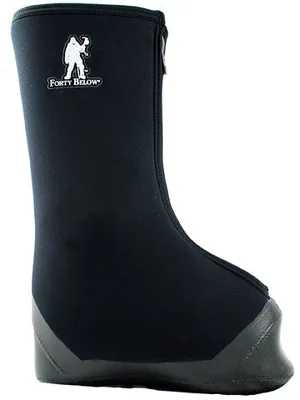
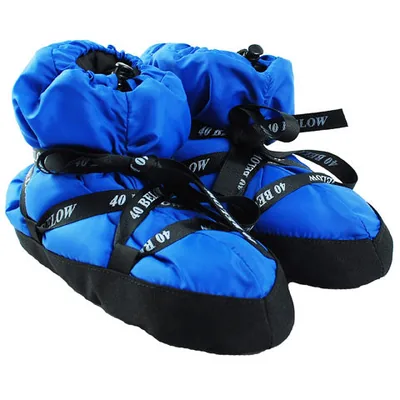
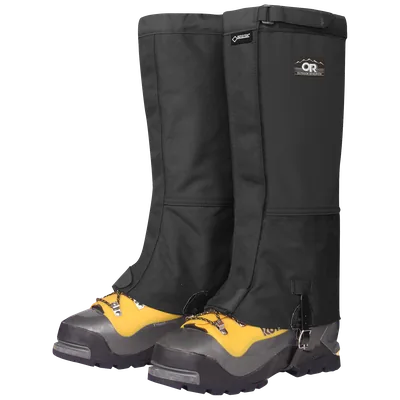
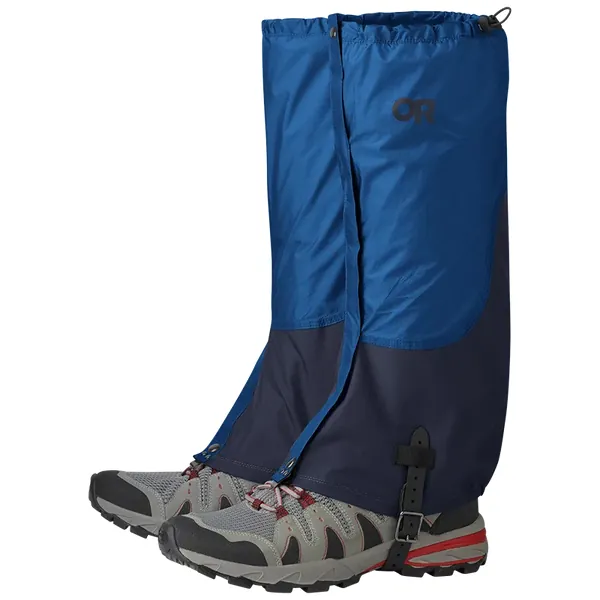
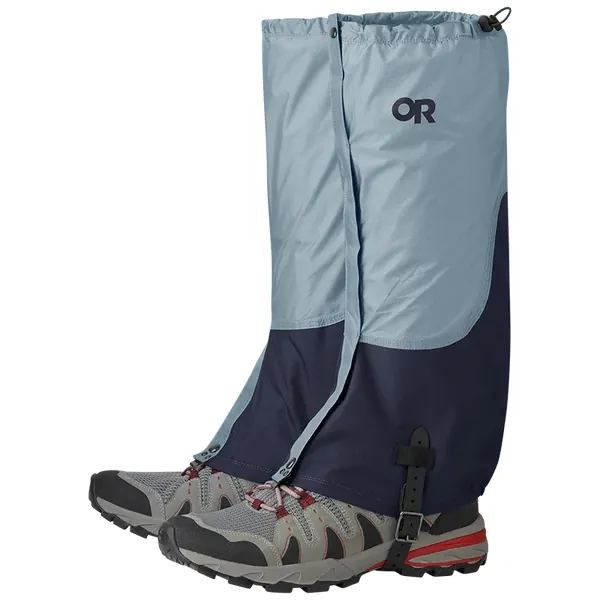
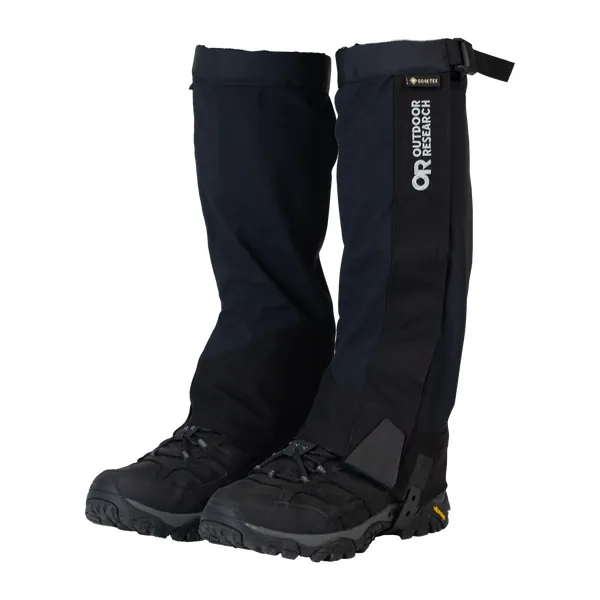
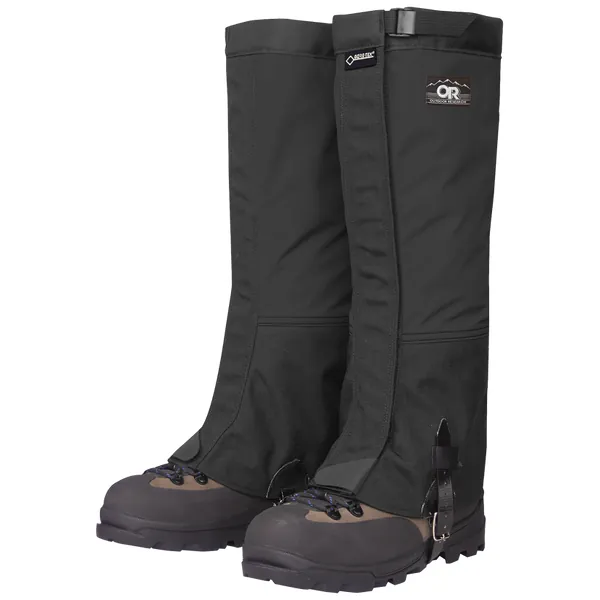
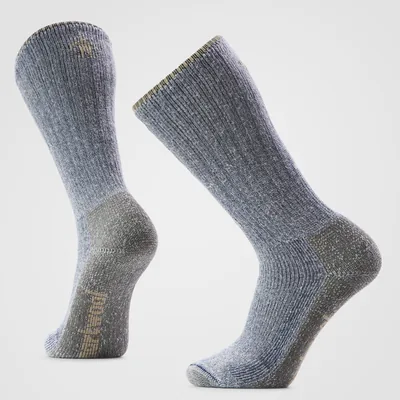
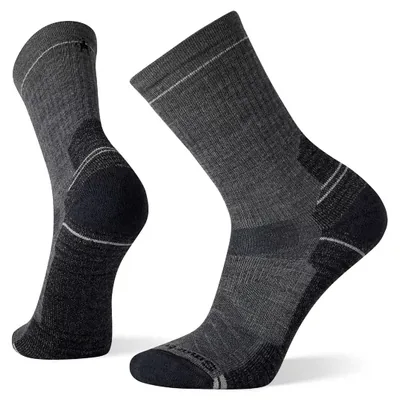
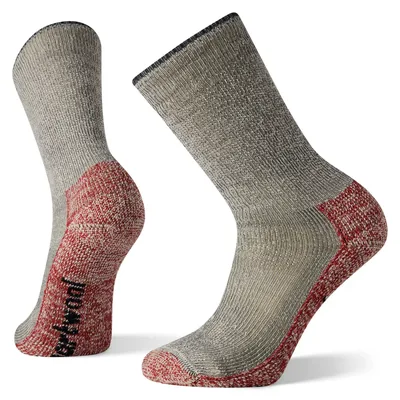
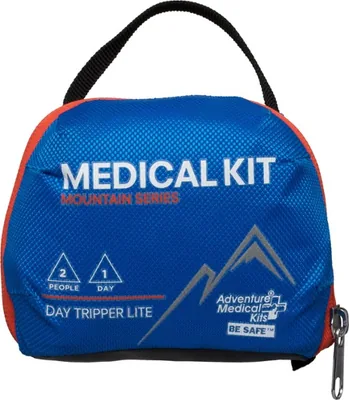
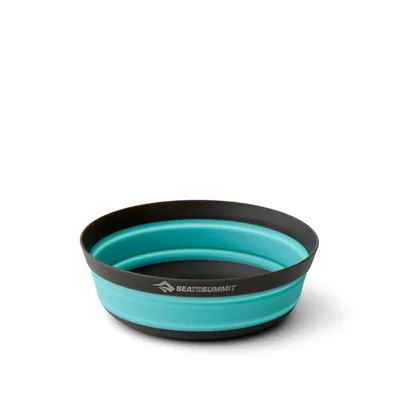
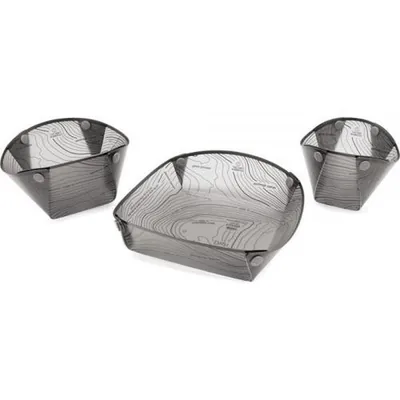
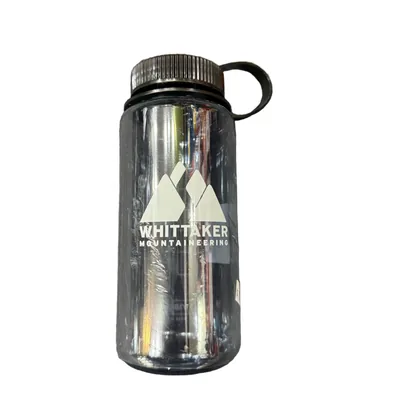
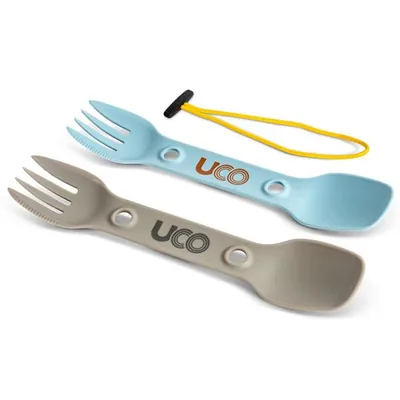
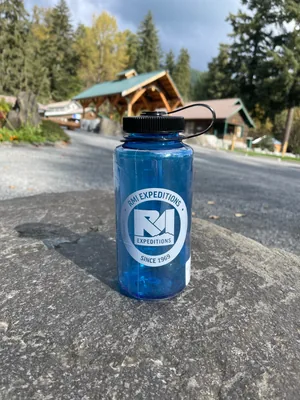
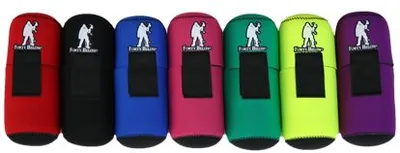
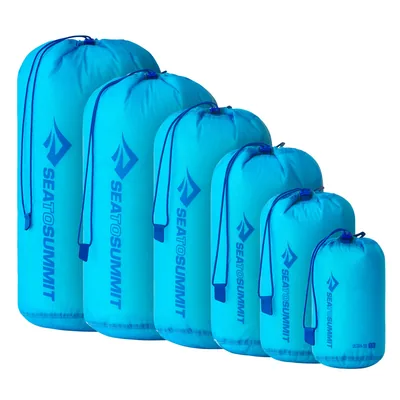
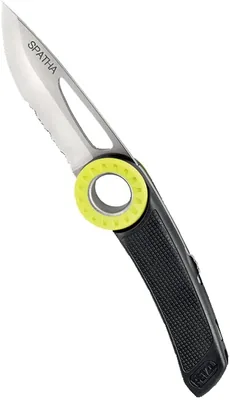

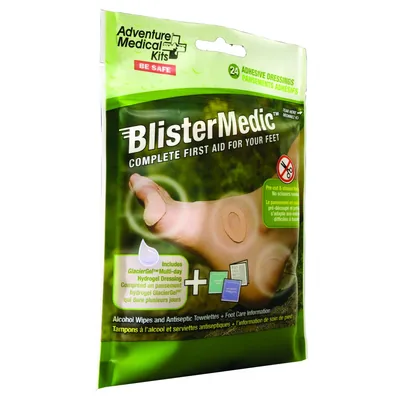




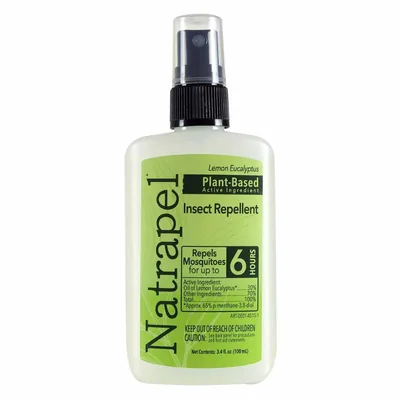
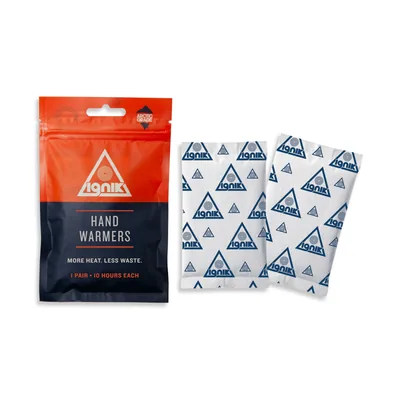
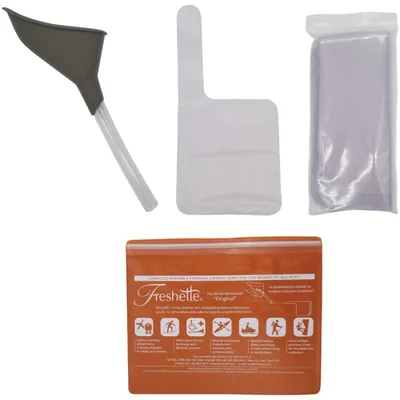

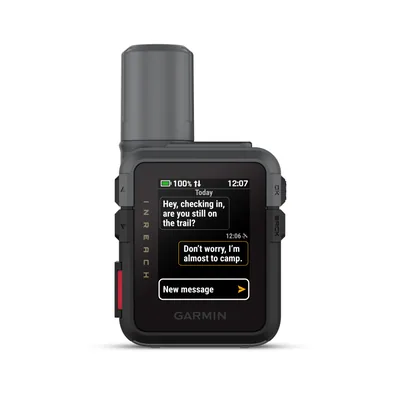
Additional Comments
I emailed a gear question to the office team and got a very rapid and useful response.