


Most Popular Entries
Posted by: Eric Frank, Alex Halliday, Erika Birkeland, Tatum Whatford, George Hedreen, Cal Seeley
Categories: Expedition Dispatches Mount Rainier
Elevation: 10,080


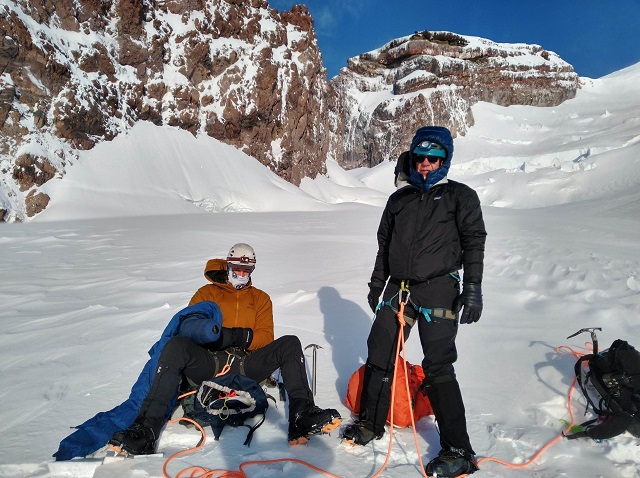
The Five Day Climb June 9 - 13 enjoyed a beautiful sunrise from Ingraham Flats and Camp Muir this morning. Route conditions did not allow the teams to ascend above 11,200' yesterday or today but the team got in some good training and enjoyed two nights at Camp Muir. The teams descended to Paradise arriving around noon today and will conclude their program at Rainier BaseCamp this afternoon.
Photos: RMI Guide Eric Frank
Posted by: Pete Van Deventer, Grayson Swingle, Erika Birkeland, Cal Smith, Keeley Rideout, Emma Lyddan
Categories: Expedition Dispatches Mount Rainier
Elevation: 13,000'
The Mt. Rainier Summit Climb, led by RMI Guides Pete Van Deventer and Grayson Swingle, turned at 13,000' due to an impasse on the route. The team reported light wind and precipitation earlier this morning. They are currently descending to Camp Muir where they will pack up their remaining gear and continue onto Paradise.
Best of Luck and Best of Experience !!
from
Baldev Raj Narang
Rakesh Bala Narang
Varnali Narang
Posted by: Baldev Raj Narang on 7/31/2021 at 8:26 am

Sunday, October 10, 2021 - 5:46 pm PT
Greetings from La Malinche! Today the team moved away from the busy streets of Mexico City to the mountains that surround it. We got great views of our future objectives, Ixta and Orizaba on our drive today across the Mexican country side.
Everyone did great hiking up to 13,700ft on La Malinche, a dormant volcano. We had sunny skies today and no wind.
Tonight we are going to feast on some authentic Mexican food and stay in cabanas at 10,000ft. The cabanas we are staying in were once used by the Mexican Olympic team for their training. The stars are out and it is a beautiful night up here.
That’s all for now, tomorrow we move to the base of Ixta.
Sounds like a pretty perfect start to your adventure! Here’s to tomorrow and more great memories!
Posted by: Constance Roth on 10/10/2021 at 8:35 pm
Posted by: Dave Hahn, Jack Delaney, Henry Coppolillo, Tatum Whatford, Axel Ryd, David Shuer
Categories: Expedition Dispatches Mount Rainier
Elevation: 14,410'
Mt. Rainier summit! The teams led by RMI Guides Dave Hahn and Jack Delaney reached the top at 7:13 a.m. They reported clear skies, a light breeze, and smoke to the East. After spending some time at the crater rim marveling in the sights from the highest point in Washington, the team began their descent.
Congrats Dr.Xue!
Posted by: tom on 8/30/2021 at 9:48 am
So exciting, congratulations Galen, Morgan, Paul & Richard!!!!
Posted by: Lori on 8/29/2021 at 9:13 am

While not everybody reached the summit of Aconcagua today, we all soaked in the entire experience. It was a perfect day to simply be in the mountains. Stars illuminating the landscape this morning. A windless day with not a cloud in the sky. Shadows creeping across peaks far in the distance, helping gauge the time of day. It was very easy to be distracted from the strenuous climbing by the surrounding beauty.
Till next time,
RMI Guide Luke Wilhelm
Tim,
Don’t know if you summited or not, but it doesn’t matter. It’s all about the journey and you have been on quite a journey over the last few years! We love you and can’t wait to see you and hear about your adventures. Now, get down and back home safely!
Love,
Dick and Irene
Posted by: Richard & Irene Simpson on 2/7/2022 at 6:51 pm
Congratulations! We’re so proud of all you! What a gorgeous day you must have had… and no matter what the outcome, we know this was a whole team effort. Way to go. Now get back down safely!
Posted by: T and B on 2/7/2022 at 4:07 am


Bill,
I just finished reading your blog (sorry I was a bit late checking the update), and was blown away by the fortitude and conviction you displayed in making your decision.
It had to have been an incredibly difficult one for you to make- and at the same time, NOT. The reasons you listed were, needless to say, all overwhelmingly outweighed the decision to carry on up the mountain. although I’m sure the pull was and is still strong, you showed even greater strength in staying put at Base Camp and “taking one for the team”.
This extra time at Base Camp also provides you with an opportunity to win back the expedition fees via the late night Texas Hold ‘Em winnings you are bound to take in! Don’t forget to play the “Oh woe is me, I’m all alone down here at base camp while my daughter is up there on the summit without me” sympathy card! That should be good for a few extra chips or let you pass on the ante a few times…
Anyway, on behalf of the Benno Group congrats on your achievement. You’re an inspiration to us mere mortals down here at sea level.
See you in August?
Best,
Marc
Posted by: Marc Reiter on 5/11/2011 at 1:38 pm
Bill- I haven’t checked in for awhile. We met in Gorak Shep. I was on the Island Peak team. Just wanted to weigh in. When we all met a few weeks ago, I sensed something pretty unique between you and Sara. The fact that you made the decision you did speaks volumes of the kind of person you are.
Dzum Dzum!
Tim
Posted by: Tim McLaughlin on 5/9/2011 at 10:42 pm
Posted by: Matias Francis, Henry Coppolillo, Daniel May, Ellison Boord, Nick Sinapius
Categories: Expedition Dispatches Mount Rainier
Elevation: 10,080'


The Expedition Skills Seminar - Muir September 8 - 13, 2022 enjoyed a great week of training at Camp Muir. RMI Guides Matias Francis and Henry Copolillo led the team with instruction on ice climbing, crevasse rescue, student led glacier navigation, fixed line travel, intro to multi pitch climbing, rappelling, alpine bouldering, nightly talks about altitude and avalanche awareness. The team is doing a bit more training this morning before starting their descent to Paradise later today. They will conclude their program this afternoon at Rainier Base Camp.
Nice work team!
Posted by: Ed Viesturs, Peter Whittaker
Categories: Expedition Dispatches Vinson Massif
Elevation: 12,400'
_Vinson_(Zoom).png)

Peter Whittaker and Ed Viesturs talk about their move to high camp
Posted by: Casey Grom, Hannah Smith
Categories: Expedition Dispatches Everest BC Trek
Elevation: 11,300'


Hello again everyone back home.
It was another enjoyable day here in the Khumbu Valley, the team woke up to bright beautifully clear skies, and mountains in every direction. We had a nice relaxing breakfast and then decided to visit a Monastery in Thamo. It’s home to female Buddhist Monks that are Tibetan refugees. They apparently escaped over the boarder which is only a few miles away and have made this home like the Sherpa community did some 500+ years ago. When we arrived the nuns were milling about and tending to their greenhouse that they use to grow their vegetables. We purchased a few prayer flags and prayer beads to help support them and then made our way back to Namche for lunch.
Then evening was spent exploring Namche and doing a little bargaining for a few gifts.
All is well and everyone is doing great.
Casey and Crew
Posted by: Hannah Smith, Evan Sather
Categories: Expedition Dispatches North Cascades
Elevation: 9,131'
The Expedition Skills Seminar - Shuksan August 26 - 31 reached the summit of Mt. Shuksan via the Sulphide Glacier today around 11 am PT. RMI Guides Hannah Smith and Evan Sather are leading the six day seminar and reported a beautiful day with a light breeze. Prior to their summit attempt the team conducted basic mountaineering skills training. Their training will continue and expand to include anchor placements, various self and team crevasse rescue techniques, belays, rappelling, knots, route finding and fixed rope travel. Thus giving them sufficient skills to continue their mountaineering persuits.
Congratulations to today's climbers!




We did training ascend on June 11 and went up to 11,000’ around 4 pm. I didn’t see any route conditions that did not allow to go further, I don’t have much experience though. Could you give more details on what route conditions stopped the group?
Posted by: Nick R on 6/15/2022 at 12:55 pm
What were the route conditions that did not allow you to go above 11k? Avalanche? Deep snow? Heading up this weekend and wondering what the current risks are from most recent teams.
Posted by: Kahlie Gleason on 6/13/2022 at 1:58 pm
View All Comments