The Kilimanjaro Family Climb began the ascent today, climbing through the rainforest on Kilimanjaro's lower slopes to reach Machame Camp at 9,800'. Check out their video dispatch below.
RMI Guides Peter Whittaker & Seth Waterfall
Best Wishes on a SAFE and super climb! You will never forget this adventure & it brings back wonderful memories of January 2007, when my son & I made the climb. Soak up the sights, smells and sounds!!!
The Kilimanjaro Family Climb arrived in Tanzania and spent the day making final preparations and packing their gear for their departure on to the mountain tomorrow morning. Check out their video dispatch below.
RMI Guides Peter Whittaker & Seth Waterfall
After climbing Mt. Rainier, as our teams are sitting in Ashford at the Bar & Grill, I am often asked, “What is a next best climb?” While that is a great question with many possibilities, my go to answer is typically Aconcagua. Aconcagua is the highest mountain in South America and one of the world's highest mountains. It is a great introduction to expedition style climbing, it is relatively safe, and it is a ton of fun!
Climbing a mountain like Aconcagua is a huge endeavor. It is a mountain that requires an athlete to be in top physical condition. Overall aerobic endurance training is very important and it is important that most climbers come to the mountain fully prepared. In regards to endurance training, I have always been a firm believer that you must do something aerobically that you really enjoy doing...because you must do a lot of it! For me, that activity is road cycling. I can get on the bike and ride for hours upon hours. For others, it may be running or hiking.
I have an additional workout that I incorporate into my training once a week, two months prior to my expedition, in order to prepare. The workout is “crossfit” style, but first I want to explain why I benefit from it.
High altitude climbing demands three things. One, you must have a high aerobic threshold. Without getting into too scientific, your body’s aerobic threshold simply means your body is still running on oxygen. Anaerobic system is when you are not getting enough oxygen and lactic acid builds up. This is when you are going so hard you begin to feel that “burn” in your legs and you simply feel you cannot maintain that effort. So your body slows down, you return to your aerobic state and your body begins to flush the lactic acid out. If you do interval training, going all out for a short time followed by a longer period of rest, you in a sense are building a higher aerobic threshold.
Two, you must have good overall strength for climbing at high altitudes. On Aconcagua you will carry a heavy pack to move between the three camps we have. So you must have strong shoulders, back, chest, core and legs.
Lastly, you must have a great deal of mental strength. We would all love it if climbing high mountains would be easy, but it is not! Climbing to high altitudes requires a little bit of suffering. How hard are you mentally willing to push it? You must break mental barriers to succeed at high altitude.
With all that I personally do a routine that has me crying at the end. Why? Because it requires all three things mentioned above. And here is the workout…but first, always consult a profession trainier before attempting a new workout.
1. Man Makers
2. 500 meter row
3. 30 – 50 full sit ups
4. Jump rope one minute
5. Kettle bell dead lift
6. Lying Leg raises
I perform these exercises in succession with as little time resting in between. A complete cycle of these exercises is one set. I perform a total of three sets. This workout is torture…but in a good way. It keeps my heart rate elevated very high, especially during the rowing and jump roping. It also incorporates overall muscle strength. And I have to push through a mental barrier because I guarantee you will either want to rest or quit.
_____
JJ Justman is a senior guide with RMI Expeditions. He has led 18 expeditions to Aconcagua, and guided and climbed around the world, including three expeditions to Mt. Everest. In addition to climbing and cycling, JJ is a talented Tango dancer. JJ will be leading several Aconcagua expeditions for RMI this coming winter.
Questions? Comments? Share your thoughts here on the RMI Blog!
Roy, I shoot for 15 manmakers (not to heavy dumb bells). 15 deadlifts, again not too heavy but find something that challenges you to barely get to 15 safely. And I go to exhaustion on the lying leg lifts. Hooe that helps. Keep the discussions going climbers. Lets stay motivated to climb higher!
Posted by: JJ on 10/7/2013 at 11:40 am
JJ,
This looks like a killer workout. For the suggested exercises you enumerated the number of sit ups and the time of jumping rope…how long and/or how many on the others?
Kikoti Camp was perfect last night. The team was refreshed and happy as we set out on our final day. Our course took us back through Tarangire National Park where we saw three young lionesses, a hunting leopard, a couple hundred elephants of all sizes, a thousand zebras and a heck of a lot of outstanding birds. By midday we'd left the park and were on the road to Arusha. Back at the lush and relaxing grounds of the Dik Dik Hotel, we rested, repacked and got ready to go our separate ways. We enjoyed a last dinner and a few more laughs together before jumping into the bus for the airport. Until next climb...
Best Regards,
RMI Guide Dave Hahn
Thank you to Mr. Hahn, the porters, and everyone at the various hotels for taking such good care of our climbers. You guys are awesome. I don’t think Eric will ever forget this trip.
Posted by: Mara on 9/27/2013 at 7:33 pm
Congratulations Jeff and Meredith! Well done and safe home from all of here in Toronto.
Alexa
Posted by: Alexa Colenbrander on 9/27/2013 at 12:49 pm
The last Expedition Skills Seminar - Muir Team of our 2013 Rainier climbing season reached the Summit of Mt. Rainier at about 2:00pm yesterday. RMI Guides Casey Grom and Elias deAndres Martos reported a blue bird day with cold temperatures and fresh snow on the route. The team will spend the morning at Camp Muir finishing up their mountaineering skills training before heading back to RMI Basecamp this afternoon.
Congratulations Team!
We explored the sixth largest national park in Tanzania today. Tarangire is a year-round, dependable water-source for thousands of elephants. We saw families big and small of pachyderms, but also wildebeest, zebra, giraffe, gazelles and antelope. The birders in the team wee kept quite busy ID-ing "new" flappers. We roamed the savanna for hours with each former climber standing half out the open back of a land-cruiser, looking hard for the next stunning wildlife display. The land we explored is essentially a wide-open baobab forest cut by a number of rivers. Up one of those giant baobabs we spied a cat... upon closer inspection that cat -a large civet- turned out to be dead. This got us looking a bit closer at the other branches of the humongous tree, where finally we discovered a sleeping leopard. We tried to imagine the strength and skill that had gone into this leopard making a kill and then dragging his kill in his teeth while climbing twenty feet vertically up the wall-like trunk of a tree. He'd stashed the kill in a fork well off the ground to keep scavengers from bothering it while he... Or she... Took a well deserved nap.
At the end of the day, we exited the park and made a short drive to Kikoti Camp... A comfortable lodge just east of the park boundary. We watched Maasai tribesmen start a fire without matches and then perform a welcome dance for us. We joined in, eventually, in trying to jump higher.
We'll get a little more chance to see wildlife in the morning on the way back through the park.
Hard to believe that we'll begin our final day together.
Best Regards,
RMI Guide Dave Hahn
If it weren't for the spectacular wildlife within the great Ngorongoro caldera, we'd spend the day fascinated by the geography anyway. We were up on the crater rim in dense cloud this morning, with just a hint of the vastness of the interior to this collapsed volcano. But as we traversed the rim, we were granted better views of the expanses within. Driving down in, we began to see "spots" and "dots" that gradually took shape as wildebeest, zebra and Cape buffalo. We spent the day driving from one side of the crater to another, stopping for lions, jackals, hippos, rhinoceros, and birds great and small. We began to see so many species that we seemed to stop taking notice of things like zebra and gazelle, which until yesterday had seemed exotic. We watched a pair of ostrich, out on a date. We saw seven lionesses conked out and sleeping within feet of the road. We saw old and solitary bull elephants, wandering amongst bull elephant skeletons. We saw warthogs and hyenas and herd after herd of wildebeest and zebra. We saw male lions, fat and happy to be lounging about in the sun while every other animal wandered around them in wide circles. After a picnic lunch near a lagoon full of hippos, we checked out a few more corners of the crater and then headed up the wall for our exit. On the rim, we visited a Masai village and learned how the tribe manages to hold onto traditions while preparing their children for the modern world. And then it was back to the luxurious Plantation Lodge for the evening. Tomorrow, Tarangire National Park.
Best Regards,
RMI Guide Dave Hahn
Talk about shifting gears... we went from climbing to cruising, just like that. Today we got on the road shortly after 8 AM and briefly toured the outskirts of Arusha before heading out across the Rift Valley of Tanzania. Our goal for the day was a tour of the the Lake Manyara National Park. To get there we traveled in two modified land rovers, gazing out the windows at Masai tribesmen and their animal herds along the highway. We reached the park at about noon and had a relaxing lunch under the big trees, keeping an eye peeled on the surrounding forest for whichever beasts might also be contemplating lunch. As it turned out, there were just a few monkeys and birds checking us out. After lunch, we toured the park's dirt roads, checking out giraffes, baboons, zebras, wildebeest and warthogs. We spied a couple of elephants and plenty of exotic birds, but we didn't see big cats or hippos. There is always tomorrow... which for us is an expedition to the Ngorongoro Crater. Tonight though, is not to be rushed. An evening at the luxurious and tranquil Plantation Lodge. We'll get in our open topped safari vehicles again at the crack of dawn, hunting for big game.
Best Regards,
RMI Guide Dave Hahn
Hard to believe we were at 10,000' in the "Giant Heather Zone" just this morning. We had a big blue sky overhead, which hasn't been exactly common on this trip. It rained at some point in the night, cleaning the dust out of the air and making everything fresh and new. After breakfast, we watched as our 57-man support team sang and danced through an excellent song about our shared adventure. We were once again amazed at the talents of our porters, cooks, guides and camp staff. The morning hike down 4000' to the Mweka Gate of Kilimanjaro National Park was easy, by our standards. We quickly got into the forest zone and the big trees and listened to birds singing as we walked. We reached the end of our climbing trip by mid-morning and were amazed and surprised to sit down to a fine outdoor picnic set up for us at the park gate. The ride back down through Moshi and along the highway toward Arusha kept each of us glued to the windows, gazing at people, shops, farms and Tanzania in general. Coming back to the Dik Dik Hotel was quite relaxing. We were greeted as friends by the staff and made very welcome. It was an afternoon of showers and catching up with the electronic world. Our victory dinner was a chance to take stock of the trip so far and an opportunity to say goodbye to Richard and Kurenai who will fly out tomorrow as the rest of us go on safari.
Best Regards,
RMI Guide Dave Hahn
My Favorite Training & What Worked
I recently got to attempt my summit of Mt. Rainier. Although we were not able to reach the summit because the route was impassable, I was in the best shape of my life and was able to reflect on all of my training, what worked, what didn’t, and what I enjoyed doing to train for the climb.
A lot of my training worked quite well to get me ready for my climb. Here are a few of the exercises that worked best:
GymStairs/Stepmill: The stepmill became my best friend while at the gym prepping for Mt. Rainier. It was very functional movement that would let me do interval training, side stepping, and long climbing durations.
Versa climber: The versa climber is an amazing cardio tool that I discovered at the ProClub in Bellevue. It serves as great cardio combined with functional movement and is very difficult to do for long periods of time. This was one of my love/hate relationships at the gym given the benefit I took away from it.
Running: Running is something that I hate in this world… especially on a treadmill. I prefer hiking and getting outdoors. However, I could not ignore the benefit that running gave me in general conditioning. I tried to get outside as much as possible, cover distance, and put in hill/stair training while I was out to break up the monotony.
Mountain Conditioning Course: This was one of my favorite parts of training. The ProClub in Bellevue offers a class twice a week that is solely focused on conditioning for hiking. This class offered a social aspect to my training with people who were training for Mt. Rainier, the Enchantments, Everest Base Camp as well as others who had already summited Mt. Rainier. This class offered circuit training, conditioning, and strength training all combined into functional movement.
Hiking
Hiking was one of the best things that I was able to incorporate into my training. What better way to train for a hike than hiking itself? The best part of my hiking training was the confidence in my abilities that some of these bigger hikes gave me once on Mt. Rainier.
• Mailbox Peak: 6mi round trip, 3100’ elevation gain, 4800’ highest point
• Colchuck Lake + Aasgard Pass: 11mi round trip, 4400’ elevation gain, 7841’ highest point
Altitude
Training at altitude was another key to feeling good on my summit attempt. I traveled to Colorado to bag some 14ers and did Camp Muir once. Knowing how the altitude would impact me and quickly learning the benefit of pressure breathing were key in my training.
Colorado: A week before my climb I had the opportunity to go to Denver for work which provided me the chance to hike several peaks over 14,000’ and see what the altitude would do to me. Additionally, this gave me a chance to do back to back days of serious hikes to see how a climb to Muir followed by a summit day would be like.
• Grays & Torreys: 8.25mi round trip, 3600’ elevation gain, 14270’ highest elevation
• Quandry: 6.75 mi round trip, 3450’ elevation gain, 14265’ highest elevation
Camp Muir: 10mi round trip, 4600’ elevation gain, 10000’ highest elevation
I only climbed Camp Muir once during my training even though it was one of the best training hikes near Seattle. I did this for several reasons - first, I wanted to prove to myself that I could do that part of the route so that when my trip came I could approach it with confidence. Second, I did not want that route to turn into what the Tiger Mountain cable line trail had become to be - a dreaded training hike that was no longer fun (I was doing that trail twice a week for training).
Backpacking: Pratt Lake: 11.5mi round trip, 3000’ elevation gain, 4200’ highest elevation
Backpacking was a fun part of my training where I carried over-weight pack for an overnight and I was able to test out my gear and equipment while out in the field. This was a great opportunity to check out my pack, boots, and clothing to ensure they were the right fit and equipment for the summit attempt.
Things I Wish I Had Done More
There were a few things that after attempting my summit I wish I had done more of in my training routine:
Hike more with full pack weight or an overweight pack: Carrying a 40 pound pack up the mountain and at elevation can start to tire even the most fit people. Training more with what that weight would feel like and just making it a part of every hike earlier on would have made a big difference. On each hike I did I would add in a decent amount of weight (25-30lbs) but only hiked at full weight once. Going back, I would have started with full weight much earlier in my training time and even gone overweight to help my body be stronger when I was at elevation.
Hike at a steady pace for long durations: RMI does a great job at managing energy expenditure if you listen to their advice. One thing that our guide targeted was that no matter the difficulty of the terrain that our energy expenditure would be the same. For example, if it was flat we might move a bit faster but that would be the same energy required as slowly going up a steep part. In my training I found myself hiking for a bit and taking 15-30sec resting periods and continuing vs going for a hour and then breaking. Although my micro rests were very helpful and made me move very fast, they were not ultimately the slow steady pace I would need for alpine climbing. Looking back I would have tried to maintain steady paces/energy expenditures for the duration of my training hikes, taking scheduled breaks and pushing myself through the tough points where I traditionally took a micro break.
All in all, all of my training was beneficial to the climb but there were definitely some things that helped more than others. I will make some tweaks to my training schedule before my next climb, and start carrying a heavier pack for training earlier. It is very important to invest in your training and start early because I saw more than one climber struggle with their fitness on the mountain. On a rope team, you are either an asset or a liability, and at the end of the day, all of your training is putting more fuel into your Mt. Rainier summiting fuel tank. So train hard and be an asset to your team - it only makes your climb better!
- Jeff Marcoux
_____
Jeff Marcoux is an avid hiker & lover of micro brews who lives with his wife in Seattle, WA.
Questions? Comments? Share your thoughts here on the RMI Blog!
I can only confirm what Jeff said about hiking with weight before the actual effort to get up Rainier. I trained with a 50 lb pack for weeks so that the actual pack weight would be less no matter what. I also hiked for, at least, an hour and a half at a time with no breaks to approximate the pace on the mountain. That alone helped me push through the tough spots.




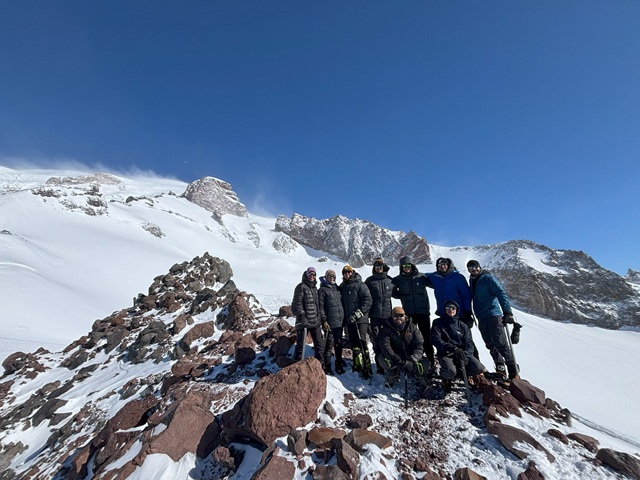
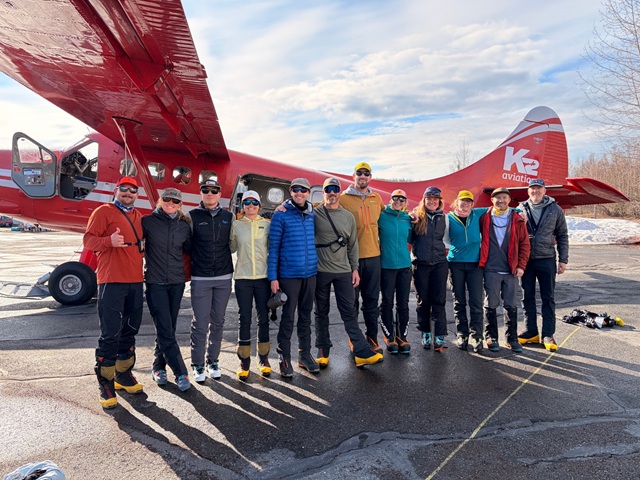


Another great day for the Team. keep smiling :-)
Posted by: Terrianne Riga on 10/9/2013 at 2:47 pm
Best Wishes on a SAFE and super climb! You will never forget this adventure & it brings back wonderful memories of January 2007, when my son & I made the climb. Soak up the sights, smells and sounds!!!
Posted by: simeon hain on 10/9/2013 at 12:36 pm
View All Comments