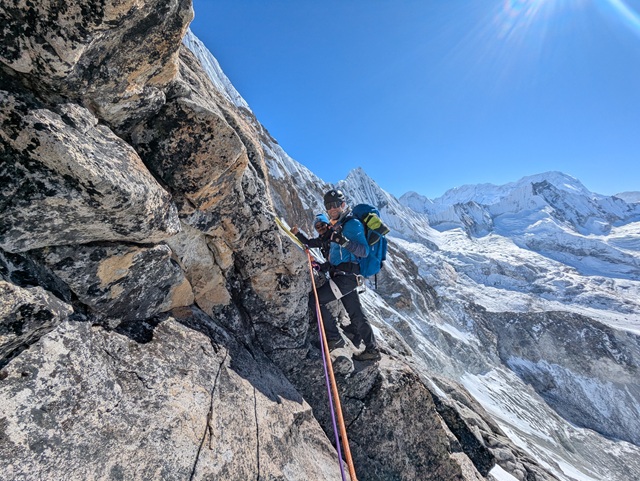
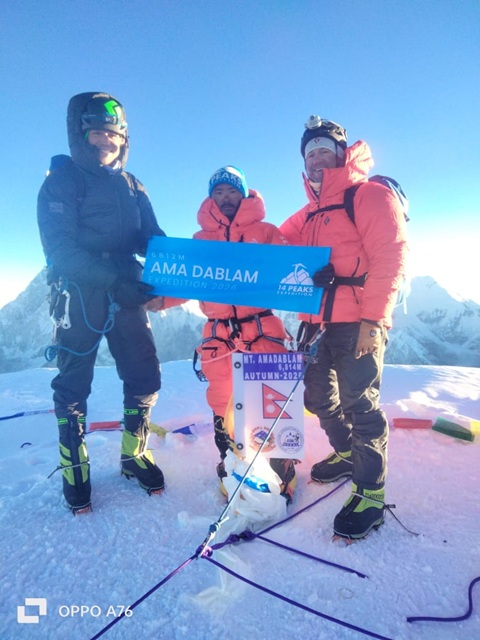
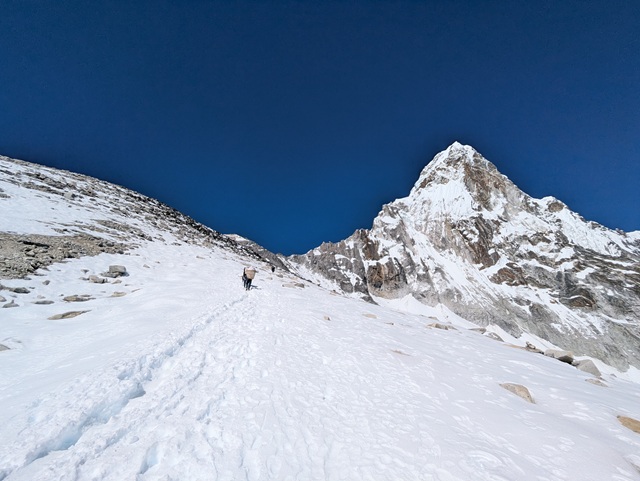
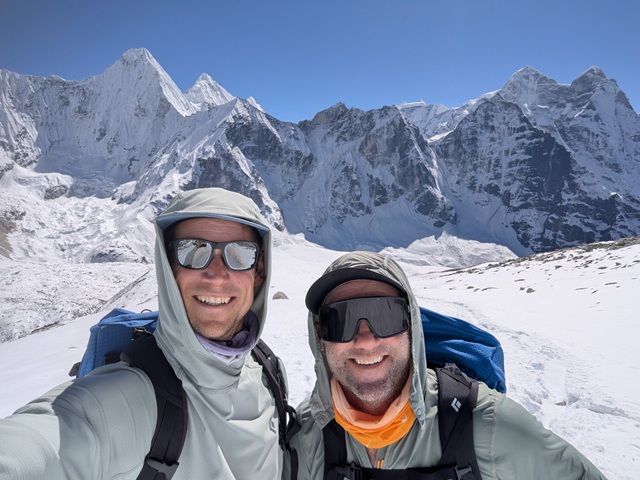
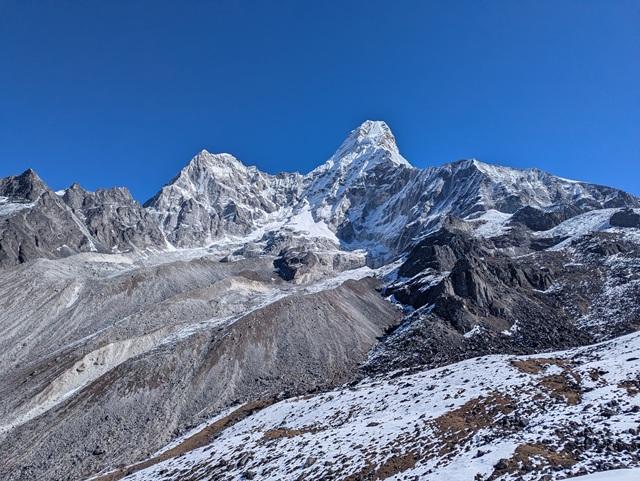
Mental preparation for mountaineering is just as important as the physical training. Often the mental hurdles of the mountains can be just as intimidating and overwhelming as the physical challenges. You’ll want to have some strategies to rely on when the climbing gets difficult and you can use your training to figure out what works to keep you mentally engaged and focused during the climb. Below are a few ideas we’ve gathered from our guides and climbers over the years:
Break It Up
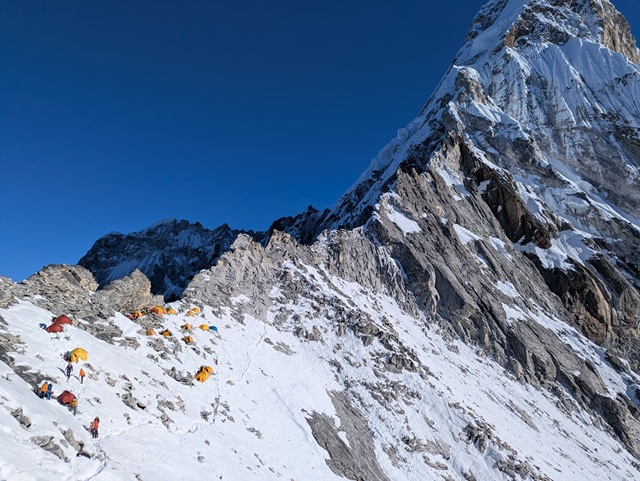
Instead of viewing the climb as single massive undertaking, break the trip into sections, and sub-sections, and sub-sections of sub-sections. If summit day is still days or even weeks away, don’t focus on it when you’re first shouldering your pack. Instead, break the trip in smaller portions: reaching Base Camp, moving to Camp 1, etc. Then segment out the day’s climbing into sections and concentrate on just the stretch you’re on. It’s easy to become overwhelmed by the enormity of the climb ahead but by breaking the endeavor into smaller sections of climbing you can separate it out into achievable parts.
Climb Beautifully
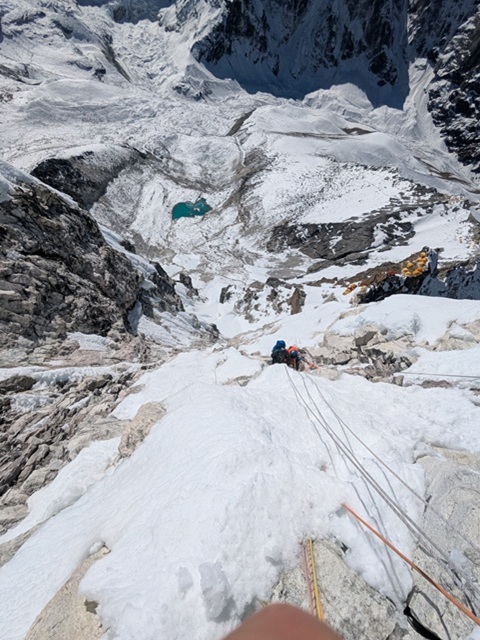
When the going gets tough and you find yourself struggling, try focusing all of your attention on the physical movements. Dial in your cramponing techniques, concentrate on climbing in perfect balance, focus on your footwork, pay attention to your rope interval. Turning your attention to these small tasks brings your attention to the immediate actions you are taking and keeps you engaged and focused.
Focus on the Now
Much like climbing beautifully, try focusing on the immediate trail ahead and don’t go through the exhausting mental exercises of “what-if”, “maybe”, or “perhaps” of what is over the rise. Instead of worrying about how intimidating the crevasse crossing you heard other climbers mention might be, what the altitude will feel like, how long the descent is going to be, or any other number of possibilities, focus on the route in front of you. By staying focused you won’t burn mental energy exploring unknowns and you’ll stay engaged. When you get to those times of the climb or places on the route, you may just find that they are far more manageable than you led yourself to believe.
Count
When the going gets really tough, try counting steps. Many climbers descend from the mountains with tales of putting their heads down and counting a certain number of steps - 20, 50, 100 - before looking up again. Don’t lose focus of what you’re doing and continue to climb safely and in tandem with your team, but counting is another way to give yourself something immediate to focus on to help get through the challenging sections.
Wander
On most climbs there are many moments such as the approach or the descent where you’re off of the technical sections of the mountain that require active focus and you’re simply walking up or down a trail. It’s okay to let you your mind wander! Stay engaged with what you’re doing so you don’t stumble, but let your mind think about things other than the trail ahead. Maybe it’s thinking about how to plant the garden, remembering quotes from your favorite movie, solving a nagging problem, or even what meal you’ll treat yourself to after the climb - anything that can give you a little mental escape.
Every climber has different mental strategies that work for them. The trick is finding what works for you. Whether it’s a long weekend hike or a tough interval session, you can use your training routine to experiment with different ways of keeping yourself mentally engaged, even when the training get’s tough.
Did we miss something? Share your suggestions on mental strategies and read past Weekly Mountaineering Training Series on the RMI Blog!
Billy Nugent led the way out of Namche, down the big hill and into the valley of a thousand farms and small villages. We made it in six hours to a comfy tea house next to the airstrip in Lukla. The rain caught us for the last hour or so, but didn't actually bother anybody enough to make them put a raincoat on. We ate the afternoon away in our new low-altitude home. Mark Tucker made a surprise appearance for dinner, having finished up his duties at Basecamp today and figured out a way to heli-hike in minutes what had filled up three days for the rest of us. We are now poised for an early wake-up and some airport hustle that may or may not get us to Kathmandu by fixed-wing aircraft. All depends on the weather.
Best Regards,
RMI Guide Dave Hahn
Nicole LoBiondo: I hope you have safe travels back home and I am so happy to hear that you and your team are safe! I’ll see you soon! Much love, Sammy
Posted by: Sam Borneman on 4/28/2014 at 8:25 pm
I hope you all have safe travels back home! I can’t wait to hear all about your adventure at Copper Canyon with a margarita! And of course the salad with the bacon, fish tacitos and the steak!!!! Love ya Nicole!
Today was a big walking day, up and down the hills of the Khumbu Valley from Pheriche to Namche. Right out of Pheriche, where we started hiking at 8 AM, we crossed the river, climbed a hill and turned into the inhabited portions of the Khumbu. We turned our backs on rocks and ice and walked down into rhododendrons, pine trees and villages. JJ led the way as we rolled through Shomare, Pangboche, Deboche, Thyangboche, and Phunky Tonga. We got hot enough to sweat a bit, which was a novelty, we passed a million trekkers and heard about a million helicopter laps as the B2's and B3's flew over us on their way back and forth to Everest Base. Finally, at midday, we got working our way up the giant dusty hill that would put us on level with Namche. It took us about six hours to reach Namche -still quite familiar to us since we spent three days acclimating in town on the way in. This time... no acclimatization needed... so fine to be below 12,000 ft for the first time in close to a month. The team enjoyed a fine evening at comfortable Camp De Base.
One more big day of hiking to go before Lukla International.
Best Regards,
RMI Guide Dave Hahn
Nicole Lobiondo: Safe travels from Lukla to you all! Nicole H.
Posted by: Nicole Howard on 4/28/2014 at 6:27 am
Hey Spencer, So sorry you weren’t able to make it this time. You’ll be back under better circumstances and the summit will be that much more sweet. Safe journey home!
Uncle Matt
Long-time RMI Guide, Alex Van Steen, visited a local second grade classroom at Columbia Crest STEM School as part of RMI’s Community Outreach program. STEM schools, a relatively new concept in Washington State, have a distinct emphasis on hands-on learning and the integration of science, technology, engineering and math into student lessons. RMI has partnered with Columbia Crest STEM to bring our mountaineering experiences right into the classroom. With Alex, the second graders studied the essential question, “What causes a volcano to erupt?” Students thoroughly enjoyed the lesson and learned ways to explain and create their own shield, composite, cinder cone and caldera volcanoes!
RMI Guide Alex Van Steen
Our last night in base was made dramatic by a lightning storm rolling through. A few inches of snow fell thick and fast, making morning, bright, fresh and beautiful. At 11:15 AM we filed out of the ghost town that Mount Everest Basecamp has become. The climbing team, accompanied by Lam Babu, made good time in losing three and a half thousand feet to reach Pheriche in four hours and forty-five minutes. We each paid Everest's summit a couple of last longing looks during the march, but then paid more attention to the task at hand; walking an uneven, slippery mountain trail while dodging trekkers, yaks and porters. The gang stuck together wonderfully, demonstrating what a close knit and fit climbing team we've become. With each village on the descent, through Gorak Shep, Lobuche and Thukla, we each noticed the thicker and easier air. We coughed less and walked faster. All enjoyed seeing the baby yaks trying out their legs on our homestretch into Pheriche. Tonight, we are indoors again... safe, enjoying each other's company, and quite comfortable. We hope things are going well for Mark Tucker and the bulk of our Sherpa Team, back at EBC for a last couple of days to button things up properly.
Best Regards,
RMI Guide Dave Hahn
What a pitiful attitude Bob has!! Wishing your team a safe journey back home. That is very admirable for Mark to have stayed back with the Sherpa team! Again it says a lot about the quality of a team you all are!! God Bless each and everyone of you!!!!! Tammy
Posted by: Tammy Doppenberg on 4/26/2014 at 4:47 pm
Oh Spen,
Tuesday’s not gone. There’s a lifetime of Tuesdays left for you. That mountain is not going anywhere. You’re young and strong and we got your back. Love you, Weasel,
Momma
We began the day with hope that we might be getting closer to resuming climbing. Billy and JJ took the climbers hiking while Mark Tucker and I met with a number of other climb leaders and Sherpa sirdars. Those meetings convinced us that the right course was to give up on Mount Everest for Spring 2014. In future dispatches, we'll try to quantify the reasons for such a decision. But for now, suffice to say that the risks outweigh the possibility of success.
This week has been a roller coaster of emotion for many of us, from the horror that came with the avalanche of April 18, to the confusion that followed it regarding the right course to take for balancing respect for the dead, concern for team safety and summit ambitions. Following the accident, our list of serious obstacles to an Everest summit was always significant, but we believed it worthwhile to continue looking for some way forward. Our climbers, Sherpas, guides, and outfitters had put too much into the planning and execution of this trip to let go of the goal with less than our best effort. We've given that now.
We'll start heading for home soon.
Best Regards,
RMI Guide Dave Hahn
RMI guides make great decisions. Dave, Billy, JJ. This is why I’ve climbed a number of summits with RMI—you literally are trusting them with your life to make good decisions.
While I’m sure this was an extremely difficult decision, I believe it was the right one. Sometimes you have to listen to what the mountain (and circumstances) are telling you.
Safe travels home.
Posted by: Dan on 4/25/2014 at 7:38 am
So sorry for the loss and for the tough situation it put you all. I’m glad you are safe and coming home. JJ—you’ll have many, many more climbs….
Posted by: Randy Christofferson on 4/25/2014 at 5:23 am
The skies were sunny with warm temperatures today at Everest Base Camp. Our climbers took a few short hikes around the lower glacier and then a bit of cards and board games to keep our minds busy. There is community gathering for a remembrance scheduled for tomorrow.
RMI Guide & Base Camp Manager Mark Tucker
Nicole Lobiondo: Hope you are okay during this tough time. My Dad and I took our Walk in Long Branch and drove by your house. All looks good! Mufasa must be a good guard cat if he is there! Thinking of you and the team and wishing you all positive thoughts for what lies ahead. XOXO, Nicole
Thank you for your calls, inquires and support regarding the tragedy on Mt. Everest last week.
If you would like to make a donation to be used to help the families who lost loved ones in the avalanche and those who were injured, you can do so through the American Alpine Club - Sherpa Support Fund.
Thank you,
The RMI Expeditions Team
Nicole Lobiondo: Hope your trip is a once in a life-time event. The Kenny’s wish you a safe trip home and are praying for your safe return. I am sure you are taking lots of photo’s.Love Terry Kenny, Adriana and Gabby
Posted by: Terry Kenny on 4/23/2014 at 8:55 am
Nicole Lobiondo: Thinking of you all during this time. Stay safe and positive. Love, Nicole
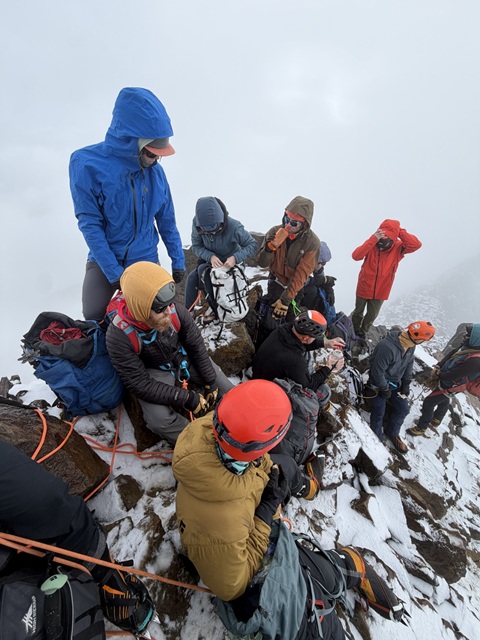
How do you utilize rest breaks in your training and climbs? Do you take a break to eat? And another when you are thirsty? Perhaps when your legs get tired and uncomfortable? A quick bathroom break on the side of the trail? It's important to take care of all of these needs but they need to approached strategically to prevent rest breaks from turning an otherwise long endeavor into an epic. Learning to manage your rest breaks and keep them efficient makes a big difference on summit day.
At RMI, the oft-used cliché is that we take "maintenance breaks," not rest breaks. Consider all of the needs that need to be taken care of mid-climb: you need to relieve yourself, take in enough calories to maintain your energy output, hydrate, adjust your clothing layers to changing conditions, perhaps take care of a hot spot so that it doesn’t become a debilitating blister, get a few minutes off of your feet, and just maybe snap a couple of photos. This list can easily turn into a half an hour of tasks, even if each only took just 4-5 minutes to accomplish. After thirty minutes your legs will likely start to stiffen and your temperature start to drop, not to mention that a few half-hour breaks together can turn a 10 hour day into a 12+ hour day in the mountains, stretching the limits of how long we can climb safely and maintain our focus.
The moral of the story is that efficiency is key: we want to try to take care of all of our needs in the span of ten minutes to leave a few minutes to relax before getting back on the trail and making progress towards the finish line. Ultra marathoners do this with "walking breaks," slowing to a walk every hour to make sure that their body is primed for the next hour. Mountainous terrain doesn’t let us take breaks on the fly, but the principle remains the same. Taking short, deliberate, and consistent breaks keeps us climbing strongly throughout the day. Making rest breaks efficient takes practice. Learn to multitask in your breaks: take a couple bites of food while you shuffle clothing layers, relieve yourself before you sit down to start your other chores, and sip on water throughout the break. As you get better at it, you’ll find that you’ve taken care of everything in the first few minutes, and you can relax and let your legs get a bit of recovery for the rest of the break.
No matter how efficient you are, the time rest breaks take add up. Taking efficient breaks too frequently can drain just as much time as taking a couple of long breaks. In the mountains, we try to maintain a consistent pace for an hour or so before stopping for ten to fifteen minutes to refuel and take care of ourselves. This proves to be an effective interval for our bodies in terms of replenishing depleted stores yet still allows us to reach our destination. Practice this interval in your training too and by your next climb it will feel like second nature.
Questions? Comments? Share your thoughts here on the RMI Blog!
Still at Everest Base. Still a very difficult situation for all involved.
JJ and Billy led the climbing team on a hike to Pumori Camp One today, where they enjoyed awesome views of Mount Everest (during our hike to the same point last week we had no views due to an ill-timed and swirling snowstorm). Mark Tucker and I attended a series of somewhat tense and serious meetings between team leaders, Sherpas, and the few government representatives present in camp. It is very difficult to say what will happen going forward but one cannot under emphasize the enormity of the tragedy to the Sherpa community. Each team, if it has not suffered death and loss directly, has lost relatives, close friends and neighbors to the icefall avalanche of April 18. In too many cases, survivors saw the friends perish before their eyes or else they dealt with the difficult aftermath of body recovery personally.
Our Sherpa partners love their jobs and love to climb, but nobody is climbing now and all are struggling to come to terms with how to proceed in a way that honors those lost and protects those left alive.
Best Regards,
RMI Guide Dave Hahn
My thoughts are with all affected by the tragedy. I can only imagine the impact it has had on you all personally. I have no doubt that you, JJ, and all the team members will make the right decision, whether that means retreating or pressing on to the summit, that most honors those lost and respects the memory and wishes of the Sherpa community. Stay strong and climb safe.




 If you would like to make a donation to be used to help the families who lost loved ones in the avalanche and those who were injured, you can do so through the American Alpine Club - Sherpa Support Fund.
Thank you,
The RMI Expeditions Team



Awesome advice! It all makes perfect sense!!!
Posted by: Tammy Doppenberg on 4/28/2014 at 8:50 pm
View All Comments