BRIEFING
This week’s final hike is the longest one of the entire training program. The all-day hike builds both physical and mental endurance. The purpose of this hike is to replicate the first day of your climb, which is coming up before long.
If you’re local to the Mount Rainier region, you will be well served to visit Camp Muir for this part of the training if the weather and conditions are conducive. Make sure to follow the appropriate safety guidelines when heading up there and bring all of the equipment, food, and gear you need (including a map and compass). If you’re elsewhere, you may need to get creative with your route choices. Either way, this will be a fun and substantial training session. The rest of your training this week will remain the same as the previous week.
DESCRIPTIONS OF WORKOUTS
Day 1: Rainier Dozen + Easy Hiking (30 Minutes)
Today’s hike is a recovery workout and you can always substitute it with a different activity, such as running, biking or swimming. The important thing is to move at a moderate pace for 30 to 45 minutes. The pace can be conversational and you do not need to be dripping with sweat at the end of the workout.
Day 2: Stair Interval Training: The 1-2-3 Workout
Warm up with some moderate paced stair climbing. Then, make three efforts: one moderately hard, one very hard, and one close to maximal effort, with rest periods in between. This may look like:
• 2 minutes at 50-65% intensity, followed by 3 minutes of rest (1 minute standing, 2 minutes descending)
• 2 minutes at 65-80% intensity, followed by 3 minutes of rest
• 2 minutes at 85-90% intensity, followed by 3 minutes of rest
Repeat this sequence five times.
Day 3: Rainier Dozen / Rest
Begin your day with the Rainier Dozen. Feel free to take another 30 to 60 minutes of light exercise if you feel like it (a brisk walk is a great option). If you feel tired, today is a good opportunity be good to take a complete rest day instead. Listen to your body.
Day 4: Rainier Dozen / Fartlek Training Hike (2 hrs)
Warm up with the Rainier Dozen, and then spend up to 2 hours on a fartlek training hike. Alternate sections of sprinting towards a target you select, with walking at your regular hiking pace.
Day 5: Rainier Dozen / Rest
Begin your day with the Rainier Dozen. Feel free to take another 30 to 60 minutes of light exercise if you feel like it (a brisk walk is a great option). If you feel tired, today is a good opportunity be good to take a complete rest day instead. Listen to your body.
Day 6: Rainier Dozen / 3 Hour Hike
Like last week, you are building your endurance for multiple days of sustained effort with this hike. Warm up with the Rainier Dozen and then hike for 3 hours at a consistent pace. You may choose to include some pack weight if you’re looking for a little extra challenge.
Day 7: 9 Hour Hike (25 pounds of weight)
Load up your pack to 25 pounds. Since you are getting pretty close to your actual climb of Mount Rainier, you’ll want to get comfortable with the gear you’ll be using on the climb (if you haven’t already). If I’m going into the mountains, I like to add realistic weight: clothing, extra water bottles, perhaps even some summit gear like down parkas, heavy gloves, long underwear, or a helmet.
This is your longest hike of the entire training program and you will do well to plan this hike as if you were planning your climb of Mount Rainier. Check the weather and get all the necessary gear ready prior to the hike. Take appropriate amounts of food and water to sustain you on the all-day hike. Get a good night’s sleep the night before and leave early enough to account for the time it will take you to get to the parking lot. Make sure to hike with a friend and let someone else know where you will be and what time you will be expected back. Be safe out there!
Warm up with the Rainier Dozen, and then hike for 9 hours, or about 15 - 16 miles. Be sure to hike at an even pace that you can maintain throughout the day.
SUMMARY
For reasons that are not always clear, it’s not uncommon for climbers to experience a very difficult day on this week’s long hike. At this point in the training, you are coping with fatigue. If you have a hard time on the trail, don’t feel discouraged by your performance. You’ll have a chance at another challenging hike next week, and you’ll have the benefit of this week’s experience.
If you do successfully complete this week’s hike, congratulations! You’re doing very well in your training and have completed one of the hardest weeks of the entire program. You are preparing well for your climb of Mount Rainier!
- John Colver
Have a question? See the Fit To Climb FAQ for explanations of specific exercises and general pointers to help you through the Fit To Climb Program.
John Colver is a longtime climber, former mountain guide, and certified personal trainer with the American Council of Exercise. Colver introduced outdoor fitness classes to athletic clubs throughout the greater Puget Sound region before creating his adventX brand. Currently, adventX leads training programs in Seattle and Colver presents clinics on outdoor fitness at companies such as Microsoft, Boeing, the American Lung Association, and REI. Colver lives in Seattle, and is working on his second book, Fit to Climb - a 16 week Mount Rainier Fitness Program.
This is Dave Hahn calling down from Advanced Base Camp, 21,300'. A good day for Seth, Dan, and myself and Lam Babu and Yubaraj up here at ABC. Seemed like it was going be a little stormy this morning. There were clouds around, but we ended up with a pretty good sunshine, pretty calm conditions down here in the valley. We went for a late acclimatization walk up to about 21,800', close to the base of the Lhotse Face. That was a right move for us anyway today, a little light activity on our first day at Advanced Base Camp. And then resting until noon. We can’t do too much differently right now, the route up the Lhotse Face is not fully established yet. There has been a few unforeseen delays in getting that route fixed. We’re okay taking it easy. We have hiking plans for tomorrow as well. And working this acclimatization round the best we can. That is all for tonight. Talk to you tomorrow.
RMI Guide Dave Hahn
The RMI Everest Expedition is on track! Three super Sherpa went from Base Camp to Camp 2. En route they stopped at Camp 1 to offer some help to the team and carried the radio and electrical equipment up to Camp 2. After arriving at Camp 2, they put the puzzle together and bingo, loud and clear communication between Basecamp and Camp 2. A few days ago they carried a couple of community loads of climbing gear, and a strong team of upper mountain route workers placed anchors and rope up the Lhotse Face. With the team now nesting at Camp 2 and feeling good, it makes for another great day here on Mount Everest. It did snow a couple of inches last night, but a beautiful day with just enough wind to whip the loose snow around making for wild views. A little maintenance on the floors of the dining and communication tents today is routine when living on a moving glacier.
RMI Guide Mark Tucker
Hey RMI, this is Dave Hahn, Seth Waterfall and Dan Johnson. We're up at Camp 1, and we came up this morning through the Ice Fall in about five hours time. Good moving and great conditions today, just a beautiful morning. And coming into Camp 1, it seemed like we were on a different planet than when we were last here and it was snowing so hard and so cloudy and cold. So today we just had a nice calm, sunny day at Camp 1. Rested and relaxed, drank a bunch of water. And we're a little bit excited because we're moving up to Camp 2 tomorrow. Our Sherpa team established Camp 2 yesterday and built it up. Yubaraj and Lam Babu spent the night up there. It's about dinner time now. The clouds were starting to creep in. Late afternoon clouds, not bad weather. Later this evening we expect them to roll right back out again. So everything is going well on our second rotation. We're hoping to be up here for about a week this time. A little bit longer. But we've been in touch with Mark Tucker down at Basecamp and everything seems to be going well. All for now, bye.
RMI Guide Dave Hahn
What a night to take in last evening! We had perfect conditions: clear, calm, and almost a full moon. It was a bit chilly, but that is what our puffy coats and pants are for. After so much unsettled weather, it was so peaceful you could almost think we were in the most tranquil environment on earth! Of course, the hanging glaciers and thousands of feet of vertical rock overhead remind us that "tranquil" is all relative in this neck of the ice.
The team was up early in the AM and sent up gear for the community effort to fix ropes to Camp 3. Our group plans on some training en route up to Camp 3 as well. We have two Sherpa at Camp 2 right now who are working hard and preparing to welcome the climbers to Advanced Base Camp in a couple of days.
The team continues to take care and plans for the long haul ahead.
RMI Guide Mark Tucker
NIce swing Tuck. Bummed that I wasn’t able to play a few rounds with you at Base Camp this year but I saw the clubs outside the com tent and took a few practice swings. My duct tape balls couldn’t compete with whiffle balls. Safe travels to Camp 3.
Posted by: Elsie Bemiss on 4/26/2013 at 6:38 am
Your reports are uniquely super! Who is your writer? I’m in the movie business and always expect a highly paid ghost writer behind every writer as good as you and your partners.
Warm regards,
Wolf
Well it's another beautiful day in Basecamp. We're enjoying another rest day before heading back up the mountain.
The teams have all joined forces to equip the Lhotse Face with fixed rope for the next series of acclimatization rounds. As a small team we will do our part by bringing gear up to Camp 2. If the weather holds then the 'fixing' will start on the 26th. That will clear the path to the South Col and then teams will begin establishing camps there.
The Col is a long way off for us though as we have quite a bit more acclimatization to go before we'll be ready for heading to 8000 meters (26,000 feet). It's all part of the long process of climbing Mount Everest.
RMI Guide Seth Waterfall
The day started out sparkling and blue... A welcome change from the weather of the past week, but by early afternoon it was back to overcast and snow flurries. Word was that those trying to travel between Camp One and Two were encountering waist deep snow and that as much as another meter had fallen on C1 since we left it two days ago. It hasn't been normal in recent years to get so much snow in April, but we choose to look at things optimistically, and we hope that some of the snow sticks up high to make travel a bit safer on the Lhotse Face and on summit day above the South Col.
That is all a bit far off today though. We are still taking it easy and resting up for the next -all important- push up the mountain. (Any push up this mountain is all important to those of us doing the pushing)
Best Regards,
RMI Guide Dave Hahn
BRIEFING
At this point in the 16 week training program, you are all in and the end is not far off! This week adds a second hike to your weekend, the Day 2 stair session becomes a little more challenging, and you’ll be adding a new kind of workout in for a bit of variety: a fartlek hike on Day 4.
DESCRIPTIONS OF WORKOUTS
Day 1: Rainier Dozen + Easy Hiking (30 Minutes)
Today’s hike is a recovery workout and you can always substitute it with a different activity, such as running, biking or swimming. The important thing is to move at a moderate pace for 30 to 45 minutes. The pace can be conversational and you do not need to be dripping with sweat at the end of the workout.
Day 2: Stair Interval Training: The 1-2-3 Workout
Warm up with some moderate paced stair climbing. Then, make three efforts: one moderately hard, one very hard, and one close to maximal effort, with rest periods in between. This may look like:
• 2 minutes at 50-65% intensity, followed by 3 minutes of rest (1 minute standing, 2 minutes descending)
• 2 minutes at 65-80% intensity, followed by 3 minutes of rest
• 2 minutes at 85-90% intensity, followed by 3 minutes of rest
Repeat this sequence five times.
Day 3: Rainier Dozen / Rest
Begin your day with the Rainier Dozen. Feel free to take another 30 to 60 minutes of light exercise if you feel like it (a brisk walk is a great option). If you feel tired, today is a good opportunity be good to take a complete rest day instead. Listen to your body.
Day 4: Rainier Dozen / Fartlek Training Hike (2 hrs)
‘Fartlek’ training is another version of interval training. The word originated in Sweden and means ‘Speed Play’. Fartlek training is popular with cyclists, runners and cross-country skiers. During your workout, you simply chose random ‘targets‘ like the top of a hill, a loop of a track, a tree or trail marker and then get after it with gusto! Increase your effort level as much as you feel like and mix up the length of the intervals for variety. I like this type of training because it replicates the unpredictable nature of mountain terrain: you can never be certain of the terrain or length of challenging portions of the climb. It’s fun too; it helps to pass the time while training alone, or adds a competitive challenge with friends. If you lack stairs, you can use any uphill grade and no matter the terrain, you can always increase intensity by adding weight to your pack.
Warm up with the Rainier Dozen, and then hike for two hours. Depending on how you are feeling, pick a spot on the trail that feels an appropriate distance away, and sprint to it. Alternate these high speed sections with walking at your regular pace. If you are doing the workout with friends, you can take turns picking the target.
Day 5: Rainier Dozen / Rest
Begin your day with the Rainier Dozen. Feel free to take another 30 to 60 minutes of light exercise if you feel like it (a brisk walk is a great option). If you feel tired, today is a good opportunity be good to take a complete rest day instead. Listen to your body.
Day 6: Rainier Dozen / 3 Hour Hike
The back-to-back hikes this weekend mimic the actual Mount Rainier climb where you complete two days of climbing in a row. The conditioning benefit is to get used to doing these long practice sessions close together. By this point, you’re getting so used to hiking so that this won’t seem like a significant challenge as it would be before the program.
Warm up with the Rainier Dozen and then hike for 3 hours. You may choose to include some pack weight if you’re looking for a little extra challenge.
Day 7: 7 Hour Hike (15 pounds of weight)
Warm up with the Rainier Dozen, and then hike for 7 hours, or about 12 - 14 miles. Be sure to hike at an even pace and bring all of the clothing, food, and equipment you need to be on the trail all day.
SUMMARY
This week is capped off with your first back-to-back hike. You may be tired when you start the second hike, or even have some muscle fatigue, but try and persevere. There are great benefits to be gained from introducing your body to the stress of multiple days of extended effort as it prepares you for the same challenges of climbing. We are headed into the final push of preparation over the coming weeks with several of these back-to-back days. When the climb comes you’ll know what to expect and how to take care of yourself over several days of climbing!
- John Colver
Have a question? See the Fit To Climb FAQ for explanations of specific exercises and general pointers to help you through the Fit To Climb Program.
John Colver is a longtime climber, former mountain guide, and certified personal trainer with the American Council of Exercise. Colver introduced outdoor fitness classes to athletic clubs throughout the greater Puget Sound region before creating his adventX brand. Currently, adventX leads training programs in Seattle and Colver presents clinics on outdoor fitness at companies such as Microsoft, Boeing, the American Lung Association, and REI. Colver lives in Seattle, and is working on his second book, Fit to Climb - a 16 week Mount Rainier Fitness Program.
I am currently signed up for the Rainer hike this coming Summer. I have done Devils Path in Catskills, NY which is 25 miles, 10,000 ft of climbing in 12 hours as well as climb Mount Mitchell in NC which is about 8 miles and 4,500 feet of climbing which took about 2 hours. I obviously will have ample time between when the 16 week program ends and my hike. Is there any suggestions for me to continue to keep in shape between the end of my training program and my hike? I know I am in good shape for the hike through trying hikes like I mentioned above but wanted to know how I continue to stay on that level. Thanks!
Posted by: Stephen on 11/17/2015 at 5:49 am
I’ve been down since labor day. My inner thigh started cramping at the end of a hike, cramped through the night, then stiffened up. The following day the skin was very bruised like I had bumped it but I had not. It’s still sore. Before and during the hike I was hydrating with clear water and occasional electrolytes because I seem to have cramping issues, but I don’t remember sweating very much. It was a cool, dry, sunny day and I was often in a tee shirt. Maybe I was evaporating off more than I realized? Truthfully, I had cheated on the training a little. I thought I was ready for a fun 13,600’ spring climb of Mt Dade in the Sierra Nevada, spring snow fields, and an overnight pack. It was only a 4 mile 1000’ ft elevation approach to an 11,000’ base camp, which is where I started cramping and turned back from the next day. It was a bear descending. I’ve been doing nothing since as far as training, but I’m going to start up again. Any advice on recovery training, and preventing this kind of injury on the the next big hike?
Our first rotation up the hill is completed. We came down the Icefall this morning in fresh falling snow, which muffled sound, concealed crevasses and greatly reduced traffic. Normally, after three nights acclimating at Camp One, we'd have gotten up a little earlier and come down a bit sooner in the morning, but daybreak at close to 20,000 ft was a bit different this time around. We had received a foot of snow in the past 24 hours and listened to avalanches running almost constantly down the steep faces of Nuptse and Everest West Shoulder. We weren't terribly anxious to run out and test our luck at finding the path through the icefall, but a few things began to work in our favor. Although no Sherpas were breaking trail from below on such a day, a few teams at Camp One were more anxious to get down than we were. We actually contemplated sitting another day to let things settle and improve, but once a few bigger teams had plowed a trail down and a short break in the storm materialized, we decided to capitalize and descend. We packed and closed our tents up tight and began walking toward Basecamp at around 9:30 AM. It wasn't a quick descent, we were quite careful stepping through the concealing powder and onto shaky ladders as the snowstorm returned to make things interesting. We were all stunned to see that the "horseshoe hotel" had fallen. This was a massive free-standing cube of glacier which we'd been passing under with a fair amount of trepidation. It came down all at once... luckily with no one in the vicinity, and we were amazed to see that the massive chunks of debris had fallen in several directions... But they hadn't bulldozed away the climbing route. The intervening crevasses had done their work and swallowed up a whole lot of hotel. The snows kept falling and we kept working our way down in a quiet cloud. Eventually we came out from under the clouds just as we reached the less hazardous features at the bottom of the Icefall. We weren't able to do everything we wanted on this rotation; it certainly would have been nice to have hiked up and touched ABC (Camp 2) but it would have been foolish in the snowstorm, so we mostly sat in our tents yesterday... But that also can lead to good acclimatization when the tents are high enough.
Now we'll enjoy the relative comforts of Basecamp (although the snowstorm has seemed to follow us down) First; tables and chairs and food served up by the plateful... Later showers and shaves and the freedom of walking around without worry of crevasses and cliffs.
Best Regards,
RMI Guide Dave Hahn
We awoke to a fresh blanket of snow here at Everest Base Camp. That didn't slow down the Sherpa team from making a run to Camp 2 with more equipment for future forays. The snow has already melted away here but the upper mountain still shows some fresh snow.
It is great to see our climbing team get some time up high. They will return to Base Camp tomorrow but will be heading back up for another rotation soon. The pieces of the puzzle are fitting together nicely thus far.
RMI Guide & Everest Base Camp Coordinator Mark Tucker




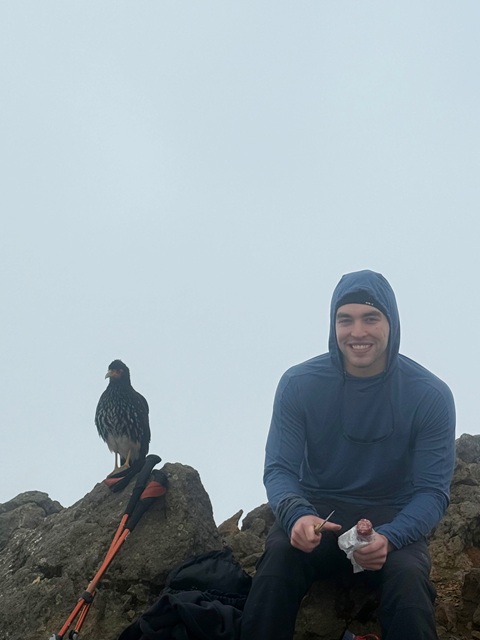


James please make sure you are on the lookout for saquatch stealing your food. Its happened once it could happen again. Stay safe my friend.
Posted by: Raymond Brown on 4/29/2013 at 8:36 am
Great going, Dave. Hope the weather holds. Can’t wait to hear about the brawl at 26,000 ft that was in the news today.
Stay safe,
Chuck
Posted by: Chuck Roberts on 4/29/2013 at 8:26 am
View All Comments