Hello RMI Family! Yes...I know, our first Aconcagua team photo certainly doesn't look like a mountaineering expedition. But you have to start somewhere. And you might as well start out in style.
The entire team made it into Mendoza with all our mountaineering gear. Today was a busy day for Geoff and I. Between airport pickups we did some food shopping for fresh vegetables, fruit and a little filet mignon.
We had our team meeting where we discussed gear, food and what lies ahead. However, for now...it is time to enjoy Mendoza. The land of spectacular food and amazing wine. Stay tuned and we will continue to provide updates of how much fun we are having.
RMI Guides JJ Justman & Geoff Schellens
A friend of mine attempted Aconcagua in his 50s with a group of people and guides. Some young guys looked at him and complained that they’d probably have to be carrying his stuff near the top. Near the top, only my friend and one guide were capable of going on. But they had to turn back, because everyone else was sick or injured. ;-(
Posted by: Hank Halle on 12/15/2012 at 3:19 pm
JJ - Looks like a great start. Please leave a little wine for the Jan 2 trip!
This is Seth checking in from Punta Arenas. The team has all arrived safe and sound. We have also managed to arrive with all of our luggage! Thank goodness.
We spent the day getting to know each other and prepping for the journey onto the ice. We will be getting our final briefing with ALE in the morning and hopefully flying to Antarctica within the next few days. As for now we are enjoying the wonderful restaurants in Punta. We will update everyone tomorrow with the plan.
RMI Guide Seth Waterfall
Testing your fitness from time to time is a great way to gauge improvement and to take the opportunity to find your limits. A fitness test acts as a measurement of overall fitness as well as specific core muscle endurance and agility. A test like this should be repeated several times during your training so that you can measure your progress. It’s not the individual results from the test that provide information, it’s the change between results that tells you of your progress. Complete the fitness test, write down your results, and then try it again in a few weeks to see how much you’ve progressed.
As with all training, there should be an emphasis on safety and self care. Push your limits but don’t place undue stress or strain on your body. Rather than go all out, try to nudge your results forward in a controlled and sensible way, much like a successful mountain climb.
In our Seattle based ‘Fit To Climb’ workouts we use a custom version of a military fitness test that can be done during a short workout. The test consists of a ‘timed run’ - we suggest a mile (if you don’t like to run, then walking is perfect) - followed by a strength test with 4 exercises designed to gauge your upper-body strength, core strength, leg strength, and agility.
After a good ten-minute warm-up followed by the Daily Dozen, or similar exercises, first do the timed run. Go at a speed that feels like an intense effort. Record your time. Then, rest for 5 minutes by gently walking or just pacing slowly back and forth.
For the strength test, find an area that has a solid, level, and soft surface. Grass is perfect but you can also do this indoors if you prefer. During this test, you will perform four exercises for 2 minutes each, with 3 minutes of rest between each exercise. For the first three exercises, the goal is to count the number of perfect repetitions you can complete in 2 minutes. If you do this with a partner, you can rest while counting their repetitions—along with encouragement! For the fourth exercise, the Shuttle Run, simply time yourself. Write down your scores for each test.
Perform the strength test as follows:
1. Push-ups: 2 minutes, followed by 4 minutes of rest
2. Steam Engines on Back: 2 minutes, followed by 4 minutes of rest
3. 3/4 Squats: 2 minutes, followed by 4 minutes of rest
4. 20-yard Shuttle Run: Set up your shuttle run course with some cones or water bottles. If you aren’t sure of measurement use 25 normal paces as a guide. Run back and forth between your markers for 2 minutes, counting the number of times you complete one leg.
• For an explanation of strength exercises see the Daily Dozen.
• A tip: Break the 2 minutes into 30-second segments, it’ll help you maintain a steady pace.
Is it hard? It really is! Two minutes may not sound like a lot but your body will know it is working hard! I suggest you record your scores and do the test each month during your training.
- John Colver
John Colver is a longtime climber, former mountain guide, and certified personal trainer with the American Council of Exercise. Colver introduced outdoor fitness classes to athletic clubs throughout the greater Puget Sound region before creating his adventX brand. Currently, adventX leads training programs in Seattle and Colver presents clinics on outdoor fitness at companies such as Microsoft, Boeing, the American Lung Association, and REI. Colver lives in Seattle.
Very interesting, good job and thanks for sharing such a good blog. Your article is so convincing that I never stop myself to say something about it. You’re doing a great job. Keep it up
Posted by: Alisha Donnelley on 4/29/2018 at 7:40 am
Hi,
I signed up for a Mt. Rainier climb in September. The skills course - Muir.
I’ve been reading through the blog/emails that was forwarded to me. For the one above, you describe the run, and the four strength tests for testing your fitness, but you don’t give gauges of fitness levels (e.g. if you can do x pushups in 2 minutes, then you’re at y% of the goal, etc.)
Where can these be found? Otherwise, how do you know if you’re at, below or above the required fitness?
On an expedition someone once announced to our group, “It’s not the altitude that’s hard, it’s the lassitude”! I’ve also heard it called Lazy-tude and I’ll admit to suffering from this once in a while ... even at sea-level and especially after holidays!
At high altitude, lassitude is a real factor. The work is hard and on a rest-day it’s easy to dig down a little into a minus-20 sleeping bag and remain as motionless as possible, conserving energy and restoring ourselves. And yet, after a while it’s easy to get into a funk, start feeling restless and then begin over-thinking the rest of the climb. At least this is my experience and there’s only one solution; find socks, boots, gloves, hats and any other required gear before suiting up and going for a walk. It’s great because it activates the body, stretches the legs and boosts your overall energy.
The same is true for training. It’s easy to sit inside in during the Holidays and, in much of the country, look outside at the rain or snow. At that moment in time the positive feelings of imagining climbing, being out in beautiful surroundings and experiencing new heights, can all seem distant.
At times like this I find that the simplest workout is all that is needed to feel great and most importantly, to move in the direction of our training goals. In my case, I find that mood follows action - rarely the other way around. So, I have a few ‘go-to’ work outs that are so simple or enjoyable that it only takes me a small effort to start:
1. 10-minute walk, 20-minute run, 10-minute walk.
2. 30 minutes of stairs, elliptical or stair-master machine.
3. The Daily Dozen with a 100-yard run between each exercise.
If you have eaten a few small feasts over the Holidays, it’s raining outside and the couch looks awfully inviting but you know you want to do something because the expedition date is coming up, just do a short and simple workout! Enjoy the feeling of activity, maybe even leave your watch or heart rate monitor behind and listen to some good music as you go.
It doesn’t take much and you will feel great!
It also doesn’t hurt to have a reminder what spectacular views await on the mountain!
- John Colver
John Colver is a longtime climber, former mountain guide, and certified personal trainer with the American Council of Exercise. Colver introduced outdoor fitness classes to athletic clubs throughout the greater Puget Sound region before creating his adventX brand. Currently, adventX leads training programs in Seattle and Colver presents clinics on outdoor fitness at companies such as Microsoft, Boeing, the American Lung Association, and REI. Colver lives in Seattle.
Questions? Comments? Leave a comment to share your thoughts with John and other readers!
This post is very well written and informative. I like how the topic is explained step by step in a clear way. The content is practical and useful for readers who want reliable information.
Interval Training is a training technique employed in many endurance sports. It refers to a training session where periods of high intensity effort, followed by rest, are repeated during a training session.
The benefits of interval training:
Benefits include improved cardiovascular fitness, increased aerobic performance and increased anaerobic threshold. It has its place in a weight loss program too, due to the high levels of energy burned during and after the workout.
It’s true that during a climb, the goal is to ascend at a steady pace and to conserve energy, which begs the question;
“Why do high-intensity interval training”?
There are several reasons. One is that as we climb higher, the air is thinner and every effort becomes more taxing. Interval training, by raising the anaerobic threshold, will simply extend the range of effort we can make before we get out of breath. It also helps us to recover after a short, hard effort.
Some ideas to implement this type of training:
As a general rule, you’ll want to be fully warmed up with some mobility exercises (for example, try the Daily Dozen) and 10 to 15 minutes of moderate walking or running, just enough to get your blood flowing and your muscles ready for a hard effort.
Stairs: If you have a set of stairs available in town or at an athletic stadium you can use them for interval training. Simply push hard up the stairs for about a minute then rest by going easy down the stairs. How many times you’ll want to repeat this depends on your fitness ability. To start off, you may chose 3 or 4 efforts. During the peak phase of training a dozen or more will provide significant benefits.
Steep grade: Same as above and use a stopwatch or mark a spot as your turn-around point.
Indoors: You can do intervals on treadmill, bicycle, stair-master and elliptical machines
None of the above? You can even do intervals with a step, a low wall or even a box you might find in a gym. Simply use your watch and do repeated step-ups. You can even wear a pack, hold weights or a medicine ball while you work.
Example workout: Short high intensity interval training.
Here is the timeline for a one hour interval training session:
• 0:00 Daily Dozen
• 0:12 Ten minutes moderate walking or running
• 0:22 Two minutes rest
• 0:24 One-minute high intensity
• 0:25 Repeat six times
• 0:43 Ten-minute cool-down walk
• 0:53 Stretch
• 1:00 Finish
If you are new to interval training, expect to feel both exhilarated and fatigued. When I do interval training with groups it’s always easy to see the effort evidenced by sweat and hard breathing.
Another version of interval training is ‘Fartlek’ training. The word originated in Sweden and means ‘Speed Play’. It’s popular with cyclists, runners and cross-country skiers. You simply chose random ‘targets‘ like the top of a hill, a loop of a track, a tree or trail marker and then get after it with gusto! Increase your effort level as high or moderate as you feel like and mix up the length of the intervals. I like this type of training very much as it replicates the unpredictable nature of mountain terrain. It’s fun too, helping to pass the time while training alone, or to add a competitive challenge with friends. If you lack stairs, you can use any uphill grade and no matter what the terrain, you can always increase intensity by adding weight to your pack. Learn more about Fartlek Training...
Other ideas for interval training include:
• The 4 x 4 Interval Workout
• Ladder Interval TrainingHow often to include Interval Training?
I find that two times per week is a good amount and I’ll choose days of the week where I’m likely to be fully rested and recovered. Avoid doing back-to-back sessions as you’ll need a day or two to recover after the effort.
In summary:
Interval training is a valuable part of a mountaineers training. It’s energetic, gets the adrenaline flowing, boosts your cardiovascular system, burns energy and helps your body cope with the stresses of a high altitude, low oxygen environment.
As with any training session, make sure you are rested, hydrated and properly fueled before interval training. It’s hard work - you’ll need good energy to complete the sessions.
- John Colver
John Colver is a longtime climber, former mountain guide, and certified personal trainer with the American Council of Exercise. Colver introduced outdoor fitness classes to athletic clubs throughout the greater Puget Sound region before creating his adventX brand. Currently, adventX leads training programs in Seattle and Colver presents clinics on outdoor fitness at companies such as Microsoft, Boeing, the American Lung Association, and REI. Colver lives in Seattle.
Questions? Comments? Leave a comment to share your thoughts with John and other readers!
Rest and recovery is an important part of the training process and there are many techniques, both active and passive, that can help. Recovery from your training efforts can be looked at from physiological and psychological perspectives. Here are some tips:
1. Plan Your Training: The first step in getting adequate recovery is crafting a solid training plan allowing for phases of training to build progressively and allowing time for active rest.
2. Keep Track: Keeping a training log is a good way of reviewing your progress. I suggest recording not only the volume, intensity, and type of each workout completed, but also your own notes about how you felt in each workout. Self-monitoring how you feel mentally (strong, weak, interested, un-interested) will allow you to see how you are progressing in an overall sense.
3. Get Psychological Rest: Psychological strategies are important factors in reducing and managing stress. Relaxation, meditation, reading, visualization, and using a coach as a sounding board are all valuable tools in helping to maintain focus and a positive attitude throughout your training. Relaxation is also helpful in ensuring quality sleep, which is essential for recovery.
4. Take Social Time: Too much of a good thing can be bad for us. Taking a complete break from climbing and hiking to participate in alternative activities can be a good way to decompress. Mix your hard training up with a different sport; play soccer, frisbee - anything really. At RMI there is a penchant for beach volleyball, ping pong, and horseshoes - it’s a nice mental break from the mountain and those downtime matches are intense but a lot of fun.
5. Get Therapeutic Rest: Sports massage, some forms of yoga, hot baths, and hydro-massage are just some examples of the many techniques available to help relax muscles after training and prepare for subsequent training sessions.
6. Pay Attention to Nutrition: Proper nutrition is essential for complete recovery. Quality food that is rich in nutrients is a key requirement for re-supplying energy stores and maintaining our body, it’s muscles, bones, organs, and systems (see Nutrition for Mountaineering Training for more information on nutrition).
Mountain climbing is tough on the mind and body - and so is training for it. When we climb we steal every opportunity to recover from the hard work so that we can get up the next day and do it again. Training demands the same attention to rest and recovery. This is a work-hard, rest-hard activity and often times your success will be as much dependent on how well you rest as how hard you train.
- John Colver
John Colver is a longtime climber, former mountain guide, and certified personal trainer with the American Council of Exercise. Colver introduced outdoor fitness classes to athletic clubs throughout the greater Puget Sound region before creating his adventX brand. Currently, adventX leads training programs in Seattle and Colver presents clinics on outdoor fitness at companies such as Microsoft, Boeing, the American Lung Association, and REI. Colver lives in Seattle.
Questions? Comments? Leave a comment to share your thoughts with John and other readers!
Starting week 6 of Fit by Nature, awesome philosophy of fitness by active, outdoor lifestyle. I love the Daily Dozen and being able to link the natural features of our community: bike paths, parks, beaches & hills to create a mini adventure every day, while making sure I’m ready for the big adventure any day!
Mountain Climbing has a high requirement for energy. Quality nutrition is a key component of training success. In this conversation with Registered Dietician Sally Hara of Kirkland, Washington, I had a chance to ask some of the questions which often come up in training for mountaineering.
John Colver:How much protein do I need?Sally Hara: Most athletes require 1.2 to 1.4 grams of protein per kilogram of body weight (1 kilogram is equivalent to 2.2 pounds). Ultra-endurance athletes may require up to 1.8 grams of protein per kilogram of body weight. This is typically not difficult for an athlete to get if he or she is eating a balanced, nutrient-dense diet and is responding appropriately to hunger cues. An ounce of meat, fish, poultry, or cheese contains about 7 grams of protein. Other good sources of protein are 1 to 2 tablespoons of nut butter, one egg, 1/4 cup cottage cheese, and 1/2 cup cooked legumes. A slice of bread, 1/3 cup of pasta or rice, or 1/2 cup cooked oatmeal can contain about 3 grams of protein each - check the nutritional label to be sure.
JC:How much water should I drink?SH: The general recommendation for daily fluid intake is about 64 to 80 ounces per day. This includes all fluids consumed, not just water. When you factor in endurance exercise, an athlete’s fluid needs will increase. Although specific needs may vary depending on duration and intensity of the exercise, the ambient temperature and humidity, altitude, and individual differences between athletes, the following are general recommendations appropriate for most athletes.
• 2 to 3 hours before exercise? Drink about 20 oz. water or sports drink
• During exercise? Drink 6 to 12 oz. every 15 - 20 minutes
• After exercise? At least 20 oz. after exercise, with continued regular hydration for the remainder of the day. Ideally, enough to replace water lost via sweat, urine, and respiration. Consume 24 oz. for every pound of body weight lost during exercise.
*Source: ADA. Position of the American Dietetic Association, Dietitians of Canada, and the American College of Sports Medicine: Nutrition and Athletic Performance, 2009
JC:How often should I eat during a normal day?SH: To optimize metabolism and both physiological and psychological performance (including mood, focus, and efficiency), I recommend eating every three to four hours. Serious athletes sometimes need to eat at least every two hours because of their high metabolism and energy needs. Spreading food intake throughout the day helps ensure that your brain and body will have enough energy to function properly during the day. Eating at regular intervals helps prevent overeating at the end of the day caused by extreme hunger. It seems paradoxical, but eating frequently can actually help regulate body weight better than skipping meals and snacks. If a person is in tune with their natural hunger and fullness signals, the best advice is simply to eat when you’re hungry and stop when you’re satisfied. Unfortunately, people who have a history of dieting often are disconnected from these signals because they have a history of ignoring them. If you are truly hungry, eat high-quality, nutrient-dense food. Hunger is a signal that your body is asking for more energy. Just respond to hunger with the most nutrient-dense food available.
JC:How do I know when I’m getting the correct mix of macronutrients (carbohydrates, proteins, and fat) to enable my best performance?SH: This is one issue a sports dietician can help you determine. Most athletes think they need much more protein than they actually do, and many vastly underestimate their need for carbohydrates. While protein is necessary to build and repair muscles and other tissues, carbohydrate is the preferred fuel for exercise (even for strength training). Protein is building material, carbohydrates are fuel. The more you work out, the more fuel you need.
JC:Do I have to eat breakfast?SH: For optimal health and performance, yes. When we wake up in the morning, our glycogen stores are significantly depleted, because that is our primary energy source when we sleep.
JC:What do you eat before a morning training session?SH: Usually a light but balanced meal or snack is best; something that contains mostly carbohydrate and a little protein for longer workouts is ideal. The size of the meal depends on the duration and intensity of the workout. Yogurt with granola or fruit can work well. Including a combination of simple and complex carbohydrates provides both an immediate energy source (simple carbs) and one that is digested more slowly, giving you more energy over time (complex carbs). An example of a meal that serves this purpose could be oatmeal with soymilk and raisins.
JC:Should I eat before a workout? What can I eat and how soon before the workout?SH: Yes. I recommend a snack with carbohydrates (fruit, granola bar, smoothie, etc.) within two hours prior to exercise. If you will be training for over ninety minutes, it is also good to include a protein source (peanut butter, yogurt, meat, soy products, etc.) to help stabilize your blood sugar for a longer period of time. How close to your workout you eat depends on you. Some people can eat a three-course meal five minutes before intense exercise, while others can barely tolerate a small yogurt two hours before the workout. This is very individual.
JC:What should I eat after a workout and how soon after?SH: The most important requirements for recovery are carbohydrates, fluids, and electrolytes. The perfect recovery snack is chocolate milk - it offers all of this plus a little protein. There are other options, of course, but the focus should be on carbs and hydration. A small amount of protein may also be helpful for post-exercise recovery, but the bulk of your post-exercise meal should be made up of carbohydrates. Remember to eat something within one hour after exercise to get a jump on replenishing your glycogen stores.
JC:Should I take a multivitamin?SH: In theory, we should be able to get all of our vitamins and minerals from the food we eat. Even if there is a slightly higher nutritional need in endurance athletes, the increased amount of food necessary to meet energy demands should contain the additional vitamins and minerals needed as well. That said, not everyone has a perfect diet, so a basic multivitamin may not be a bad idea. There is no need to overspend on specialized vitamins, however. For instance, those little packets with four to six vitamin pills in them are mostly a marketing ploy.
JC:I don’t eat fish - should I take fish oil supplements?SH: Fish oil supplements are an excellent idea. The omega-3 fatty acids in these supplements have multiple documented benefits, including cholesterol balance, anti-inflammatory effects, and mood stabilization. A good substitute for vegetarians would be flaxseed oil.
JC:What type of beverage should go into my water bottle when I’m exercising - something with electrolytes?SH: For anyone exercising over sixty minutes, I recommend a sports drink containing both electrolytes and carbohydrates. Since you should be fueling as you go, this is a convenient way to take in the recommended carbohydrates.
Alternatively, you could fill the bottle with an electrolyte-only drink and eat solid foods as an energy source. It really depends on the sport and whether or not you typically eat while training. Either way, fluids and electrolytes are both important to have in your sports bottle.
JC:How does alcohol affect my performance?SH: It’s all about timing and moderation. Alcohol is a known diuretic and can lead to significant dehydration and electrolyte imbalances. If you have an occasional beer, rehydrate before turning in for the night and limit yourself to one to two drinks per day. Alcohol is a known toxin that can hinder liver functions, including the ability of the liver to produce blood sugar from glycogen (for fuel) during exercise.
JC:How much fiber do I need?SH: The current recommendation is about 30 grams of fiber per day. Consuming whole grains most of the time and getting at least five servings of fruits and vegetables a day will likely provide this amount of fiber easily.
JC:What if I don’t have much time to cook?SH: This is a big problem in our society. Some strategies could include cooking once a week and freezing several meals that you can easily heat up later. One great tool for athletes is a slow cooker. You can chop meat, vegetables, and spices, put them in a slow cooker for eight hours, and you’ll have wonderful meals. Personally I enjoy curries, chilies, stews, soups, and even baked potatoes. It’s easy, safe (you can leave it on all day), inexpensive ($50 to $100), and nutrient dense, as the cooking method used does not leach vitamins or minerals, nor does it destroy nutrients with excessive heat.
JC:For vegetarians, are there specific things to know about eating for athletic performance?SH: The basic needs for vegetarian athletes are the same as for other athletes. What differs is the source of some of the nutrients (especially protein, iron, B12 and calcium). A great resource for this is the book The Vegetarian’s Sports Nutrition Guide, by Lisa Dorfman, RD, CSSD.
Vegetarians should pay particular attention to getting enough protein, but it’s not that difficult to do. The main sources of protein for vegetarians are legumes (such as dried beans, peas, and lentils), soy products, and (for non-vegans) milk, cheese, yogurt, and eggs. The good thing about vegetarian protein sources is that most also contain carbohydrates, which are an athlete’s best friend.
Iron, one of the nutrients that all vegetarians must be aware of, is found abundantly in animal products but sparsely in plant products. Some good sources of iron for vegetarians include dried beans and dark green leafy vegetables. Iron absorption is increased by eating foods containing vitamin C together with iron-rich foods in the same meal.
JC:If I am a vegetarian, how can I get enough vitamin B12?SH: Vitamin B12 is found only in animal products. Lacto-ovo vegetarians can get B12 from dairy products and eggs. Vegans (who eat only plant products) need to supplement their diet with B12 either by including nutritional yeast, foods that have been fortified with it (like some soy milks), or by taking a B12 supplement. The recommended intake of B12 for adults is 2.4 micrograms daily. Inadequate B12 can result in a condition called macrocytic anemia, in which you will be overly tired and have difficulty training and recovering from exercise.
JC:How do I know if I’m getting enough iron?SH: Iron deficiencies are common in endurance athletes, especially runners. There is controversy over why this occurs. Iron plays a key role in transporting oxygen to the muscles. This increases the need for iron in endurance athletes. Athletes who overtrain will often develop iron-deficiency anemia despite consuming what should be adequate iron, because a body that is in a stressed state from overtraining makes the iron unavailable. If you have a history of iron deficiency (determined by simple blood tests your doctor can order), taking an iron supplement routinely is a good idea. If this doesn’t fix the problem, you may need to examine your training and nutrition habits. Certainly, making sure to include iron-rich foods (especially red meat, which is very high in iron) is very important.
- John Colver
John Colver is a longtime climber, former mountain guide, and certified personal trainer with the American Council of Exercise. Colver introduced outdoor fitness classes to athletic clubs throughout the greater Puget Sound region before creating his adventX brand. Currently, adventX leads training programs in Seattle and Colver presents clinics on outdoor fitness at companies such as Microsoft, Boeing, the American Lung Association, and REI. Colver lives in Seattle.
Vitamin C is a water-soluble vitamin that is also one of the most important antioxidants in the human body. Vitamin C provides a number of benefits to our body, including reducing the risk of cardiovascular disease, Alzheimer’s disease, and other types of dementia. It also helps with wound healing and can help prevent or reduce the severity of colds.
The recommended dietary allowance for Vitamin C is 75mg for adults and children over 4 years old.
More Infomation HealthinfoBD
The question of how to build strength for mountaineering can be answered in many ways. First, consider what kind of strength is needed when climbing. We need strength in our legs to carry ourselves up and down the mountain; we need strength in our back and shoulders to carry our backpack over uneven and variable surfaces; we need general body strength to tackle the everyday tasks such as setting up camp, digging tent platforms, or even to use an ice axe to arrest a fall. This strength can best be described as overall core strength.
One way to think of core strength is to consider our body’s ability to move functionally through a wide range of motion in a variety of directions with and without resistance. Many activities will develop this, ranging from certain gym classes and circuit training, to activities like dance, yoga, and weight training. These are all activities that can be done for a few minutes a day or for an hour or two several times a week. If you have an activity that meets all of these goals, I encourage you to continue to use it.
If you are looking for an all-around core strength activity that you can do anywhere, then look no further than the Daily Dozen. This workout can be done anywhere and with no equipment; you can even do it in your pj’s in the kitchen while you’re waiting for the coffee to brew! The Daily Dozen is a key workout of my book Fit By Nature and I use it routinely in my training sessions around Seattle. As a special resource for the readers of RMI's Weekly Mountaineering Training Series, you can download an excerpt from Fit By Nature that gives a detailed description of the Daily Dozen with accompanying photographs:
Download the Daily Dozen Description here.
Often, the question comes up: “Is twelve minutes of training sufficient?” In reality, if you do 12 minutes each day, it adds up to almost an hour and a half per week of core strength training. However, if you prefer to make it a longer workout, you can simply run through the Daily Dozen two or three times. You can even combine it with other exercises to make it an all-around workout. For instance, in between each exercise, you can walk a set of stairs or do a short run.
What is important is to make your core strength training work for you. Remember the key concepts of moderation and consistency; this means that it’s better to train more often at a moderate intensity than it is to try and do all of your strength training in one big session once a week.
- John Colver
John Colver is a longtime climber, former mountain guide, and certified personal trainer with the American Council of Exercise. Colver introduced outdoor fitness classes to athletic clubs throughout the greater Puget Sound region before creating his adventX brand. Currently, adventX leads training programs in Seattle and Colver presents clinics on outdoor fitness at companies such as Microsoft, Boeing, the American Lung Association, and REI. Colver lives in Seattle.
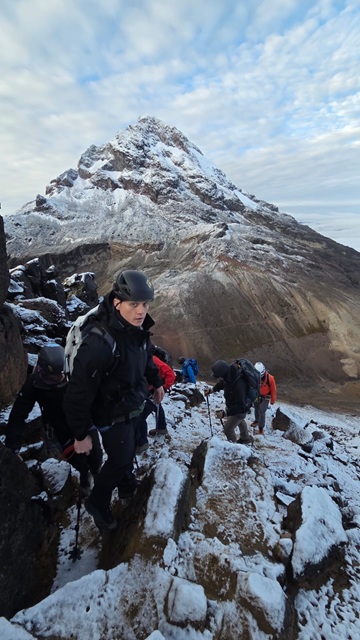
Hey everyone, this is JJ Justman with the Mexico Adventure team. We are happy to report that we are back at basecamp here on Orizaba. The mountain today, Orizaba, said no. It's always a little bit unfortunate. It's always a bummer when you don't summit. But we made it to within about 1,500 feet of the summit. Actually made it a good way on the glacier but we had rock hard, bulletproof ice. It's something I've never seen here before and pretty rare on all the mountains I've been on. We could hardly even penetrate our crampons. It was that firm. So my gut was telling me the obvious. Orizaba said no to reaching the top. It's something I never really share with my team before a summit climb, but I did have to let them know that while we were on Ixta, here on Orizaba, that same day unfortunately, a climber who was non-guided, slipped and fell. And she did not make it. So when you hear things like that, and you have the conditions that we had, it's a pretty easy decision to make. Even though it's disappointing not reaching the top, we are back down safe and sound and you know what, we can come back when Orizaba is in better shape, better conditions and give her another shot, but the team is real happy. We made the summit of Ixta, and that definitely still has us smiling and we're definitely glad to be down here. So we're gonna pack up camp and head back down to Dr. Reyes' and we'll have a good meal down there and definitely have a celebration. So thanks for tuning in. Everyone here says hello and we will hopefully see you on the mountain. Bye.
RMI Guide JJ Justman
Hello RMI Blog,
This is JJ Justman. We are done resting and relaxing in the town of Puebla, and are now at our camp on Orizaba at 14,000’. A nice little spot everyone is guiding out our tents making sure they do not blow away in the wind. We do have a little bit of a breeze, but the weather is beautiful. They are calling for a bit of a cold front tonight so it might be chilly, but we are planning on waking up early and going for the summit of Orizaba tomorrow morning, most likely at 2 o’clock in the morning we will be walking on out.
The team is doing great, we are well rested, well fed, and we are looking forward to see what Orizaba has to offer. Stay tuned we will give you a call tomorrow to let you know how everyone is doing.
Everyone on the team says, “Hello!”
RMI Guide JJ Justman & Team






A friend of mine attempted Aconcagua in his 50s with a group of people and guides. Some young guys looked at him and complained that they’d probably have to be carrying his stuff near the top. Near the top, only my friend and one guide were capable of going on. But they had to turn back, because everyone else was sick or injured. ;-(
Posted by: Hank Halle on 12/15/2012 at 3:19 pm
JJ - Looks like a great start. Please leave a little wine for the Jan 2 trip!
Posted by: Peter Rogers on 12/6/2012 at 11:26 am
View All Comments